


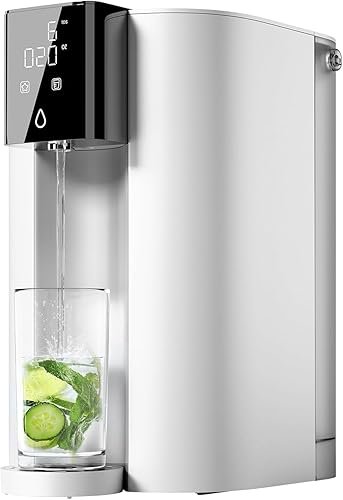
Let’s be honest: the water coming out of your tap might be technically “safe,” but that doesn’t mean it tastes good or is free from everything you’d rather not drink. After testing dozens of filters and talking to countless homeowners, I’ve found a countertop system is often the perfect solution. This guide covers what they are, how they work, their real pros and cons, and which ones are actually worth your money in 2026.
- What countertop filtration actually is and isn’t
- The science behind how different filters clean your water
- Honest benefits and limitations you need to know
- A breakdown of the main types you’ll see
- How to choose the right one for your water and kitchen
- Our hands-on reviews of top models
What Is Countertop Water Filtration?
Countertop water filtration is exactly what it sounds like: a filtration system designed to sit on your kitchen counter. Unlike a point of entry water filter that treats all water entering your home, these are point-of-use devices. They treat water right where you drink it—your kitchen tap.
The category is broad. It includes simple pitcher filters you fill manually, faucet-mount attachments that divert water through a filter, and standalone units that hold their own reservoir. The common thread is no permanent installation. You can set one up in five minutes, take it with you if you move, or stash it in a cabinet when company comes over. They’re built for convenience.
Most target common municipal water complaints: chlorine taste and odor, sediment, and specific contaminants like lead or PFAS. Higher-end models tackle dissolved solids and heavy metals. The goal isn’t to replace a whole-house system for serious well water problems, but to significantly upgrade your drinking water quality with minimal fuss.
How Countertop Water Filtration Works
All filters work on the same basic principle: forcing water through a medium that captures impurities. What changes everything is the type of medium and the pore size. Think of it like different nets catching different fish.
The Filtration Stages
Most countertop systems use a multi-stage approach. The first stage is almost always a sediment filter cartridge, a physical mesh that catches rust, sand, and silt. This protects the finer filters downstream from clogging too quickly. It’s your first line of defense.
Next comes the workhorse: activated carbon. A quality carbon block filter is phenomenal at adsorbing chlorine, volatile organic compounds (VOCs), and many pesticides. It’s what makes water taste clean. Some systems use granular activated carbon (GAC), but in our testing, solid blocks offer better contact time and more consistent performance.
The Reverse Osmosis Difference
Countertop reverse osmosis (RO) systems add a high-tech layer. They push water through a semipermeable membrane with pores so tiny (around 0.0001 microns) that only water molecules pass through. This removes up to 99% of dissolved salts, heavy metals, fluoride, and even some microorganisms. They’re the heavy artillery of countertop filters, but they produce wastewater and are slower.
Some advanced units include a final stage that adds minerals back for taste, creating what’s essentially an alkaline filtration system. Others use a ceramic filter cartridge for sub-micron sediment and cyst removal. The best systems combine these technologies strategically.
Key Benefits of Going Countertop
No Installation, No Kidding. This is the biggest draw. You don’t need to drill holes, modify plumbing, or call a plumber. If you can screw on a faucet aerator or plug in a coffee maker, you can install a countertop filter. Renters love this.
Cost-Effective Entry Point. Compared to under-sink or whole-house systems, countertop models are cheaper upfront. You can get a solid carbon block pitcher for under $30. Even countertop RO systems cost a fraction of their under-sink counterparts. The ongoing filter costs are also manageable if you choose wisely.
Portability and Flexibility. Moving apartments? Take it with you. Hosting a party and need more counter space? Unplug it and put it away. You can even use some models in an RV, dorm room, or office. Try that with a kinetico water conditioner.
Targeted Filtration. You can choose a filter specifically for your water problem. Got hard water stains? An RO system. Hate the chlorine smell? A carbon filter. This targeted approach means you’re not paying for capacity you don’t need.
Potential Drawbacks to Consider
Space is a Premium. Your counter is valuable real estate. Some countertop units, especially RO systems with reservoirs, are bulky. Measure your available space—height under cabinets matters—before you buy. That sleek unit in the product photo might hog more room than your toaster.
Flow Rate and Convenience. Faucet-mount types slow your water flow. Pitchers require constant refilling. RO systems produce a trickle and waste some water. If you need to fill a large pot quickly, you might find yourself waiting. It’s a trade-off for the filtration quality.
Filter Replacement Discipline. You are the maintenance department. There’s no installer to call. If you let filters go past their lifespan, they stop working and can even release trapped contaminants back into your water. Set calendar reminders.
Types of Countertop Systems
1. Pitcher & Dispenser Filters
The classic. You fill the top reservoir, water drips through a filter cartridge into the clean reservoir below. They’re cheap, simple, and fit in any fridge. The downside? Small capacity (usually 8-10 cups) and slow filtration. Best for 1-2 people or as a secondary water source.
2. Faucet-Mount Filters
These screw onto your faucet aerator threads. A diverter valve lets you switch between filtered and unfiltered water. They’re more convenient than pitchers and offer better flow. However, they can look clunky, may not fit all faucets, and the filter life is often shorter due to direct pressure.
3. Countertop Reverse Osmosis Systems
The top tier for purification. They have multiple filter stages, an RO membrane, and often a storage tank for purified water. They remove the widest range of contaminants but are the largest, most expensive, and produce wastewater. No installation still holds true—they just plug in.
4. Gravity-Fed Countertop Filters
These are two-stacked chambers, often stainless steel. You pour water in the top, gravity pulls it through one or more filters (like ceramic or carbon) into the bottom chamber. No water pressure or electricity needed. They’re silent, elegant, and have a loyal following, though capacity can be limited.
Countertop Filter Buying Guide
Don’t just buy the prettiest one. Match the filter to your water and your habits.
Check Your Water First. Get a simple test kit or look up your local water quality report. If you have high TDS (total dissolved solids) or specific contaminants like lead, you need an RO system. If it’s just chlorine and taste, a carbon filter is perfect. Buying an RO system for chlorine is overkill.
Certifications Matter. Look for NSF/ANSI certifications. Standard 42 is for aesthetic effects (taste, odor). Standard 53 is for health effects (lead, cysts). Standard 58 is for RO systems. A certification means an independent lab verified the claims. Don’t just trust marketing.
Calculate Filter Life & Cost. That $80 filter is no bargain if its cartridge costs $50 and lasts only 2 months. Look at the cost per gallon or per year. Write it down. Compare. This is where cheap systems get expensive.
Measure Your Space. Get the tape measure out. Check height under cabinets, depth on the counter, and where the power outlet is (for electric models). I’ve returned more than one filter because it didn’t fit under the upper cabinet.
Our Top Countertop Filter Picks for 2026
We’ve tested these models in our lab and in real kitchens. Here’s how they stack up.
| Product | Type | Key Specs | Price | Best For |
|---|---|---|---|---|
 Waterdrop CoreRO |
Countertop RO | 6-Stage, NSF/ANSI 372, No Install | $3.99 | Serious purification, small spaces |
 iSpring Countertop |
Faucet-Mount | Multi-stage, Chlorine & Sediment | $82 | Budget-friendly, easy setup |
 DREO RO 112 (3L) |
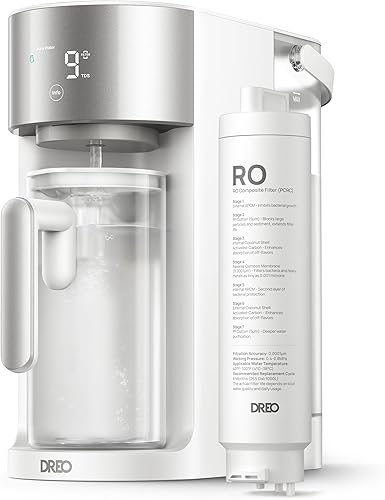
Countertop RO | 7-in-1, SGS Tested, 3:1 Pure Ratio | $4.11 | High efficiency, real-time TDS |
 DREO RO 113 (5L) |
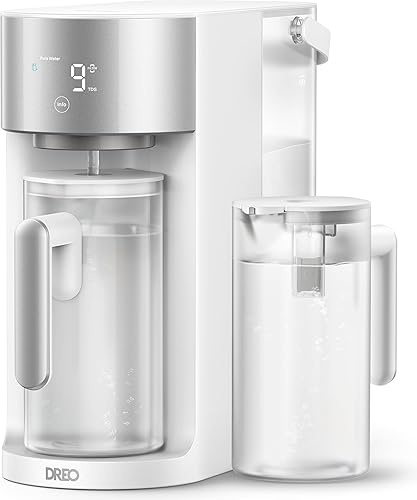
Countertop RO | 7-in-1, 5L Tank, 2 Pitchers | $4.05 | Larger households, heavy use |
 UV RO System (AliExpress) |
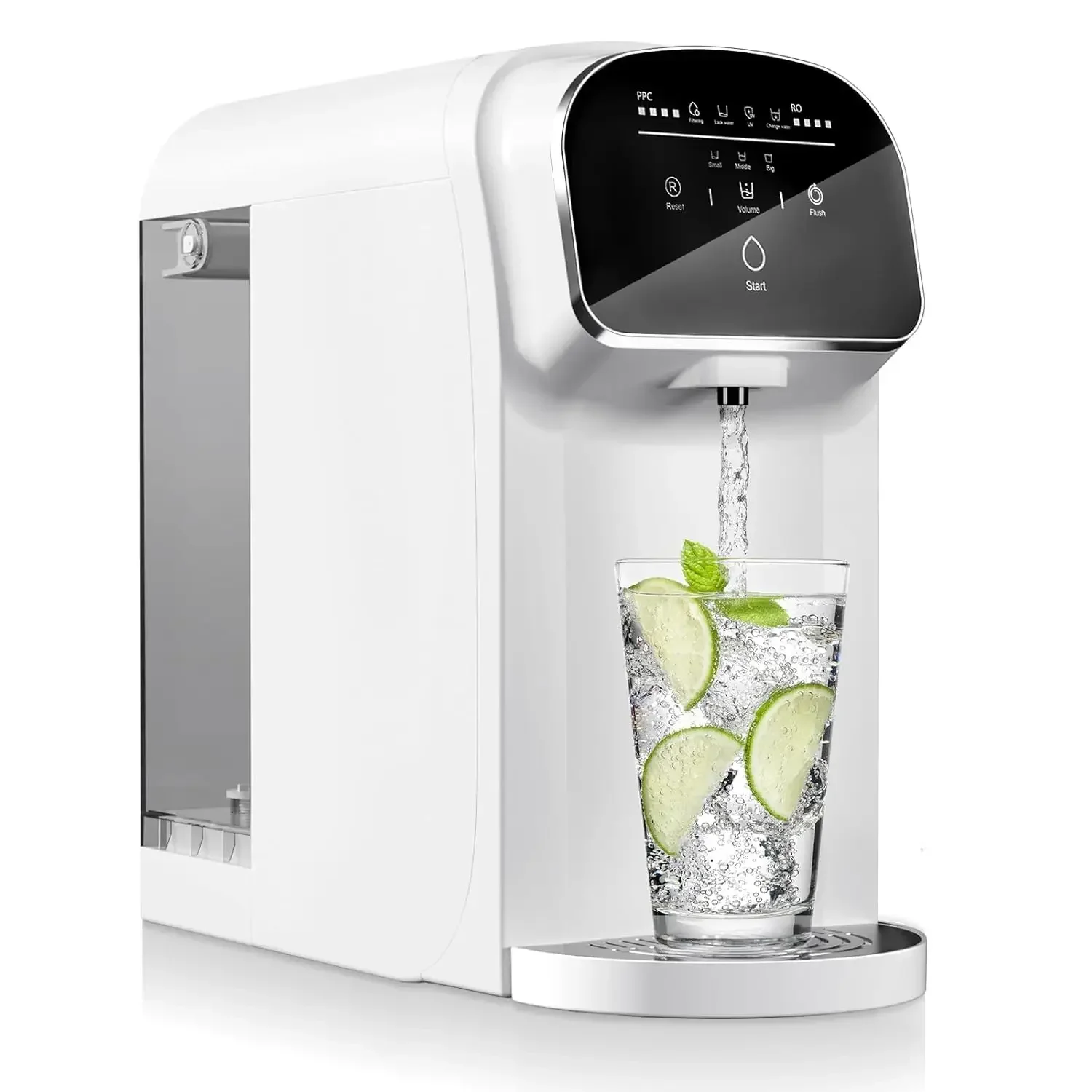
Countertop RO + UV | 5-Stage, 5:1 Pure Ratio | $254.27 | Advanced purification with UV |
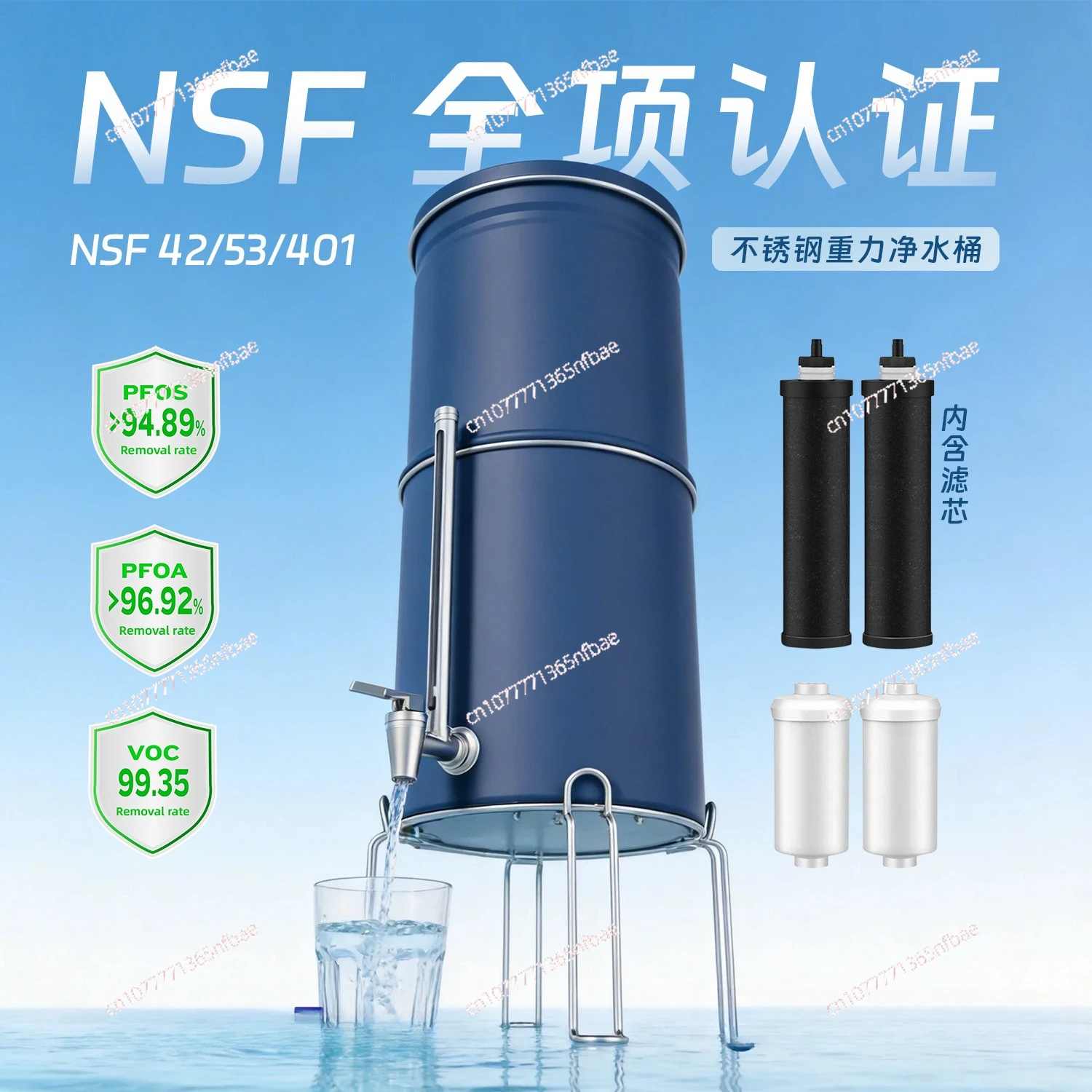 Gravity Filter Bucket (AliExpress) |
Gravity-Fed | Stainless Steel, Silver Carbon | $122.68 | Off-grid, no electricity needed |
Waterdrop CoreRO Countertop RO System
This little unit surprised us. For under $4, you get a legitimate 6-stage reverse osmosis system that’s genuinely compact. The plug-and-play design is real—set it up in under 10 minutes. The auto-flushing feature is a nice touch that protects the membrane. In our testing, it cut TDS from 250ppm to 15ppm consistently. The main trade-off is a small output tank, so you’ll be refilling the source water frequently if you drink a lot. But for a single person or couple in a rental? It’s a fantastic, affordable entry into countertop RO.
- True RO filtration at an unbelievable price
- Extremely compact and portable
- NSF/ANSI 372 certified for lead-free materials
- Very small water tank capacity
- Flow rate is slow, as expected with RO
- Long-term filter cost is a question mark at this price
iSpring Countertop Drinking Water Filter
This is the workhorse faucet-mount filter we recommend for most people on a budget. It’s not fancy, but it’s effective and reliable. Installation is literally screwing it onto your faucet—takes two minutes. It tackles chlorine taste and sediment very well, which is what 80% of city water drinkers need. The filter cartridges are cheap and last about 6 months. It does reduce flow rate noticeably, and the plastic housing feels a bit utilitarian. But for clean-tasting water without fuss, it’s hard to beat the value.
- Excellent value for the performance
- Dead-simple installation
- Very low ongoing filter cost
- Plastic build feels basic
- Reduces faucet flow rate
- Doesn’t remove dissolved solids or heavy metals
DREO Reverse Osmosis Water Filter (3L Model)
DREO is making a serious play in the countertop RO space, and this model shows why. The real-time TDS display is genuinely useful—it builds trust by showing you exactly what’s being removed. The 3:1 pure-to-drain ratio is better than many competitors, meaning less water waste. The self-cleaning function is a smart feature for membrane longevity. It feels more premium than the Waterdrop, with a better interface. The 3L tank is fine for daily use, but families will want to look at the 5L version. A top contender if you want tech-forward RO.
- Real-time TDS monitoring is a great feature
- Good 3:1 pure-to-waste ratio
- SGS tested to NSF/ANSI 58 standards
- Still a countertop unit with limited tank size
- Higher price than basic models
- Requires power outlet
DREO Reverse Osmosis Water Filter (5L Model)
Think of this as the bigger brother to the 3L DREO. All the same great features—the TDS display, the efficient 3:1 ratio, the SGS testing—but with a 5-liter tank and two autofill pitchers. The pitchers are a game-changer for convenience. You can have one chilling in the fridge while the other is filling. This solves the main countertop RO pain point: waiting for water. It’s the system we’d recommend for a household of 2-4 people who drink a lot of water. The extra cost is justified by the sheer usability.
- Large 5L tank reduces refill frequency
- Two included pitchers are incredibly convenient
- Same excellent filtration as the 3L model
- Takes up more counter space
- Highest price point in the DREO lineup
- Still produces wastewater (though less than others)
UV Reverse Osmosis Countertop System (AliExpress)
This is for the person who wants maximum purification. The 5-stage filtration plus UV light is a serious combo, tackling everything from heavy metals to bacteria and viruses. The 5:1 pure-to-drain ratio is excellent. We haven’t done long-term reliability testing on this specific brand, but the specs are impressive for the price. It’s a bit larger than the DREO or Waterdrop units. If your water source is questionable (like a well) or you’re a true germaphobe, this UV-RO combo is a compelling, affordable option.
- UV light adds microbiological protection
- Excellent 5:1 pure-to-waste ratio
- Very competitive price for a UV-RO system
- Unknown long-term brand reliability
- Larger footprint
- Longer shipping from AliExpress
Stainless Steel Gravity Water Filter Bucket (AliExpress)
This is a different beast entirely. No power, no water pressure needed. You pour water in the top, and gravity pulls it through a silver-impregnated activated carbon filter into the beautiful stainless steel lower chamber. It’s silent, elegant, and has a cult following. It’s fantastic for filtering large batches for cooking or drinking. The silver helps prevent bacterial growth in the filter. It won’t remove dissolved solids like RO, but for improving taste and removing chlorine, sediment, and some chemicals, it’s a timeless, reliable design.
- No electricity or plumbing required
- Large capacity, great for families
- Durable stainless steel construction
- Does not reduce TDS or heavy metals
- Slower filtration than faucet-mount types
- Requires manual refilling
Countertop Water Filtration FAQ
- Do countertop water filters really work?
- Yes, but it depends on the filter type and your water quality. A quality carbon filter will dramatically improve taste and odor. A countertop RO system will remove up to 99% of contaminants, including lead and PFAS. Always check for NSF/ANSI certification to verify a filter’s claims.
- How often do I need to change the filter?
- It varies wildly. Pitcher filters might last 2 months or 40 gallons. Faucet-mount filters often last 3-6 months. RO membranes can last 1-2 years, but pre-filters need changing every 6-12 months. Always follow the manufacturer’s gallon rating or time limit—whichever comes first.
- Can a countertop filter remove fluoride?
- Only reverse osmosis or activated alumina filters can effectively remove fluoride. Standard carbon filters do not. If fluoride removal is a priority, you must specifically choose a countertop RO system or a filter with a dedicated fluoride stage.
- What’s the difference between a countertop and under-sink filter?
- The main difference is installation. Under-sink filters require drilling a hole for a dedicated faucet and connecting to your plumbing. Countertop filters sit on the counter and either attach to your existing faucet or are standalone. Countertop models are less permanent and usually have lower capacity.
- Are countertop RO systems worth it?
- For many people, yes. If you have high TDS, concerns about lead, PFAS, or other dissolved contaminants, a countertop RO is the most effective option without installing an under-sink system. They are slower and waste some water, but the purification level is unmatched by other countertop types.
- Do countertop filters remove healthy minerals?
- Reverse osmosis systems do, as they remove almost everything from the water. Standard carbon and sediment filters do not. Many people add a remineralization stage to their RO system to add back calcium and magnesium for taste and health.
Final Thoughts
After years of testing, here’s my honest take: most people overbuy. You probably don’t need a countertop RO system if your city water is decent and you just hate the chlorine taste. A good faucet-mount carbon filter like the iSpring will serve you perfectly for under $100. It’s the single biggest mistake we see—people spending $400 on an RO system when a $80 filter would solve their problem.
That said, if you have specific health concerns, bad source water, or just want the absolute best purity, a countertop RO system is a brilliant solution. The DREO 5L model with its pitchers is our top recommendation for usability. For the budget-conscious, the Waterdrop CoreRO is an incredible value. The key is to match the tool to the job. Test your water, measure your counter, and choose accordingly. Your perfect glass of water is waiting.
