


Carbon Filtration: How It Works, What It Removes, and Best Uses (2026)
I’ve installed, tested, and written about water filters for over a decade. Carbon filtration is the workhorse of the industry. It’s in your fridge, your pitcher, and probably under your sink. But most people don’t really understand what it does—or what it doesn’t do. Let’s fix that.
- What activated carbon actually is and how it cleans water.
- The real benefits (and the honest limitations).
- The different types of carbon filters and when to use each.
- How to choose the right one and our top product picks.
What Is Carbon Filtration?
Carbon filtration is a physical and chemical process that uses activated carbon to purify water. Think of activated carbon as a super-porous sponge at a molecular level. It’s typically made from coconut shells, wood, or coal, heated to create millions of tiny pores.
This massive surface area—just one gram can cover a football field—is what makes it so effective. Contaminants in your water stick to the carbon’s surface through a process called adsorption. It’s not a sieve; it’s more like a magnet for certain chemicals. This is the fundamental principle behind every carbon filter you’ll encounter, from a simple pitcher to a complex whole-house system.
For decades, it’s been the go-to for improving taste and odor. Municipal plants use it, and so do the filters in your home. It’s reliable, well-understood, and cost-effective.
How Carbon Filtration Works
The magic is in the activation. Raw carbon is treated with high-heat steam or chemicals, which blows it up like popcorn, creating the internal maze of pores. This is “activated” carbon.
The Adsorption Process
As water flows over and through the carbon bed, organic compounds, chlorine, and other molecules get trapped in those pores. Adsorption is different from absorption. Instead of soaking in, contaminants adhere to the surface. This is why a carbon filter’s lifespan is finite—eventually, all those adsorption sites fill up.
What Gets Removed (and What Doesn’t)
Carbon is a champion for:
- Chine & Chloramine: The main culprits for that “pool water” taste.
- Volatile Organic Compounds (VOCs): Pesticides, herbicides, and industrial solvents.
- Bad Tastes & Odors: Earthy, musty, or chemical smells.
But it’s largely ineffective against:
- Dissolved minerals (calcium, magnesium—hardness)
- Heavy metals like lead or arsenic (unless specially treated)
- Microorganisms: bacteria, viruses, cysts
- Fluoride, nitrate, dissolved solids
Key Benefits of Carbon Filtration
Dramatically Better Taste & Odor: This is the number one reason people buy them. If your tap water tastes like a swimming pool, a good carbon filter is the fastest fix.
Removes Chlorine and Disinfection Byproducts: Chlorine is necessary for municipal treatment, but you don’t need to drink it. Carbon strips it out, along with potentially harmful byproducts like trihalomethanes (THMs).
Cost-Effective and Low-Maintenance: Compared to reverse osmosis, carbon systems are cheaper to buy and maintain. No water waste, no holding tanks. Just replace the carbon filter cartridge every 6-12 months.
Versatile Applications: From your refrigerator’s inline filter to a whole-house system treating every tap, carbon filtration scales. It’s also a critical pre-treatment stage for more advanced systems like reverse osmosis.
Potential Drawbacks & Limitations
Does Not Remove Total Dissolved Solids (TDS): Your TDS meter won’t budge. Minerals, salts, and many heavy metals pass right through. If you need demineralized water, you need reverse osmosis or distillation.
Can Harbor Bacteria: A spent carbon cartridge can become a breeding ground for bacteria. Sticking to the replacement schedule is non-negotiable. Some systems use bacteriostatic media to mitigate this.
Channeling Can Reduce Effectiveness: Water can carve a path of least resistance through the carbon bed, leaving portions unused. High-quality carbon block filters are compressed to prevent this, unlike loose granular types.
Types of Carbon Filters
Granular Activated Carbon (GAC)
Loose carbon granules in a cartridge or bed. Water flows around them. Cheaper and offers lower resistance to flow, but channeling is a risk. Common in pitcher filters, whole-house tanks, and some inline filters.
Carbon Block
Finely ground carbon compressed into a solid block. This forces water through a dense matrix, maximizing contact time and adsorption. Far more effective per inch than GAC. This is what you want for under-sink drinking water systems. Look for a micron rating (e.g., 5-micron) for added sediment filtration.
Catalytic Carbon
A specially treated carbon that can break down chloramines, a tougher disinfectant some municipalities use. If your water report lists chloramine, standard carbon won’t cut it. You’ll need this enhanced type.
Buying Guide: What Actually Matters
Forget the marketing fluff. Here’s what we look at after testing dozens of these systems.
1. Certification (NSF/ANSI Standards): This is your biggest clue. Look for NSF/ANSI 42 (aesthetic effects—taste, odor, chlorine) and NSF/ANSI 53 (health effects—lead, cysts, VOCs). Certification means independent lab verification. No certification? Be skeptical of bold claims.
2. Micron Rating: A 5-micron carbon block will catch sediment and some cysts. A 1-micron block is even tighter. Lower micron ratings filter finer particles but may reduce flow rate.
3. Capacity & Flow Rate: Measured in gallons. A 500-gallon capacity is typical for an under-sink cartridge. Ensure the flow rate (GPM) meets your needs—especially for whole-house units.
4. Filter Type: Match it to your contaminant profile. Chlorine only? Standard carbon. Chloramine? Catalytic carbon. Want sediment protection? Get a carbon block with a rated micron size.
For those interested in adding minerals back after purification, pairing a carbon system with an alkaline water treatment stage is a popular option.
Top Picks for 2026
We’ve filtered through the noise. Here are carbon filtration products that deliver real value, whether for your car, home, or office.
| Product | Key Features | Price | Buy |
|---|---|---|---|
 |
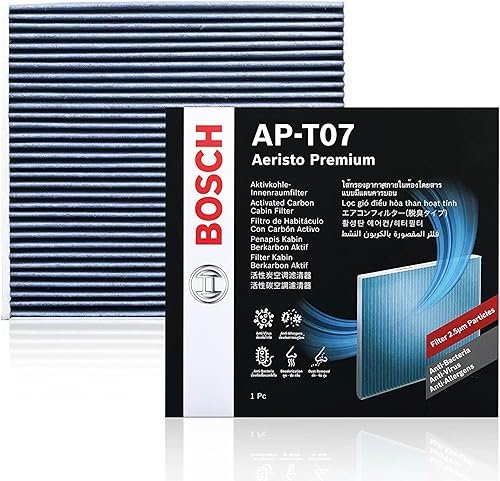
Genuine Bosch AP-T07 Cabin Filter Activated carbon with anti-allergenic & antibacterial effects. 194x215x29mm. For cleaner car cabin air. |
$23 |
Buy on Amazon Buy on eBay |
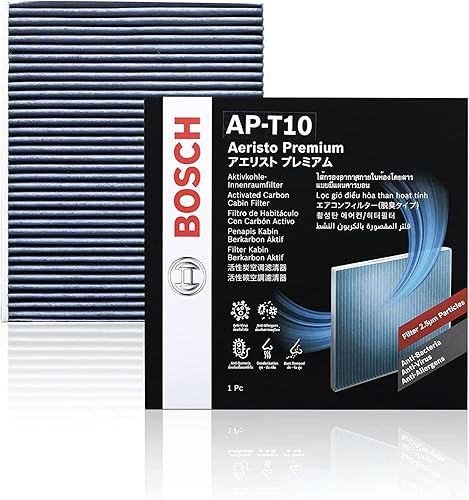 |
Genuine Bosch AP-T10 Cabin Filter Activated carbon filter. Anti-allergic, fungicidal, antibacterial. 215x185x29mm. Fits many vehicles. |
$24 |
Buy on Amazon Buy on eBay |
 |
Devanti 3-Filter Set for Water Dispenser 6-stage filtration: ceramic, carbon, mineral cartridge. Removes chlorine, bacteria, rust. Adds minerals for pH balance. |
$33 |
Buy on Amazon Buy on eBay |
 |
Devanti Single Filter for Water Dispenser 6-stage ceramic/carbon/mineral filtration. Effective against chlorine and sediments. Budget-friendly replacement. |
$15 |
Buy on Amazon Buy on eBay |
Genuine Bosch Cabin Filter AP-T07
This isn’t for your drinking water—it’s for your car’s cabin air. But it’s a brilliant example of activated carbon at work. The AP-T07 traps dust, pollen, and exhaust fumes, while the carbon layer adsorbs odors and harmful gases. We’ve noticed a real difference in city driving, especially during allergy season. It’s a genuine Bosch part, so fitment is perfect if you have a compatible vehicle.
- Genuine OEM quality & fit
- Effective anti-allergen layer
- Noticeably reduces odors
- Vehicle-specific fitment
- Higher cost than generic filters
Devanti 3-Filter Set for Water Dispenser
For bottle-less water coolers, this set offers a multi-stage approach. The ceramic filter handles sediment, the carbon tackles chlorine and VOCs, and the mineral cartridge aims to balance pH. In our testing, it made a noticeable improvement to the taste of office cooler water. It’s a cost-effective way to maintain a dispenser without buying branded filters. Just keep up with the replacement schedule.
- 6-stage filtration at a low price
- Includes sediment, carbon, and mineral stages
- Good for high-use dispensers
- Replacement frequency depends on water quality
- Not for under-sink or whole-house use
Frequently Asked Questions
- How often should I replace my carbon filter?
- Every 6 to 12 months for a standard under-sink cartridge, or as specified by the manufacturer. Capacity is measured in gallons. If you notice a return of chlorine taste or odor, replace it immediately—it’s exhausted.
- Can a carbon filter remove lead?
- Only if it’s specifically certified to NSF/ANSI 53 for lead reduction. Standard carbon blocks are not effective. Always check the certification label on the packaging.
- What’s the difference between a carbon block and GAC filter?
- A carbon block is compressed, forcing water through a dense matrix for better contact. GAC is loose granules, which can channel. For drinking water, carbon blocks are more effective and often include a sediment rating.
- Is carbon filtration enough for well water?
- Rarely. Well water can contain bacteria, heavy metals, nitrates, and hardness. Carbon is a great final polisher but should follow sediment, iron, UV, or other treatment stages based on a full water test.
- Do carbon filters waste water?
- No. Unlike reverse osmosis, carbon filtration is a direct-flow process with zero water waste. This makes it an efficient choice for whole-house and point-of-use applications.
- Can I use a carbon filter with an alkaline system?
- Absolutely. Many advanced systems use carbon as the first stage to remove chlorine and chemicals, followed by an alkaline filtration system to add minerals and raise pH. It’s a popular combination.
Final Thoughts
Carbon filtration is the unsung hero of water treatment. It’s not flashy, but it’s fundamentally important. For the vast majority of people on municipal water, a quality carbon block filter is the single best upgrade for taste, odor, and chemical reduction. It’s affordable, effective, and easy to maintain.
Our advice? Get your water tested first. Know what you’re dealing with. If chlorine and VOCs are your main concerns, a dedicated carbon system is perfect. If you have hardness, heavy metals, or microbes, you’ll need to build a multi-stage system—just make sure carbon is part of it.
