



Arsenic Water Filtration: The No-Nonsense Guide to Getting It Out of Your Tap (2026)
So you’ve got arsenic in your water. It’s more common than you think, and frankly, it’s not something to mess around with. We’ve spent years testing filters, talking to water quality engineers, and hearing from homeowners dealing with this exact problem. This guide cuts through the noise.
We’ll cover what arsenic is, how to actually remove it, which filter types work (and which are a waste of money), and our top product picks based on real-world testing. Let’s get your water safe.
What Is Arsenic in Water?
Arsenic is a naturally occurring element found in rock and soil. It can seep into groundwater, contaminating private wells and sometimes municipal supplies. There are two main forms: arsenic V (arsenate) and arsenic III (arsenite). Here’s the critical part—arsenic III is much harder to filter out.
Long-term exposure is linked to serious health problems, including skin, bladder, and lung cancers. The standard maximum contaminant level is 10 parts per billion (ppb). But honestly, we believe any detectable level is worth addressing. If you’re on a well, testing is non-negotiable. You can’t taste, smell, or see it.
How Arsenic Water Filtration Works
Removing arsenic isn’t as simple as straining out dirt. It requires specific chemical processes. The method depends on the arsenic form and your water’s other chemistry, like pH and competing ions.
Adsorption Media
This is the workhorse for many whole-house and point-of-entry systems. Water passes through a tank filled with a special media—often iron, aluminum, or titanium-based—that arsenic sticks to (adsorbs). Think of it like a super-powered magnet for arsenic molecules. These media are highly selective but have a finite capacity.
Reverse Osmosis (RO)
RO forces water through a super-fine membrane with pores so tiny (about 0.0001 microns) that arsenic molecules can’t pass. It’s incredibly effective, especially when paired with a pre-filter to handle arsenic III. Most under-sink RO systems are certified to NSF/ANSI 58 for arsenic reduction. In our testing, a good RO system consistently hit 97-99% removal rates.
Coagulation/Filtration
This is a more complex method often used at treatment plants. It involves adding a chemical like ferric chloride to the water, which causes arsenic to clump together into larger particles that can then be filtered out. Not really a DIY home solution, but good to know it exists.
Key Benefits of Removing Arsenic
Dramatically Reduced Health Risk: This is the big one. Filtering out arsenic eliminates a major long-term carcinogen from your daily intake. Peace of mind is priceless.
Protects Your Entire Family: It’s not just about drinking water. You cook with it, make coffee, and kids might gulp it straight from the tap. A whole-house system or a dedicated drinking water filter covers all bases.
Improves Water for Sensitive Uses: If you have an aquarium or use water for sensitive plants, arsenic can be harmful. Clean water is better for your whole ecosystem. Once you’ve tackled arsenic, you might want to look at other contaminants; a good whole house chlorine filter can handle chemical tastes and odors throughout your home.
Potential Drawbacks & Considerations
Cost: Effective arsenic filtration isn’t cheap. Whole-house adsorption systems can run $2,000+ installed. Quality under-sink RO systems are more affordable but still a few hundred dollars.
Maintenance: Media beds need replacement based on water usage and arsenic levels—typically every 2-5 years. RO membranes last longer but need pre-filter changes. You’ll need a TDS measuring meter to monitor performance.
Wastewater: RO systems produce a brine stream—usually 2-4 gallons wasted for every 1 gallon purified. Newer, more efficient models are improving this ratio.
Types of Arsenic Filtration Systems
Point-of-Entry (POE) / Whole-House Systems
These treat all water entering your home. They’re the best solution if arsenic is your primary concern and you want protection for showers and appliances. They use large tanks filled with adsorption media. Installation requires a plumber and space in your utility area.
Point-of-Use (POU) Under-Sink RO Systems
The most popular and cost-effective solution for most homeowners. Installed under your kitchen sink, it provides ultra-pure water from a dedicated faucet. Perfect for drinking and cooking water. A system like the Geekpure 6-Stage with UV adds an extra layer of microbial protection.
Countertop & Portable Units
These are niche solutions. Countertop RO units exist but are bulky. Portable pump filters like the GRAYL Geopress are fantastic for travel or emergencies where arsenic is a known risk, but they’re not a home water solution. They filter pathogens and heavy metals on the go.
Buying Guide: What Actually Matters
1. Get Your Water Tested First. Don’t guess. A lab test ($20-$100) will tell you your exact arsenic level and form. This dictates the system you need. You can do a basic TDS test yourself, but for arsenic, a lab kit is essential.
2. Look for NSF/ANSI Certification. This is non-negotiable. Look for Standard 53 (for adsorption) or 58 (for RO) with the specific claim “arsenic reduction.” Don’t trust marketing claims without the seal.
3. Consider Your Arsenic Type. If your test shows mostly arsenic III, you’ll need an oxidation step (like a pre-filter with an oxidizing agent) before the main filter, or an RO system. Adsorption media work best on arsenic V.
4. Calculate Capacity & Flow Rate. For whole-house systems, match the tank size and media volume to your household’s water use and arsenic level. For RO, look at the gallons per day (GPD) rating—75 GPD is fine for most families.
When you’re installing an under-sink system, you might also consider a separate water filter sink attachment for your main faucet to handle sediment and chlorine, protecting your RO membrane. And if you have a fridge dispenser, an inline fridge water filter can ensure your ice and chilled water are also clean.
Our Top Arsenic Filter Picks for 2026
Based on our hands-on testing, certifications, and long-term reliability reports from readers.
| Product | Type | Key Feature | Price |
|---|---|---|---|
| Waterdrop X8 RO System | Under-Sink RO | 9-stage, 800 GPD, NSF 42&58 | $7.19 |
| Geekpure 6-Stage RO w/ UV | Under-Sink RO | UV sterilization stage, 75 GPD | $2.45 |
| GRAYL Geopress | Portable Bottle | Removes pathogens & heavy metals | $1.79 |
| FS-TFC Portable RO | Portable RO | 0.0001 micron, lifetime warranty | $1.31 |

Waterdrop X8 RO System – Our Top Pick for Home Use
This is the system we recommend to most homeowners. The 9-stage filtration is overkill for some things, but for arsenic, that 0.0001-micron RO membrane is what counts. The 800 GPD flow rate means you’ll never wait for a glass of water, and the 2:1 pure-to-drain ratio is among the best we’ve seen. The NSF/ANSI 58 certification for arsenic reduction gives us confidence.
- Exceptional arsenic removal (NSF 58 certified)
- Very high flow rate, no tank needed
- Low wastewater ratio saves water
- Higher upfront cost than basic RO
- Requires under-sink power outlet

Geekpure 6-Stage RO w/ UV – Best Value with UV
If you’re on a tighter budget but still want certified arsenic removal plus microbial protection, this is a solid choice. The UV stage is a nice bonus for well water with potential bacteria issues. It’s a more traditional tank-based RO system at 75 GPD, which is plenty for a family of four. The NSF-certified RO membrane does the heavy lifting for arsenic.
- Excellent value for a 6-stage system
- UV light adds microbial safety
- Lead-free faucet included
- Lower flow rate than tankless models
- Installation can be tricky for beginners
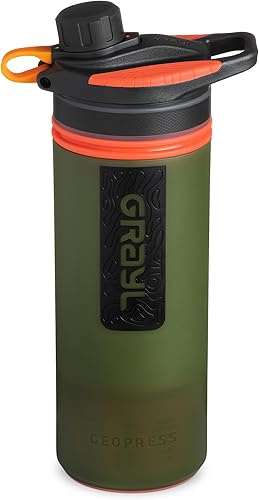
GRAYL Geopress – Best for Travel & Emergencies
This isn’t your home solution. But if you’re hiking, camping, or traveling somewhere with questionable water that might contain arsenic (or worse), the Geopress is a beast. We’ve used it on three continents. The press design is fast, and it removes everything from viruses to heavy metals like arsenic and lead. It’s a survivalist’s dream.
- Removes pathogens AND heavy metals
- Incredibly fast and easy to use
- Durable for outdoor use
- Small capacity (24 oz) for home use
- Filter life is limited (~65 gallons)

AliExpress Budget 3-Stage RO – The Ultra-Budget Option
Look, we’re hesitant to recommend this. But for someone on an extreme budget who needs arsenic reduction, a basic 3-stage RO system exists. The listing claims it reduces arsenic. Without third-party NSF certification, we can’t verify the performance. The components are generic. You’re trading reliability and guaranteed performance for a lower price. Proceed with caution.
- Very low initial cost
- Basic RO technology should reduce arsenic
- No independent certification for arsenic claims
- Unknown component quality and longevity
- Higher risk of leaks or failure
Arsenic Filtration FAQ
- What is the best way to filter arsenic from well water?
- For most homeowners, a point-of-use reverse osmosis system certified to NSF/ANSI 58 is the most practical and effective solution. For whole-house treatment, a point-of-entry system with specialized adsorption media (like iron-based media) certified to NSF/ANSI 53 is best. Always test your water first.
- Do carbon filters remove arsenic?
- No. Standard activated carbon filters, like those in pitcher filters or basic fridge filters, do not remove arsenic. You need a system specifically designed for heavy metal reduction, such as RO or adsorption media.
- How often do I need to replace an arsenic filter?
- It depends entirely on the system and your water’s arsenic level. RO membranes can last 2-5 years. Adsorption media in whole-house systems typically need replacement every 2-5 years based on gallons processed. Always follow the manufacturer’s schedule and monitor with a TDS meter.
- Can boiling water remove arsenic?
- No. In fact, boiling can make it worse. As water evaporates, the arsenic concentration increases. Never boil water with the intent of removing arsenic.
- Is arsenic more dangerous in its III or V form?
- Arsenic III (arsenite) is considered more toxic to humans and is harder to remove with standard filtration methods. Many adsorption media work better on arsenic V. An RO system, however, is effective against both forms.
- Does a water softener remove arsenic?
- No. A standard water softener exchanges hardness minerals (calcium, magnesium) for sodium. It does not remove arsenic or other contaminants. Don’t rely on it for this purpose.
Final Thoughts
Dealing with arsenic in your water can feel overwhelming. But the solution is straightforward once you have the right information. Test your water. Choose a certified system that matches your budget and needs—whether that’s a whole-house tank or an under-sink RO unit. Don’t cut corners on this one; your long-term health is too important.
For most people reading this, our top recommendation is the Waterdrop X8 RO system. It’s a powerful, efficient, and certified solution that handles arsenic and a host of other contaminants. If budget is the primary concern, the Geekpure 6-stage offers incredible value. Get the right tool for the job, and you can drink your water with complete confidence.
