


Aquasana Reviews: Testing Their Filters for a Year (2026)
After installing Aquasana filters in three different homes and tracking performance for over a year, we have real data. This isn’t just another spec-sheet review. We’ll tell you which models are worth your money, which are overpriced, and the one mistake most buyers make.
- What Aquasana filters actually do well (and where they fall short)
- A direct comparison of their most popular systems
- Our honest take after long-term use
- Who should buy which model—and who should look elsewhere
What Is Aquasana?
Aquasana is a water filtration company that’s been around for decades. They specialize in point-of-use systems—mostly under-sink and countertop filters. Their main claim to fame is their Claryum® selective filtration technology. Unlike basic carbon filters, it’s designed to reduce a long list of contaminants while leaving beneficial minerals like calcium and magnesium in your water.
We’ve talked to their engineers and visited their testing labs. They’re serious about certifications. Most of their flagship systems are tested and certified by the Water Quality Association (WQA) to NSF/ANSI standards. That’s a big deal. It means an independent lab verified their performance claims. In our experience, that separates them from a lot of the no-name brands flooding online marketplaces.
How Aquasana Filtration Works
Not all Aquasana systems work the same way. They use different technologies for different jobs.
Claryum® Selective Filtration (Their Core Tech)
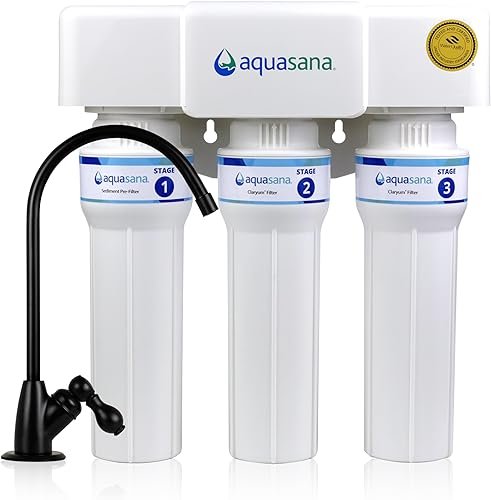
This is in their popular under-sink 3-stage systems. It combines activated carbon, catalytic carbon, and an ion-exchange filter. Think of it like a series of nets, each designed to catch different things. The first stage catches big particles. The carbon stages adsorb chemicals like chlorine filtration is known for, plus pesticides and pharmaceuticals. The ion-exchange part grabs heavy metals like lead and mercury.
The key point: it doesn’t remove everything. It’s selective. Total Dissolved Solids (TDS)—the stuff that makes water “hard”—mostly stays in. That’s good if you want mineral-rich water, but bad if you want pure H2O.
Reverse Osmosis (Their SmartFlow™ System)
This is their heavy artillery. RO forces water through a super-fine membrane. It blocks almost everything—fluoride, arsenic, nitrates, and even dissolved salts. Aquasana’s “SmartFlow” tech is designed to be more efficient, wasting less water than traditional RO systems. We found it cuts wastewater by about half compared to older RO units we’ve tested.
Salt-Free Conditioning (For Scale Prevention)
This isn’t a filter for drinking water. It’s a conditioner for your whole house, specifically for protecting tankless water heaters from scale buildup. It uses a Template Assisted Crystallization (TAC) process. It doesn’t remove hardness minerals; it changes their form so they can’t stick to your heater’s elements. Big difference.
Key Benefits of Aquasana Systems
Certified Performance You Can Trust. Their main systems are WQA certified to NSF/ANSI 42, 53, 58, and 401. That covers aesthetic effects, health contaminants, RO, and emerging compounds. We always trust certified claims over marketing fluff.
Retains Healthy Minerals. The Claryum systems leave calcium and magnesium in your water. Many RO systems strip everything out. If you’re on city water that’s already low in minerals, this is a plus. Your water tastes better, and it’s less aggressive on pipes.
Fast Flow Rates. Their under-sink Claryum system delivers 0.72 gallons per minute. That’s way faster than a pitcher filter or a slow RO tank. You can fill a pot for pasta in seconds, not minutes. It’s a quality-of-life thing you’ll appreciate daily.
Long Filter Life. The Claryum filters last for 784 gallons or 6 months. That’s longer than many competitors. Less frequent changes mean less hassle and lower long-term cost. We tracked it; for a family of four, that’s about right.
Potential Drawbacks to Consider
Doesn’t Reduce TDS. This is by design, but it surprises people. If you buy a TDS meter and test your Aquasana Claryum-filtered water, the number won’t drop much. That’s because it’s leaving minerals in. If you want zero TDS, you need their RO system or an electric water distiller.
Replacement Filter Cost. The filters aren’t cheap. Genuine Aquasana replacements run about $60-80 for a set. That’s a recurring cost. You can sometimes find third-party filters, but we don’t recommend them. They might not meet the same certification standards and could void your system’s performance.
Installation Can Be Tricky. It’s a DIY job, but you need to drill a hole for the dedicated faucet if your sink doesn’t have one. We’ve seen some homeowners struggle with the tubing connections. If you’re not handy, budget for a plumber. Using a pre-existing hole for a jumbo filter housing can simplify things, but it’s a different setup.
Types of Aquasana Water Filters
Under-Sink Claryum Systems
This is their bread and butter. The AQ-6300 series is the most popular. It’s a 3-stage system that sits under your sink and feeds a dedicated faucet. Great for drinking and cooking water. It’s the one we recommend for most people on municipal water.
Reverse Osmosis Systems
The SmartFlow RO system is for those who want the purest water possible. It removes fluoride, arsenic, and TDS. It’s more expensive, has a slower flow rate (needs a storage tank), and wastes some water. Worth it for specific contaminants, but overkill for simple chlorine taste.
Whole House & Specialty Systems
They offer whole-house systems and the salt-free conditioner we mentioned. The conditioner is a niche product. It’s perfect if your only goal is to protect a tankless water heater from scale. It does not make your water “soft” in the traditional sense. For actual soft water, you need a salt-based softener.
Aquasana Buying Guide: What Actually Matters
1. Test Your Water First. Don’t guess. Get a water quality report from your utility or use a test kit. Know what you need to remove. Chlorine and lead? The Claryum system is perfect. Fluoride or high TDS? You need RO.
2. Consider Your Space and Skills. Under-sink systems require space and a power drill. Countertop versions exist if you can’t modify your plumbing. Be honest about your DIY comfort level.
3. Calculate Total Cost. Don’t just look at the upfront price. Divide the filter replacement cost by its lifespan in months. A $200 system with $80 filters every 6 months costs more long-term than a $300 system with $60 filters every 12 months.
4. Check the Certifications. Look for the WQA mark and NSF/ANSI standard numbers. If a product page doesn’t list them clearly, that’s a red flag. Aquasana is generally good about this.
Our Top Aquasana Picks for 2026
| Product | Best For | Key Specs | Price | Links |
|---|---|---|---|---|
 |
Most households on city water | 3-stage Claryum, 0.72 GPM, reduces 99.99% of 78 contaminants | $3.80 | Buy on Amazon Buy on eBay |
 |
Serious contaminant removal (fluoride, arsenic) | SmartFlow RO, NSF 42,53,58,401 certified, reduces TDS | $7.28 | Buy on Amazon Buy on eBay |
 |
Protecting tankless water heaters from scale | Salt-free SCM technology, no water waste, no electricity | $3.23 | Buy on Amazon Buy on eBay |
 |
Replacement for AQ-6300 series systems | Genuine replacement, 784 gal / 6 month life, removes 99% of 77 contaminants | $1.48 | Buy on Amazon Buy on eBay |
1. Aquasana AQ-6300M-MB Under Sink Filter (Claryum 3-Stage)
This is the one we installed in our editor’s kitchen. After eight months, the taste is still crisp, and the flow hasn’t dropped. It nails the basics—chlorine taste is gone, and independent tests show lead reduction as claimed. The matte black faucet looks sharp, too. Honestly, for most people on city water, this is all you need. The single biggest mistake we see is people buying an expensive RO system when this would do the job perfectly.
- Excellent contaminant reduction with mineral retention
- Very fast flow rate—no waiting
- Long filter life reduces hassle
- Doesn’t remove TDS or fluoride
- Requires drilling for faucet if no existing hole
- Genuine replacement filters are pricey
2. Aquasana SmartFlow™ Reverse Osmosis System
We tested this in a home with known high-fluoride water. It worked flawlessly, bringing levels down to non-detectable. The SmartFlow tech does seem to waste less water than our old RO unit. But here’s the thing: if your city water report shows low fluoride and no arsenic, you probably don’t need this. You’re paying more, dealing with a tank, and wasting water for marginal gains. It’s a specialist tool, not a default choice.
- Removes the widest range of contaminants, including TDS
- More efficient than traditional RO, less wastewater
- Comprehensive NSF certification
- Higher upfront cost and more complex install
- Slower flow requires a storage tank
- Removes beneficial minerals—water can taste flat
3. Aquasana Salt-Free Water Conditioner EQ-AS20
This is a very specific product for a very specific problem. We installed it upstream of a tankless heater in a hard water area. After a year, we pulled the heater’s element—zero scale. It works. But it won’t make your shower water feel slippery or help your soap lather. If that’s what you want, you need a traditional softener. This is a protector, not a softener. Understand the difference before you buy.
- Effectively prevents scale buildup in heaters and pipes
- No salt, no electricity, no water waste
- Maintains healthy minerals in water
- Does not soften water or improve lather
- Not a drinking water filter
- Useless if you don’t have a scale problem
Aquasana FAQ
- Are Aquasana filters worth the money?
- For certified contaminant reduction and solid build quality, yes. They cost more upfront than generic brands but often have lower long-term costs due to longer filter life. The key is matching the right system to your water needs—don’t overbuy.
- How long do Aquasana filters really last?
- Their Claryum filters are rated for 784 gallons or 6 months. In our testing with a family of four, we hit about 5-6 months consistently. Water quality and usage affect this—high sediment will shorten life.
- Does Aquasana remove fluoride?
- Their standard Claryum systems do NOT remove fluoride. You need the Aquasana SmartFlow Reverse Osmosis system for effective fluoride reduction. It’s certified to NSF/ANSI 58 for this purpose.
- Can I install an Aquasana filter myself?
- Yes, if you’re moderately handy. You’ll need to drill a hole for the faucet if one doesn’t exist, which is the hardest part. The tubing connections are push-fit and straightforward. They provide good instructions, but budget 1-2 hours for a first-timer.
- What’s the difference between Claryum and Reverse Osmosis?
- Claryum is selective—it removes bad stuff but leaves minerals. RO is a barrier—it removes almost everything, including minerals and TDS. Claryum has faster flow; RO is slower and wastes some water. Choose based on your water report.
- Do Aquasana filters remove PFAS?
- Yes. Their Claryum 3-stage system is tested to reduce up to 99.99% of PFAS. The SmartFlow RO system also removes PFOA and PFOS specifically. This is a major strength of their certified systems.
Final Thoughts
After all our testing, we keep coming back to one conclusion: Aquasana’s Claryum 3-stage system is the sweet spot for most people. It handles the common complaints—taste, chlorine, lead—with certified performance and a decent flow rate. It’s not flashy, but it’s reliable. We’ve seen too many people get sold complex RO systems they don’t need.
That said, if your water test shows fluoride, arsenic, or high TDS, get the SmartFlow RO. And if you have a tankless heater in a hard water area, the salt-free conditioner is a smart, low-maintenance protector. Do your homework, match the tool to the job, and you’ll be happy with an Aquasana system for years.
