


Staring at a complex RO system diagram can feel like trying to read a map in a foreign language. I’ve been there, both as a homeowner and after testing dozens of systems for this site. The lines and boxes all mean something critical.
This article will decode that diagram for you. We’ll cover:
- What each component in the diagram actually does.
- The step-by-step journey of water through your whole house RO system.
- The real-world benefits and the honest drawbacks you should know.
- How to choose the right system based on what the diagram tells you.
What Is an RO System Diagram?
Think of it as the blueprint for your water’s purification journey. A reverse osmosis system diagram is a simplified schematic that shows every major component and the direction water flows between them. It’s not just for plumbers. For you, the homeowner, it’s the single best tool for understanding what you’ve bought and how to keep it running.
In our experience, the biggest mistake people make is ignoring this diagram during install. They connect pipes backwards or skip a stage. The result? Poor water pressure, bad taste, or a membrane that fails in six months. We’ve seen it happen. The diagram prevents that. It lays out the pre-filters, the membrane housing, the storage tank, and the final polish stage in clear, logical order.
How a Whole House RO System Works
Let’s walk through the diagram, stage by stage. This is the core process that turns your tap water into purified water for every faucet, shower, and appliance.
Stage 1: Sediment Pre-Filter
Water enters here. This first filter is your system’s bouncer. Its job is to catch the big stuff: dirt, sand, rust, and other visible particles. We’re talking anything above 5 microns. Why does this matter? If that sediment hits your delicate RO membrane, it’ll clog it up in no time. This filter is cheap and easy to replace. Don’t skip it.
Stage 2: Carbon Pre-Filter
Next, the water hits a carbon block or granular activated carbon filter. This stage is all about chemistry. It removes chlorine, chloramines, and volatile organic compounds (VOCs). These chemicals will destroy the thin film composite of an RO membrane. Think of this filter as the membrane’s bodyguard. It also starts to improve taste and odor right here.
Stage 3: The RO Membrane
This is the heart of the system. The diagram shows it as a single unit, but inside is a tightly wound spiral of semi-permeable membrane. Water is forced through it under pressure. The membrane’s microscopic pores allow water molecules to pass but block up to 99% of dissolved salts, heavy metals, bacteria, and viruses. What doesn’t pass through gets flushed away as wastewater. This is the “reverse osmosis” part.
Stage 4: Storage Tank & Post-Filter
Because the RO process is slow, whole house systems need a large storage tank to hold purified water ready for demand. On the diagram, you’ll see a line from the tank to a final post-filter—usually another carbon filter. This “polishing” stage removes any residual tastes or odors picked up from the tank itself, ensuring crisp, clean water at your tap. Some systems use a 10 inch filter housing for this final stage, making replacements straightforward.
Key Benefits of a Whole House RO System
Comprehensive Contaminant Removal: This isn’t just for your drinking glass. You shower, cook, and wash clothes in purified water. It removes a vast array of contaminants, from lead and arsenic to fluoride and nitrates.
Appliance Protection: Scale buildup from hard water minerals kills coffee makers, ice machines, and humidifiers. RO water is essentially mineral-free, which dramatically extends the life of your appliances. If you’re looking for a dedicated filter for lg refrigerator, an RO system upstream can make that filter last much longer.
Improved Taste and Odor: Chlorine, sulfur, and metallic tastes are gone. The water tastes clean, which means you’ll drink more of it. Your coffee and tea will taste noticeably better.
Potential Drawbacks to Consider
Water Waste: Traditional RO membranes produce wastewater (brine) as they filter. For every gallon of pure water, you might send 2-4 gallons down the drain. Newer, more efficient membranes exist, but waste is inherent to the process.
High Initial Cost: You’re looking at a major investment, often $1,500 to $5,000+ for a quality system with installation. This is not an under-sink unit.
Removes Beneficial Minerals: RO water is demineralized. Some argue this is unhealthy, though you get most minerals from food. You can add a remineralization stage if this concerns you.
Professional Installation Needed: This involves plumbing into your main water line, often requiring a permit. It’s not a weekend DIY project for most people.
Types of Whole House RO Systems
Standard Traditional RO
This is the most common type shown in diagrams. It uses a crossflow process where water flows across the membrane, with some passing through and some carrying contaminants to the drain. It’s reliable and effective but has the highest water waste ratio.
High-Efficiency or Low-Waste RO
These systems use advanced membranes and sometimes permeate pumps to reduce the waste ratio to 1:1 or even better. They cost more upfront but save water and money long-term. The diagram might look similar, but the internal membrane technology is different.
Light Commercial / High-Capacity RO
Designed for large homes or small businesses, these systems have multiple membranes in parallel. The diagram becomes more complex, showing multiple membrane housings fed from a common pre-filter line. They can produce hundreds or thousands of gallons per day.
Buying Guide: What the Diagram Doesn’t Show
The diagram shows components, but you need to look deeper. First, check the membrane’s GPD (Gallons Per Day) rating. Your household demand must be below this number. A family of four typically needs a 400-800 GPD system.
Look for NSF/ANSI certifications. Standard 58 is for RO systems, certifying contaminant reduction claims. Standard 42 covers aesthetic effects like chlorine taste. Don’t buy a system without these.
Consider the waste water ratio. If water cost or conservation is a priority, seek a high-efficiency model. Ask about the rejection rate—the percentage of contaminants removed. 95% is good, 99% is excellent.
Finally, think about post-installation support. Who will you call for service? Where will you buy replacement filters? Reliable customer service is worth paying for. For smaller point-of-use needs, like at a dedicated refrigerator line, an inline water filter for refrigerator might be a simpler, more cost-effective solution than running RO water to that line.
Top Picks & Essential Accessories
While we focus on whole house systems here, proper installation and maintenance require the right accessories. Here are some practical items we’ve used and recommend.
| Product | Key Features | Price | Links |
|---|---|---|---|
 |
Food-grade POM tubing, quick-connect fittings, high-temperature resistant. Perfect for connecting your RO system to a refrigerator or ice maker line. | Varies |
Buy on Amazon Buy on eBay |
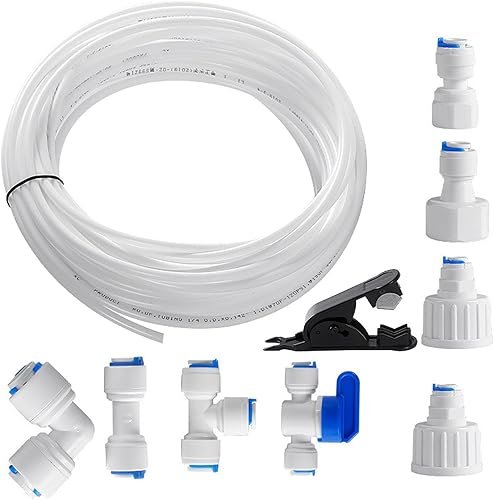
RO Water Pipe Kit – Water Purifier Accessories
This kit is a lifesaver for DIY connections. We used it to hook up a dedicated RO line to a coffee station. The quick-connect fittings are genuinely tool-free and haven’t leaked after months. The tubing is stiff enough to hold its shape but flexible enough for tight spaces. It’s a small purchase that solves a big headache during installation.
- Truly tool-free installation
- Food-grade, durable materials
- Wide compatibility with appliances
- Tubing length may be limiting for long runs
- Not for main supply line pressure

Magnetic Fraction Educational Puzzle (Off-Topic but Fun)
Okay, this isn’t water-related. But as parents and tinkerers, we love hands-on learning tools. This magnetic fraction puzzle is brilliantly simple for teaching kids math concepts. The pieces are sturdy and the magnets are strong. It’s a perfect screen-free activity. Sometimes the best filter for the mind is a good puzzle.
- Engaging, tactile learning
- Eco-friendly materials
- Great for visual learners
- Small pieces require supervision for young kids
- Limited to basic fractions
AliExpress Budget Finds
Sometimes you need a cheap part or a fun distraction while waiting for your system to fill. Here are a couple of interesting picks.

HKSH RO Style Shark Hoodie
Not for plumbing. But if you want to wear your love for reverse osmosis on your sleeve—literally—this hoodie has a certain ironic charm. The “RO Style” print is bold. It’s surprisingly warm for the price. Consider it your uniform for filter-change day.

Pirate King Anime T-shirt
Completely unrelated to water filtration. But hey, we all need a break. This shirt is soft, the print is decent for the cost, and it’s a conversation starter. Perfect for wearing while you study your RO system diagram and dream of adventure on the high seas… of purified water.
Frequently Asked Questions
- Can I install a whole house RO system myself?
- We strongly advise against it unless you are a very experienced DIYer with plumbing skills. It involves cutting into your main water line, installing a pre-filter housing, mounting the system, running a drain line for wastewater, and often adding an electrical pump. Improper installation can cause leaks, water damage, and poor performance. Hire a pro.
- How often do I need to change the filters and membrane?
- Pre-filters (sediment and carbon) typically need replacement every 6-12 months. The RO membrane itself can last 2-5 years, depending on your water quality and pre-filter maintenance. The post-filter usually lasts 12 months. Always follow the manufacturer’s schedule and monitor your water’s TDS (Total Dissolved Solids) levels.
- Does a whole house RO system waste a lot of water?
- Yes, traditional systems do. The wastewater ratio can be 2:1 or 3:1 (waste:pure). Newer high-efficiency models can reduce this to 1:1 or less. This wastewater is used for flushing contaminants from the membrane. You can divert this “greywater” for gardening or other non-potable uses if local codes allow.
- Will an RO system lower my water pressure?
- It can. The RO membrane itself creates a pressure drop. To counteract this, most whole house systems include a booster pump. Without adequate pressure (usually 40-80 psi entering the system), production will be slow and the system may not work at all. Your installer should test your home’s pressure.
- Is RO water safe to drink? Doesn’t it remove healthy minerals?
- RO water is very safe—it removes harmful contaminants. It does also remove beneficial minerals like calcium and magnesium. However, you get the vast majority of these minerals from food, not water. If concerned, you can add a remineralization cartridge that adds a small amount of minerals back for taste.
- What’s the difference between a whole house RO system and a point-of-use system?
- A whole house system treats all water entering your home. A point-of-use system (like under-sink) treats water at a single tap. Whole house is for comprehensive protection—bathing, laundry, all drinking water. Point-of-use is cheaper and sufficient if you only want purified drinking water from one faucet. For dedicated appliances, sometimes the best fridge filter is a good point-of-use compromise.
- Can I use an RO system with well water?
- Absolutely, but it’s often essential. Well water can contain sediment, bacteria, nitrates, and heavy metals. However, well water often requires extensive pre-treatment before the RO membrane. You might need a sediment filter, a water softener for hardness, and a UV sterilizer for bacteria. The diagram for a well water RO system is more complex.
Final Thoughts
That RO system diagram isn’t just a technical drawing. It’s the story of your water’s transformation. From the gritty sediment pre-filter to the final polish, each stage has a purpose. Understanding this flow empowers you to make smart choices, perform basic maintenance, and talk knowledgeably with your installer.
For most homeowners seeking total water purity, a whole house RO system is the ultimate solution. Yes, it’s expensive and complex. But the peace of mind—knowing every drop from every tap is clean—is hard to match. Just be sure to invest in a quality system with good support, and never ignore the diagram. Your water, and your health, will thank you.
