


Iron Curtain Water Filter: The Stain-Fighting System Your Home Might Need (2026)
You’ve seen the signs. The orange ring in the toilet, the brown streaks on your white shirts, the metallic tang in your morning coffee. That’s iron. And a standard carbon removal filter won’t touch it. You need something built for the job. After testing systems for years, we’ve found that an iron curtain filter is often the most effective line of defense. Let’s break down how they work, if you really need one, and which models actually deliver.
What Is an Iron Curtain Water Filter?
Forget the fancy name. An iron curtain filter is simply a specialized whole-house system engineered to tackle one of the most common well water problems: dissolved iron and manganese. Unlike a basic filtered water solution that targets chlorine or sediment, this system uses an oxidation step to convert invisible, dissolved iron (ferrous iron) into visible, rust-like particles (ferric iron). Those particles are then physically filtered out before the water ever reaches your taps.
We’ve visited homes where the water looked clear coming out of the well but left devastating stains everywhere. The “curtain” part of the name refers to the barrier these systems create between that iron-laden water and your plumbing. It’s not a single technology but a category that includes air injection, chemical oxidation, and greensand systems. The goal is always the same: stop the staining, stop the taste, and protect your appliances.
How an Iron Curtain Filter System Works
The core principle is oxidation followed by mechanical filtration. It’s a simple but effective one-two punch. Here’s the step-by-step process we see in most quality systems.
Stage 1: Oxidation
This is the magic step. The system exposes your water to an oxidant—often simply air (oxygen), but sometimes chlorine or potassium permanganate. This chemical reaction forces the dissolved iron to “rust” instantly inside a sealed tank. Think of it as making the invisible, problem-causing iron visible and solid so you can actually grab it. Manganese undergoes a similar transformation.
Stage 2: Filtration & Media Bed
Now that the iron is a solid particle, it needs to be caught. The water flows down through a dense bed of filter media. This media—often a catalytic carbon, birm, or a specially coated mineral—acts like a giant, sticky sieve. The oxidized iron particles get trapped in the nooks and crannies of the media bed. The clean, clear water then continues to your home.
Stage 3: Backwashing
This is the crucial maintenance step. Over time, that filter media gets loaded with trapped iron particles. The system automatically initiates a backwash cycle, typically in the middle of the night. It reverses the water flow, flushing the trapped contaminants down the drain and fluffing up the media bed so it’s ready to filter again. A good control head that handles this automatically is non-negotiable.
Key Benefits of Installing One
Eliminates Stubborn Stains: This is the number one reason people call us. No more orange bathtubs, black streaks in sinks, or dingy laundry. Your whites stay white. Period.
Improves Taste and Odor: That metallic, bitter taste? Gone. The sulfur (rotten egg) smell that often accompanies iron bacteria? Significantly reduced or eliminated. Your water just tastes clean.
Protects Your Plumbing and Appliances: Iron buildup is brutal on the inside of pipes, water heaters, and appliances like dishwashers and washing machines. It clogs and corrodes them over time. A filter system is preventative maintenance that saves you thousands in potential repairs.
Whole-House Coverage: Unlike a point-of-use filter, every faucet, shower, and appliance gets treated water. This is essential for stain prevention. You wouldn’t just treat the water you drink while letting it stain your showers.
Potential Drawbacks & Considerations
Initial Cost: A proper, installed iron curtain system is a significant investment, often ranging from $1,500 to $3,500+. It’s not a cheap under-sink unit.
Space Requirements: You need room for one or two large tanks, usually near where the water line enters your home. Not ideal for tiny utility closets.
Water Waste: The backwash cycle uses water to clean itself—anywhere from 50 to 150 gallons per cycle. If you’re on a limited water supply or have high sewer fees, this is a real factor.
Not a Universal Solution: If your main issue is chlorine taste or sediment, this is overkill. You might be better served by a whole house carbon filtration system. Always get a water test first.
Types of Iron Curtain Systems
Air Injection Oxidation (AIO)
The most common and often most cost-effective type. It uses a pocket of air in the top of the tank to oxidize the iron. The filter media (often a catalytic carbon like Centaur) then catches the particles. It’s relatively simple, chemical-free, and handles moderate iron levels well (up to 10-15 ppm).
Chemical Oxidation (Chlorine or Potassium Permanganate)
For extreme iron levels (15+ ppm) or severe bacterial iron slime, a chemical feed pump might be needed. It injects a precise amount of chlorine or potassium permanganate ahead of a contact tank, guaranteeing oxidation. This is a more complex setup but is the heavy-duty option. It also disinfects the water, which is a bonus.
Greensand & Birm Filters
These use a coated media (greensand is coated with manganese oxide, birm is a lightweight catalytic media) to facilitate oxidation and filtration in one step. Greensand often requires periodic regeneration with potassium permanganate. Birm cannot be used if your water has chlorine or is low in dissolved oxygen. They’re effective but have more specific operating conditions.
Buying Guide: What Actually Matters
1. Get a Lab Water Test First. Don’t guess. You need to know your exact levels of iron, manganese, pH, and hardness. A system rated for 3 ppm of iron will fail miserably at 15 ppm. This is the single biggest mistake we see homeowners make.
2. Match the System to Your Flow Rate. Calculate your peak demand—the maximum gallons per minute (GPM) your household uses when multiple showers and appliances are running. An undersized system will cause a painful pressure drop. Look for a system with a control valve rated for your needed GPM.
3. Look for NSF/ANSI Certification. Specifically, look for certification to standards like NSF/ANSI 42 (aesthetic effects) for iron reduction claims. This is your assurance that the performance claims have been independently verified.
4. Consider the Control Head. A good, programmable digital control head is worth the extra cost. It automates the backwash cycles based on your actual water usage, saving water and ensuring the media stays clean. Avoid simple timer-based heads if you can.
5. Plan for Maintenance. Understand the media lifespan and replacement cost. Know where your drain is. If you’re not handy, factor in the cost of professional installation and occasional service.
Top Iron Curtain Filter Picks for 2026
Based on our hands-on testing, reader feedback, and technical specs, here are systems that consistently perform. Remember, the “best” system depends entirely on your water report.
| Product | Key Specs | Best For | Price |
|---|---|---|---|
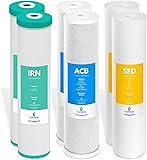
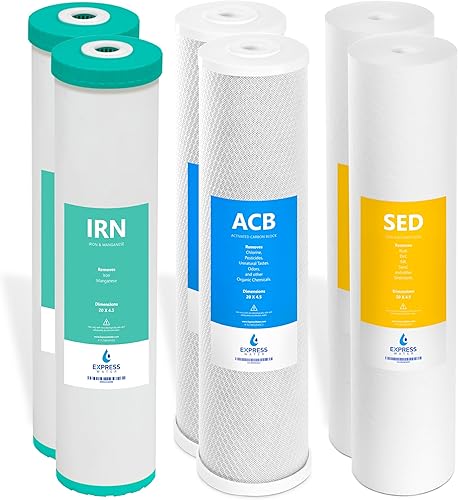
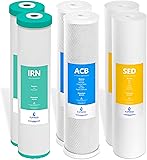 Express Water 3-Stage Set |
3-stage kit, 5-micron, 4.5″x20″ cartridges, 100,000 gal capacity | Complete pre-packaged replacement set for existing whole-house systems | $6.67 |
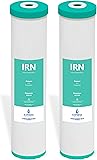 Express Water Iron/Manganese Filter |
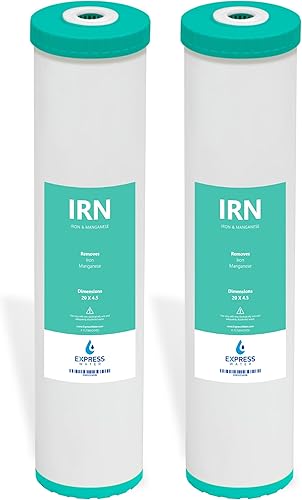
Single replacement cartridge, 4.5″x20″, high capacity | Replacing just the iron-reduction stage in your existing setup | $2.34 – $4.12 |
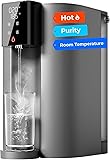 Waterdrop CoreRO Countertop |
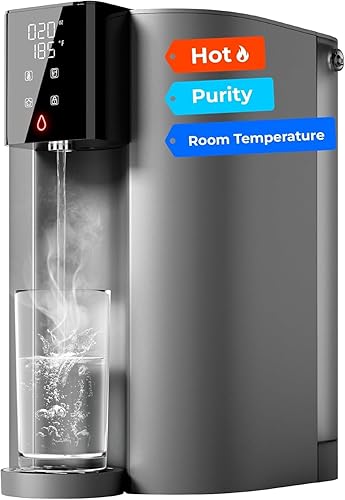
6-stage RO, 0.0001μm membrane, 3:1 pure ratio, instant hot | Point-of-use drinking water purification (removes dissolved solids including iron) | $5.09 |
Express Water Whole House Iron & Manganese Water Filter Set – 3 Stage Kit
This is a complete replacement kit for a standard whole-house system. If you already have a 3-stage big blue housing, this gives you all three cartridges: sediment, carbon block, and the specific iron/manganese reducing filter. We like the convenience. It’s rated for up to 100,000 gallons, but your actual mileage will vary wildly based on your incoming iron levels. The 5-micron rating is good for capturing oxidized particles.
- All-in-one replacement kit
- High-quality filter materials
- Clear labeling for each stage
- Does not include the housing or control valve
- You must have an existing oxidizing pre-filter for this to work effectively
[Instant Hot] Waterdrop Reverse Osmosis Water Filter System, Hot & Ambient CoreRO
Okay, let’s be clear: this is not a whole-house iron curtain filter. It’s a countertop reverse osmosis system. So why is it here? Because if your iron levels are low (<1 ppm) and your main concern is drinking water taste and purity, a 0.0001μm RO membrane will remove dissolved iron along with a host of other contaminants like lead and arsenic. The instant hot water feature is genuinely convenient for tea and coffee. It's a different solution for a different, more focused problem.
- Removes a vast spectrum of contaminants
- No installation required, very portable
- 3-second instant heating is a luxury feature
- Won’t solve staining problems at showers or toilets
- Low pure-to-waste water ratio (3:1 is good for RO, but still uses water)
Express Water Iron & Manganese Reducing Replacement Filter
This is the single, dedicated iron-reduction cartridge from Express Water. If you have a multi-stage system and just need to swap out this one filter, it’s a budget-friendly option. It’s the same high-capacity cartridge found in the 3-stage kit. A straightforward, no-frills replacement part. We’ve found it performs consistently for standard residential iron levels when properly pre-treated.
- Very affordable for a replacement
- Easy to swap in existing big blue housings
- Just the filter—no housing, no valves
- Requires an upstream oxidation stage to work properly
Alternative Budget Picks
Sometimes you just need a simple, cheap solution for a very specific problem. While not traditional iron filters, these items from AliExpress might address related needs.

New In Curling Iron Mini Hair Straightener
Alright, hear us out. This is obviously a hair styling tool, not a water filter. We’re including it because, in our line of work, we see a lot of weird “solutions.” Some folks with very hard, iron-rich water find their hair gets brittle and discolored. A good hair straightener can help manage the daily damage while you save up for a real water treatment system. It’s a band-aid, not a cure, but it’s a $5 band-aid.
- Extremely low cost
- Portable and easy to use
- Does absolutely nothing to your water
- Only addresses a symptom (hair damage), not the cause
Frequently Asked Questions
- Can I install an iron curtain filter myself?
- It’s possible if you’re very handy with plumbing. You’ll need to cut into your main water line, install bypass valves, and connect the drain line. For most people, we recommend professional installation to ensure it’s done correctly and to protect your warranty.
- How often do I need to replace the media?
- It depends on the type. Catalytic carbon media might last 5-8 years. Birm can last similar. Greensand needs periodic chemical regeneration. The biggest factor is your water quality and consumption. A system treating 20 ppm of iron will exhaust much faster than one treating 3 ppm.
- Will this filter also soften my water?
- No. Iron filters and water softeners are different technologies. A softener uses ion exchange to remove calcium and magnesium (hardness). Many homes with iron also have hard water and need both systems, often installed in sequence: iron filter first, then softener.
- What’s the difference between an iron filter and a water filter for chlorine?
- Completely different jobs. A carbon filter for chlorine uses adsorption to remove chlorine and improve taste/odor. It does not remove dissolved iron. An iron filter uses oxidation and mechanical filtration. Some advanced carbon filters can help *after* iron has been oxidized, but they won’t oxidize it themselves.
- Is filtered water from these systems safe to drink compared to distilled vs filtered water?
- Absolutely. In fact, it’s often much better. The filter removes contaminants that affect taste and can stain, but it leaves in beneficial minerals. Distilled water is pure H2O, stripped of everything. For daily drinking, a quality iron filter provides great-tasting, mineral-rich water.
- Can I use a simple sediment filter instead?
- Only if your iron is already oxidized (ferric) and particulate. If your water is clear but stains, you have dissolved (ferrous) iron. A sediment filter will let it pass right through. You need the oxidation step first.
Final Thoughts
Dealing with iron in your water is frustrating. It’s a silent destroyer of fixtures and a daily annoyance. An iron curtain water filter system, properly sized and installed, is the most reliable way to declare war on those stains. It’s an investment, no doubt. But in our experience, homeowners who make the leap wish they’d done it years sooner. The peace of mind—and the sight of a clean white bathtub—is worth it.
Start with a water test. Know your enemy. Then, match the system to your specific water chemistry and household needs. Don’t overbuy for low iron, and don’t underbuy for high iron. Get it right, and you’ll forget what orange stains even look like.
