



So you’ve heard the term “inline filter cartridge” tossed around. Maybe your fridge water tastes off, or your RV’s water pump is acting up. You know you need a filter, but the options are dizzying. We’ve installed, tested, and clogged more of these little cylinders than we can count. This guide cuts through the noise.
- What an inline filter cartridge actually is and isn’t.
- How they work and the different types you’ll encounter.
- The real benefits and the honest drawbacks.
- How to choose the right one and our top picks for 2026.
What Is an Inline Filter Cartridge?
Forget the big, complex housings. An inline filter cartridge is a simple, sealed unit. It has an inlet and an outlet, and you plumb it directly into your water line. No separate housing, no complicated wrenching. They’re typically 10 to 20 inches long and about 2 inches in diameter.
You’ll find them everywhere. They’re the primary filter in many under-sink systems, the secret behind your fridge’s decent-tasting water, and the go-to for RVs and boats. Their job is specific: reduce a targeted contaminant—like chlorine, sediment, or scale—at a particular point in your plumbing. Think of them as specialists, not generals.
Compared to a full carbon block filter system, they’re often simpler. The entire cartridge gets replaced, which is both a convenience and a cost. The key is matching the cartridge’s capability to your water problem.
How Inline Filter Cartridges Work
The Basic Principle: Forced Filtration
Water pressure from your main line does all the work. It pushes water into the cartridge inlet, forces it through the filter media inside, and out the other end. The media is what does the heavy lifting—trapping particles, adsorbing chemicals, or altering water chemistry.
What’s Inside? Filter Media Breakdown
The guts vary wildly. A sediment cartridge uses a spun polypropylene string or pleated membrane to physically block sand, rust, and silt. A taste-and-odor cartridge is packed with granular activated carbon (GAC) that grabs chlorine and volatile organic compounds. Some advanced ones, like the iSpring FA15, use calcite or mineral balls to add minerals back into purified water. The media determines the filter’s job.
Key Benefits of Going Inline
Simplicity is king. Installation is often a DIY job with quick-connect fittings. No drilling into mains, no bulky tanks. For renters or RV owners, this is a huge deal.
Targeted filtration. You can solve one specific problem—like chlorine taste at the fridge—without overhauling your entire plumbing. It’s efficient and cost-effective for spot treatments.
Low upfront cost. Compared to a full carbon filter system or reverse osmosis setup, the initial buy-in is minimal. You’re paying for the filter media and a plastic housing, not a complex manifold.
Easy maintenance. When it’s spent, you twist it off and screw on a new one. No mess, no sanitizing a housing. This simplicity means people actually change them on schedule—which is half the battle with water filtration.
Potential Drawbacks & Limitations
Limited capacity. They clog. A sediment filter protecting a pump might need swapping every few months in silty water. Always have a spare on hand.
Can reduce flow. Especially as they get loaded with debris. If your shower pressure drops after installing one for the whole house, you’ve undersized it. For point-of-entry jobs, consider whole house carbon filtration with a larger housing instead.
Ongoing cost. Those $20-$40 replacements add up. Over five years, you might spend more on cartridges than you did on the initial setup. It’s the classic “razor and blades” model.
Types of Inline Filter Cartridges
Sediment Prefilter
Your first line of defense. These catch dirt, sand, and rust. Look for a micron rating (e.g., 5 micron). Lower number, finer filtration. Essential for protecting downstream equipment like UV lamps or RO membranes.
Carbon Block / GAC
The taste improvers. Granular Activated Carbon (GAC) is great for chlorine and odor. A solid carbon block filter offers finer filtration and can handle some cysts. This is what most fridge and under-sink inline filters use.
Specialty & Alkaline
These do niche jobs. Scale-inhibitor cartridges protect water heaters and coffee machines. Alkaline cartridges, like the iSpring, use calcite to raise pH and add minerals—popular for post-RO remineralization.
Fuel & Non-Potable
Important distinction! Cartridges like the transparent 40-micron fuel filter are for gasoline, diesel, or non-potable water lines in machinery. Never use these for drinking water. The materials aren’t food-grade.
Buying Guide: What Actually Matters
1. Micron Rating: This is non-negotiable. For sediment, 5 microns is a good all-rounder. For finer polishing, 1 micron or less. For carbon filters, it’s less about microns and more about the type and quality of the carbon.
2. Flow Rate (GPM/LPM): Match it to your use. A fridge needs 0.5 GPM. A whole-house line needs 5+ GPM. Undersizing causes frustrating pressure drops.
3. Connection Size: Most are 1/4″ or 3/8″ quick-connect for under-sink. RV and garden hose versions use standard hose threads. Measure your existing lines!
4. Certification: For drinking water, look for NSF/ANSI 42 (aesthetic effects like chlorine) or NSF/ANSI 53 (health effects like lead, cysts). No certification? Be very skeptical of health claims.
5. Capacity & Lifespan: Rated in gallons or months. A 1,500-gallon carbon filter might last 6 months in a two-person household. Don’t believe “12-month” claims without a gallon rating.
Top Inline Filter Cartridges for 2026
| Product | Best For | Key Spec | Price | Links |
|---|---|---|---|---|
| Stefani Inline RV Filter | Travel & Camping | High-flow hose connection | $29 |
Amazon eBay |
| Anmumu 4-Pack Inline | Fridges & Ice Makers | 1/4″ Quick-Connect, 4-pack | $44 |
Amazon eBay |
| iSpring FA15 Alkaline | Post-RO Remineralization | Calcite & Mineral Balls | $42 |
Amazon eBay |
| Transparent Fuel Filter (2pc) | Mowers & Small Engines | 40 Micron, 8mm Pipe | $15 |
Amazon eBay |
| EPMAN Racing Fuel Filter | Performance Vehicles | AN6, 100 Micron SS | $20.52 | AliExpress |
| Universal AN6-AN10 Filter | Budget Fuel Filtration | 50 Micron, w/ Bracket | $11.41 | AliExpress |

1. Stefani Inline Caravan/RV Water Filter Cartridge
This is the one we recommend to every RVer who asks. It’s built tough, with a housing that doesn’t crack after a season of bouncing down corrugated roads. The high-flow design means it won’t slow down your tank filling—something cheaper models constantly mess up. It tackles the chlorine and funky taste common in caravan park water supplies effectively. Honestly, for under $30, it’s a no-brainer for travel.
- Robust construction for mobile use
- Doesn’t restrict water flow
- Simple hose-thread installation
- Primarily for sediment/chlorine, not heavy metals
- Needs replacement every camping season

2. Anmumu Inline Water Filter 4-Pack
Look, most fridge filters are overpriced branded cartridges. This 4-pack from Anmumu is the generic workhorse we use in our test kitchen. The quick-connect fittings are reliable, and the carbon does a solid job on chlorine taste and odor. At about $11 per filter, you can afford to change them every 4-6 months without wincing. The “Widely Used” claim is accurate—we’ve slapped these on ice makers, coffee pots, and under-sink RO systems. They just work.
- Incredible value for a 4-pack
- Universal 1/4″ quick-connect
- Effective basic carbon filtration
- No NSF certification listed (a concern)
- Unknown carbon quality vs. big brands

3. iSpring FA15 Inline Alkaline Filter
Reverse osmosis water is clean but can taste flat, even acidic. This cartridge is the fix. It’s the final stage in many RO systems, using calcite and mineral balls to add back calcium and magnesium, raising the pH. We’ve measured the output—it reliably bumps pH by 0.5-0.8 points. If you have an RO system and miss the “mouthfeel” of mineral water, this is the component you’re missing. It’s a specific tool for a specific job, and it does it well.
- Effectively re-mineralizes RO water
- Noticeably improves taste
- Standard 10″ size fits most housings
- Only for post-RO or very soft water
- Can slightly increase TDS reading

4. 2pcs Fuel Filter Inline Cartridge (8mm)
Switching gears completely. This is for your mower, generator, or go-kart—not your kitchen. The 40-micron rating is perfect for catching fine debris in fuel lines. The transparent housing is its best feature; you can see when it’s dirty and needs swapping. We keep a pack in the garage. At $15 for two, it’s cheap insurance against gunked-up carburetors. Just remember: fuel only. Don’t even think about using it for water.
- See-through housing for easy monitoring
- Great price for a two-pack
- 40-micron rating is ideal for small engines
- Not for potable water (fuel-grade materials)
- Plastic housing can be brittle in cold
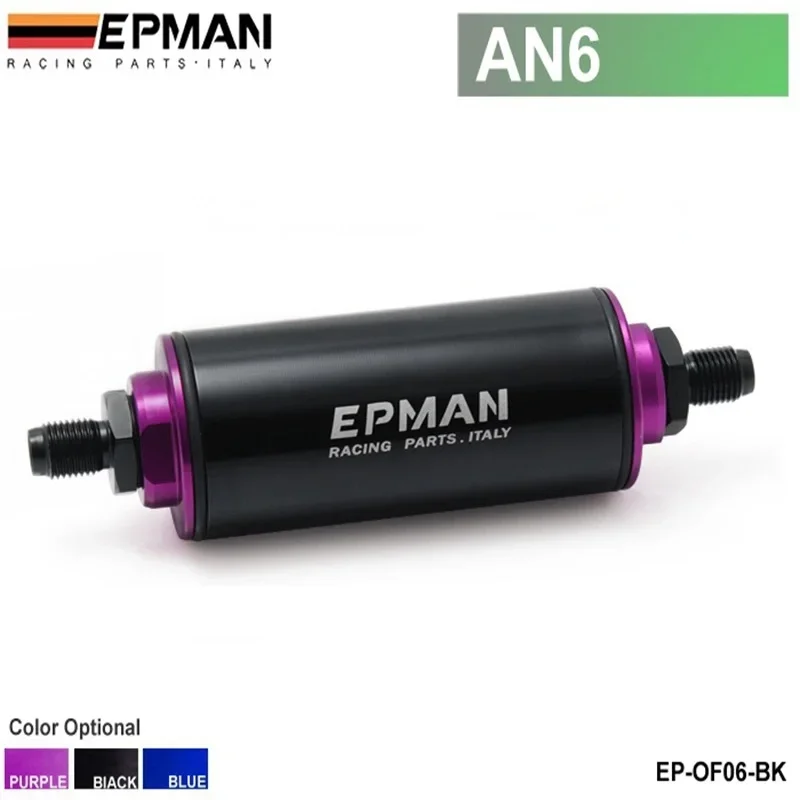
5. EPMAN Black Racing Inline Fuel Filter (AliExpress)
For the DIY car enthusiast on a budget. This AN6 aluminum filter with a 100-micron stainless steel element is for pre-fuel pump protection in performance applications. It flows well and looks the part. The build quality is surprisingly decent for the price. However, we’d only use this on a track car or project vehicle. For a daily driver, stick with OEM-spec filters. It’s a niche product that serves its niche well.
- Excellent value for AN6 fittings
- Reusable/cleanable SS element
- Solid aluminum construction
- 100-micron is coarse—only for pre-filter use
- Quality control can vary on marketplace sites

6. 58mm Universal Inline Fuel Filter (AliExpress)
This is the ultra-budget option for a universal fuel filter setup. It comes with AN6/8/10 adapters and a mounting bracket, which is handy. The 50-micron element is a good middle ground for many carbureted engines. Is it a quality name-brand part? No. But for a lawnmower upgrade or a simple fuel system on a project, it gets the job done. Inspect it carefully upon arrival—our test unit was fine, but consistency can be an issue at this price.
- Extremely low cost with included bracket
- Versatile with multiple AN fittings
- 50-micron is a useful rating
- Unknown brand longevity
- Not for high-pressure fuel injection systems
Frequently Asked Questions
- How often should I replace an inline filter cartridge?
- It depends entirely on the filter type and your water quality. A sediment filter might need changing every 3-6 months when it clogs. A carbon filter is typically every 6 months or after filtering 500-1,500 gallons. Always follow the manufacturer’s rated capacity and watch for a drop in flow rate or a return of bad taste.
- Can I use an inline filter for my whole house?
- You can, but you must choose a high-flow model (5+ GPM) designed for point-of-entry. Most small 10″ inline cartridges are for point-of-use (one faucet, fridge). For whole-house sediment or chlorine reduction, a larger housing with a big-blue style filter is usually a better, more cost-effective solution.
- What’s the difference between an inline filter and a housing with a replaceable cartridge?
- An inline filter is an all-in-one disposable unit. A housing system has a permanent sump and you replace just the internal filter element. Inline is simpler to swap. Housing systems are often cheaper long-term and offer more filter media choices, but are messier to change.
- Do inline filters reduce water pressure?
- All filters create some pressure drop. A clean, properly sized inline filter will have minimal impact (e.g., 2-5 PSI drop). If you notice a significant pressure loss, the filter is either clogged, too fine for your flow rate, or undersized for the application. Check the specs before buying.
- Are inline fuel filters safe for drinking water systems?
- Absolutely not. Fuel filters are made from materials that are not food-grade and may leach chemicals into water. They are designed for gasoline, diesel, or oil. Only use filters explicitly labeled and certified for potable/drinking water in any water system you consume.
Final Thoughts
The humble inline filter cartridge is the unsung hero of clean water and clean fuel. Its beauty is in its simplicity: a targeted solution you can install in minutes. For RV owners, the Stefani is our top pick for its durability. For home fridge and ice maker duty, the Anmumu 4-pack offers unbeatable value if you’re okay with the lack of certification. And for you RO users chasing perfect taste, the iSpring FA15 is a game-changer.
Just remember the golden rule: know your problem before you buy. Is it sediment? Chlorine taste? Fuel gunk? Match the cartridge’s micron rating and media type to the job. Don’t ask a simple carbon filter to remove lead, and don’t put a fuel filter on your drinking line. Get that right, and these little cylinders will serve you reliably for years.
