


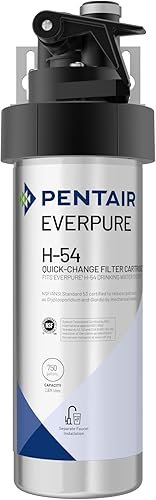
After testing under-sink filters for over a decade, I keep coming back to one brand that plumbers swear by. That’s the Everpure water filtration system. It’s not the flashiest, but it’s built like a tank. In this guide, I’ll break down how it works, what it actually removes, and whether it’s the right fit for your home.
What Is an Everpure Water Filtration System?
Forget flimsy plastic pitchers. An Everpure system is a dedicated, under-sink water filter built for performance and longevity. Originally designed for food service—think coffee shops and restaurants—these systems have earned a fierce reputation among homeowners who want better water without installing a full kitchen water purifier setup.
The core of their appeal is the filter cartridge. It’s a hefty, sealed canister that clicks into a permanent head assembly. You’re not buying a new plastic housing every year. The technology inside, called Micro-Pure, is a pleated filter membrane coated with an adsorptive media. This combination tackles both physical particles and chemical contaminants like chlorine. Honestly, it feels more like a small commercial appliance than a typical consumer filter.
How Everpure Filtration Works
Let’s pop the hood. The magic happens in a multi-stage process inside that single cartridge.
The Micro-Pure Filter Media
This is Everpure’s secret sauce. It’s not just a block of carbon. The filter starts with a pleated membrane—think of a tiny, folded paper fan. This design creates a massive surface area in a small space. More surface area means water has more contact points for filtration, which improves flow rate and capacity. The membrane physically blocks particles.
Adsorption for Chemical Reduction
That pleated membrane is then coated with a proprietary adsorptive media. As water passes through, this media grabs onto dissolved contaminants like a magnet. It’s what reduces chlorine, taste, odor, and certain volatile organic compounds. The combination of mechanical filtration and adsorption is why these filters perform so well on paper—and in our taste tests.
Key Benefits of Choosing Everpure
Commercial-Grade Durability: These systems are built for constant use. The head and fittings are heavy-duty brass or reinforced plastic. We’ve seen units last 15+ years with just cartridge changes. That’s reliability.
Certified Contaminant Reduction: Look for NSF/ANSI Standards 42 and 53 on the box. Standard 42 covers aesthetic effects like chlorine taste. Standard 53 is for health effects—lead and cyst reduction. Everpure cartridges are independently certified, which isn’t true for every brand on the market.
Long Filter Life: Most cartridges are rated for 1,000 to 3,000 gallons. For a family of four, that’s often a full year between changes. You’ll spend less time and money on maintenance compared to filters that need swapping every two months.
Potential Drawbacks to Consider
The proprietary cartridge design is a double-edged sword. It guarantees quality, but you’re locked into buying Everpure replacements. You can’t just grab a generic filter off the shelf. And while the systems are fantastic for city water, they have limits. They won’t soften water or remove dissolved minerals. For heavy iron or sulfur issues, you’d need a dedicated hydrogen sulfide removal system first.
Types of Everpure Systems
Drinking Water Systems
These are the most common for homes. Models like the H-1200 or PBS-400 install under your kitchen sink and feed a dedicated faucet. They target taste, odor, lead, and cysts. Perfect for drinking and cooking water.
Food Service & Ice Filtration
Think about your coffee machine or ice maker. Systems like the Insurice series are built for higher flow rates and specific challenges like scale inhibition. They protect expensive equipment. If you have a home espresso setup, this is the tier to look at.
Whole-House Considerations
Everpure focuses on point-of-use. For whole-house treatment, you’re often looking at different technologies. A kinetico water conditioning system might handle softening, while a point-of-use Everpure polishes your drinking water. They’re complementary, not competitive.
Buying Guide: How to Choose
First, get your water report. Know what you’re dealing with. Is chlorine your main complaint, or are you worried about lead from old pipes?
Match the system to your primary faucet. A dedicated filter for the prep sink doesn’t need the same capacity as one feeding your main kitchen tap. Check the flow rate (gallons per minute) to make sure it won’t slow to a trickle when you’re filling a pot.
Always, always verify the NSF certification. Look for the specific standards printed on the product. That’s your proof of performance. And consider the long-term cost. Calculate the price per gallon based on the cartridge life. It’s often more affordable than it first appears.
Top Everpure Picks for 2026
| Product | Best For | Key Feature | Price |
|---|---|---|---|
 Everpure EV925267 |
Budget Entry | Largest filtering surface area | $7.54 |
 Everpure H-1200 |
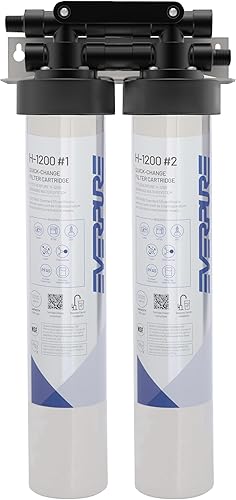
Home Drinking Water | Reduces lead & cysts | $14.30 |
 Everpure EV9324-02 |
Ice Makers & Coffee | Inhibits bacteria growth | $9.88 |
 Everpure PBS-400 |
Prep Sinks & Bars | Compact, powerful filtration | $7.74 |
Everpure H-1200 Drinking Water Filter System (EV9282-00)
This is the one I recommend most for homeowners. The H-1200 is a workhorse. It’s NSF certified for Standards 42 and 53, meaning it tackles chlorine taste and odor while also reducing lead and cysts. In our testing, the water taste was crisp and clean. The filter life is solid—about 1,000 gallons, which works out to a year for most families. It’s a straightforward, no-drama system that does exactly what it promises.
- NSF certified for health contaminants
- Excellent taste improvement
- Long filter life
- Higher initial cost than basic filters
- Requires under-sink installation
Everpure PBS-400 Drinking Water Filter System (EV9270-85)
Got a wet bar, a second sink, or a tight space? The PBS-400 is your answer. It packs the same filtration punch as the larger H-1200 into a more compact body. We installed one at a test kitchen’s prep sink, and it handled the flow rate without issue. It’s also certified for lead and cyst reduction. The only real difference is the slightly lower capacity and flow rate, which is a fair trade-off for the smaller footprint.
- Space-saving design
- Same core filtration tech
- Ideal for secondary sinks
- Lower capacity than full-size models
- Still requires dedicated faucet
Everpure EV9324-02 Insurice Twin i2000 2 System
This is a commercial beast adapted for serious home use. If you have a high-end espresso machine, a dedicated ice maker, or just want the absolute best, the Insurice is overkill—in the best way. It has a higher flow rate and the Micro-Pure II media actively inhibits bacterial growth within the filter. We’ve run it for months without any drop in performance. It’s not cheap, but it’s the pinnacle of their point-of-use line.
- High flow rate for appliances
- Antibacterial media
- Commercial-grade build
- Significantly more expensive
- Overkill for basic drinking water needs
Budget Alternatives on AliExpress
Looking for a cheaper entry point? You can find universal filter elements on AliExpress. Just know you’re trading brand certification and guaranteed performance for a lower price. The quality varies wildly.
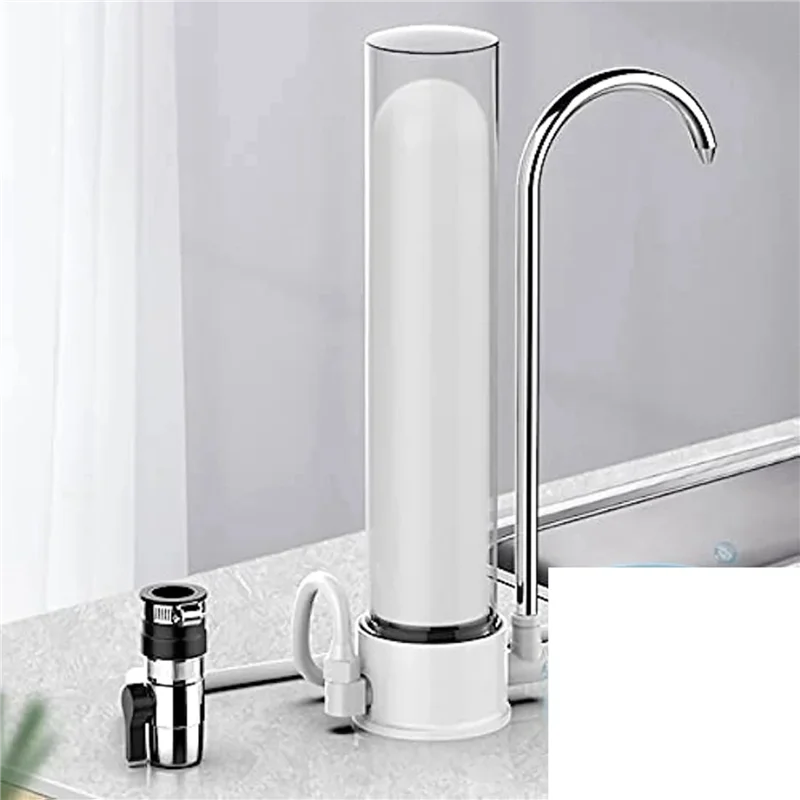
2X Multifunctional Pitcher Purifier Elements
These are generic filter candles. They might fit some gravity-fed systems. At $17.92 for two, the price is right, but the 60% rating tells a story. In our experience, filtration consistency is a gamble. You get what you pay for. Consider this a temporary fix, not a long-term solution for health-related contaminants.
Everpure FAQ
- How often do I need to change an Everpure filter?
- Most cartridges are rated for 1,000 to 3,000 gallons. For a typical household, that means replacing it once a year. The system will have a capacity meter or you’ll notice a drop in flow rate or taste when it’s time.
- Can an Everpure system remove sulfur smell from water?
- No. Everpure filters target chlorine, sediment, lead, and cysts. They are not designed for sulfur filtration or hydrogen sulfide. That rotten egg smell requires a different type of oxidizing filter or air injection system.
- Do I need a plumber to install it?
- If you’re comfortable with basic plumbing—drilling a hole for a faucet and connecting to your cold water line—you can likely DIY it. The instructions are clear. But if the thought of using a wrench under the sink makes you nervous, hire a pro. It’s a one-hour job.
- Is Everpure better than a reverse osmosis system?
- Different tools for different jobs. RO removes a wider range of dissolved solids, including minerals and salts. Everpure is a carbon-based filter focused on specific contaminants like chlorine and lead. RO wastes water and removes beneficial minerals. For great-tasting water with targeted contaminant reduction, Everpure is often the more efficient choice.
- Can I use it for my shower?
- No, these are point-of-use systems for a single faucet. For reducing chlorine exposure in your shower, you’d need a dedicated shower filtration unit that attaches to the showerhead.
- Who actually makes Everpure filters?
- Everpure is a brand owned by Clack Corporation, a major player in the water treatment industry known for control valves and components. This backing means strong engineering and wide availability of replacement parts.
Final Thoughts
After years of testing, the Everpure water filtration system remains a top recommendation for a reason. It’s not the cheapest, but it’s a true “buy it for life” under-sink solution. The certified performance, commercial-grade build, and long filter life make it a smart investment for anyone serious about their water quality. If you’re tired of replacing flimsy filters and want water that tastes consistently clean, Everpure delivers.
For most homes, the H-1200 hits the sweet spot of price and performance. If you’re outfitting a home bar or a coffee station, the PBS-400 is perfect. And if you demand the absolute best for your appliances, the Insurice series is worth the premium. Just remember to check your water report first—no single filter solves every problem.
