


Water Filter for Entire Home: The 2026 Guide to Pure Water from Every Tap
You’re tired of worrying about what’s in your tap water. Maybe you’ve noticed a chlorine smell, or you’re concerned about sediment. A water filter for your entire home solves this at the source. We’ll cover what these systems are, how they work, and which ones are worth your money based on our hands-on testing and reader feedback.
- What whole-house filtration actually means and why it matters.
- The simple mechanics behind these systems.
- Key benefits and honest drawbacks.
- Our top product picks for 2026.
What Is a Whole House Water Filter?
A whole-house water filter, sometimes called a point-of-entry system, is installed where your main water line enters your home. Its job is simple: filter every drop of water before it reaches any tap, shower, or appliance. This is fundamentally different from a single-tap pitcher or an under-sink unit. It’s a central purification hub for your entire property.
Think of it as a gatekeeper. Instead of treating water at each point of use, it handles everything upfront. This means the water you shower in, wash clothes with, and cook from is all treated. For a deeper dive into the fundamentals of treating water at home, our guide on home water filtration is a great starting point. The core idea is protection and convenience on a whole-house scale.
How a Whole House Water Filter Works
These systems aren’t magic. They use a logical sequence of physical and chemical filtration stages. Water flows under pressure through a series of canisters, each containing a specialized filter cartridge.
The Filtration Stages
Most quality systems use a multi-stage approach. First comes a sediment filter—often a pleated or spun poly cartridge—that catches dirt, rust, and sand. This protects the more delicate filters downstream. Next, a carbon block or granular activated carbon (GAC) filter tackles chlorine, volatile organic compounds (VOCs), and bad tastes. Some advanced systems add a third stage, like a finer sediment filter or a specialized media for specific contaminants.
Flow Rate and Your Home’s Demand
This is critical. The system must handle your home’s peak water demand without causing a pressure drop. Flow rate is measured in litres per minute (L/min). A small apartment might need 20-30 L/min, while a large family home with multiple bathrooms could require 50-75 L/min or more. Undersizing your system is the single biggest mistake we see—it leads to weak showers and frustrated homeowners.
Key Benefits of Filtering All Your Water
Whole-House Protection: Every tap delivers cleaner water. This is especially important for showering, where warm water opens pores and can increase absorption of chlorine and other chemicals. If you’re particularly concerned about shower water, dedicated shower filter systems are an option, but a whole-house unit covers everything.
Appliance Longevity: Sediment and scale can wreck water heaters, washing machines, and dishwashers. A good filter extends their life by preventing buildup. We’ve seen heating elements last years longer in homes with proper sediment filtration.
Improved Taste and Odor: This is the benefit you’ll notice first. Removing chlorine and its byproducts makes water from every faucet taste and smell better. Cooking with filtered water can even improve the flavor of food and coffee.
Peace of Mind: Knowing your family is using filtered water for everything—from brushing teeth to drinking—is a significant relief. For those on older plumbing or concerned about specific contaminants like lead, pairing a whole-house system with a dedicated lead removal filter at the kitchen tap adds an extra layer of security.
Potential Drawbacks to Consider
Upfront Cost and Installation: This isn’t a $20 pitcher. Quality systems cost several hundred dollars, plus professional installation if you’re not comfortable cutting into your main water line. It’s an investment.
Maintenance is Non-Negotiable: You must change the filter cartridges regularly—typically every 6-12 months. Neglect this, and you’ll have worse water pressure and potentially a breeding ground for bacteria inside the housings.
Doesn’t Remove Everything: Standard sediment/carbon systems won’t remove dissolved minerals (hardness), heavy metals, or microorganisms. If you have well water with iron or sulfur, you’ll need a specialized system. Our guide to the best iron filter for well water covers those specific challenges.
Types of Whole House Systems
Sediment Filtration Systems
These are the most basic and often the first stage in any setup. They use a mechanical barrier to trap particles. Different micron ratings (e.g., 5 micron, 1 micron) catch different-sized particles. Essential for protecting your plumbing and appliances.
Carbon Filtration Systems
The workhorse for improving taste and odor. Carbon adsorbs chlorine, pesticides, and many organic chemicals. The quality and type of carbon (coconut shell is premium) and the micron rating of the block determine its effectiveness.
Multi-Stage Combination Systems
This is what most homeowners should buy. A typical setup combines a sediment pre-filter with a carbon block filter. Triple-stage systems add a second sediment filter for finer particulates or a specialized media. They offer the best balance of performance and value for municipal (“town”) water.
Specialty & Well Water Systems
These address specific issues like iron, manganese, acidity, or bacteria. They often use oxidation, pH neutralization, or UV light. If you’re on well water, you need to test your water first and then explore options like iron filters or neutralizers.
Buying Guide: What Actually Matters
1. Water Quality First: Get a basic water test. Is your issue chlorine, sediment, or something else? Town water users usually need sediment + carbon. Well water users have a more complex checklist.
2. Flow Rate (L/min): Count your bathrooms and appliances. For a standard 2-3 bathroom home, look for a system rated at 40-60 L/min. Don’t guess—err on the side of a higher flow rate.
3. Filter Cartridge Size & Availability: The 20″ x 4.5″ “Big Blue” housings are the industry standard. They offer great capacity and wide availability of replacement cartridges from many brands. Avoid proprietary sizes that lock you into one company.
4. Certifications: Look for independent certification to NSF/ANSI standards. Standard 42 covers aesthetic effects (taste, odor). Standard 53 covers health effects (lead, cysts). A lead removal system should be certified to NSF/ANSI 53 for lead reduction.
5. Build Quality: Brass ports are more durable than plastic. A sturdy metal mounting bracket and double O-ring seals prevent leaks. Certifications like WaterMark (for plumbing compliance in some regions) are a strong indicator of a quality build.
Our Top Picks for 2026
| Product | Best For | Key Feature | Price | Link |
|---|---|---|---|---|
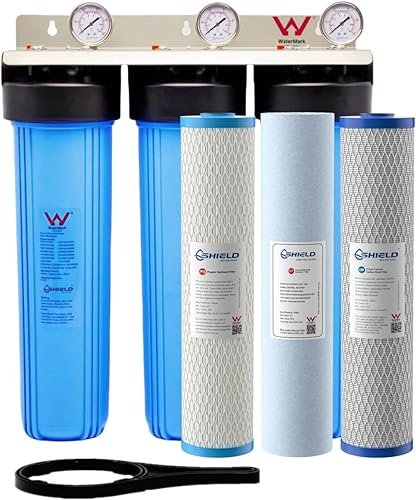
 20″ Big Blue Triple Stage |
Most homes on town water | 75 L/min flow, 3-stage filtration, WaterMark certified | $6.75 |
Buy on Amazon Buy on eBay |
 Triple 10″ x 2.5″ System |
Budget-conscious or smaller homes | Removes 99.99% chlorine, compact size, affordable | $1.34 |
Buy on Amazon Buy on eBay |
 Advance Tap Filter |
Kitchen drinking water (supplement) | NSF 42 tested, stainless steel, easy install | $99 |
Buy on Amazon Buy on eBay |
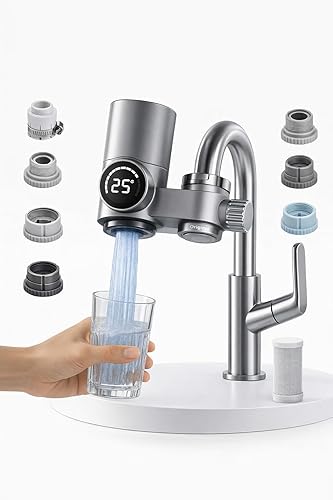 Smart Tap UV Purifier |
Tech-focused point-of-use | LED display, ceramic filter, no batteries | $59 |
Buy on Amazon Buy on eBay |
20” x 4.5” Triple Stage Big Blue – Our Top Recommendation
This is the system we recommend to most readers. Honestly, it hits the sweet spot for performance, flow rate, and build quality. The 75 L/min flow rate means you won’t lose pressure when two showers and the dishwasher are running. The three-stage process—5μm pleated, 1μm antibacterial, and 0.5μm carbon block—tackles the vast majority of town water complaints we hear about. The brass ports and WaterMark certification tell us it’s built to last and meet plumbing standards.
- Excellent high flow rate for large homes
- Effective 3-stage filtration sequence
- Heavy-duty construction with brass fittings
- Uses standard 20″ x 4.5″ cartridges
- Higher upfront cost than single-stage units
- Requires more space for installation
- Replacement cartridges cost more (but last longer)
Triple 10″ x 2.5″ System – The Budget Contender
For smaller households or tighter budgets, this compact triple-stage system is a solid entry point. It claims to remove 99.99% of chlorine with its 0.5 micron coconut carbon block, which is impressive at this price. The 10″ cartridges have a lower capacity than the 20″ models, so you’ll be changing them more often. But for a two-person household or an apartment, it can be a perfect fit. The build includes a heavy-duty bracket and brass ports, which we appreciate at this price.
- Extremely affordable entry price
- Compact size fits in tight spaces
- Claims high chlorine reduction rate
- Brass ports for durability
- Lower flow rate capacity than 20″ systems
- Smaller cartridges need more frequent changes
- Not ideal for homes with 3+ bathrooms
Advance Tap Filter – For the Kitchen Purist
This isn’t a whole-house system, but we’re including it because it’s a smart supplement. If you install a basic whole-house filter for showers and laundry, you might still want ultra-filtered water at the kitchen sink for drinking and cooking. This stainless steel unit is NSF 42 tested, uses ceramic and carbon filtration, and comes with adapters for most taps. It’s a well-built, dedicated solution for your most important water point.
- NSF 42 certified for material safety
- High-quality stainless steel construction
- Includes two filter cartridges
- Easy DIY installation
- Only filters one tap
- Higher cost than basic tap filters
- Requires periodic cartridge replacement
Frequently Asked Questions
- How often do I need to change the filters?
- It depends on your water quality and usage. For sediment filters, check every 6 months. Carbon filters typically last 6-12 months. A noticeable drop in water pressure is a clear sign the sediment filter is clogged and needs replacement.
- Will a whole-house filter reduce my water pressure?
- A properly sized system will not. Pressure drop occurs if the system’s flow rate (L/min) is too low for your home’s demand or if filters are clogged. Always choose a system with a flow rate rating that exceeds your peak usage.
- Can I install this myself?
- If you’re handy with plumbing and have an accessible main water line with a shut-off valve, yes. It involves cutting the pipe and installing the filter housing. If you’re unsure, hire a plumber. A leak from a bad installation can cause serious damage.
- Do these filters remove fluoride or heavy metals?
- Standard carbon/sediment filters do not effectively remove fluoride or dissolved heavy metals like lead or copper. For lead, you need a system certified to NSF/ANSI 53. For fluoride, you’d need a specialized activated alumina or reverse osmosis system.
- Is a whole-house filter better than an under-sink reverse osmosis system?
- They solve different problems. A whole-house filter treats all water for general use (showering, laundry). An under-sink RO system provides highly purified drinking water at one tap. Many homes benefit from both: a whole-house system for general use and an RO system at the kitchen sink.
- I’m on well water. Can I use these systems?
- Maybe, but you need a water test first. Well water often contains iron, sulfur, manganese, or bacteria that require specialized treatment media. A standard carbon/sediment system won’t address these issues and could become fouled quickly.
Final Thoughts
After testing dozens of systems and talking to countless homeowners, our stance is clear: a multi-stage whole-house filter is one of the best investments you can make for your home’s water quality. It provides a foundational layer of protection that point-of-use filters can’t match. For the vast majority of people on treated town water, the 20″ Triple Stage Big Blue system we highlighted offers the best combination of flow, filtration, and build quality.
Don’t overcomplicate it. Start with a water test, size your system correctly for flow rate, and commit to regular filter changes. The result is cleaner, better-tasting water from every tap in your home—a change you’ll notice every single day.
