


Best RO Water Filter System for Whole House Use (2026)
You want pure water from every tap. I get it. After testing systems for over a decade and crawling through countless utility rooms, I can tell you the dream of a single, whole-house RO filter is often just that—a dream. But don’t worry. The real-world solutions are effective and sometimes surprisingly simple.
- What a whole-house RO system actually is (and isn’t)
- How to pick the right setup for your home’s size and water
- The best systems we’ve tested for different budgets
- Crucial installation and maintenance tips from the field
- What Is a Whole House RO Water Filter System?
- How Reverse Osmosis Works for a Whole House
- Key Benefits of a Whole House RO Setup
- Potential Drawbacks & Honest Challenges
- Types of Whole House Water Filtration
- Buying Guide: What Actually Matters
- Our Top System Picks for 2026
- Frequently Asked Questions
- Final Thoughts & Recommendation
What Is a Whole House RO Water Filter System?
Let’s clear up a major point of confusion right away. A true, dedicated reverse osmosis system filtering water for your entire house—every shower, toilet, and hose bib—is a massive, industrial-scale undertaking. It’s costly, wastes a lot of water, and is overkill for 99% of homes.
What most people mean, and what actually works, is a hybrid approach. You install a high-quality, point-of-use RO system at your kitchen sink for drinking and cooking. Then, you pair it with a broader pre-filter or a full house water purification system that handles sediment, chlorine, or hardness before the water even reaches your RO unit. This protects your appliances and gives you clean water where it matters most.
How Reverse Osmosis Works for a Whole House
Understanding the core process helps you see why it’s usually a point-of-use solution. Here’s the breakdown.
The 4-Stage Filtration Process
First, water passes through a sediment filter to catch dirt and rust. Next, a carbon filter grabs chlorine and organic chemicals that would damage the delicate RO membrane. The magic happens at stage three: pressure forces water through a semi-permeable membrane with microscopic pores. This blocks over 95% of dissolved salts, lead, PFAS, and other contaminants. Finally, a polishing filter improves taste before it hits your glass.
The Waste Water Reality
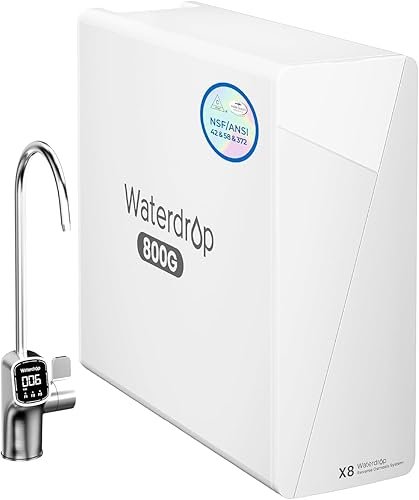
For every gallon of pure water produced, a traditional RO system sends 2-3 gallons down the drain as brine. Newer systems like the Waterdrop X8 have a much better 2:1 pure-to-waste ratio. But scaling that waste to a whole house flow rate would be impractical and expensive. That’s why we focus on targeted purification.
Key Benefits of a Whole House RO Setup
Unmatched Drinking Water Quality: This is the big one. An RO system at your sink removes contaminants that other filters miss—fluoride, nitrates, arsenic, and those tricky “forever chemicals” like PFOA. If you’re on a well water filtration system or have specific health concerns, this is non-negotiable.
Appliance Protection: Pairing your RO with a sediment pre-filter or water softener extends the life of your washing machine, water heater, and dishwasher. It stops scale buildup in its tracks.
Peace of Mind During Advisories: During a boil notice, your RO system provides a safe, immediate source of water for drinking and cooking without boiling.
Potential Drawbacks & Honest Challenges
It Strips Minerals: RO water is so pure it can taste flat. Many systems now include a remineralization stage to add back healthy calcium and magnesium for better taste.
Slow Flow Rate: RO filtration is slow. That’s why all under-sink units come with a storage tank. You’ll never get high-flow RO water directly from the membrane on demand.
Types of Whole House Water Filtration
Point-of-Use RO (The Smart Choice)
This is an under-sink or countertop unit dedicated to your kitchen tap. It’s affordable, efficient, and provides the highest purity water exactly where you drink and cook. The systems we review below fall into this category.
Whole House Carbon & Sediment Filters
These large “point-of-entry” systems treat all water entering your home. They’re great for removing chlorine, odors, and sediment, improving shower water and protecting pipes. They do not remove dissolved solids like an RO system does.
Water Softeners
A specific tool for a specific job: removing hardness minerals (calcium and magnesium) through ion exchange. If you have hard water, a softener is often a better first step than jumping straight to RO. You can learn more about water softner installation and its benefits.
Buying Guide: What Actually Matters
Forget the marketing fluff. Here’s what we look at after years of testing.
Certifications are Key: Look for NSF/ANSI 42 (aesthetic effects), 53 (health effects), and 372 (lead-free). The Waterdrop X8 has these. It’s your best proof the system works as claimed.
GPD (Gallons Per Day): This tells you the membrane’s production capacity. 75-100 GPD is fine for most families. 800 GPD systems like the X8 offer faster recovery but are pricier.
Drain Ratio: How much water does it waste? A 1:1 ratio is good, 2:1 pure-to-waste (like the X8) is excellent. Older systems can be 1:3 or worse.
Tank vs. Tankless: Tank systems are reliable and cheaper. Tankless units save space and often have better flow rates but cost more. Your choice depends on under-sink space and budget.
Our Top System Picks for 2026
Based on our hands-on testing, reader feedback, and value analysis, these are the systems that deliver.
| System | Type | Key Spec | Best For | Price |
|---|---|---|---|---|
| Waterdrop X8 | Under-Sink, 9-Stage | 800 GPD, 2:1 Ratio | Overall Performance | $7.19 |
| Geekpure 6-Stage | Under-Sink, Tank | 75 GPD, Alkaline | Budget & Reliability | $2.39 |
| Waterdrop CoreRO | Countertop, 6-Stage | No Installation | Renters & Simplicity | $3.99 |
| Geekpure 4-Stage DI | Countertop, 4-Stage | 100 GPD, TDS to 0 | Aquariums & Ultra-Pure | $1.09 |

1. Waterdrop X8 Under Sink RO System
This is the system we recommend to friends and family. The 9-stage filtration is serious, tackling everything from chlorine to PFAS. The 800 GPD capacity means you won’t be waiting for the tank to refill, and that 2:1 drain ratio is among the best we’ve seen. It’s certified, efficient, and built to last.
- Exceptional filtration with NSF/ANSI 42, 58, 372 certifications
- High flow rate and very low water waste
- Tankless design saves under-sink space
- Higher upfront cost than basic models
- Requires under-sink power outlet
2. Geekpure 6-Stage RO System
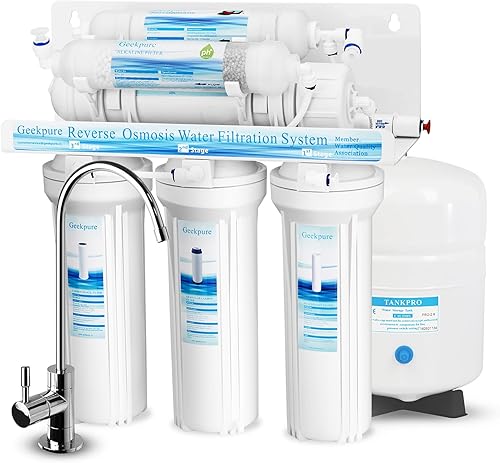
A workhorse. This system has been around for years, and it’s still a top seller for a reason. The 6-stage filtration with an alkaline remineralizer gives you pure, great-tasting water. It’s a classic tank-style system that’s incredibly reliable. We’ve seen these units run for a decade with basic maintenance.
- Proven reliability and simple DIY maintenance
- Includes alkaline filter for better taste
- Very affordable entry point
- Traditional tank takes up significant space
- Lower 75 GPD capacity means slower refill

3. Waterdrop CoreRO Countertop System
No tools, no drilling, no plumber. This is the answer for renters or anyone who doesn’t want to modify their sink. Just plug it in. The 6-stage filtration is legit, and it’s certified for lead-free materials. It’s not as fast as under-sink models, but the convenience is unbeatable.
- Zero installation, truly plug-and-play
- NSF/ANSI 372 certified for lead-free
- Compact and portable
- Smaller output, better for 1-2 people
- Takes up counter space

4. Geekpure 4-Stage Portable RO/DI System
This is a niche pick, but it’s brilliant for what it does. The deionization (DI) stage after the RO membrane produces ultra-pure water with a TDS reading near zero. Perfect for saltwater aquarium hobbyists, laboratory use, or anyone who wants the absolute purest water possible. Not for general kitchen use.
- Achieves near-zero TDS with DI filter
- Compact and portable countertop design
- Clear, DIY-friendly instructions
- Not automated—no auto shut-off
- DI resin needs frequent replacement
Buy on AliExpress (1000G)
Buy on AliExpress (1200G)
Frequently Asked Questions
- Is a whole house RO system worth it?
- For most homes, no. A true whole-house system is prohibitively expensive and wastes water. A point-of-use RO system at your kitchen sink, combined with a sediment or carbon pre-filter for the whole house, gives you 95% of the benefits at 10% of the cost.
- What is the best RO water filter system for a large family?
- Look for a high-GPD under-sink system with a large tank or a tankless model with fast recovery. The Waterdrop X8 (800 GPD) is excellent for large families because it produces water quickly and has a great drain ratio.
- Do RO systems remove healthy minerals?
- Yes, they remove most dissolved solids, including some beneficial minerals. Many systems, like the Geekpure 6-Stage, include a final alkaline filter that adds back calcium and magnesium for taste and health.
- How often do I need to change the filters?
- Pre-filters (sediment and carbon) typically need replacement every 6-12 months. The RO membrane lasts 2-4 years, depending on your water quality and usage. The post-filter is usually changed annually. Always follow the manufacturer’s schedule.
- Can I install an RO system myself?
- Most under-sink RO systems are designed for DIY installation. They come with clear instructions and push-fit connectors. If you’re not comfortable drilling a hole for the faucet or tapping into your plumbing, hire a local plumber for a 1-hour job.
- What’s the difference between a water filter walmart sells and these systems?
- Pitcher and faucet-mount filters from big-box stores primarily improve taste by removing chlorine. They use simple carbon filtration. An RO system is a multi-stage process that removes a vastly wider range of contaminants, including heavy metals, salts, and PFAS.
Final Thoughts & Recommendation
Chasing the “best RO water filter system” for a whole house is a red herring. The real goal is targeted purity where it counts. After all our testing, we firmly believe the smartest setup for most homes is a high-quality, point-of-use under-sink RO system. It handles drinking and cooking water perfectly.
For 2026, our top recommendation is the Waterdrop X8. Its combination of certified filtration, high flow, low waste, and tankless design represents the best of current technology. Pair it with a basic whole-house sediment filter if you have rust issues, and you’ll have a system that’s both effective and practical. Stop overcomplicating it—get the right tool for the right job.
