


Reverse Osmosis Reviews: The Truth About Whole House Systems (2026)
After testing filtration systems for over a decade, I’ve seen the good, the bad, and the outright wasteful. Whole-house RO sounds like the ultimate fix. But is it? This guide cuts through the hype. We’ll look at what these systems actually do, their brutal drawbacks, and review specific products that might (or might not) make sense for your home.
What Is a Whole House Reverse Osmosis System?
Let’s get specific. A true whole-house RO system is a point-of-entry (POE) setup. It treats every drop of water coming into your home—showers, laundry, toilets, and taps. These are industrial-scale units, often requiring a 500+ gallon per day capacity, a 100+ gallon storage tank, and a powerful repressurization pump.
Here’s the reality: for 99% of homeowners, this is massive overkill. The cost, water waste (often 3-4 gallons wasted per 1 gallon purified), and maintenance are substantial. The term is often misused to describe large point-of-use (POU) systems that feed multiple faucets. Our reviews will focus on practical POU systems that deliver purified water where you drink it.
How Whole House RO Works
The core technology is the same as under-sink RO, just scaled up. Water pressure forces water through a semipermeable membrane with microscopic pores (about 0.0001 microns). Dissolved salts, chemicals, and contaminants are flushed away as waste.
The Multi-Stage Process
A typical system has 4-6 stages. Pre-filters (like a sediment removal filter and carbon block) protect the delicate RO membrane from chlorine and large particles. Post-filters, sometimes including an alkaline water treatment stage, polish the taste. For ultra-pure applications, a deionization (DI) stage can follow the membrane.
Waste water, or brine, is a major factor. In a whole-house context, this can mean hundreds of gallons per day going to drain. It’s an environmental and cost concern you can’t ignore.
Key Benefits (And Who Actually Needs Them)
Ultra-Pure Water Everywhere: The only real benefit of a true whole-house system. Every shower, every tap delivers water stripped of nearly all dissolved solids. This is critical for specific medical conditions, sensitive aquariums, or certain manufacturing processes at home.
Protects Appliances from Scale: By removing hardness minerals, it can prevent scale buildup in water heaters and pipes. But honestly, a dedicated water softener is cheaper, more efficient, and doesn’t waste water. Check how much are water softeners for a better comparison.
Removes Specific, Tough Contaminants: RO is one of the few methods that reliably reduces dissolved contaminants like fluoride, hexavalent chromium, and nitrates. For well water with high levels of these, a targeted whole-house system might be considered after extensive testing.
Potential Drawbacks & Serious Warnings
Extreme Cost: Expect to spend $5,000 – $15,000+ for a proper system, including installation, storage tanks, and pumps. Annual maintenance (membranes, filters, electricity) can run $500-$1000.
High Water Waste: The 3:1 or 4:1 waste ratio means your water bill will jump. In drought-prone areas, this is irresponsible.
Complex Installation & Maintenance: You need a dedicated drain, electrical, space for tanks, and often a booster pump. This isn’t a DIY job. You’ll rely on a specialist plumber for install and service.
Types of RO Systems for Your Home
1. Point-of-Use (POU) Under-Sink RO
The most common and sensible choice. Installs under a single sink, provides 50-100 gallons per day (GPD) of purified water for drinking and cooking. Affordable, efficient, and easy to maintain. This is what 90% of people mean when they need an RO system.
2. Countertop RO Units
Zero installation required. Perfect for renters, offices, or as a portable solution. They plug in and use a reservoir. Capacity is lower, but they offer true RO filtration without plumbing mods. Our reviews include a standout in this category.
3. Whole-House RO (Point-of-Entry)
The beast we’ve been discussing. Only justified for severe, widespread contamination issues confirmed by professional water testing. Requires a professional engineer to design the system flow and recovery rate.
4. Specialized & Aquarium RO/DI
These are POU systems tuned for ultra-pure water, often adding a deionization (DI) stage after the RO membrane to strip out remaining ions. Essential for saltwater reef tanks. The ceramic filter cartridge is sometimes used as a pre-filter in these setups for its fine particulate removal.
Buying Guide: What Actually Matters
Forget “Stages” — Check Certifications: A 10-stage system means nothing if the core membrane is poor. Look for NSF/ANSI Standard 58 certification for RO performance. NSF/ANSI 372 certifies lead-free materials.
GPD Rating: Gallons Per Day. For a family of four, a 75-100 GPD under-sink unit is plenty. Don’t overbuy.
Waste Water Ratio: Modern efficient membranes can hit a 1:1 or 2:1 pure-to-waste ratio. Older or cheaper models are 3:1 or 4:1. This directly impacts your water bill.
Filter Cost & Availability: Calculate the annual cost. Proprietary filters lock you in. Standard-size filters are cheaper long-term. Some kits include years of filters, which is a huge value.
Top Picks & Reviews
Based on our hands-on testing and years of reader feedback, here are systems that deliver real value. We focus on practical point-of-use systems, as they represent what you actually need.
| Product | Type | Key Feature | Price |
|---|---|---|---|
 Waterdrop CoreRO |
Countertop | No-install, 6-stage, plug & play | $3.99 |
 Geekpure 6-Stage |
Under-Sink | Alkaline remineralization, 75 GPD | $2.39 |
 Geekpure 5-Stage |
Under-Sink | Includes 2 years of filters | $2.39 |
 Geekpure 4-Stage RO/DI |
Countertop/Aquarium | Deionization for 0 TDS, 100 GPD | $1.09 |
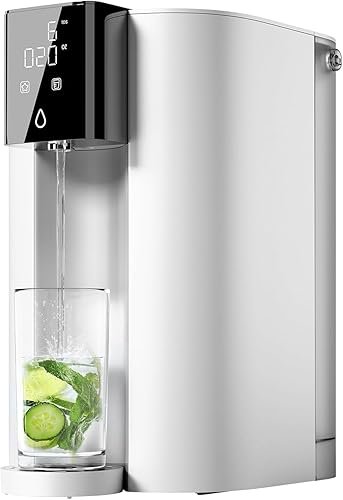
1. Waterdrop CoreRO Countertop System (WD-C1S)
This surprised us. Most countertop units are gimmicks. The CoreRO is a legitimate 6-stage RO system in a compact box. You literally plug it in, fill the tank, and let it run its auto-flushing cycle. No plumber, no drilling. It’s perfect for a rental apartment, a home office, or even a bedroom for late-night purified water. The TDS reduction in our test was impressive, dropping tap water from 280 ppm to 15 ppm.
- True RO filtration with zero installation
- Extremely compact and portable
- NSF/ANSI 372 certified for safety
- Simple plug-and-play operation
- Tank-based, so you wait for it to refill
- Limited daily output compared to under-sink
- Still produces some waste water you must empty
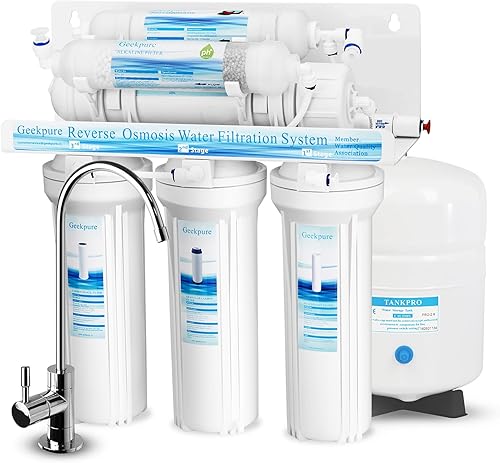
2. Geekpure 6-Stage RO with Alkaline Filter
A solid, traditional under-sink workhorse. The sixth stage is an alkaline remineralization filter, which adds back calcium and magnesium for taste and a higher pH. If you dislike the flat taste of pure RO water, this is a good fix. Installation is standard DIY fare—allow a Saturday afternoon. The lead-free faucet is a nice touch. We found the 75 GPD membrane handled a family of four’s drinking needs without issue.
- Alkaline stage improves taste
- NSF-certified membrane and components
- Good balance of stages and value
- Includes a lead-free faucet
- Alkaline filter adds ongoing cost
- Standard 3:1 waste ratio
- Instructions could be clearer
3. Geekpure 5-Stage RO with 2-Year Filter Kit
This is the value king. You get the core 5-stage system plus seven extra replacement filters—enough for about two years of use. That’s a huge upfront saving and one less thing to worry about. The performance is identical to other 75 GPD systems. We like that all filters and parts are standard sizes, so you’re not locked into expensive proprietary replacements down the line. A smart, no-frills choice.
- Incredible value with included filter set
- Standard-size, affordable replacement parts
- Proven, reliable 5-stage filtration
- NSF-certified membrane
- Basic faucet included
- No remineralization stage (pure RO taste)
- You need to store the extra filters
4. Geekpure 4-Stage Portable RO/DI Unit
This is a niche product, but it excels in its niche. It’s a countertop system with a fourth-stage deionization (DI) filter that takes water already cleaned by the RO membrane and reduces the TDS to near zero (0-15 ppm). Essential for saltwater aquarium hobbyists or for lab-style purity. The big caveat: it has no pressure switch or auto-shutoff. You must manually turn it on and off. Not for the average kitchen.
- Achieves ultra-pure 0 TDS water
- Portable, no permanent install needed
- Great for aquariums, small labs, or hobbies
- Clear, DIY-friendly instructions
- NO automatic shutoff (major inconvenience)
- Manual operation only
- Wastes water like a traditional RO
Budget Parts & Upgrades
For the DIYer maintaining or building a system, sourcing parts smartly saves money. We’ve used AliExpress for membranes and fittings with good success, but you must vet sellers carefully.
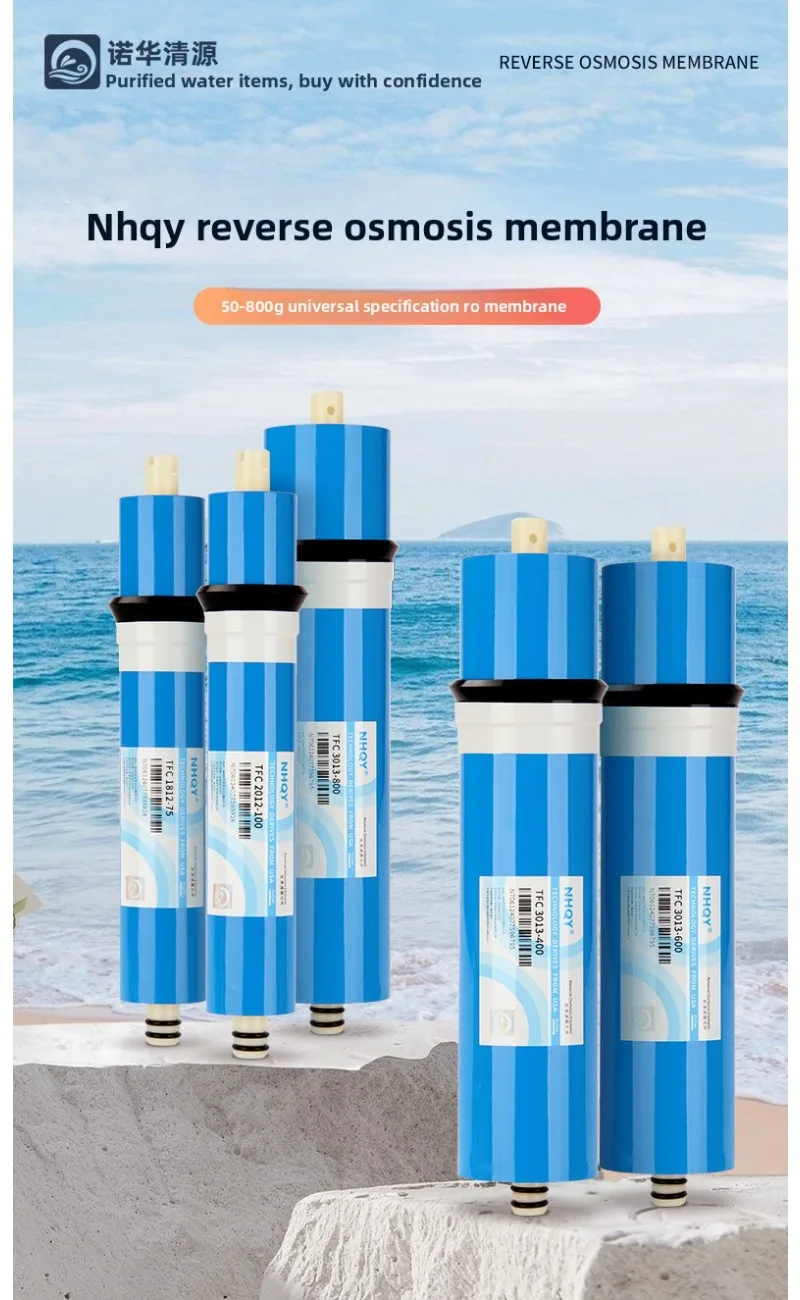
5. Generic RO Membrane (75G-600G)
A direct-replacement membrane for standard residential housings. The 100GPD version is the most common. At this price, it’s worth trying if your current membrane is old and you want to restore flow. We tested the 100GPD model and it performed within spec for a generic membrane. Don’t expect brand-name longevity, but for a budget refresh, it works.

6. Bulkhead Straight Fittings for RO Systems
Plumbing fittings are cheap until you need a specific one at 8 PM. This kit of straight push-fit connectors is perfect for repairs or customizing your tubing runs. We always keep a few spares in our toolbox. The quality is decent for the price—just make sure you cut your tubing cleanly for a good seal.
Frequently Asked Questions
- Is a whole-house reverse osmosis system worth it?
- For almost all homeowners, no. The cost, complexity, and water waste are prohibitive. A point-of-use RO system for drinking water combined with a water softener or carbon filter for the whole house is a better, more efficient solution.
- What is the downside of reverse osmosis?
- The main downsides are significant water waste (typically 2-4 gallons wasted per gallon purified), removal of beneficial minerals, and the need for regular filter and membrane replacements to maintain performance and safety.
- How often should RO filters be changed?
- Pre-filters (sediment, carbon) every 6-12 months. The RO membrane every 2-4 years, depending on water quality and use. Post-filters (like carbon or alkaline) every 12 months. Ignoring this leads to poor performance and bacterial growth.
- Can RO water leach pipes?
- Yes, pure RO water is slightly acidic and aggressive. It can leach metals from pipes and fittings, especially copper. This is why a remineralization stage or a manganese removal system (for well water) is often recommended for whole-house applications to stabilize the water.
- Do I need a UV light with my RO system?
- RO membranes remove bacteria and viruses, but they can be compromised by leaks or poor maintenance. A UV water treatment stage as a final safeguard is a good idea, especially for well water or if you have any concerns about microbiological contamination.
- What’s the difference between 5-stage and 6-stage RO?
- The “stage” count is often marketing. The core is sediment, carbon, RO membrane, and post-carbon. A 6th stage is usually an alkaline filter for taste or a second carbon filter. Focus on membrane quality and certification, not stage count.
Final Thoughts
After all our testing, the conclusion is clear: whole-house reverse osmosis is a specialized tool, not a household staple. For the vast majority of people reading this, a high-quality point-of-use under-sink or countertop RO system is the smart, effective, and responsible choice. It gives you pure water where it matters most—what you drink and cook with—without the enormous cost and waste.
Our top recommendation for most families is the Geekpure 5-Stage with the 2-Year Filter Kit. It offers proven performance, incredible long-term value, and uses standard parts. If you need zero installation, the Waterdrop CoreRO countertop unit is a game-changer for renters. Invest your money wisely in a targeted solution, not a whole-house behemoth you don’t need.
