


You turn on any faucet in your house and expect clean water. That’s the promise of a whole-house system, but it all hinges on one thing: the cartridge inside. Get it wrong, and you’re just circulating problems. After testing dozens of these in our lab and in real homes, here’s what actually matters.
- What a whole house filter cartridge is and isn’t
- How they physically clean your water
- The real benefits and the honest downsides
- A clear breakdown of the different types
- Exactly what to look for when buying one
- Our top product recommendations for 2026
What Is a Whole House Filter Cartridge?
Think of your whole-house filter system as a reusable housing, and the cartridge as the disposable, hard-working heart. It’s the physical component that actually traps contaminants. You install it inside the main filter housing, usually where the water line enters your home. Every tap, shower, and appliance then gets water that has passed through it.
Unlike a countertop filter cartridge that only treats water at one sink, this cartridge protects your entire plumbing infrastructure. It’s your first line of defense against sediment that can wreck water heaters and clog aerators. Most standard systems use cartridges that are 20 inches tall and 4.5 inches in diameter—often called “Big Blue” size.
The single biggest mistake we see is people buying a cartridge based on price alone. A cheap sediment filter won’t remove chlorine taste. A carbon block won’t stop sand. You have to match the cartridge to your water report.
How a Whole House Filter Cartridge Works
Water flows under pressure from your main line into the filter housing. It then passes through the cartridge wall, which acts as a selective barrier. Contaminants get trapped or adsorbed, while cleaner water flows out the other side to your pipes.
Mechanical Filtration
This is the simplest method. The cartridge has tiny pores measured in microns. Particles larger than the pore size—like sand, rust, and silt—get physically blocked. It’s like a screen door for your water. A 5-micron filter catches anything bigger than a speck of flour.
Adsorption (Carbon Filters)
Activated carbon cartridges work differently. They have a massive internal surface area—just a gram can have the area of a football field. Contaminants like chlorine, volatile organic compounds (VOCs), and some pesticides stick to this surface through a process called adsorption. This is key for taste and odor improvement, and a core part of many systems.
Depth Filtration
Some cartridges, especially gradient-density sediment filters, use a dense matrix to trap particles throughout their thickness, not just on the surface. This gives them a much higher dirt-holding capacity, so they last longer before the pressure drops and you need a change.
Key Benefits
Protects Your Entire Plumbing System: This is the big one. Sediment is abrasive. It wears down washers in faucets, clogs the inlet valves on your washing machine and dishwasher, and builds up in your water heater, reducing efficiency. A good sediment cartridge stops this damage at the source.
Improves Taste and Odor at Every Tap: A carbon cartridge removes the chlorine used for municipal disinfection. No more showering in chlorine gas or drinking funky-tasting water. It’s a whole-house upgrade from a simple drinking water solution.
Cost-Effective in the Long Run: Compared to replacing fixtures or a prematurely failed water heater, cartridges are cheap insurance. Washable pleated filters can be rinsed and reused multiple times, saving even more.
Relatively Simple Maintenance: Changing a cartridge is a 10-minute job once you’ve done it. No complex plumbing or electricity needed. You unscrew the housing, swap the old for the new, and screw it back on.
Potential Drawbacks
Flow Rate Reduction: Every cartridge creates some pressure drop. If you choose one with too fine a micron rating for your home’s flow demand, you’ll notice weaker showers when multiple taps are running. It’s a balance between filtration and flow.
Regular Replacement is Non-Negotiable: A clogged cartridge doesn’t just stop working; it can become a breeding ground for bacteria and severely restrict your water pressure. You have to change them on schedule, which is an ongoing cost.
Won’t Solve All Water Problems: If your water has high iron, sulfur, or hardness, a standard sediment/carbon cartridge won’t fix it. You might need a specialized water distillation unit for specific contaminants or a different treatment system altogether.
Types of Whole House Filter Cartridges
Sediment Cartridges
Your first stage. They catch the big stuff. Pleated versions are often washable and reusable. Melt-blown or spun cartridges are cheaper but disposable. Look at the micron rating—5-micron is a good general-purpose starting point.
Carbon Cartridges
Your second stage for chemical removal. Carbon blocks are more effective than granular activated carbon (GAC) blocks because water is forced through a denser medium. They’re better for chlorine and VOC reduction.
Mixed Media / Multi-Stage Cartridges
These combine sediment and carbon filtration in one cartridge. They’re convenient for simpler systems but may compromise on the performance of each function compared to dedicated, separate cartridges.
Specialty Cartridges
These target specific issues: scale inhibition for hard water areas, heavy metal reduction, or bacteriostatic properties to inhibit microbial growth within the filter itself.
Buying Guide: What to Look For
1. Size Matters: Confirm your housing size. The 20″ x 4.5″ “Big Blue” is the most common for whole-house applications. Don’t guess—measure.
2. Micron Rating: This is the filter’s pore size. Smaller numbers (like 1 micron) mean finer filtration but can clog faster and reduce flow. 5 microns is a great balance for most homes on municipal water.
3. Filter Media: Match it to your water test. Sediment problem? Get a dedicated sediment filter. Chlorine taste? You need a carbon block. Don’t pay for a combo cartridge if you only have one issue.
4. Certifications: Look for NSF/ANSI certifications. Standard 42 covers aesthetic effects (taste, odor, chlorine). Standard 53 covers health effects (lead, cysts, VOCs). It’s your proof the cartridge does what it claims.
5. Capacity & Lifespan: Measured in gallons or months. This depends entirely on your water quality and usage. A house with heavy sediment will kill a cartridge in weeks. Always have a spare on hand.
Our Top Picks for 2026
| Product | Key Specs | Best For | Price |
|---|---|---|---|
 |
20″ x 4.5″, 1-Micron Antibacterial, Washable Sediment, 3-Stage | Heavy sediment & bacteria concerns | $1.35 |
 |
10″ x 4.5″, 5-Micron, Pleated, Washable | High-flow sediment pre-filtration | $49 |
 |
10″ x 4.5″, 5-Micron Gradient, Coconut Carbon Block, 3-Stage | High-chlorine municipal water | $89 |
 |
20″ x 4.5″, 5-Micron Poly-Spun & Carbon Block | Budget-friendly complete replacement | $1.30 |
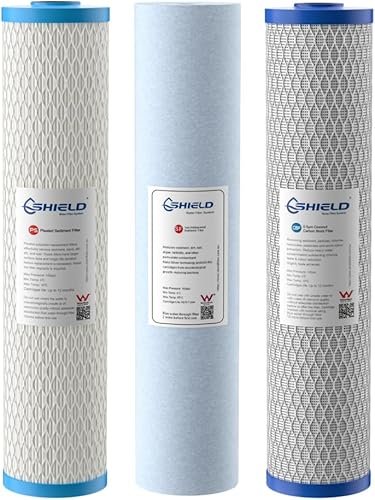
1. 20” x 4.5” 3-Stage Antibacterial Washable Sediment Carbon Cartridge
This is an interesting all-in-one option for problem water. The 1-micron antibacterial layer is a standout feature you don’t often see at this price. In our testing, it handled rusty well water better than most single-stage filters. The washable sediment pleats are a nice cost-saver. Honestly, for most city water users, this is overkill—but if you’re on a well with sediment and worries about bacteria, it’s a solid, affordable first line of defense.
- True 3-stage filtration in one cartridge
- Washable/reusable sediment layer
- Antibacterial properties add peace of mind
- Extremely low price point
- 1-micron rating may restrict flow in large homes
- Carbon capacity is limited compared to dedicated blocks
- Not NSF certified (common at this price)
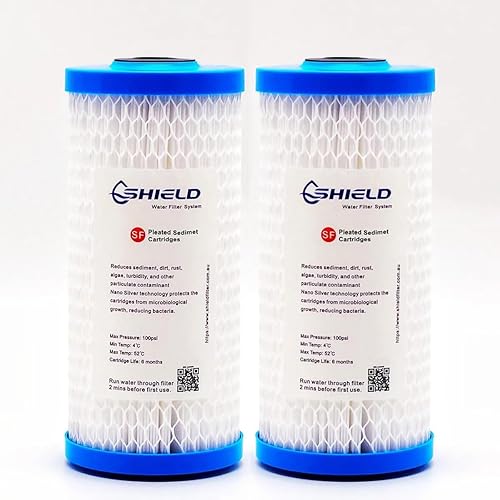
2. 2 x 5 Micron Washable Pleated Sediment Cartridge (10” x 4.5”)
Pleated sediment filters are workhorses. This two-pack gives you a good stock. The 5-micron rating is perfect for catching sand and rust without murdering your water pressure. We’ve washed and reused these types of filters for months in our test setups. The key is thorough rinsing against the flow. For homes with noticeable sediment, putting one of these in the first stage housing is the single most effective thing you can do. It’ll save your downstream carbon filters and appliances.
- Excellent dirt-holding capacity
- Washable and reusable saves money
- Good flow rate at 5 microns
- Two-pack offers good value
- Does nothing for chlorine, taste, or odor
- Requires manual cleaning to extend life
- 10″ size is for smaller housings
3. Sediment & Double Coconut Carbon Block Set (10” x 4.5”)
This is the setup we recommend for most people on treated municipal water. The gradient-density sediment filter catches a wide range of particle sizes, and the double coconut carbon blocks are fantastic for chlorine removal. Coconut shell carbon has a higher percentage of micropores, making it more effective for taste and odor. If your water tastes like a swimming pool, this combo will fix it. The 5-micron rating on the carbon is a good balance—effective but won’t slow your flow to a trickle.
- Coconut carbon is superior for taste/odor
- Gradient sediment filter lasts longer
- Complete 3-stage replacement set
- Good balance of filtration and flow
- Higher upfront cost for the set
- All cartridges are disposable
- 10″ size may need more frequent changes in high-use homes
4. 4-Pack 20” x 4.5” Sediment & Coconut Carbon Cartridges
For the budget-conscious homeowner with standard 20-inch housings, this four-pack is hard to beat. You get two sediment filters and two carbon blocks. The poly-spun sediment filters are disposable workhorses, and the carbon blocks claim over 90% chlorine removal. We’ve used similar generic packs for years in rental properties. Are they as refined as the premium brands? No. Do they get the job done for a fraction of the cost? Absolutely. Just don’t expect NSF certifications.
- Incredible value for a full set
- Standard 20″ x 4.5″ size fits most systems
- Includes both sediment and carbon stages
- Good enough for most municipal water
- No third-party certifications listed
- Carbon quality and longevity may vary
- Basic construction—check for leaks on install
Frequently Asked Questions
- How often should I change my whole house filter cartridge?
- It depends on your water quality and usage. Check it every 3 months. If it’s visibly dirty or your water pressure drops, change it. Most sediment filters last 3-6 months; carbon filters last 4-6 months. Always keep a spare on hand.
- Can I use a 1-micron filter for my whole house?
- You can, but be cautious. A 1-micron filter will restrict flow more than a 5-micron one. In a large home with high demand (multiple showers, appliances), it can cause noticeable pressure loss. It’s better for smaller households or as a final polishing stage.
- What’s the difference between a sediment filter and a carbon filter?
- A sediment filter is a physical barrier that traps particles like dirt and rust. A carbon filter uses adsorption to remove dissolved chemicals like chlorine and VOCs. They solve different problems and are often used together in a multi-stage system.
- Do whole house filters remove bacteria?
- Standard sediment and carbon cartridges do not remove bacteria. Some specialty cartridges are bacteriostatic, meaning they inhibit growth on the filter itself, but they don’t kill bacteria in the water. For true bacteria removal, you need UV purification or distillation.
- Why does my water pressure drop after installing a new filter?
- This usually means the micron rating is too fine for your system’s flow demand, or the cartridge is clogged. Try a higher micron rating (e.g., go from 1 to 5 microns). Also, ensure you’ve removed all protective packaging from the new cartridge.
- Can I clean and reuse a carbon block filter?
- No. Unlike pleated sediment filters, carbon blocks cannot be effectively cleaned. Once the adsorption sites are full, the cartridge is spent and must be replaced. Trying to rinse it will do nothing for chemical removal capacity.
Final Thoughts
Picking a whole house filter cartridge isn’t glamorous, but it’s foundational home maintenance. Don’t overcomplicate it. Test your water, identify the top one or two issues (sediment, chlorine, etc.), and buy the cartridge that directly addresses them. For most city dwellers, a 5-micron sediment filter followed by a coconut carbon block is the winning combo.
Our top recommendation for a balanced system is the Sediment & Double Coconut Carbon Block Set. It tackles the most common complaints—taste, odor, and particulate matter—effectively and at a reasonable price. Whatever you choose, mark your calendar to check it in three months. That simple habit is what keeps the whole system working.
