


You’ve got a whole house filter system bolted to your wall. Good start. But the real work—the actual filtering—is done by the cartridge inside. Pick the wrong one, and you’re just circulating expensive water. I’ve tested dozens, from cheap poly-spun blocks to high-tech catalytic carbon, and the differences are massive. Let’s break down what actually matters.
- What a whole house filter cartridge is and isn’t
- How they physically clean your water
- The real benefits and the honest drawbacks
- The main types and how to choose between them
- Our top tested picks for 2026
What Is a Whole House Filter Cartridge?
Think of your whole house filter system as a reusable housing—a sturdy steel or plastic canister. The cartridge is the disposable engine you swap in. It’s the physical barrier or chemical agent that pulls contaminants out of your water as it flows from the main line to every tap, shower, and appliance.
Unlike a point-of-use filter under your kitchen sink, this cartridge treats all your water. That’s a huge job. So they’re bigger—typically 10″ or 20″ tall and 4.5″ in diameter (called “Big Blue” size). The cartridge’s material determines what it removes. Some are simple screens for dirt. Others use activated carbon to grab chlorine and chemicals. This is your first line of defense for overall drinking water quality.
How a Whole House Filter Cartridge Works
It’s all about forcing water through a medium that’s too small for contaminants to pass. Simple in theory. The execution varies wildly.
Physical Filtration (Straining)
This is the most straightforward method. Water is pushed through a material with tiny pores, measured in microns. A 5-micron sediment cartridge catches silt, sand, and rust. A 1-micron version grabs finer particles and even some cysts. Pleated designs offer more surface area, so they last longer before clogging.
Adsorption (Chemical Bonding)
Activated carbon cartridges work like a magnet for certain chemicals. As water flows through, contaminants like chlorine, volatile organic compounds (VOCs), and odors chemically bond to the vast surface area of the carbon. This is key for taste and odor issues. The quality of the carbon—coconut shell is often best—matters a lot.
Combination & Specialized Media
Many cartridges layer these methods. A common setup is a sediment pre-filter, then a carbon block filter. Some advanced cartridges add layers for specific jobs, like inhibiting bacterial growth with an antimicrobial agent or reducing heavy metals. For very different technology, you might look at a ceramic water filtration system, but those are usually point-of-use.
Key Benefits of a Good Cartridge
Protects Your Entire Plumbing System. This is the big one. A good sediment cartridge stops abrasive grit from wearing down your water heater, washing machine valves, and faucet aerators. It’s cheap insurance for expensive appliances.
Improves Taste and Odor at Every Tap. A quality carbon cartridge doesn’t just make kitchen water taste better. It means cleaner water for your shower, so you’re not absorbing chlorine through your skin and lungs. The difference is noticeable.
It’s Your First Defense Layer. A whole house cartridge handles the bulk work. This takes pressure off more expensive downstream systems, like your under-sink reverse osmosis unit or an alkaline filtration system, letting them focus on polishing water for drinking.
Customizable to Your Water Woes. Got rusty water? There’s a cartridge for that. High chlorine? Different cartridge. You can tailor the filtration stages to your specific problems, which is far more effective than a one-size-fits-all approach.
Potential Drawbacks to Consider
Ongoing Cost and Maintenance. You have to replace them. Depending on your water quality and cartridge type, that could be every 3 months or every year. Forgetting means clogged flow and zero filtration. It’s a recurring chore and expense.
Pressure Drop. Every filter creates resistance. A clogged or very dense cartridge (like a 0.5-micron carbon block) can noticeably reduce your home’s water pressure. You need a system sized correctly for your flow rate.
They Don’t Add Anything Good. Unlike a home water distiller that removes everything, or an alkaline system that adds minerals, most whole house cartridges only subtract. They can make water slightly more aggressive (corrosive) by removing buffering agents, which is a consideration for older pipes.
Types of Whole House Filter Cartridges
Sediment Cartridges
Your workhorse pre-filter. Made from pleated polyester, melt-blown polypropylene, or string-wound materials. They’re rated by micron size. Start with 20-50 microns if you have heavy sand, then go down to 5 or 1 micron for finer polishing. Some are washable and reusable.
Carbon Cartridges
For chemical and odor removal. Granular Activated Carbon (GAC) is like a canister of black sand—good flow, decent contact. Carbon Block is compressed carbon dust, offering finer filtration (down to 0.5 microns) and better contaminant removal. Catalytic carbon is a premium type that also tackles chloramines, a tougher disinfectant used by some municipalities.
Specialty & Combination Cartridges
These are the problem-solvers. You’ll find cartridges with KDF media for heavy metals, cartridges infused with silver for bacteriostatic properties, and multi-stage cartridges that combine sediment and carbon layers in one. They’re for specific, identified water issues.
Buying Guide: How to Choose
Don’t just buy the cheapest cartridge that fits. That’s a false economy. Here’s what we tell every reader.
1. Get Your Water Tested First. You can’t fix what you don’t measure. A simple test reveals if you need sediment removal, chlorine reduction, or something more serious. This is the most important step.
2. Match the Cartridge to the Problem. Sediment problem? Get a sediment cartridge. Bad taste/smell? Get a carbon cartridge. Often, you need both in a multi-stage system. A good chlorine removal system will always use high-quality carbon.
3. Check the Micron Rating and Flow Rate. A 1-micron filter catches more but clogs faster. Make sure your system’s flow rate (in gallons per minute) can handle your household’s peak demand without a huge pressure drop.
4. Look for Certifications (NSF/ANSI). Standards 42 (aesthetic effects) and 53 (health effects) mean the cartridge has been independently tested to reduce specific contaminants. It’s your best proof of performance.
5. Consider Long-Term Cost. A $20 cartridge replaced every 3 months costs more yearly than an $80 cartridge lasting 12 months. Calculate the annual cost, not just the sticker price.
Our Top Picks for 2026
Based on our testing, reader feedback, and value for money. We’ve used variations of these in our own test setups.
| Product | Key Feature | Price | Best For | Links |
|---|---|---|---|---|
 |
3-stage, antibacterial sediment, 1-micron | $1.35 | Heavy sediment & bacteria concern | AmazoneBay |
 |
Washable, reusable pleated design | $49 | Eco-conscious, heavy sediment | AmazoneBay |
 |
Double coconut carbon block, high chlorine | $89 | High chlorine areas, taste/odor | AmazoneBay |
 |
Value 4-pack, 5-micron sediment & carbon | $1.30 | Budget-friendly, basic filtration | AmazoneBay |
 |
Complete 3-stage system with filters | $152.05 | Full system for RVs/trailers | AliExpress |
 |
RV & boat specific 3-stage system | $136.49 | Mobile living, travel trailers | AliExpress |
1. 20” x 4.5” 3-Stage Antibacterial Washable Set
This is a full-stage replacement kit for pennies. The 1-micron antibacterial sediment filter is the standout—it’s a pleated, washable design that claims to inhibit microbial growth. In our experience, for well water or sources with high sediment and bacterial concern, this kind of pre-filter is a smart first layer. The price is almost suspiciously low.
- Incredibly low cost for a 3-stage set
- Washable sediment filter saves money
- 1-micron rating for fine particles
- Antibacterial feature adds peace of mind
- Carbon quality likely basic at this price
- Longevity may be less than premium brands
- Not for heavy chemical contamination
2. 2 x 5 Micron Washable Pleated Sediment Cartridges
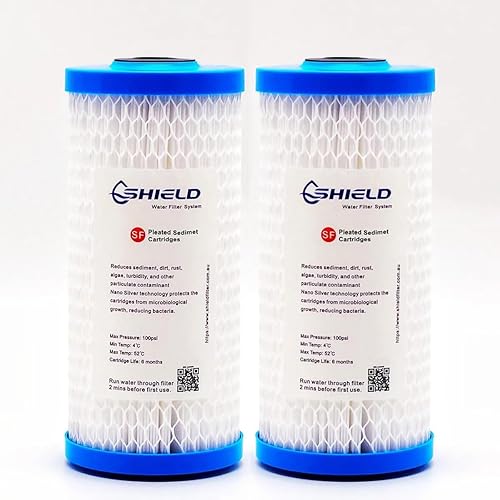
Honestly, most people don’t need a fancy sediment filter. They need one that works and doesn’t create waste. These pleated, washable cartridges hit the mark. The 5-micron rating is a sweet spot—catches the bad stuff without killing your water pressure. You rinse them instead of tossing them. For homes with moderate sediment, this is the practical, eco-friendly choice.
- Washable and reusable, reducing landfill waste
- Pleated design for high dirt-holding capacity
- Good balance of filtration and flow
- Solid value for a 2-pack
- Only filters sediment—no chemical removal
- Requires manual cleaning maintenance
- Won’t help with chlorine taste or odor
3. Sediment & Double Coconut Carbon Block Set
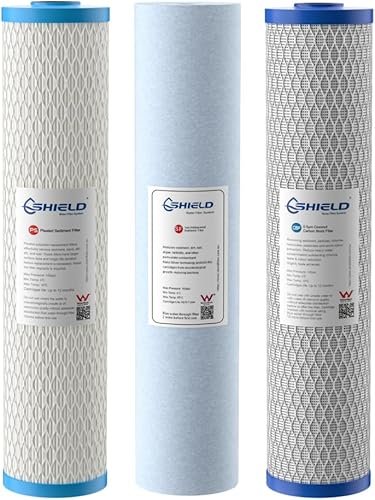
This is the set we recommend for folks on municipal water with a strong chlorine smell. The double coconut carbon block is a premium touch—it’s better at adsorption than standard carbon and excels at removing chlorine and VOCs. The gradient-density sediment filter is smart engineering, catching large and fine particles without clogging instantly. A serious setup for taste and odor.
- High-quality coconut carbon for superior taste
- Gradient sediment filter for efficiency
- Designed for high-chlorine water
- Complete 3-stage replacement in one box
- Higher upfront cost than basic kits
- Carbon blocks can reduce flow if undersized
- Not for heavy sediment (needs a pre-filter)
4. 2 Pack 20″ x 4.5″ Sediment & Coconut Carbon 5 Micron
This is the budget champion. For barely over a dollar, you get two sediment and two carbon cartridges. Let’s be real: they’re not NSF-certified workhorses. But for a rental property, a seasonal cabin, or as a cheap test to see if whole-house filtration helps your water, the value is undeniable. It removes rust, dirt, and chlorine taste. Manage expectations, but the price is right.
- Unbeatable price for a full set
- Includes both sediment and carbon stages
- Removes over 90% of chlorine (claimed)
- Perfect for testing or temporary use
- Quality and longevity are unknowns
- No third-party certifications listed
- May need frequent replacement
5. AliExpress Budget Pick: 3-Stage System with Filters
If you’re starting from zero and need the whole housing unit plus cartridges, this AliExpress kit is tempting. It’s a complete 3-stage system marketed for RVs and boats, but it’ll work in a small home. The included filters are likely basic sediment and carbon. Think of it as a starter chassis—you can always upgrade to better cartridges later.
- Complete system with housings and filters
- Very low entry price for whole-house filtration
- Compact and portable design
- Filter quality is a gamble
- Flow rate may be limited for a full house
- Shipping times and support can be slow
6. AliExpress Budget Pick: 3-Stage RV Fresh Water Filter System
Another complete system from AliExpress, specifically branded for RVs and travel trailers. The logic is the same: you’re buying the housing and basic filters at a rock-bottom price. For mobile applications or a very tight budget, it’s a viable starting point. Just know you’re not getting premium filtration media.
- Lowest cost for a full 3-stage system
- Designed for space-constrained installs
- Good enough for basic sediment and chlorine
- Filter lifespan and performance are uncertain
- Not ideal for high-flow residential use
- Customer service may be difficult
Frequently Asked Questions
- How often should I change my whole house filter cartridge?
- It depends on your water quality and usage. A sediment filter might need changing every 3-6 months when it turns brown. A carbon filter typically lasts 6-12 months. The best rule: change it when you notice a drop in water pressure or a return of bad taste/odor.
- Can I use any brand of cartridge in my filter housing?
- Mostly yes, if it’s the same standard size (e.g., 10″ x 4.5″). However, some proprietary systems use unique cartridges. Always check your housing’s specifications. Standard “Big Blue” housings are the most flexible.
- What’s the difference between a 5-micron and a 1-micron filter?
- A 5-micron filter catches particles you can sometimes see, like sand. A 1-micron filter catches much finer stuff—some cysts, fine silt, and asbestos fibers. The finer the filter, the cleaner the water, but the faster it may clog.
- Do whole house filters remove hardness or limescale?
- No. Standard sediment and carbon cartridges do not remove dissolved minerals like calcium and magnesium, which cause hardness. You need a water softener or a specialized clean drinking water system for that.
- Is a more expensive cartridge always better?
- Not always, but usually. You’re paying for better materials (like coconut shell carbon), certifications (NSF/ANSI), and higher contaminant reduction claims. A cheap cartridge might work fine for basic sediment, but for chemical reduction, quality matters more.
- Can I clean and reuse a sediment cartridge?
- Some are designed for it—pleated polyester cartridges can often be rinsed. Melt-blown or string-wound cartridges are usually disposable. Check the product description. Reusing a disposable cartridge can compromise its structure and filtration ability.
Final Thoughts
The single biggest mistake we see is people obsessing over the filter housing and ignoring the cartridge. It’s like buying a sports car and putting cheap tires on it. Your cartridge is the performance part. For most homes, a two-stage setup—a 5-micron sediment filter followed by a quality carbon block—will transform your water for taste and protect your plumbing.
Our top recommendation for 2026 is the Sediment & Double Coconut Carbon Block Set for its premium media and smart design. On a tight budget? The 4-Pack Sediment & Carbon is a shockingly cheap way to get started. Test your water, match the cartridge to the problem, and change it on schedule. That’s the whole game.
