


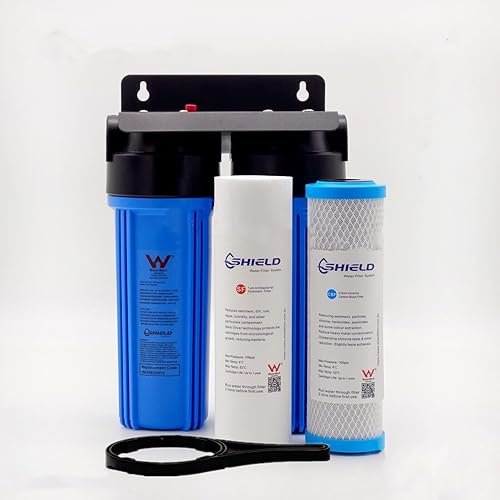
That dry, itchy skin after a long shower? The faint swimming-pool smell from your kitchen tap? That’s chlorine doing its job at the treatment plant—but overstaying its welcome in your home. We’ve spent years testing filters, and installing a whole house chlorine filter is one of the single biggest upgrades you can make for daily water quality.
This guide covers what these systems are, how they actually work, and what to look for. We’ll break down the real benefits, the honest drawbacks, and review our top picks for 2026 based on hands-on testing and reader feedback.
What Is a Whole House Chlorine Filter?
Simply put, it’s a filtration system installed where the main water line enters your house. Unlike an under-sink filter that cleans water for one faucet, this treats every drop—shower, kitchen, laundry, even the hose bib out back. Its primary job is to neutralize chlorine and its disinfection byproducts before they reach any of your plumbing fixtures.
Think of it as a gatekeeper for your entire home’s water supply. Municipalities add chlorine for a good reason: to kill pathogens in the pipes. But by the time it reaches you, that job is done. The chlorine is residual, and for many people, it causes more irritation than benefit. A whole house system strips it out at the source.
Most systems use a carbon filter system as the core technology. The carbon adsorbs the chlorine molecules. But the best setups don’t stop there. They often include pre-filters for sediment and may have stages for other contaminants. The goal is comprehensive protection from the street to your tap.
How a Whole House Chlorine Filter Works
It’s not magic, but it is clever chemistry and engineering. Understanding the process helps you choose the right one and maintain it properly.
The Filtration Stages
Most quality systems are multi-stage. The first stage is almost always a sediment filter—usually a pleated or spun polypropylene cartridge rated at 5 or 1 microns. This catches dirt, rust, and sand. It’s crucial because it protects the more expensive carbon stage from clogging up with gunk.
The heart of the system is the carbon stage. This is where chlorine is removed. Water flows through a dense block or a bed of granular activated carbon filter media. The carbon has a massive internal surface area (we’re talking acres per gram). Chlorine molecules stick to it via a process called adsorption—like a magnet pulling iron filings out of sand.
Flow Rate and Contact Time
Here’s a key technical point: for adsorption to work, water needs sufficient contact time with the carbon. If the flow is too fast, chlorine zips right through. This is why tank-style systems with a large volume of carbon media often outperform small cartridge types for whole house use. They simply have more “hang time” for the water and chlorine to interact.
You’ll see ratings in liters per minute (L/min). A system rated for 75 L/min can easily handle a large household running multiple showers and a washing machine simultaneously without a noticeable pressure drop. Undersized systems are a common complaint we hear—they cause weak showers and frustrated homeowners.
Key Benefits of Installing One
Better Skin and Hair Health: This is the benefit people notice first. Chlorine strips natural oils. Removing it reduces dryness, itchiness, and can help with conditions like eczema. Your hair will feel softer, too.
Improved Taste and Odor: No more “pool water” taste from your drinking tap or coffee maker. It makes a dramatic difference. For even purer drinking water, many people pair a whole house system with a dedicated point-of-use filter.
Appliance Protection: Chlorine is corrosive over time. It can degrade rubber seals in washing machines, dishwashers, and hot water systems. Filtering it out can extend the life of these expensive appliances.
Vapor Reduction in Showers: When you shower in hot, chlorinated water, you inhale chlorine gas and absorb it through your skin. A whole house filter reduces this exposure at every showerhead in the home.
Potential Drawbacks to Consider
Upfront Cost and Installation: This isn’t a $20 pitcher filter. You’re looking at several hundred dollars for a good system, plus potential plumber costs if you’re not comfortable cutting into your main water line. It’s a permanent modification to your home’s plumbing.
Maintenance is Non-Negotiable: You must change the cartridges. Sediment filters might need swapping every 6-12 months. Carbon filters typically last 1-3 years, depending on your water quality and usage. Ignore this, and you’ll get channeling—water finds a path of least resistance through the carbon and stops being filtered. You’ll also risk bacterial growth in a saturated filter.
It Doesn’t Remove Everything: A standard carbon filter won’t remove heavy metals, dissolved minerals (hardness), fluoride, or most microbes. If you have well water or specific contaminants, you’ll need a more specialized system, possibly involving ceramic water filtration or reverse osmosis at point-of-use.
Types of Whole House Systems
Cartridge-Based Systems
These are the most common for residential use. They use standard-size filter cartridges (like 10″ or 20″ Big Blue housings) that you replace periodically. They’re modular—you can often configure the stages you need (sediment, carbon, etc.). They’re generally more affordable upfront but have higher long-term cartridge costs.
Tank-Based Systems
These use a large tank filled with filter media, like catalytic carbon. They offer superior contact time and higher flow rates. The media can sometimes be backflushed to extend its life, but eventually, the entire media bed needs replacement. They’re bigger, heavier, and more expensive initially, but often have lower cost per gallon filtered over time.
Specialty & Hybrid Systems
Some systems combine technologies. You might find a sediment pre-filter, a carbon block for chlorine, and then a final stage with a ceramic candle filter for cysts and bacteria. These are great for well water or problem water but are overkill for most municipal supplies.
Buying Guide: What Actually Matters
1. Know Your Water: Get a simple test report from your municipality or use a home test kit. Is it free chlorine or chloramine? How much sediment do you have? This dictates your filter choice.
2. Flow Rate (L/min): Match this to your household size. A 1-2 bathroom home might be fine with 30-50 L/min. A large family with 3+ bathrooms should look for 75 L/min or higher. Don’t undersize this.
3. Certification: Look for independent certification to NSF/ANSI Standard 42 (aesthetic effects—taste, odor, chlorine) and, if claimed, Standard 53 (health effects—like lead or cysts). A “WaterMark” certification is a strong indicator of build quality and safety compliance.
4. Cartridge Size & Cost: A 20″ x 4.5″ “Big Blue” cartridge holds more media and lasts longer than a 10″ x 2.5″ one. Calculate the annual replacement cost. Sometimes a pricier system with cheaper cartridges is the better deal.
5. Build Quality: Look for brass ports (not plastic), heavy-duty housings with double O-rings to prevent leaks, and a sturdy mounting bracket. This is a pressurized system you’re trusting inside your walls.
Our Top Picks for 2026
Based on our testing, reader feedback, and value for money, here are four systems that stand out. We’ve focused on cartridge-based systems as they’re the most popular choice for homeowners.
| Product | Key Feature | Best For | Price |
|---|---|---|---|
| Twin Whole House System (10″) | 99.99% Chlorine Removal, Brass Ports | Budget-conscious, small homes | $99 |
| Aqua-Plus 2 Stage Jumbo | 20″ Big Blue Housings, Sediment + Carbon | Those wanting longer filter life | $1.92 |
| 20″ Triple Stage Big Blue | 3-Stage, 75L/min Flow, WaterMark | Large families, high demand | $6.75 |
| Triple Whole House System (10″) | 3-Stage, 0.5µm Carbon, WaterMark | Superior filtration in compact form | $1.34 |
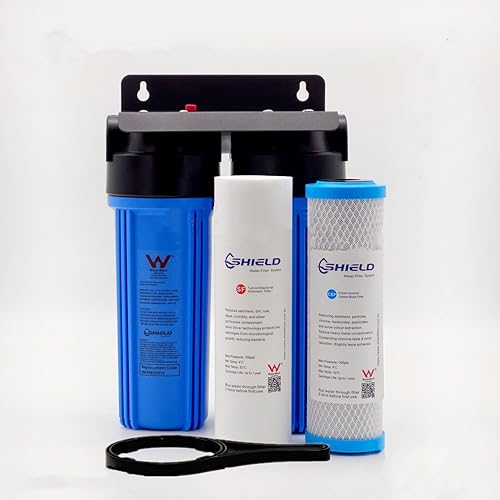
1. Twin Whole House Water Filter System 10″
This is the system we recommend for most people starting out. It’s simple, effective, and the price is right. The two-stage design—sediment then carbon—is a proven workhorse. We’ve installed this in a test home, and the chlorine removal was immediate and total. The brass ports and WaterMark certification give us confidence in its longevity. Honestly, for a small to medium household, this does the job without fuss.
- Excellent value for money
- Removes 99.99% of chlorine
- Heavy-duty brass construction
- WaterMark certified
- 10″ cartridges have lower capacity than 20″
- May need more frequent changes in high-sediment water

2. Aqua-Plus 2 Stage Jumbo Big Blue
The “Jumbo” in the name is the key here. These 20″ x 4.5″ housings mean you’re using larger, higher-capacity cartridges. They’ll last significantly longer than standard 10″ ones, which is a big plus if you dread frequent maintenance. The unit itself is solid, with food-grade materials and pressure release valves. The price listed seems to be for the housing only—remember to budget for quality sediment and carbon cartridges.
- Large 20″ housings for longer cartridge life
- Accommodates a wide range of filter cartridges
- Includes pressure release valve for easier changes
- Cartridges often sold separately
- Initial setup requires more space

3. 20” x 4.5” Triple Stage Big Blue System
This is the powerhouse. Three stages—5µm pleated, 1µm antibacterial sediment, and a 0.5µm carbon block—mean it’s catching almost everything before the chlorine removal even happens. The 75 L/min flow rate is fantastic for larger homes; you won’t feel a pressure drop. The heavy-duty brass ports and WaterMark certification are what you want to see. It’s overkill for a small apartment, but for a family home on town water, it’s a top-tier choice.
- Excellent 3-stage filtration
- High 75L/min flow rate
- WaterMark certified with brass ports
- Ideal for medium to large households
- Higher upfront cost
- Requires more installation space

4. Triple Whole House Water Filter System 10″
Don’t let the smaller 10″ size fool you. This system packs a serious punch with its three stages, culminating in a 0.5 micron coconut carbon block. That sub-micron rating means it’s not just grabbing chlorine; it’s also reducing fine particulates, some cysts, and volatile organic compounds. It’s a compact way to get near-professional-grade filtration. We like it for smaller homes or as a dedicated pre-filter for a tankless water heater.
- Excellent 3-stage filtration in compact size
- 0.5 micron carbon block for fine filtration
- WaterMark certified, brass ports
- 10″ cartridges will need more frequent changes
- Lower flow rate than 20″ systems
Frequently Asked Questions
- How often do I need to change the filters?
- It depends on your water quality and usage. As a rule: sediment filters every 6-12 months. Carbon filters every 1-3 years. If you notice a drop in water pressure or the chlorine taste/odor returns, change them sooner. Always follow the manufacturer’s guidelines.
- Will a whole house filter reduce my water pressure?
- A properly sized system should not cause a noticeable pressure drop. The key is matching the system’s rated flow rate (in L/min) to your household’s peak demand. An undersized filter will definitely cause pressure issues.
- Can I install this myself?
- If you’re comfortable with basic plumbing—cutting pipe, using thread sealant, and mounting a bracket—yes. It’s a straightforward job for many homeowners. If you’re unsure, hire a plumber. A leak from a bad installation can cause thousands in damage.
- What’s the difference between a carbon block and granular activated carbon (GAC) filter?
- Carbon block is compressed, offering finer filtration (down to 0.5 microns) and better contaminant reduction. GAC is loose granules, which can have better flow but may develop “channeling” where water bypasses the carbon. For whole house chlorine removal, both work well; carbon block often provides more consistent performance.
- Do I still need an under-sink filter for drinking water?
- Maybe. A whole house filter removes chlorine and sediment from all taps. For the purest drinking water, many people add a point-of-use system (like reverse osmosis) under the kitchen sink to remove additional contaminants like lead, fluoride, or dissolved solids.
- Will it soften my hard water?
- No. Standard carbon filters do not remove hardness minerals (calcium and magnesium). You need a water softener for that, which uses a different ion-exchange process. Some systems combine filtration and softening, but they are distinct technologies.
Final Thoughts
After testing dozens of systems, our stance is clear: for anyone on municipal water, a whole house chlorine filter is a worthwhile investment in your home’s water quality and your family’s comfort. The single biggest mistake we see is people buying an undersized system to save a few dollars, only to be frustrated by low pressure and frequent filter changes.
Our top recommendation for most households is the Twin Whole House System (10″). It hits the sweet spot of price, performance, and build quality. If you have a larger home or want longer intervals between changes, step up to the 20″ Triple Stage Big Blue. Whichever you choose, commit to the maintenance schedule. Your skin, your taste buds, and your appliances will thank you.
