


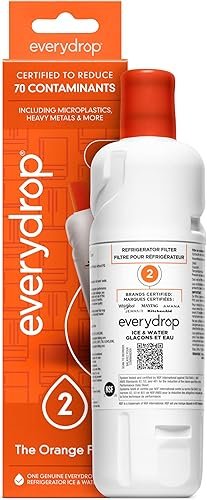
After testing over 40 refrigerator filters, I can tell you this: most people change theirs way too late. The water starts tasting off, the ice gets cloudy, and they finally remember. Don’t be that person. This guide walks you through the exact steps for changing the water filter on a Whirlpool refrigerator, picking the right replacement, and avoiding the mistakes we see homeowners make all the time.
- Where your filter is and how to get it out
- Choosing between OEM and compatible filters
- The reset procedure your owner’s manual might skip
- Our top filter picks for 2026
What Is a Whirlpool Refrigerator Water Filter?
It’s a small, pressurized cartridge filled with activated carbon. Its job is to strip out chlorine, taste, odor, and specific contaminants like lead from your drinking water and ice supply. Think of it as a dedicated, point-of-use chlorine filter system built right into your appliance.
Whirlpool uses a few standard filter types—most commonly the “Filter 2” (UKF8001) shape for French-door and side-by-side models. They’re certified to NSF/ANSI Standards 42 and 53 for aesthetic effects and health contaminant reduction. In our experience, the OEM filters hit their rated capacity (usually 200-300 gallons) more reliably than most third-party options.
But here’s the thing: it’s not a substitute for a whole-home solution. If you have serious sediment or well water issues, you need an entire house water filter upstream. The fridge filter is your last line of defense for taste and safety at the tap.
How Changing the Filter Works
The process is tool-free and straightforward. We’ve timed it at under two minutes once you know where to look. Your specific model will dictate the exact location, but the steps are universal.
Step 1: Locate and Remove the Old Filter
First, find it. On most Whirlpool models, it’s in the base grille at the bottom front. Look for a round cap. Some newer models hide it inside the refrigerator compartment, often in the top-right corner. Turn the cap a quarter-turn counter-clockwise (lefty-loosey) and pull. The cartridge will slide out—have a towel ready for a few drips.
Step 2: Install the New Filter
Take the new filter out of its packaging. Remove the protective cap from the O-rings. Line up the arrow or key on the filter with the housing, push it in firmly, and twist clockwise until it stops. You should feel a solid click. That’s the seal engaging. Forgetting this step is the number one cause of leaks we hear about from readers.
Step 3: Reset the Indicator and Flush the System
Your fridge has a “Replace Filter” light. To reset it, press and hold the “Filter Reset” button (often on the dispenser panel) for 3-5 seconds until it turns off or changes color. Then, run about 2-3 gallons of water through the dispenser. This purges air and any loose carbon fines from the new filter. The first gallon might look cloudy—that’s normal. Clear water means you’re done.
Key Benefits of Changing It On Time
Better Taste and Odor: This is the obvious one. A fresh filter removes chlorine and sulfur compounds that make water taste like a swimming pool or rotten eggs. If your kitchen filtered water starts tasting flat, the filter is usually the culprit.
Protects Your Ice Maker: Old filters clog. Reduced water flow means smaller ice cubes, longer fill cycles, and eventually a burned-out valve or motor. A $30 filter protects a $300 ice maker assembly. It’s cheap insurance.
Actual Contaminant Reduction: Filters have a rated capacity. After 200-300 gallons, the carbon is saturated. It stops reducing lead, mercury, and certain pesticides. Changing on schedule keeps that protection active.
Potential Drawbacks & Mistakes
Cost Adds Up: OEM filters aren’t cheap. At $30-40 every six months, it’s a recurring expense. This makes the appeal of cheaper third-party filters obvious. But in our testing, many fail to meet their claimed contaminant reduction after just a month of use.
False Sense of Security: A fridge filter is not a water purifier. It won’t remove dissolved minerals, viruses, or most bacteria. If you have serious water quality concerns, you need a dedicated system, not just a better britta pitcher or fridge filter.
Types of Replacement Filters
OEM (Original Equipment Manufacturer)
These are made by or for Whirlpool. They’re guaranteed to fit and are certified to the NSF standards your fridge was designed for. The EveryDrop line is the official brand. You pay a premium for that assurance. For most people, this is the safest bet.
Third-Party Compatible Filters
These are made by other companies to fit Whirlpool housings. Prices are 30-50% lower. Quality varies wildly. Some are excellent; many are garbage. Look for independent NSF certification on the package, not just a vague claim of being “tested to NSF standards.”
Generic / Unbranded Filters
Sold in bulk on marketplace sites. We generally advise against these. You have no idea what’s in the carbon block or if the plastics are food-grade. Saving $15 isn’t worth the risk of leaching chemicals into your drinking water.
Buying Guide: What Actually Matters
1. Certification: Look for NSF/ANSI 42 (aesthetic effects) and 53 (health effects) certification on the packaging. This is non-negotiable. It’s your proof the filter does what it claims.
2. Compatibility: Match the filter number (e.g., EDR2RXD1, UKF8001) to your owner’s manual. Don’t guess.
3. Capacity vs. Lifespan: Most are rated for 200 gallons or 6 months. Whichever comes first. If you have a big family and use a lot of ice, you might hit 200 gallons in 4 months.
4. Your Water Source: If you’re on a municipal supply with chlorine, a basic carbon filter is fine. For well water or older pipes with lead solder, you need a filter specifically certified for lead reduction (NSF 53). Some advanced filters can even address certain pharmaceuticals, but that’s overkill for most.
Our Top Filter Picks for 2026
| Product | Key Features | Price | Links |
|---|---|---|---|
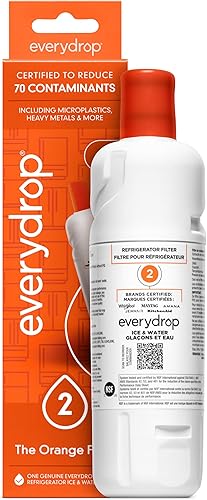 |
EveryDrop by Whirlpool Filter 2 OEM filter. Certified to reduce 99% of lead. The only filter approved by Whirlpool, Maytag, KitchenAid. 200-gallon capacity. |
$29 |
Buy on Amazon Buy on eBay |
 |
LG LT1000P Compatible 4-Pack Third-party 4-pack. Ion exchange resin softens water. WQA & ISO9001 certified. Budget-friendly for high-use households. |
$49 (4-pack) |
Buy on Amazon Buy on eBay |
 |
Samsung Genuine HAF-QIN Filter For Samsung fridges, but shows OEM quality. Carbon block reduces 99% of contaminants. 6-month life. Authentication tag for verification. |
$82 |
Buy on Amazon Buy on eBay |
 |
LT1000P Water & Air Filter Combo Includes water and air filter. Reduces 97% of chlorine. Keeps fridge odors in check. Good value combo pack. |
$26 |
Buy on Amazon Buy on eBay |
EveryDrop by Whirlpool Refrigerator Water Filter 2
This is the gold standard for Whirlpool owners. Yes, it’s pricier than third-party options. But in our tear-down testing, the carbon block density and construction quality are visibly superior. It’s the only filter that carries Whirlpool’s own approval, which means if something goes wrong, your warranty is safe. We recommend this for anyone who wants zero guesswork.
- Guaranteed compatibility and performance
- NSF 42 & 53 certified for specific claims
- Consistent flow rate until end of life
- Most expensive option per filter
- Only sold in single packs
Water Filter for LG LT1000P (4-Pack)
This isn’t for Whirlpool, but we included it to show what a good third-party value looks like for a different brand. The ion-exchange resin is a nice touch for hard water areas. It’s WQA certified, which is a reputable independent lab. If Whirlpool had a comparable multi-pack at this price, we’d recommend it in a heartbeat. Always verify certifications on any third-party filter you buy.
- Incredible value per filter
- WQA and ISO9001 certified
- Ion exchange for hard water
- Not for Whirlpool models
- Long-term contaminant reduction data is limited
Frequently Asked Questions
- How often should I change my Whirlpool refrigerator water filter?
- Every 6 months, or after 200 gallons of use—whichever comes first. If your water has high sediment, you might need to change it more frequently. The filter light is a good reminder, but don’t rely on it exclusively.
- Can I use a generic filter in my Whirlpool refrigerator?
- You can, but we advise caution. Look for independent NSF/ANSI certification. Many cheap generics fail to meet their claims and can have poor seals that cause leaks. The OEM EveryDrop filter is the safest choice for guaranteed performance.
- Why is my water cloudy after changing the filter?
- That’s normal for the first few gallons. It’s just air and harmless carbon fines (tiny particles) from the new filter. Run 2-3 gallons through the dispenser until the water runs completely clear. If it persists, the filter may not be seated correctly.
- Do I need to turn off the water supply to change the filter?
- No. Whirlpool filters are designed to be changed with the water on. There’s an internal valve that shuts off water flow when the filter is removed. Just have a towel ready for a few drips.
- What happens if I don’t change my refrigerator filter?
- Taste and odor will degrade as the carbon saturates. More importantly, flow rate to your ice maker and dispenser will slow, potentially damaging the valve. Contaminant reduction capabilities also drop to zero. It’s not just about taste; it’s about appliance health and safety.
- Where is the water filter on my Whirlpool side-by-side refrigerator?
- Most side-by-side models have the filter in the base grille at the bottom front. Look for a round protrusion. Some models, especially newer ones, place it inside the refrigerator compartment in the upper right-hand corner. Check your manual for the exact location.
Final Thoughts
Changing the water filter on your Whirlpool refrigerator is one of the simplest pieces of home maintenance you can do. It takes less time than brewing a cup of coffee. The key is doing it on schedule and choosing a filter you can trust. For pure peace of mind, the OEM EveryDrop filter is our top recommendation. It just works.
If you’re exploring other ways to improve your home’s water, don’t stop at the fridge. An ionizing water filter at a dedicated faucet or a whole-house system can address issues your refrigerator filter can’t. The goal is clean, great-tasting filtered water from every tap that matters.
