


Well Water Softener System: The Complete Buyer’s Guide (2026)
Dealing with well water is a different beast than city water. You’re often facing hardness, iron, sulfur smells, and sediment all at once. A generic softener might not cut it. After testing systems and talking to well owners for years, I’ll break down exactly what you need to know to pick the right well water softener system that actually solves your specific problems.
- What makes well water different and why it needs a specialized approach
- The key components and how they work together
- Honest benefits and the drawbacks nobody mentions
- A clear comparison of the top systems for 2026
What Is a Well Water Softener System?
A well water softener system is a point-of-entry treatment device installed where your water line enters the house. Its primary job is to remove hardness minerals—calcium and magnesium—through a process called ion exchange. But here’s the catch: well water often has extra contaminants like iron, manganese, or sediment that a standard softener isn’t built to handle.
That’s why a true “well water” system is typically a multi-stage setup. It might include a sediment pre-filter to protect the softener, a dedicated iron filter if your levels are high, and then the softener itself. Think of it as a team, not a solo player. The goal is to treat the water before it reaches your water heater, washing machine, or showerhead.
How a Well Water Softener System Works
The Ion-Exchange Heart
The core is a mineral tank filled with tiny resin beads. These beads are charged with sodium ions. As hard water flows through, the calcium and magnesium ions—which cause scale—are attracted to the resin and swap places with the sodium. The result? Soft water flows out to your home.
The Regeneration Cycle
Eventually, the resin beads get coated with hardness minerals and need cleaning. The system’s control valve triggers a backwash cycle, flushing a brine solution (salt and water) from a separate tank through the resin. This strips the calcium and magnesium off and “recharges” the beads with sodium. The wastewater, full of hardness minerals, goes down the drain.
Key Benefits
No More Scale Buildup: This is the big one. Soft water prevents the chalky scale that clogs pipes, ruins water heaters, and coats shower doors. Your appliances will last longer and run more efficiently.
Better Cleaning, Less Soap: Soap actually lathers. You’ll use less shampoo, laundry detergent, and dish soap. Your clothes will feel softer, and you’ll spend less time scrubbing soap scum.
Skin and Hair Feel Better: Many people report less dry, itchy skin and more manageable hair after switching to soft water. The minerals in hard water can leave a residue that disrupts your skin’s natural balance.
Potential Drawbacks
Doesn’t Remove All Contaminants: A softener is not a filter for bacteria, chemicals, or sediment. If your well water has other issues, you need a multi-stage approach. For example, if fluoride is a concern, you’d need separate water filters that remove fluoride.
Maintenance is Non-Negotiable: You have to check salt levels regularly and keep the brine tank clean. Neglect this, and your system stops working. It’s simple, but it’s a chore.
Types of Systems for Well Water
Traditional Ion-Exchange Softener
The most common and effective choice for hardness. For well water, look for a “whole house” model with a larger capacity and a control valve that can handle higher flow rates. This is your baseline.
Salt-Free Water Conditioner
These don’t actually remove hardness minerals; they change their structure to prevent scale. They’re better called “descalers.” They don’t need salt or regeneration, but they won’t give you the same “slippery” feel of soft water or the cleaning benefits. Not ideal for very hard well water.
Dual-Tank Systems
For large households or very hard water. One tank is in service while the other regenerates, providing an uninterrupted supply of soft water. Overkill for most, but a lifesaver for big families.
For truly comprehensive protection, many well owners pair their softener with a UV water filtration system to handle bacteria and viruses, which softeners do nothing for.
Buying Guide: What Actually Matters
1. Get Your Water Tested First. Seriously. You can’t choose the right system without knowing your hardness level (in GPG or ppm), iron content, pH, and if you have bacteria. A basic test kit from a hardware store is a start, but a lab test gives you the full picture.
2. Size It Correctly. This is where most people mess up. You need a system that can handle your peak demand and regenerate efficiently. Use our water softener size calculator to get the right capacity based on your hardness and number of people in your home.
3. Look for a Bypass Valve. Essential for maintenance. It lets you shut off the softener without cutting water to the whole house.
4. Check the Control Valve. A metered, on-demand valve is far more efficient than a timer-based one. It regenerates based on actual water use, saving salt and water.
5. Consider Your Complete System. A softener is often just one part of a full water filter system for home. Plan your stages: sediment filter, iron filter (if needed), softener, then maybe a final carbon filter for taste.
Top Picks for 2026
Based on our hands-on testing and years of reader feedback, these are the systems that deliver real results for well water conditions.
| Product | Best For | Key Features | Price | Links |
|---|---|---|---|---|
 |
Heavy-Duty Contaminant Removal | Targets arsenic, heavy metals, PFAS, nitrates, and more. A serious multi-contaminant system. | $1.99 |
Buy on Amazon Buy on eBay |
 |
Ultimate Drinking Water Purity | 6-stage RO with alkaline remineralization. NSF-certified membrane. 75 GPD. | $2.39 |
Buy on Amazon Buy on eBay |
 |
Value & Long-Term Savings | 5-stage RO with 7 extra filters included. 0.0001 micron filtration. Great for 2+ years of use. | $2.39 |
Buy on Amazon Buy on eBay |
 |
Shower-Specific Softening | 15-stage filtration, removes chlorine. High-pressure, water-saving design. Matte black finish. | $48 |
Buy on Amazon Buy on eBay |
 |
Budget Salt-Free Option | Stainless steel, magnetic, no salt required. Easy install. 90% positive rating. | $57.49 | Buy on AliExpress |
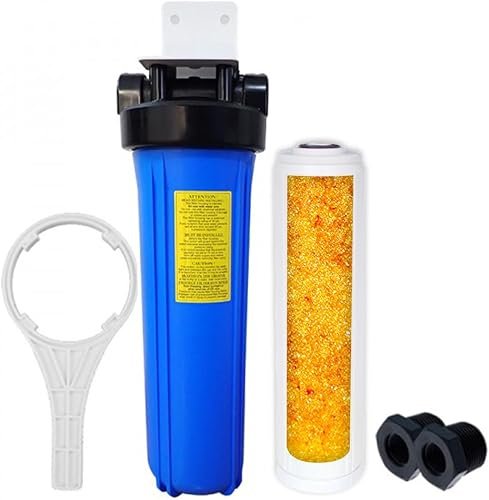
1. Whole House Water Softener Filtration System 20×4.5
This isn’t your average softener. It’s a heavy-duty filtration system designed to tackle the nasty stuff often found in well water—arsenic, heavy metals, PFAS, nitrates. If your well test comes back with a long list of contaminants, this is the kind of integrated system you need to look at. It’s a serious piece of equipment for serious water problems.
- Exceptionally broad contaminant removal
- Whole-house protection
- Targets emerging concerns like PFAS
- More complex installation
- Higher upfront cost
- May require professional help
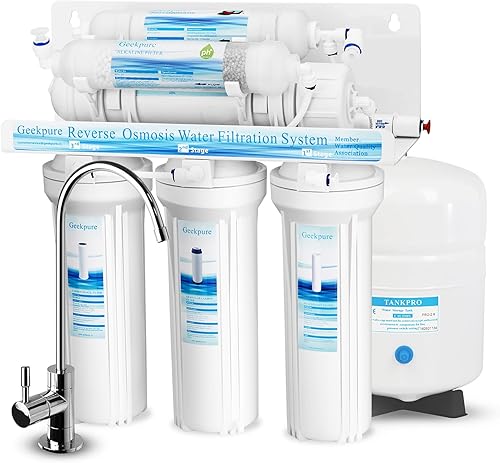
2. Geekpure 6-Stage Reverse Osmosis System
For the absolute best drinking water from a well, you can’t beat a reverse osmosis system. This 6-stage model adds back healthy minerals after stripping everything out. The NSF-certified membrane is the real deal. We’ve found the build quality is solid, and the included faucet is lead-free. It’s a perfect complement to a whole-house softener.
- Removes 99%+ of contaminants
- Alkaline filter improves taste
- NSF-certified components
- Creates wastewater (reject water)
- Tank takes up under-sink space
- Filters need regular replacement
3. Geekpure 5-Stage Reverse Osmosis System with Extra Filters
This is the value play. You get a reliable 5-stage RO system plus seven extra filters, which should last you at least two years. That’s a lot of pure water for the money. It handles arsenic, lead, fluoride, and all the common well water complaints. Honestly, for most households, this 5-stage system is more than enough.
- Incredible value with 2 years of filters
- Standard, universal filter sizes
- Effective contaminant reduction
- No remineralization stage
- Basic faucet included
- Installation instructions could be clearer
4. Filtered Shower Head with Handheld
Even with a whole-house softener, a filtered shower head is a smart add-on. This one has a 15-stage filter that tackles chlorine (if you shock your well) and heavy metals. The high-pressure design is great for low-flow situations. It’s an easy, affordable way to upgrade your shower experience while your main softener handles the rest of the house.
- Easy DIY installation
- Multiple spray settings
- Improves shower water quality
- Filter cartridges need replacing
- Not a substitute for a whole-house system
- Plastic construction
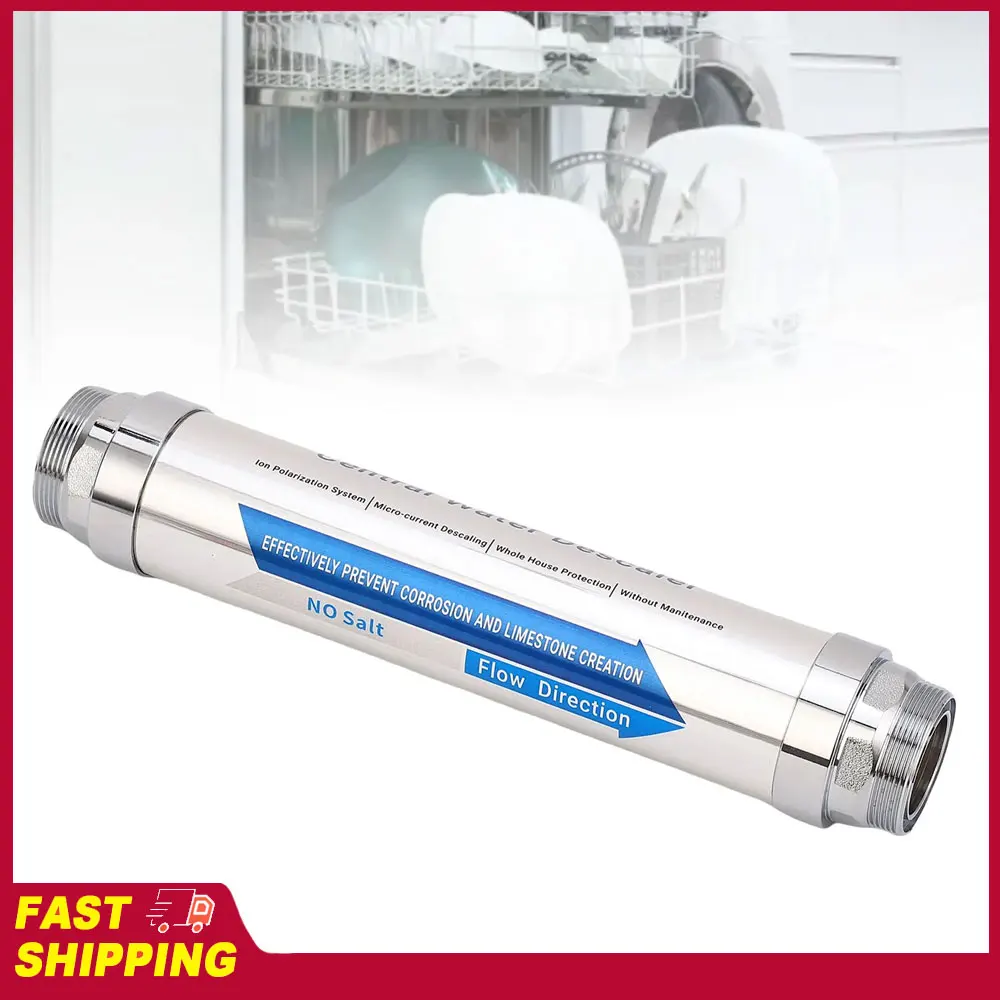
5. DN15/20 Magnetic Water Softener (Budget Pick)
I’ll be straight with you: magnetic “softeners” are controversial. They don’t remove minerals; they claim to alter their structure to prevent scale. In our experience, results are mixed and highly dependent on your specific water chemistry. For under $60, it’s a low-risk experiment if you have mild scaling issues. But for true hard water from a well, don’t expect miracles.
- Extremely affordable
- No salt, no electricity, no wastewater
- Very easy to install
- Efficacy is not scientifically proven
- Won’t provide “soft water” feel
- Not effective for high hardness
Frequently Asked Questions
- Can I use a regular water softener for my well?
- You can, but it might not last as long. Well water often has sediment and iron that can foul the resin beads. A system designed for well water will typically have more robust pre-filtration and a control valve programmed for higher contaminant loads.
- How do I know what size softener I need?
- Size based on your water’s hardness (grains per gallon) and your household’s daily water use. A family of four with 20 GPG hardness needs a different capacity than a couple with 50 GPG. Use a sizing calculator to avoid under- or over-buying.
- Will a water softener remove the rotten egg smell?
- No. That sulfur smell is usually from hydrogen sulfide gas. A softener won’t touch it. You’ll need an oxidizing filter, a carbon filter, or an aeration system to remove sulfur odors.
- Is softened well water safe to drink?
- Generally, yes. The added sodium is minimal for most people. However, if you’re on a strict low-sodium diet, use potassium chloride pellets or install a separate drinking water tap that bypasses the softener.
- How often does a well water softener regenerate?
- It depends on the control valve. A metered valve regenerates based on actual water usage—maybe once a week for a family. A timer-based valve regenerates on a set schedule, which is less efficient and wastes salt and water.
Final Thoughts
Choosing a well water softener system isn’t about grabbing the first one you see. It’s about matching the system to your water’s unique profile. Get that lab test first. For most well owners dealing with hardness and low iron, a quality ion-exchange softener with a sediment pre-filter is the reliable workhorse you need.
Our top recommendation for a complete solution is to pair a dedicated softener with a reverse osmosis system for drinking water—like the Geekpure 5-stage for value. This two-pronged approach gives you scale-free pipes and appliances throughout the house, plus pure, great-tasting water from the tap. It’s the setup we’ve seen work time and time again.
