


If your shower leaves soap scum on the glass and your kettle furs up in weeks, you’re dealing with hard water. It’s a common headache for well owners. But the solution isn’t just about buying any softener. You need a system that can handle the unique challenges of well water. This guide covers everything from how these systems work to our top picks for 2026.
What Is a Well Water Softener System?
A well water softener is a whole-house appliance that treats water as it enters your home from the well. Its primary job is to reduce “hardness” — that’s the dissolved calcium and magnesium ions that create scale on fixtures and appliances. Think of it as a preventive measure for your entire plumbing system.
But here’s the key difference from city water systems: well water often carries extra baggage. We’re talking iron, manganese, sediment, and sometimes even sulfur bacteria. A dedicated well water system is built tougher. It’s designed to handle these contaminants without getting clogged or overwhelmed. Many combine softening with an iron filter system in one unit.
Honestly, most people don’t need the fanciest model. You need one matched to your water’s specific hardness level and flow demands. Getting that balance right is what separates a system that works for a decade from one that fails in two years.
How Well Water Softener Systems Work
The Ion Exchange Process (Salt-Based)
This is the classic method. Water flows through a tank filled with resin beads. These beads are covered in sodium ions. The calcium and magnesium ions in your hard water are attracted to the resin and swap places with the sodium. The result? Softened water flows out to your pipes.
Eventually, the resin gets coated with hardness minerals. That’s when the system regenerates. A brine solution (salt water) flushes through the tank, washing away the calcium and magnesium and recharging the beads with fresh sodium. It’s a cycle that repeats every few days based on your water usage.
Template Assisted Crystallization (Salt-Free)
Salt-free “conditioners” don’t remove hardness minerals. Instead, they change their form. Water passes through a catalytic media that transforms dissolved minerals into microscopic crystals. These crystals can’t stick to surfaces, so they just flow harmlessly downstream. You still get the benefits of reduced scale without adding sodium to your water.
This method is great if you’re on a low-sodium diet or worried about environmental salt discharge. But it won’t actually soften the water in the traditional sense. Your soap won’t lather any better, for example. It’s a scale inhibitor, not a true softener.
Key Benefits
Protects Your Plumbing and Appliances. Scale buildup is a silent killer. It clogs water heaters, reduces flow in pipes, and makes your dishwasher work harder. A softener stops this at the source, potentially adding years to the life of your appliances.
Better Cleaning, Less Soap. Soft water lets soap and detergents lather properly. You’ll use less shampoo, laundry detergent, and dish soap. Clothes come out softer and brighter. Showers feel more rinsed, leaving your skin and hair less dry.
Solves Multiple Well Water Issues. Many modern systems for wells do more than soften. They can include sediment filters, iron removal filter stages, and even activated carbon for taste and odor. It’s a one-stop solution for cleaner, better-tasting water from every tap.
Long-Term Cost Savings. The upfront cost stings. But consider the savings: fewer appliance repairs, lower energy bills (scale insulates water heaters), and buying less soap. Over 5-10 years, a good system often pays for itself.
Potential Drawbacks
Initial Investment is High. A quality whole-house system isn’t cheap. You’re looking at $1,000 to $3,000+ for the unit, plus professional installation if you’re not handy. Don’t forget the cost of a water test first.
They Don’t Remove All Contaminants. A softener is not a purifier. It won’t remove bacteria, viruses, or many chemicals. For that, you need additional treatment stages, like a dedicated lead removal system or UV sterilizer, depending on your test results.
Space and Electrical Needs. These are big tanks. You need space in your garage, basement, or utility room. Most systems also need a standard electrical outlet for the control valve and a drain for the regeneration wastewater.
Types of Systems for Well Water
Traditional Ion Exchange Softeners
The most effective for true softening. They physically remove hardness minerals. Best for high hardness levels (over 10 GPG). The downside is the salt and the regeneration cycle, which uses water and creates brine waste.
Salt-Free Water Conditioners
Perfect for moderate hardness and if you want to avoid salt. They’re virtually maintenance-free—no electricity, no salt, no drain line needed. But they struggle with very hard water or water with high iron content. They’re a preventative measure, not a cure.
Dual-Tank Systems
For large families or homes with extremely hard water. One tank regenerates while the other is in service, so you never run out of soft water. It’s overkill for most households but a lifesaver for big families with high water use.
Combination Systems
The best choice for most well owners. These units bundle a softener with a sediment pre-filter and often an iron or manganese filter. They address the full spectrum of well water problems in one integrated package. This is often smarter than buying separate components.
Buying Guide: What Actually Matters
1. Get Your Water Tested. This is non-negotiable. Test for hardness (GPG or mg/L), iron, manganese, pH, and TDS. Your local health department or a lab can do this. The results dictate your system choice.
2. Calculate Your Grain Capacity. This tells you how much hardness a softener can remove before it needs to regenerate. A family of four with 20 GPG hardness needs about a 32,000-grain capacity system. Don’t undersize it.
3. Check the Flow Rate (GPM). Your system must handle your peak demand—when multiple showers, a dishwasher, and a washing machine might run simultaneously. Look for a system rated for at least 8-12 GPM for an average home.
4. Look for NSF/ANSI Certification. Standards 42 and 44 are key for performance claims. Certification means an independent lab verified the manufacturer’s claims about contaminant reduction and structural integrity.
5. Consider Maintenance. Salt-based systems need salt. All systems need pre-filter changes. Factor in the ongoing cost and effort. If you travel a lot, a simpler salt-free model might be less hassle.
For more on point-of-use options to complement your whole-house system, read our guide on pou filtration.
Our Top Picks for 2026
| Product | Type | Key Feature | Price | Links |
|---|---|---|---|---|
| Whole House Filtration System 20×4.5 | Combination Filter | Removes heavy metals, PFAS, arsenic | $1.99 | Amazon eBay |
| WaterBoss Salt-Free Descaler System | Salt-Free Conditioner | 600,000 gal capacity, no salt/electricity | $8.65 | Amazon eBay |
| Geekpure 6-Stage RO System | Reverse Osmosis (Drinking) | 75 GPD, alkaline remineralization | $2.39 | Amazon eBay |
| Filtered Shower Head with Handheld | Point-of-Use (Shower) | 15-stage filtration, high pressure | $48 | Amazon eBay |
| WS200 Magnetic Water Descaler | Magnetic Conditioner | Large flow, anti-limescale | $86.11 | AliExpress |
| Salt Free Water Descaler Whole House | Salt-Free Conditioner | Prevents scale on heaters & boilers | $71.51 | AliExpress |

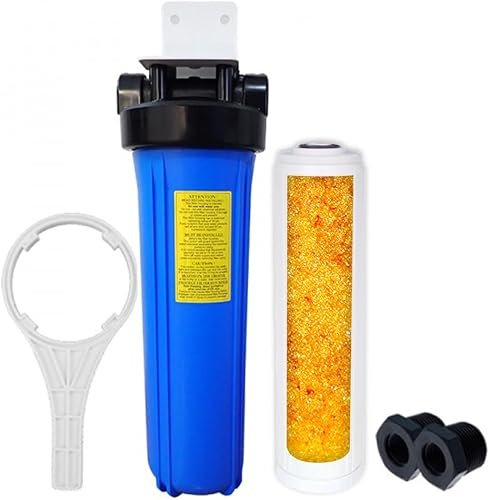
1. Whole House Filtration System 20×4.5
This is a heavy-duty filtration cartridge, not a traditional softener. It’s built to tackle a scary-long list of contaminants: arsenic, PFAS, heavy metals, nitrates, and more. In our view, this is an excellent pre-filter stage to install before a dedicated softener, especially if your water test shows multiple contaminants. The price is unbelievably low for this level of filtration claim.
- Removes an exceptional range of contaminants
- Very affordable entry point
- Fits standard 20″ x 4.5″ housings
- Not a water softener (doesn’t remove hardness minerals)
- Cartridge replacement needed periodically
- Flow rate may be limited for large homes

2. WaterBoss Salt-Free Descaler System
This is a true salt-free conditioner. It uses a template-assisted crystallization media to prevent scale without electricity or backwash cycles. The 600,000-gallon capacity is impressive. We like it for its simplicity and the 6-year warranty. It’s a solid choice if your primary goal is scale prevention and you want to avoid the maintenance of a brine tank. Remember, it won’t give you that “slippery” soft water feel.
- No salt, no electricity, no wastewater
- Very low maintenance
- Long 6-year/600,000-gallon warranty
- Doesn’t remove hardness minerals (no soap lather improvement)
- Less effective on water with high iron
- Higher upfront cost than basic softeners
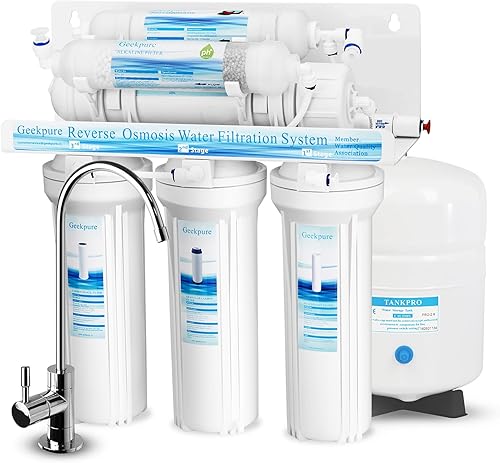
3. Geekpure 6-Stage Reverse Osmosis System
This isn’t a whole-house softener—it’s a point-of-use drinking water system. We include it because many well water users pair a whole-house softener with an RO system for kitchen drinking water. This 6-stage model adds minerals back for taste. The NSF-certified membrane and lead-free faucet are reassuring. At this price, it’s a steal for anyone wanting purified drinking water from a dedicated tap.
- Excellent purification for drinking/cooking water
- Alkaline remineralization improves taste
- Very affordable for a 6-stage system
- Only treats water at one faucet (point-of-use)
- Creates wastewater (typical for RO)
- Doesn’t address whole-house hardness

4. Filtered Shower Head with Handheld
Here’s a smart upgrade for anyone with hard well water. Even with a whole-house softener, a shower filter provides an extra layer of protection for chlorine and heavy metals. The 15-stage filtration here is thorough. We’ve found that filtered shower heads can noticeably reduce dry, itchy skin and dull hair caused by impurities. The high-pressure design is a nice bonus if your well pressure is low.
- Targets chlorine and heavy metals at the point of use
- May improve skin and hair condition
- Easy DIY installation
- Filter cartridge needs regular replacement
- Doesn’t address water hardness
- Some models can reduce water pressure
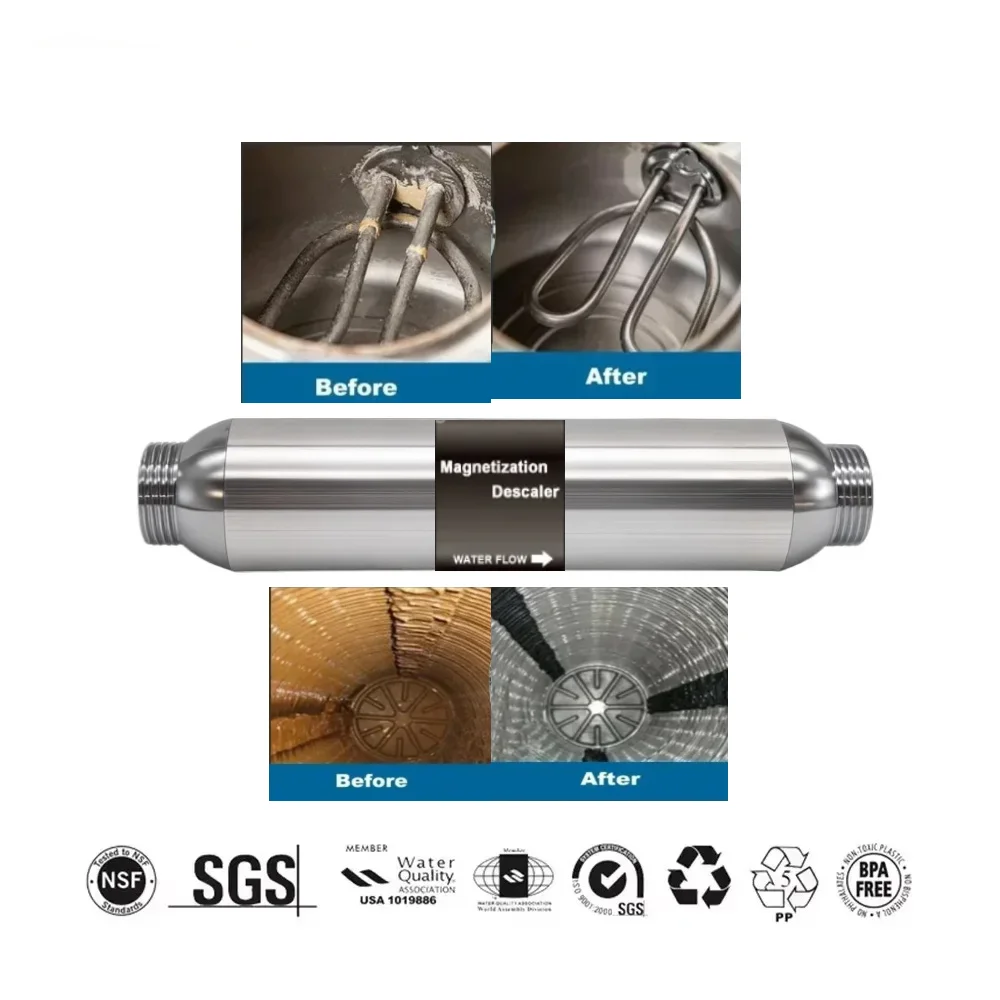
5. AliExpress Budget Pick: WS200 Magnetic Descaler
This is a magnetic water conditioner—a different beast entirely. It uses powerful magnets wrapped around your pipe to alter the electromagnetic properties of hardness minerals. The science is debated, but some users report reduced scale. At $86, it’s the cheapest whole-house option. We see it as an experiment. If you’re skeptical but curious, it’s a low-risk way to test the concept. Don’t expect miracles.
- Extremely affordable whole-house option
- Zero maintenance, no consumables
- Easy installation (clamps on pipe)
- Efficacy is not scientifically proven
- Won’t work on non-metal pipes
- Doesn’t soften water or remove contaminants
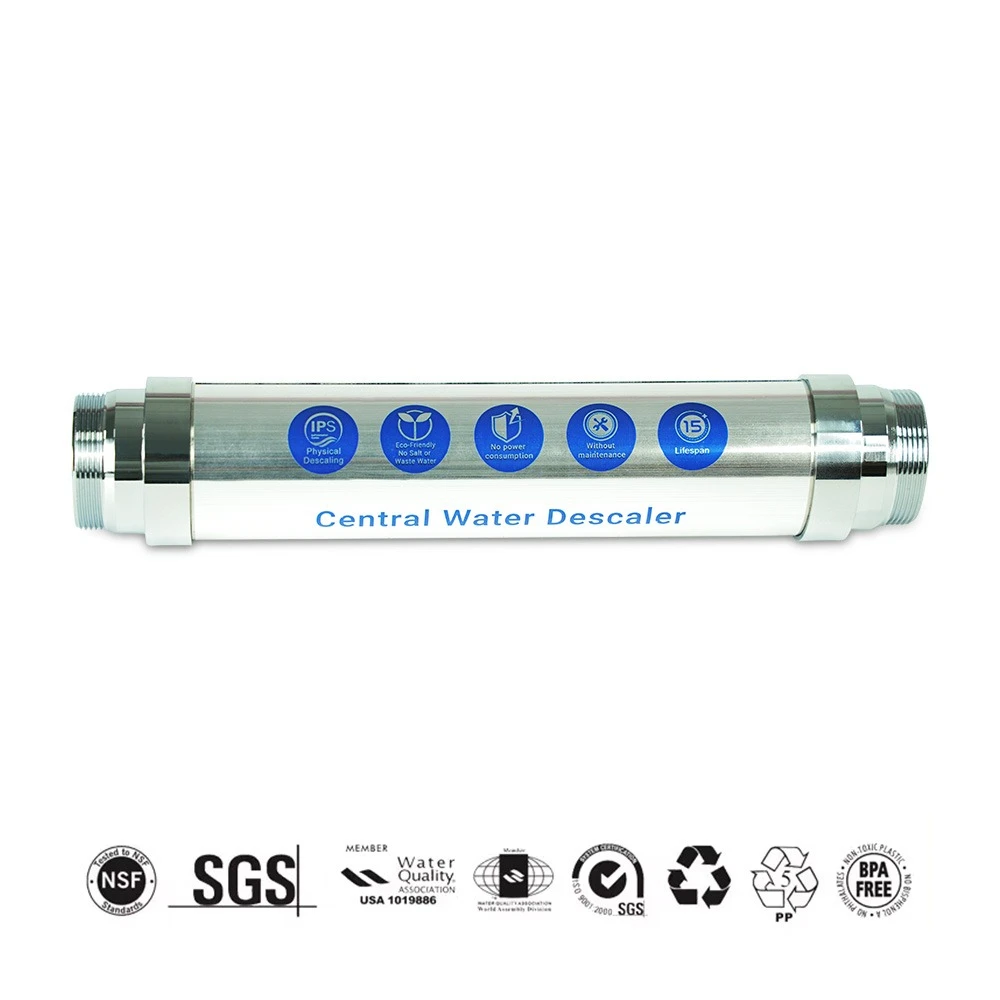
6. AliExpress Budget Pick: Salt Free Descaler
Another salt-free alternative at a very competitive price. This one claims to use a catalytic media to condition water. The lack of a rating makes us cautious, but the price is tempting for budget-conscious buyers. If you’re handy and willing to take a chance, it might work for moderate hardness. Just manage your expectations—it’s not in the same league as the WaterBoss in terms of proven performance and warranty.
- Very low cost for a whole-house conditioner
- No salt or electricity required
- Simple design with few failure points
- Unknown brand and unproven reliability
- No warranty or certification data
- Performance claims are unverified
Frequently Asked Questions
- Can you use a regular water softener with well water?
- Yes, but it’s not ideal. Standard softeners can clog quickly from sediment and iron common in wells. Look for models specifically labeled for well water. They have more robust valves and often include a pre-filter. You might also need a separate iron removal filter if your iron levels are high.
- How do I know what size water softener I need for my well?
- Calculate your daily water use (75-80 gallons per person is a safe estimate). Multiply by the number of people, then multiply by your water hardness in grains per gallon (GPG). That gives you grains per day. Multiply by 7 to find a weekly regeneration capacity. A 32,000-grain unit suits most families of four.
- Do I need a special filter for well water?
- Almost always, yes. Well water can contain sediment, iron, manganese, bacteria, and other contaminants a softener won’t remove. A sediment pre-filter is essential. Depending on your water test, you may also need an iron filter, UV purifier, or activated carbon filter for odors. This ensures complete home filtered water.
- Is a salt-free water softener good for well water?
- It depends on your goal. Salt-free conditioners are excellent for scale prevention and require no maintenance. However, they don’t actually remove hardness minerals, so your water won’t feel “soft.” They’re less effective if your water has high iron or very high hardness levels. They’re a great low-hassle option for moderate hardness.
- How often should a well water softener regenerate?
- It depends on your water usage and hardness. Most systems are set to regenerate every 3-7 days. Modern demand-initiated regeneration systems are smarter—they only regenerate when needed based on actual water use, saving salt and water. This is more efficient than a simple timer-based system.
- Can a water softener remove iron from well water?
- Some can, but not all. Standard softeners can remove small amounts of clear-water iron (ferrous iron). But if you have red stains, you likely have ferric iron or high levels, which will foul the softener resin. For iron, a dedicated oxidizing iron filter is much more effective and will protect your softener investment.
Final Thoughts
Choosing a well water softener system comes down to your specific water chemistry and your tolerance for maintenance. If you want the absolute best performance and don’t mind salt, a traditional ion-exchange softener with a good pre-filter is hard to beat. It gives you truly soft water that feels different and protects your home.
For those who want simplicity and scale prevention without the salt, a quality salt-free conditioner like the WaterBoss is a smart, low-maintenance choice. Whichever path you take, start with a water test. It’s the best $30 you’ll spend on your water quality journey. Your pipes, appliances, and skin will thank you.
