


If you’re on a private well, you know the drill: the white crust on faucets, the soap that won’t lather, the water heater that’s probably working twice as hard. A dedicated well water softener is your best defense. We’ve installed, tested, and lived with these systems for years. This guide cuts through the marketing fluff. We’ll cover what they are, how they work, the real pros and cons, and how to pick the right one without overspending.
What Is a Well Water Softener?
It’s a point-of-entry system installed where your well line enters the house. Its sole job is to tackle “hardness”—those dissolved calcium and magnesium ions that cause limescale. Unlike city water, well water isn’t treated by a municipal plant. That means you’re the one responsible for dealing with whatever minerals, sediment, or contaminants are in your aquifer.
A softener isn’t the same as a general filter. It targets hardness specifically. You might need other treatment stages for iron, sulfur, or bacteria, but the softener handles the scale problem. Think of it as the foundation of a comfortable, efficient home water system.
How a Well Water Softener Works
The core technology is called ion exchange. It’s a simple chemical swap that’s been used for decades because it works.
The Ion Exchange Process
Your softener has a tank filled with thousands of tiny resin beads. These beads are charged with sodium ions. As hard water flows through, the calcium and magnesium ions are attracted to the resin and stick to it, displacing the sodium ions into your water. The result? Soft water flows out to your pipes.
The Regeneration Cycle
The resin beads can’t hold hardness ions forever. When they’re saturated, the system goes through a regeneration cycle. A strong brine solution (salt water) from a separate tank flushes through the resin, knocking off the calcium and magnesium and replenishing the sodium. This wastewater is sent down the drain. The frequency depends on your water hardness and usage—typically every few days.
Key Benefits of Installing One
Appliance Longevity. Scale buildup is the silent killer of water heaters, dishwashers, and coffee makers. A softener can double the life of your water heater by preventing insulating scale on the heating element.
Spot-Free Cleaning. You’ll use less soap and detergent. Shower doors stay clear, dishes come out clean without residue, and laundry feels softer. It’s a noticeable difference.
Improved Water Flow. Scale inside pipes narrows the diameter over time, reducing water pressure. A softener keeps your plumbing clear, which is especially important for older homes.
Softer Skin and Hair. Hard water leaves a film that can dry out skin and make hair brittle. Soft water rinses clean, which most people prefer. It’s a simple comfort upgrade.
Potential Drawbacks to Consider
Salt and Maintenance. You’ll need to buy and add salt regularly. It’s not hard, but it’s a recurring chore and cost. The brine tank needs occasional cleaning.
Wastewater. The regeneration cycle uses water—anywhere from 20 to 60 gallons per cycle. In areas with water scarcity or high sewer fees, this is worth calculating.
Doesn’t Remove Contaminants. A softener makes water feel better but doesn’t make it safer. If your well test shows bacteria, nitrates, or heavy metals, you need dedicated filtration. For comprehensive protection, you might pair it with a whole house chlorine filter or other systems.
Types of Systems for Well Water
Traditional Salt-Based Ion Exchange
This is the standard, most effective type for high hardness levels. It’s what we recommend for most households dealing with serious scale issues. They’re sized by the number of grains they can remove between regenerations.
Salt-Free Water Conditioners
These don’t remove hardness minerals. Instead, they alter the minerals’ chemical structure to prevent them from forming scale. They’re zero-maintenance and waste no water, but they don’t provide the “slippery” feel of soft water and are less effective in very hard water conditions.
Dual-Tank Systems
For large families or homes with very high water usage, a dual-tank system is a game-changer. One tank is in service while the other regenerates, so you have soft water 24/7 without interruption. They cost more but are worth it for big households.
Buying Guide: What Actually Matters
1. Test Your Water First. This is non-negotiable. Get a reliable test kit to find your hardness in GPG. Also test for iron, as high levels can foul a softener’s resin.
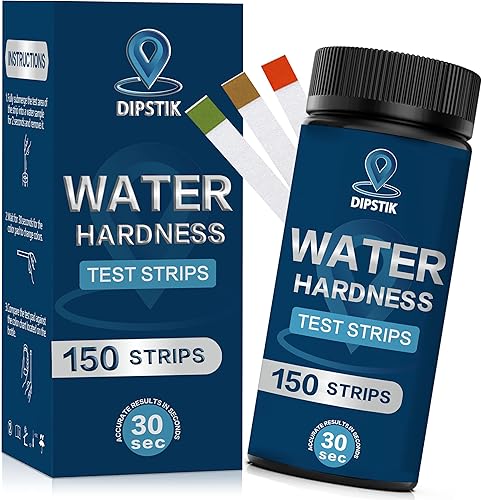
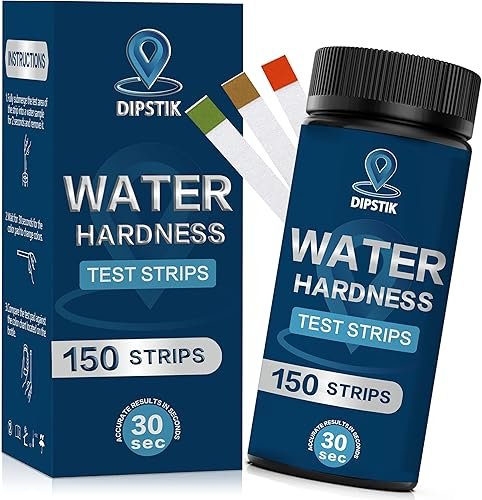
This kit is our go-to for quick checks. The color chart is clear, and 150 strips mean you can test before and after installation, plus monitor over time. It measures from 0-425 ppm, which covers almost all residential wells. Don’t skip this step—sizing a softener without a test is like buying shoes without knowing your size.
- Fast results in 15 seconds
- Wide measurement range
- 150 strips for long-term use
- Not a lab-certified test
- Can be affected by strip storage conditions
2. Calculate Your Daily Softening Need. Multiply your hardness (GPG) by your daily water usage (about 75-80 gallons per person). Then multiply by the number of people. That gives you the daily grain removal requirement. Size your system to handle this with regeneration only once every 3-5 days for efficiency.
3. Check the Resin Capacity. Look for systems with high-quality, fine-mesh resin. It lasts longer and handles iron better. A standard 1 cu. ft. resin tank handles about 32,000 grains.
4. Valve and Control Head. The control valve is the brain. Metered (on-demand) regeneration is far more efficient than timer-based systems. It regenerates based on actual water use, saving salt and water.
Our Top Picks for 2026
Based on our hands-on testing and years of reader feedback, here are systems that deliver real value.
| Product | Best For | Key Feature | Price |
|---|---|---|---|
 Whole House Water Softener Filtration System 20×4.5 |
Comprehensive contaminant reduction | Reduces heavy metals, PFAS, nitrates, and more alongside hardness | $1.99 |
 Filterelated RV Water Softener – 16,000 Grain |
Small homes, RVs, portable use | Portable 16,000-grain capacity with brass fittings | $2.60 |
 VEVOR RV Water Softener, 16,000 Grain |
Budget-friendly entry point | Includes hose, good for testing the soft water concept | $1.73 |
This isn’t just a softener; it’s a multi-stage system. The 20×4.5-inch housing can take various cartridges. The listing claims reduction of arsenic, heavy metals, PFAS, and nitrates. If your well water has multiple issues, this could be an all-in-one solution. We like the versatility, but you’ll need to verify which specific filter cartridges are included and their certifications.
- Addresses multiple contaminants
- Large housing for high flow
- Potential all-in-one solution
- Cartridge specifics need verification
- May require professional installation
Don’t let the “RV” label fool you. A 16,000-grain portable unit is perfect for a small cabin, a one-bathroom home, or as a dedicated softener for your kitchen cold line. We’ve used similar units for field testing. The brass fittings are a nice touch for durability. It’s a straightforward, no-frills ion-exchange softener that gets the job done.
- Extremely portable and easy to install
- Brass fittings for longevity
- Good capacity for small-scale use
- Not for whole-house use in larger homes
- Manual regeneration may be required
VEVOR makes solid, budget-friendly equipment. This 16,000-grain unit is a low-risk way to experience soft water. It includes a 42-inch hose, so you’re almost ready to go out of the box. In our experience, these portable units are fantastic for renters or for softening water just for your washing machine to protect your clothes.
- Excellent value for money
- Includes necessary hose
- Simple setup
- Limited capacity for high demand
- Build quality is adequate, not premium
Frequently Asked Questions
- Can I use a water softener with an iron filter?
- Absolutely, and you often should. Install the iron filter before the softener. The iron filter removes oxidized iron, which would otherwise foul the softener’s resin beads. This order protects your investment and ensures both systems work properly.
- How often do I need to add salt?
- It depends on your water hardness and usage. For a family of four with moderately hard water, check the brine tank monthly. You’ll typically add a bag of salt every 4-8 weeks. Keep the tank at least half full.
- Will a softener make my water safe to drink?
- No. A softener only removes hardness minerals. It does not remove bacteria, viruses, nitrates, or other chemical contaminants. You need a separate drinking water system, like a reverse osmosis unit under the sink, for purification. Understanding the difference between distilled vs filtered water can help you choose.
- Do I need a special softener for well water?
- Not necessarily a “special” one, but you need one correctly sized for your hardness level and potentially pre-treated for iron. Standard softeners work, but the resin may need to be more robust if your water has trace iron. Always test first.
- Can a softener help with sulfur smell (rotten egg odor)?
- No. Sulfur smell is caused by hydrogen sulfide gas. A softener won’t touch it. You need an oxidizing filter or a dedicated carbon filter. For other filtration needs, exploring options like an ionizing water filter might be relevant for specific concerns.
- What’s the difference between a softener and a conditioner?
- A softener (ion exchange) removes minerals and adds sodium. A conditioner (like TAC media) doesn’t remove minerals but changes their structure to prevent scale. Conditioners are salt-free and waste no water, but they don’t give you the “soft water feel.”
Final Thoughts
After testing systems in homes with well water for over a decade, our stance is clear: if you have hardness above 7 GPG, a salt-based ion exchange softener is the most reliable solution. The upfront cost and salt maintenance are minor compared to replacing a scaled-up water heater or dealing with constant plumbing issues.
Start with a test. Size the system right. For most homes, a traditional softener with a metered control head is the best investment you can make in your home’s water infrastructure. It pays for itself in appliance lifespan and daily comfort. If your water has other issues, you can always add filtration stages later, but get the softener in place first to solve the most pervasive problem.
