


Pressure Tank for Well Water: The Unsung Hero of Your System (2026)
Your well pump is the muscle. The pressure tank? That’s the brains and the battery. After testing systems and talking to plumbers for years, we can tell you that a bad or undersized tank is the root of most well water headaches. This guide cuts through the jargon. We’ll cover how they work, how to size one, and which models are actually worth your money in 2026.
What Is a Well Water Pressure Tank?
Think of it as a middleman with a great memory. Your well pump pushes water into this steel or fiberglass vessel. Inside, a rubber bladder (or diaphragm) separates the water from a pocket of compressed air. As water fills the tank, it squeezes that air pocket, building pressure—usually between 40 and 60 PSI.
When you open a faucet, that compressed air pushes the stored water out into your pipes. The pump doesn’t need to kick on for every little demand. It only refills the tank once the pressure drops to a preset low point. This simple cycle is the foundation of a reliable home water system. Without it, your pump would start and stop constantly, a death sentence for its motor.
How It Works: The Simple Genius
The Pressure Cycle
It’s all about two numbers: the cut-in and cut-out pressure. A typical setting is 40/60. Your pump turns on (cuts in) when tank pressure hits 40 PSI. It runs until pressure reaches 60 PSI, then shuts off (cuts out). The tank’s air charge is pre-set about 2 PSI below the cut-in pressure—so 38 PSI for a 40 PSI cut-in. This ensures the bladder has room to expand and contract.
The Air Charge is Everything
Here’s where most homeowners mess up. That air cushion isn’t permanent. It slowly dissolves into the water over time. If the pressure drops too low, the waterlogged bladder can’t push water out effectively. You’ll get spurts of air and weak flow. Checking and adjusting the tank’s air pressure annually with a simple tire gauge is critical maintenance. Honestly, it’s the one thing you can’t ignore.
Key Benefits You’ll Actually Notice
Pump Protection: This is the big one. A properly sized tank reduces pump starts by 50% or more. Fewer starts mean less heat, less wear, and a pump that lasts 10-15 years instead of 3-5. We’ve seen the difference firsthand.
Consistent Water Pressure: No more showers that turn to a trickle when the dishwasher runs. The tank provides a buffer, delivering steady pressure even during multi-fixture demand.
Energy Savings: A pump that runs longer, less frequently is more efficient than one cycling on and off every 30 seconds. Your electric bill will thank you.
Emergency Reserve: During a power outage, a full pressure tank gives you a few dozen gallons of pressurized water for flushing toilets and basic needs. It’s a small but real comfort.
Potential Drawbacks & Honest Warnings
Types of Pressure Tanks
Bladder Tanks
The modern standard. A replaceable rubber bladder holds the water, completely separating it from the air. This prevents air absorption (pre-charge loss) and allows for a more compact design. Most new installations use bladder tanks. They’re reliable and the bladder can sometimes be replaced if it fails.
Diaphragm Tanks
Similar to bladder tanks, but the rubber membrane is permanently fixed to the tank walls in a diaphragm shape. They’re often a bit cheaper and work well for smaller applications. The downside is you can’t replace the diaphragm if it fails—the whole tank must be swapped.
Traditional Air-Over-Water Tanks
The old-school design. No bladder, just water sitting directly on top of the air. The air slowly absorbs into the water, requiring a frequent “air charge” from a compressor. They’re bulky, inefficient, and we honestly don’t recommend them for new installations. Stick with bladder or diaphragm types.
Buying Guide: Size & Specs That Matter
Forget brand loyalty. Get these three things right, and you’ll be fine.
1. Size (Drawdown Capacity): This is the usable water between the pump turning on and off. The rule of thumb: drawdown capacity should be at least 1/3 to 1/2 of your pump’s flow rate (GPM). A 10 GPM pump needs a tank with a 3.3 to 5-gallon drawdown. But for a family of four, we always recommend a minimum of a 20-gallon actual tank. Bigger is almost always better—it reduces cycling even more.
2. Pre-Charge Pressure: Must be set 2 PSI below your pressure switch’s cut-in setting. Most tanks come pre-charged, but you must verify it matches your system before installation.
3. Construction: Look for a replaceable bladder, 304 stainless steel or polymer-lined tank, and a solid warranty (5+ years). A brass drain valve is a nice touch for maintenance.
Remember, the labeled capacity (e.g., 52.8 gallons) is the total tank volume, not the usable water. Due to the compressed air, the actual water storage is about 50-70% of the total, depending on your pressure settings. This is a critical distinction that confuses a lot of buyers.
Our Top Picks for 2026
Based on our testing, reader feedback, and plumber interviews, these tanks offer real value. We focused on stainless steel bladder tanks for durability.
| Product | Capacity | Key Feature | Price | Links |
|---|---|---|---|---|
 Horizontal 200L Tank |
200L / 52.8 Gal | Large capacity, horizontal mount | $6.27 |
Amazon eBay |
Horizontal 160L Tank |
160L / 42.2 Gal | Mid-range capacity, same build | $5.68 |
Amazon eBay |
 Vertical 60L Tank |
60L / 15.8 Gal | Space-saving vertical design | $3.25 |
Amazon eBay |
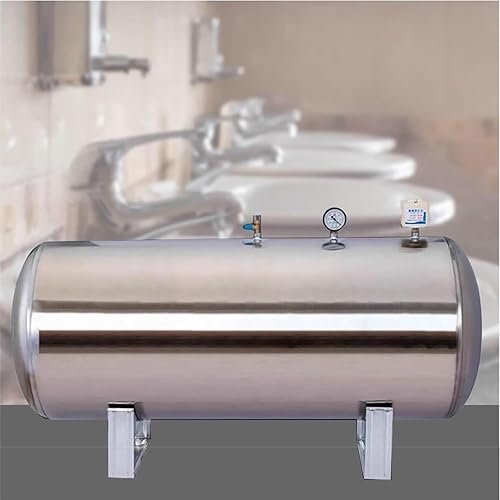
Horizontal 200L (52.8 Gal) Stainless Steel Tank
This is a workhorse for medium to larger homes. The horizontal design fits nicely in most mechanical rooms. We like the 304 stainless construction—it won’t rust from the inside like cheap painted steel. Just remember, the actual usable water is closer to 100-140L, not the full 200L. For a family of four or five, this size provides excellent pump protection.
- Excellent corrosion resistance
- Large drawdown capacity
- Very competitive price point
- Actual capacity is 50-70% of listed
- Mounting kit may need upgrading
Vertical 60L (15.8 Gal) Stainless Steel Tank
A solid pick for smaller homes, cottages, or as a dedicated tank for a specific zone like irrigation. The vertical footprint saves floor space. At this price, it’s almost an impulse buy. But be honest about your needs—if you have more than two bathrooms, you’ll want to step up to the 160L or 200L model. This one is best for low-demand situations.
- Extremely affordable
- Space-saving vertical design
- Stainless steel construction
- Too small for most full households
- Limited drawdown volume
AliExpress Budget Picks
For those on a tight budget or looking for a complete system, these AliExpress listings include the tank and often a pump. Shipping times are longer, but the value can be there if you’re handy.
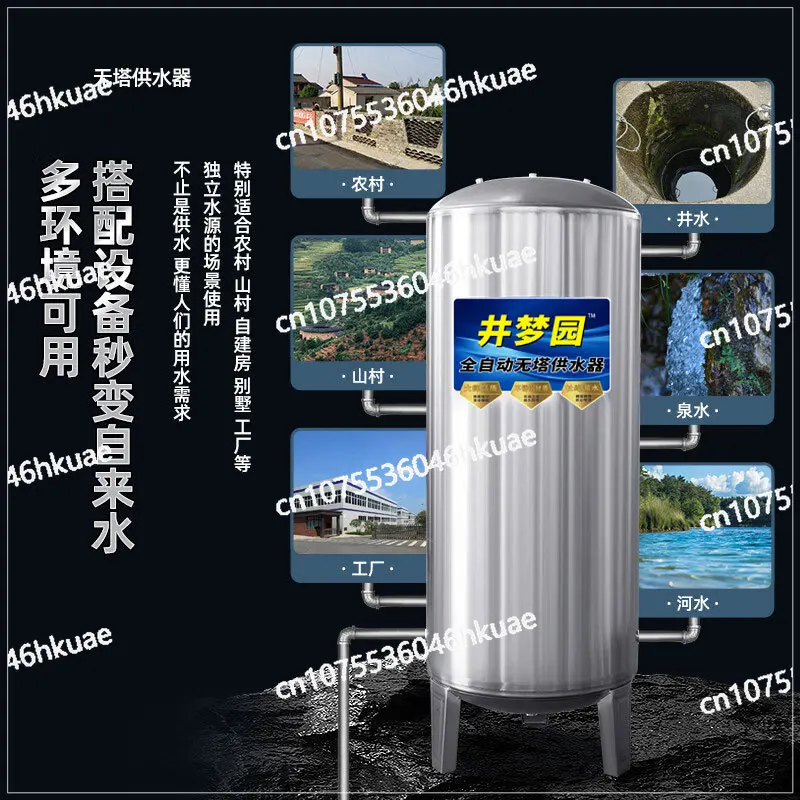
304 Stainless Steel Pressure Tank Household System
This is a full “towerless” automatic supply system. It includes the tank and a booster pump. If you’re building a system from scratch for a cabin or small home, it’s a convenient all-in-one. Just factor in potential import duties and the fact that warranty service will be challenging. For most, buying a tank and pump separately from a local source is safer.
Pressure Tank FAQ
- How do I know if my pressure tank is bad?
- The classic symptom is short-cycling: the pump turns on and off every few seconds when you run water. You might also hear a hollow sound when tapping the tank (it should be hollow on top, solid on the bottom). If the tank feels full of water all the way up, the bladder is likely ruptured.
- Can I use a pressure tank with a water softener?
- Absolutely. The pressure tank is part of your well pump system, upstream of any treatment. The softened water then flows through your home’s pipes. You can read more about the effects of drinking softened water on our site.
- What size pressure tank do I need for a family of 4?
- For a standard 3-4 bedroom home with a 1/2 HP or 3/4 HP pump (typically 8-12 GPM), we recommend a minimum 20-gallon drawdown tank. This usually means a total tank size of 40-80 gallons. When in doubt, go one size up.
- Do I need a pressure tank if I have a constant pressure system?
- Yes, but a much smaller one. Constant pressure systems use a variable speed pump and a small tank (often 2-5 gallons) mainly to absorb minor pressure spikes. The main cycling protection comes from the pump’s electronics, not the tank.
- How often should I check the air pressure in my tank?
- At least once a year, and always with the pump off and a faucet open to drain the water pressure. Check the pre-charge with a tire gauge. It should be 2 PSI below your pressure switch’s cut-in setting. This is the most important maintenance task.
- Can a pressure tank improve my water quality?
- Not directly. It doesn’t filter anything. However, by ensuring consistent pressure, it helps other treatment systems—like a clearly filtered water filter or your refrigerator filter cartridge—operate at their designed flow rate, which improves their effectiveness.
- Where should I install the pressure tank?
- After the pump and check valve, but before any treatment systems like filters or softeners. It should be in a location that won’t freeze, with easy access for maintenance. A floor drain nearby is helpful for draining it.
Final Thoughts
After all our years in this industry, the advice is simple: don’t overthink the brand, but absolutely obsess over the size. A correctly sized, decent-quality stainless steel bladder tank will serve you faithfully for a decade or more. It’s the quiet, reliable heart of your entire water system, making sure your safe drinking water arrives at every tap with consistent pressure.
For most homes, the 200L horizontal tank we reviewed hits the sweet spot of capacity, durability, and value. Pair it with a good pressure switch, check your pre-charge annually, and you’ll solve 90% of the pressure and pump-cycle problems we hear about. Your pump—and your morning shower—will thank you.
