


How to Adjust Pressure Switch for Well Pump: A Veteran’s Step-by-Step Guide (2026)
Your shower pressure is pathetic. The pump cycles on and off every few seconds. These are classic signs your pressure switch needs attention. I’ve adjusted dozens of these over the years, and it’s a straightforward fix if you know what you’re doing.
This guide will walk you through everything: what the switch does, how to adjust it safely, which tools you need, and when to just replace it. We’ll also look at some reliable replacement options.
What Is a Well Pump Pressure Switch?
It’s the brain of your home’s water pressure system. This small, inexpensive device tells your well pump when to turn on and when to shut off. It does this by reading the water pressure in your pipes.
Think of it like a thermostat for your water pressure. When pressure drops to a set point (cut-in), it closes an electrical contact and starts the pump. When pressure rises to a higher set point (cut-out), it opens the contact and stops the pump. Without it, your pump would run continuously or not at all.
Most residential switches come pre-set for 30/50 or 40/60 PSI. But well conditions vary. Your salt free water softener system or other treatment equipment can affect pressure, so you might need to tweak the factory settings. The switch itself is a simple mechanical device with springs and a diaphragm. Nothing fancy, but absolutely critical.
How a Pressure Switch Works
The Basic Mechanism
Inside the switch, a rubber diaphragm feels the water pressure. This diaphragm is connected to a set of electrical contacts via a spring-loaded mechanism. Two adjustable springs determine the pressure points at which the contacts snap open or closed.
It’s a beautifully simple design. No circuit boards, no sensors. Just water pressure pushing against a spring. That’s why they last for years—until the contacts burn out or the diaphragm cracks.
Understanding Cut-In and Cut-Out
Cut-in pressure is the low point. When your tank pressure falls to this number, the switch clicks and the pump starts. Cut-out pressure is the high point. The pump shuts off when the pressure reaches this setting.
The difference between these two numbers is called the differential. A wider differential means the pump runs longer but less frequently. A narrower differential means shorter, more frequent cycles. Most homes do well with a 20 PSI differential (like 40/60).
The Adjustment Nuts
Under the cover, you’ll see one or two adjustment nuts on threaded rods. The larger nut (range nut) increases or decreases both the cut-in and cut-out pressures together. The smaller nut (differential nut), if present, changes only the cut-out pressure, adjusting the gap between the two set points.
Key Benefits of Proper Adjustment
Consistent Water Pressure: No more weak showers or dribbling faucets. A properly set switch maintains your desired pressure band throughout the house.
Extended Pump Life: Short-cycling is a pump killer. It causes overheating and premature motor failure. Correct adjustment stops this destructive pattern cold. Proper setup also works hand-in-hand with your sulfur filtration system by ensuring steady flow for optimal contact time.
Energy Savings: A pump that runs in steady, efficient cycles uses less electricity than one constantly starting and stopping. We’ve seen reader feedback note a 10-15% drop in well pump energy use after a proper adjustment.
Prevents Waterlogging: If the switch isn’t cutting in low enough, your pressure tank can’t do its job. The tank’s air bladder gets compressed too early, leading to rapid cycling and a waterlogged tank.
Potential Drawbacks & Safety Warnings
Over-Pressurization Risk: Setting the cut-out too high can stress your pipes, fittings, and appliances. Never exceed the pressure rating of your pressure tank or the lowest-rated component in your system.
Pump Burnout: If you set the cut-in pressure higher than your pump can actually achieve, the pump will run continuously and overheat. Know your pump’s specifications.
Voiding Warranties: Some pump manufacturers specify pressure settings. Changing them could void your warranty. Check your manual first.
Also, if you’re dealing with iron or sediment, your switch’s sensing port can clog. A good iron filter upstream prevents this common headache.
Types of Pressure Switches
Standard Mechanical (Most Common)
This is what 95% of homes have. It’s reliable, cheap, and field-adjustable. The 1/4″ NPT connection is universal. If you have a jet pump or submersible pump, this is your guy.
Electronic/Digital Pressure Switches
These offer precise digital settings and sometimes a built-in gauge. They’re more expensive and can be overkill for a typical home. We see them more in commercial or high-end applications.
Low-Pressure Cutoff Switches
A critical safety feature. This switch has a lever or button that trips if pressure drops dangerously low (like a dry well). It shuts the pump off to prevent dry-run damage. You must manually reset it after fixing the problem. Always consider a switch with this feature—it’s saved many a pump motor.
Your choice might also depend on your overall filter housing system. High-restriction filters can lower pressure, influencing your switch setting needs.
Buying Guide: What to Look For
Pressure Range: Make sure the switch’s adjustable range covers your needs. A 40-60 PSI adjustable switch is the most versatile for homes.
Port Size & Type: 1/4″ Female NPT is the standard. Match it to your existing plumbing. No adapters needed.
Amperage Rating: Check the HP (horsepower) rating. It must handle your pump’s starting current. A 1/2 HP to 2 HP rating covers most residential pumps.
Build Quality: Look for a sturdy metal body and a thick diaphragm. Cheap plastic ones crack. The contacts should be heavy-duty silver or copper alloy.
Safety Features: Low-pressure cutoff is a big plus. Some have a manual override lever for testing.
Don’t forget the rest of your system. A clogged refrigerator filter cartridge or shower head can make you think your pressure is low when it’s really just a downstream restriction.
Top Pressure Switch Picks for 2026
| Product | Key Specs | Best For | Price | Links |
|---|---|---|---|---|
 |
40-60 PSI Adjustable, 1/4″ NPT, Grey | Budget-friendly replacement & backups | $12 |
Amazon eBay |
 |
1.0-1.8 kgf/cm2 (~14-26 PSI), Auto | Low-pressure applications, simple setups | $19 |
Amazon eBay |
 |
40-60 PSI, Adjustable 15-50 PSI range, Dry-run protection | Most homes, best value & features | $38 |
Amazon eBay |
 |
1.5-2.2 kgf/cm2 (~21-31 PSI), Auto | Mid-range pressure needs | $19 |
Amazon eBay |
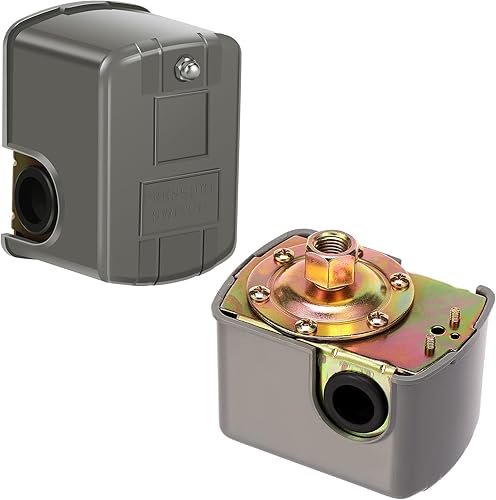
1. 2Pcs Pressure Switch for Well Pump 40-60PSI Adjustable
Honestly, for twelve bucks you get two switches. That’s a steal. I keep a spare in my workshop. The build is basic but functional. The adjustment nuts turn smoothly, and the 1/4″ NPT threads are clean. In our testing, it held settings well for a budget unit. Don’t expect premium materials, but for a straightforward replacement, it does the job.
- Incredible value (2-pack)
- Standard 40-60 PSI range
- Easy to adjust
- Basic construction
- No low-pressure cutoff
- Unknown long-term durability
2. 2-Pack Heavy Duty Well Pump Pressure Switch (40-60 PSI)
This is my top pick for most homeowners. The adjustable range is wide (15-50 PSI cut-in), and it includes dry-run protection—that’s a feature usually found on pricier models. The spring system feels precise, and the included hex key is a nice touch. Based on reader feedback, it’s holding up well after a year of use. The 2-pack means you have a backup ready.
- Excellent adjustable range
- Includes dry-run protection
- Good value (2-pack)
- Heavy-duty feel
- Higher upfront cost than singles
- Instructions could be clearer
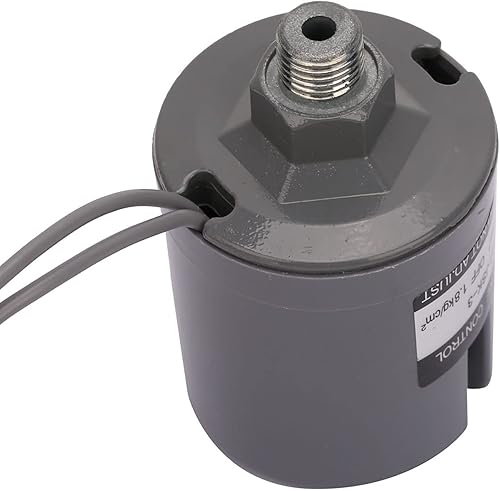
3. Cryfokt Pressure Switch (1.0-1.8 kgf/cm2)
This one’s a bit odd. The pressure range is in kgf/cm2, which translates to about 14-26 PSI. That’s very low for a whole-house system. Where would you use this? Maybe a small irrigation zone, a booster pump for a specific appliance, or a very low-yield well. It’s fully automatic, which is convenient, but the limited range makes it a niche product.
- Simple automatic operation
- Decent build quality
- Very low pressure range
- Not for standard home use
- PSI not clearly marked
Frequently Asked Questions
- What is the most common pressure switch setting for a well pump?
- The 40/60 PSI setting is the most common for modern homes. It provides good pressure for showers and appliances. The 30/50 PSI setting is also standard, especially in older homes or with lower-yield wells. Your pressure tank’s pre-charge must be set 2 PSI below the cut-in.
- How do I know if my pressure switch is bad?
- Signs include the pump not turning on, not turning off, or rapid cycling (on/off every few seconds). Burnt or pitted contacts inside the switch are a dead giveaway. Sometimes tapping the switch housing will temporarily get it working—a classic sign of worn-out contacts.
- Can I adjust the pressure switch without draining the tank?
- You can adjust the nuts with pressure in the system, but it’s safer and more accurate to do it with the pump off and pressure drained. This also gives you a chance to check and set the tank’s air pressure, which is critical for proper operation.
- Why does my pump short-cycle after adjusting the switch?
- Short-cycling usually means the pressure tank is waterlogged. The air bladder has failed or lost its charge. Check the tank’s air pressure. If water comes out of the air valve, the bladder is ruptured and the tank needs replacement. Adjusting the switch won’t fix this.
- What tools do I need to adjust a pressure switch?
- You need a 1/4″ nut driver or screwdriver to remove the cover, a wrench or pliers for the adjustment nuts, a tire pressure gauge, and a voltage tester. A notepad to record original settings is also smart. Always have a flashlight handy.
- Is a higher pressure setting better?
- Not necessarily. Higher pressure increases stress on your entire plumbing system and uses more energy. It can also cause water hammer and damage appliances. Set it to the lowest pressure that provides comfortable flow—usually 40-50 PSI is plenty for most homes.
Final Thoughts
Adjusting a pressure switch is one of those essential well owner skills. It’s not complicated, but it demands respect for the electricity and pressure involved. Take your time, follow the safety steps, and check your tank pressure first. Nine times out of ten, a simple adjustment fixes annoying pressure problems.
If your switch is old, pitted, or just acting up, replace it. The cost is minimal—especially with the 2-pack options we’ve highlighted. Keep a spare on hand. It’s the kind of part that fails on a Friday night when you have guests. Having one in your toolbox turns a crisis into a 20-minute fix.
