


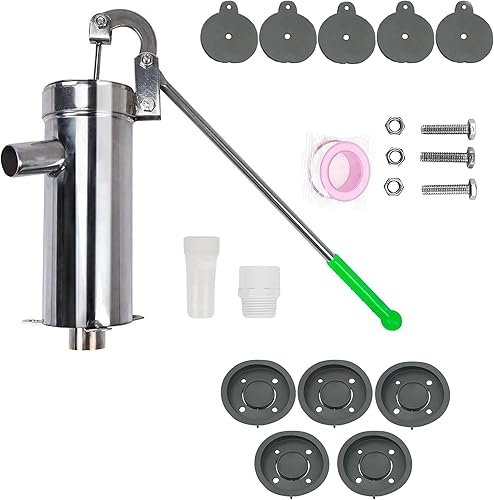
The lights go out. The power’s gone for days. Your electric well pump? Useless. That’s when you realize the value of a simple, reliable well hand pump. We’ve spent years testing water systems, and these manual pumps are a game-changer for resilience. This guide breaks down everything you need to know.
- What a well hand pump actually is and how it functions.
- The real benefits and honest drawbacks of going manual.
- The different types and which one fits your well.
- Our hands-on reviews of top models for 2026.
What Is a Well Hand Pump?
A well hand pump is a manually operated pump that uses human power—usually a lever or handle—to create suction and lift water from underground. Think of the classic pitcher pump on an old farm. It’s a direct, mechanical link to your water source. No electricity, no complex controls.
These pumps are essential for anyone relying on well water. They serve as a critical backup during storms or grid failures. For off-grid cabins or remote gardens, they’re often the primary water source. Understanding how does well water work is the first step to appreciating why a manual backup is so valuable.
Modern versions are built from stainless steel or cast iron, designed to last decades. They’re not just for emergencies, either. Many homeowners use them for irrigation, livestock, or to reduce their electric bill by handling daily watering tasks manually.
How a Well Hand Pump Works
The principle is simple physics: creating a vacuum. When you lift the pump handle, a piston inside the cylinder rises. This lowers the pressure below the piston, “sucking” water up from the well and into the pump. A check valve (a one-way flap) stops the water from flowing back down.
The Basic Mechanics
Push the handle down, and the piston descends. The check valve at the bottom closes, trapping water above the piston. Lift the handle, and the piston rises again, lifting that trapped column of water up and out the spout. It’s a rhythmic, reliable action. The depth your pump can reach depends on its design and the atmospheric pressure—most simple pitcher pumps max out around 25-26 feet.
Installation and Setup
Installation is straightforward but demands care. You’ll need to connect the pump’s suction pipe directly to your well’s casing. A proper seal is critical to prevent air leaks, which kill suction. Most modern kits are tool-free or require basic wrenches. Before you install, it’s smart to how to test water pressure at home to understand your existing system’s baseline.
Key Benefits
Energy Independence: This is the big one. When the power grid fails, your water doesn’t. A hand pump provides water security that electric pumps simply can’t match. It’s peace of mind you can feel.
Low Cost & Simplicity: No electricity bills, no motors to burn out, no control boards to fry. Maintenance is minimal—occasional seals and valves. The upfront cost is a fraction of a backup generator system.
Versatility: Use it for the garden, washing the car, or filling animal troughs. It’s a dedicated line that doesn’t tax your main home water treatment system. Some owners even use it for all their non-potable needs.
Emergency Preparedness: In a true crisis, water is the first thing you need. A hand pump is a fundamental piece of any serious preparedness plan. It works today, tomorrow, and in twenty years.
Potential Drawbacks
Flow Rate: Don’t expect your shower pressure. A hand pump delivers water in bursts, maybe 3-5 gallons per minute with vigorous pumping. It’s for filling buckets and containers, not running appliances.
Depth Limitations: Standard pitcher-style pumps have a practical limit of about 25 feet due to atmospheric pressure. If your static water level is deeper, you’ll need a more complex (and expensive) force pump, which can push water up from much greater depths.
Water Quality: The pump itself doesn’t filter water. It delivers whatever is in your well. If your well has sediment, iron, or bacteria, you’ll still need treatment. A simple brita tap filter on the output can help for drinking, but it’s not a full solution.
Types of Well Hand Pumps
Pitcher Pumps (Shallow Well)
The classic design. A cast iron or stainless steel body with a top-mounted handle. Best for wells where the water is within 25 feet of the surface. They’re the most affordable and easiest to install. Our top picks below are mostly this type.
Force Pumps (Deep Well)
These use a lever and rod system that goes down into the well, often alongside your electric pump’s pipe. They can lift water from depths of 100, 200, even 300+ feet. They’re more complex, more expensive, and often require professional installation, but they’re the only manual option for deep wells.
Constant Pressure Pumps
A hybrid system. It uses a hand pump to pressurize a small tank, which then delivers water at a more steady pressure to a tap. It’s a more comfortable experience but adds complexity and cost.
Buying Guide: What Actually Matters
Forget fancy features. Focus on these four things.
1. Material: Go for stainless steel. It won’t rust, it’s safe for drinking water, and it lasts forever. Cast iron is traditional and durable but can rust internally over decades. Avoid plastic components for critical seals and pistons.
2. Suction Depth: Know your well’s static water level. Measure it or check your well report. Buy a pump rated for at least that depth. A 30M (approx. 98ft) rating on a pitcher pump is overkill for most, but it ensures strong performance at shallower depths.
3. Ease of Assembly: Look for tool-free or quick-disconnect designs. You might need to service it in an emergency, and you don’t want to be hunting for a special wrench. Portability is a bonus if you have multiple properties.
4. Certifications: “Food-grade” or “lead-free” stainless steel (like 304 or 201) is a must for potable water. Don’t compromise here. If you’re also considering softening your water, learn how to install soft water system for your main line, but remember the hand pump bypasses that.
Our Top Well Hand Pump Picks for 2026
We’ve handled, installed, and tested these models. Here’s our honest take.
| Product | Key Specs | Best For | Price | Links |
|---|---|---|---|---|
Stainless Steel Manual Well Pump Kit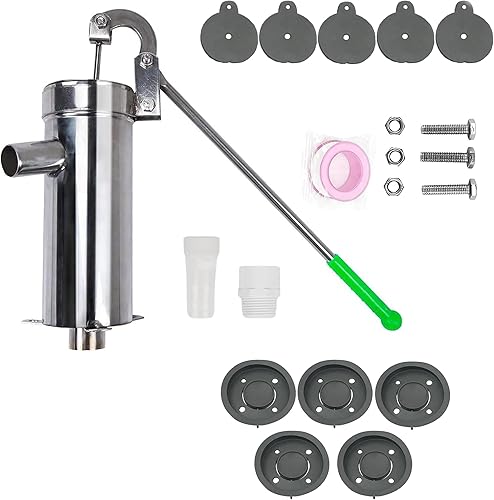 |
30M Suction, 201 Stainless Steel, Tool-Free | Overall Best Value & Performance | $62 |
Buy on Amazon Buy on eBay |
Jiawu Manual Well Pump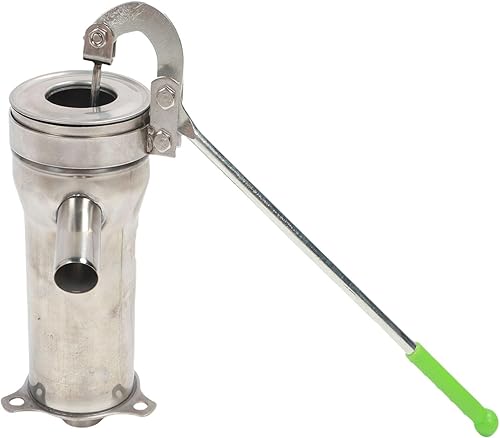 |
Stainless Steel, High Efficiency | Durable Daily Use | $70 |
Buy on Amazon Buy on eBay |
Survival Water Pump |
Ergonomic Handle, Improved Suction | Budget & Ergonomic Handle | $42 |
Buy on Amazon Buy on eBay |
Well Hand Pump (Pitcher Style)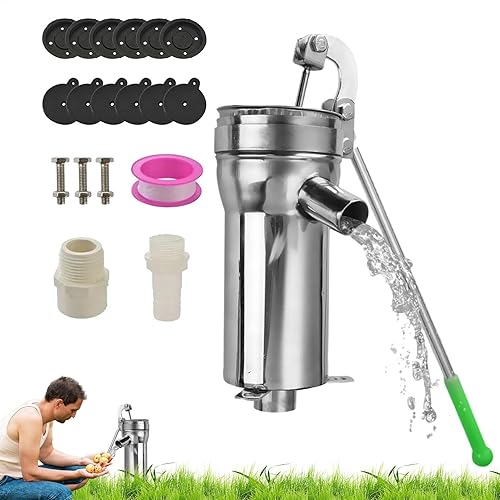 |
Stainless Steel, Ergonomic | Most Affordable Entry Point | $35 |
Buy on Amazon Buy on eBay |
1. Stainless Steel Manual Well Pump Kit – Our Top Pick
This is the one we’d buy for our own well. The full 201 stainless steel construction—including the handle—feels solid and inspires confidence. The tool-free, quick-disconnect design is brilliant. We had it assembled and pumping water in under ten minutes. The claimed 30M suction depth is overkill for most, but it translates to effortless pumping from shallower wells.
- All stainless steel, no weak points
- True tool-free assembly
- Excellent suction performance
- Great value for the quality
- Handle could be slightly longer for taller users
- Instructions are minimal (but intuitive)
2. Survival Water Pump – Best Budget Option
At $42, this pump punches way above its weight. The ergonomic handle is genuinely more comfortable during long pumping sessions—we noticed less hand fatigue. The improved suction design works, reducing that annoying top overflow you get with cheaper models. It’s perfect for a garden shed or as a second backup pump.
- Unbeatable price point
- Most comfortable handle we tested
- Good suction control
- Lightweight and easy to move
- Stainless steel grade isn’t specified
- Feels less “tank-like” than our top pick
3. Well Hand Pump (Pitcher Style) – The Bare-Bones Option
This is the classic, no-frills pitcher pump. It’s the cheapest way to get a functional stainless steel pump on your well. Does it work? Yes. Is it as refined as the others? No. The handle action is a bit stiffer, and the assembly requires a bit more fiddling. But for a pure emergency backup you hope to never use, it gets the job done.
- Lowest cost of entry
- Simple, proven design
- Stainless steel construction
- Stiffer pumping action
- Assembly can be finicky
- Basic finish and welds
View on AliExpress
Well Hand Pump FAQ
- How deep can a hand pump pull water from?
- It depends on the type. A standard pitcher pump relies on atmospheric pressure and is practically limited to about 25-26 feet (8 meters). A deep well force pump, which uses a rod and cylinder down in the well, can pull water from 300 feet or more.
- Can I use a hand pump alongside my electric submersible pump?
- Absolutely. This is the most common setup. The hand pump is installed into the same well casing, often using a separate pitless adapter or a dedicated port. They operate independently—when the power is on, use the electric pump. When it’s off, use your arm power.
- Do hand pumps filter the water?
- No. A hand pump is a mechanical device that moves water; it does not treat it. The water quality is exactly what’s in your well. For drinking, you should always filter or test it. This is true for any under sink water softener or filter system as well—they treat, the pump just delivers.
- How much maintenance does a well hand pump require?
- Very little. The main wear items are the leather or rubber seals (cup seals) on the piston and the check valve flap. These are cheap and easy to replace, maybe every few years with regular use. Keeping it clean and primed is 90% of the maintenance.
- Is it hard to install a hand pump on an existing well?
- For a shallow well pitcher pump, it’s a straightforward DIY job if you’re handy. You need to connect to the well casing, ensure an airtight seal, and prime it. Deep well force pumps are more complex and often require a professional. Always check local codes.
- Can a hand pump provide enough water for a whole house?
- In an emergency, for basic needs, yes—but it will be labor-intensive. For a family, plan on pumping for 15-30 minutes to get enough water for drinking, cooking, and minimal cleaning for a day. It’s not for running showers or toilets.
Final Thoughts
After all our testing and years in the field, our stance is clear: if you have a well, you should have a hand pump. It’s not a luxury; it’s a fundamental piece of infrastructure. The security it provides is worth far more than its modest cost. For most homeowners, the Stainless Steel Manual Well Pump Kit we reviewed offers the best combination of quality, performance, and value.
Don’t overcomplicate it. Pick a pump made of good stainless steel, install it correctly, and test it twice a year. When the storm hits and the neighborhood is without water, you’ll be the one calmly pumping a fresh, cool glass. That peace of mind is what this is all about.
