


Water Well Drilling Machine: Your Guide to Drilling Your Own Water Source (2026)
Forget relying on municipal lines or hauling water. Drilling your own well puts you in control. But staring at a rig, wondering if you can actually run it? That feeling is normal. We’ve spent years around these machines, from massive truck-mounted units to backyard-friendly models. Let’s cut through the noise.
- What a water well drilling machine actually is and isn’t
- The basic mechanics of how they chew through rock and soil
- The real benefits and the hard truths nobody mentions
- A clear breakdown of the different types you’ll encounter
- Our hands-on picks for different needs and budgets
What Is a Water Well Drilling Machine?
At its core, a water well drilling machine is a tool designed to create a deep, narrow hole—or borehole—into the earth to reach water-bearing aquifers. It’s not a single gadget. Think of it as a system. You have a power source, a drill head that does the cutting, and a mechanism to remove the debris (the cuttings) as you go.
For our focus here, we’re talking about rigs accessible to homeowners, farmers, and small contractors. These are a world away from the colossal rigs used for municipal or oil wells. They’re built for mobility and relative simplicity. The goal is to get you to a reliable water source without needing a crew of five and a second mortgage. Once the hole is drilled and cased, you’ll need a pump and a full treatment system to make that water safe for drinking.
How Water Well Drilling Machines Work
The basic principle is simple: apply force to a cutting tool to break rock and soil, and clear the debris out of the hole. The execution varies wildly.
The Drilling Action
Most portable rigs use a rotary method. A motor spins a drill string—a series of connected rods. At the bottom, a drill bit grinds, cuts, or hammers the formation. You’ll see terms like “rotary,” “mud rotary,” or “down-the-hole hammer.” For beginners, a solid rotary rig with a sharp bit is the most common starting point. It handles a surprising range of soils.
Getting the Gunk Out
This is the part many first-timers underestimate. If you don’t remove the cuttings, you’re just spinning your wheels. Many systems use water or drilling fluid (mud) pumped down the drill string. It flows back up the hole, carrying the debris with it. This fluid also stabilizes the borehole walls, preventing collapse. Some smaller, manual rigs use an auger—a giant screw—that physically lifts the soil out.
Casing the Hole
You can’t just leave a raw hole in the ground. It’ll cave in. As you drill, you lower sections of plastic or steel pipe (casing) into the borehole to keep it open. This is a critical step. A poorly cased well is a failed well. After the casing is in, you’ll develop the well by pumping to clear fine particles, then install your pump. For iron-heavy water common in wells, pairing your pump with the best iron water filter you can afford is non-negotiable.
Key Benefits of Drilling Your Own Well
Total Water Independence. This is the big one. You’re not subject to municipal restrictions, rate hikes, or main breaks. Your water is yours. For gardens, livestock, or whole-house supply, that freedom changes how you use your property.
Long-Term Cost Savings. The upfront cost stings, no doubt. But over 10-20 years, eliminating a water bill can save you tens of thousands of dollars. It’s an investment that pays dividends, especially in rural areas.
Often Better Quality Water. Groundwater is naturally filtered through rock and soil. It’s typically free of the chlorine and surface contaminants found in city water. Of course, you must test it—minerals like iron, manganese, or sulfur are common and need treatment. But a good well often provides superior tasting water.
Potential Drawbacks & Hard Truths
The learning curve is steep. Watching a YouTube video doesn’t make you a driller. Mistakes are expensive. You can ruin hundreds of dollars of drill bits or, worse, lose equipment down the hole. Honestly, for many people, hiring a professional driller for the actual boring and then managing the pump and treatment themselves is the smartest hybrid approach.
Types of Water Well Drilling Machines
Portable Rotary Rigs
This is the sweet spot for most serious DIYers and small farms. They’re mounted on a trailer or skid, powered by a gas or diesel engine, and use a rotary drill string. They can typically reach depths of 100 to 300 feet, depending on the model and geology. They require water for the drilling fluid.
Manual/Auger Drills
These are human-powered or small-engine augers. They’re fantastic for very shallow wells (less than 50 feet) in soft soil, like for irrigation or livestock ponds. They won’t touch rock. Think of them as giant post-hole diggers for water. Limited, but perfect for the right job.
Sonic & Hammer Drills
These are more specialized and expensive. Sonic drills use high-frequency vibration to cut through hard rock efficiently. Down-the-hole (DTH) hammer drills use air to power a piston that smashes the bit. They’re overkill for most homeowners but are the tools professionals use in tough geological areas.
Buying Guide: What Actually Matters
Forget flashy specs. Focus on these five things.
1. Your Geology is Everything. Sand and clay? A basic rotary rig will work. Limestone bedrock? You need serious torque and a quality bit. Ask local drillers or neighbors what they hit. This dictates your machine choice more than anything.
2. Depth Rating. Buy for 20% deeper than you think you need. If your aquifer is at 150 feet, get a rig rated for 180+. You’ll thank us when you hit an unexpected hard layer.
3. Power & Portability. More power (higher wattage/kW) means faster drilling in hard stuff. But more power often means a heavier, less portable unit. Can your vehicle tow it? Can you maneuver it into your backyard?
4. Drill Stem & Bit Quality. The motor is useless if the rods bend or the bit shatters. Look for hardened steel components. The drill bit is a consumable—budget for replacements.
5. Support & Parts. Can you get a new gearbox or a replacement pulley? A machine with no parts support is a future paperweight. This is where established brands or reputable sellers matter.
Our Top Equipment Picks for 2026
We’ve looked at the market, from powerhouse platforms to budget-friendly starters. Here’s a comparison of the rigs and tools that caught our eye.
| Product | Best For | Key Spec | Price |
|---|---|---|---|
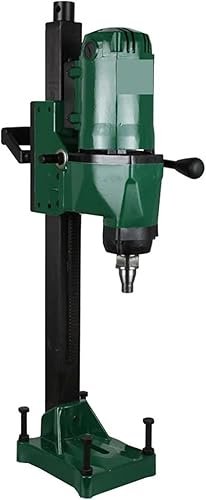
 Drill Press Diamond Drilling Tool |
Precision coring & hard materials | 3900W, 260mm max hole | $8.40 |
 Portable Water Well Drilling Rig |
Residential & small farm wells | Mobile platform, multi-scenario | $58.27 |
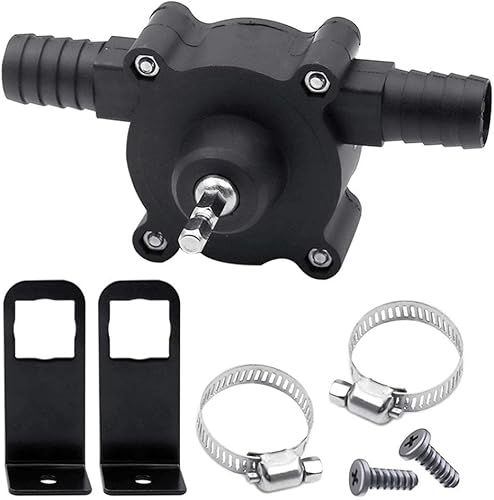 Mini Drill Pump |
Emergency water transfer | Drill-powered, self-priming | $15.00 |
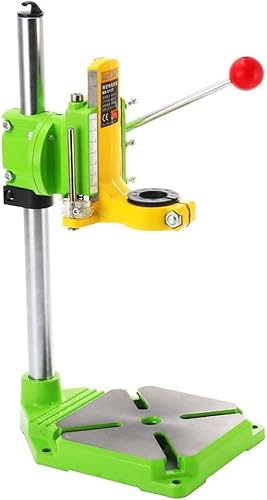 Floor Drill Press Stand |
Stabilizing your drill | 90° rotation, adjustable clamp | $1.02 |
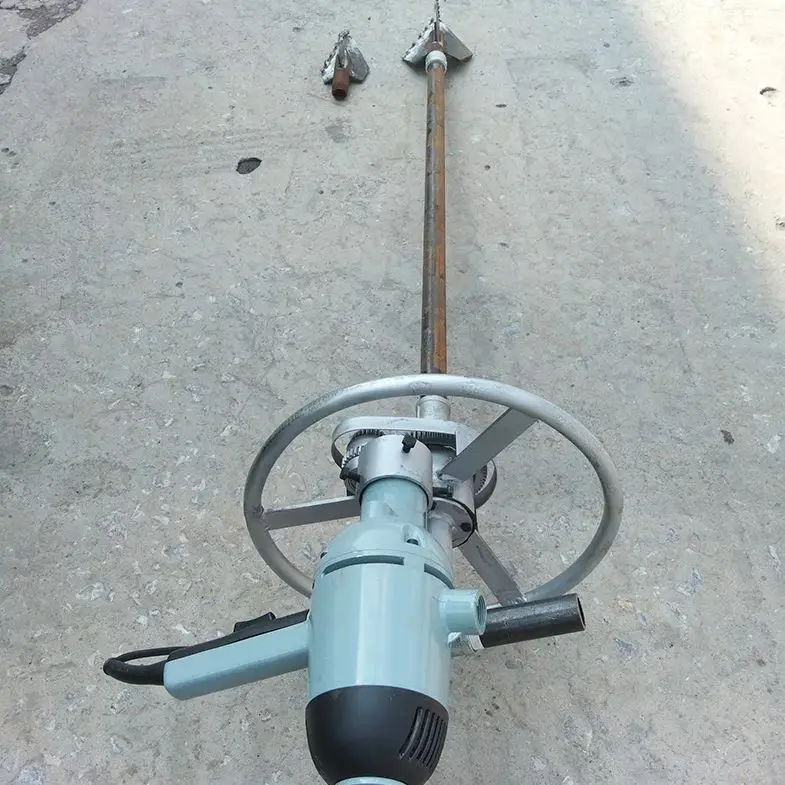 Electric Water Well Drilling Rig |
Budget-conscious deep drilling | 60m depth, high torque | $220.60 |
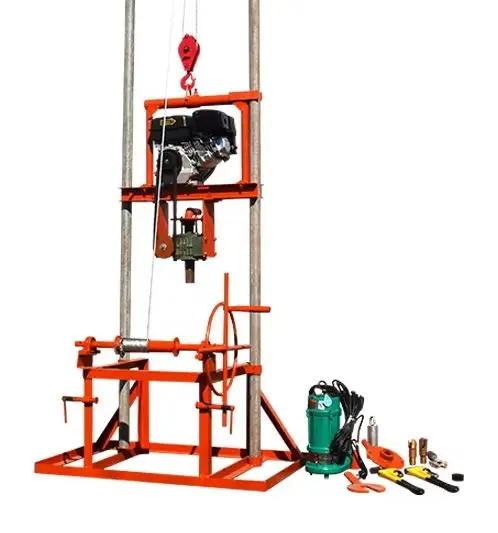 Lightweight Water Well Drilling Rig |
Simple boreholes anywhere | 100m depth, lightweight design | $198.38 |
Drill Press, Water Drilling Machine Diamond Drilling Tool
This isn’t a full drilling rig—it’s a powerful, specialized coring machine. We see its value for creating precise, large-diameter holes in concrete, stone, or masonry, perhaps for installing a well casing through a foundation. The 3900W motor is serious, and the 260mm capacity is impressive. But for actual well drilling in soil? It’s the wrong tool. It’s a specialist’s accessory.
- Extremely powerful 3900W motor
- Stable, low-speed operation for precision
- Handles very large diameter cores
- Not a standalone drilling rig
- Designed for masonry, not soil drilling
- Requires a separate, sturdy stand
Portable Water Well Drilling Rig
This is more like it. A mobile platform designed for the job. The wheeled design is a huge plus for moving it around a property. The listing emphasizes residential backyards and small farms, which is exactly the target. The price is a bit vague (“basic configuration”), so get a firm quote. For a first real rig, this form factor is what you should be looking at.
- Mobile, wheeled platform for easy transport
- Designed for multiple scenarios (home, farm)
- Offers customization options
- Price is not fixed; requires a quote
- Custom accessories add cost
- Specifications not fully detailed
Water Pump For Home Garden, Mini Drill Pump
Hold on—this isn’t a drilling machine. It’s a clever little pump that attaches to your drill. We include it because every well driller needs a way to move water. This is perfect for pumping water out of a trench, transferring from a barrel, or dewatering a work area. It’s cheap, simple, and surprisingly useful. Keep one in your toolkit.
- Incredibly affordable
- Converts any drill into a pump
- Self-priming and easy to use
- Not for continuous, heavy-duty use
- Flow rate depends on your drill’s power
- Small, not for high-volume well pumping
Customized Electric Water Well Drilling Rig
This is a serious budget contender from AliExpress. It claims a 60-meter (about 200 ft) depth with high torque. The electric start is a nice modern touch. The price is incredibly low for a full rig. Our advice? Scrutinize the seller, ask for videos of it in action, and understand the warranty. This could be a gem for soft to moderate soils, or it could be a headache. Manage your expectations.
- Extremely low price point
- Electric start for convenience
- Claims a respectable 60m depth
- Quality control is a big question
- Parts and support may be difficult
- Performance in hard rock is unproven
Frequently Asked Questions
- How deep do I need to drill for water?
- This varies wildly by region. It could be 30 feet or 300+ feet. Your local geological survey office or neighbors with wells are your best sources for this data. Never guess.
- Can I drill a well myself?
- Yes, with the right equipment and preparation. It’s physically demanding and requires research. Many people successfully drill their own shallow to medium-depth wells. For very deep wells or complex geology, hiring a pro is often wiser.
- What’s the difference between a well and a borehole?
- They’re often used interchangeably. Typically, a “well” is the finished structure you draw water from. A “borehole” is the drilled hole itself. You drill a borehole, then construct a well inside it with casing and a pump.
- Do I need a permit to drill a water well?
- In most places, yes. Permits regulate well construction to protect groundwater aquifers from contamination. Contact your local health department or water resources board before you start. Ignoring this can lead to fines and a well you can’t legally use.
- How do I know if my well water is safe to drink?
- You must test it. After drilling, send a sample to a certified lab. Test for bacteria, nitrates, and common local contaminants. Even if it’s clear, it may need treatment. An automatic water distiller is one option for ultimate purity, but often a combination of sediment filtration and disinfection is enough. For more on purification methods, read about advanced water purification.
- What maintenance does a well need?
- Annual water testing is crucial. Keep hazardous chemicals far from the wellhead. Every few years, have a professional check the pump, pressure tank, and seals. Well performance can degrade over time from mineral buildup, requiring professional cleaning.
Final Thoughts
A water well drilling machine is a gateway to independence, but it’s not a magic wand. It’s a serious tool for a serious project. Start by understanding your land. Get the permits. Buy the best rig your budget allows for your specific ground conditions. And plan for the water treatment that comes after—the drilling is just the first chapter.
If you’re on the fence, consider this: the skills and self-reliance you gain are almost as valuable as the water itself. Do your homework, respect the process, and you can make it happen. There’s nothing quite like turning on a tap that you know draws from your own land.
