


You turn on your tap, and clean water comes out. Simple, right? But behind that convenience is a massive, complex operation most people never see. After a decade of reporting on water quality, I’ve toured treatment facilities and tested the water coming out of them. What I’ve learned might surprise you.
- What a water treatment plant actually is and why it matters
- The step-by-step process from dirty river to clean glass
- The real benefits and hidden drawbacks of municipal treatment
- How to choose the right home system to complement your tap water
What Is a Water Treatment Plant?
A water treatment plant is an industrial facility designed to take raw, untreated water from a natural source and make it potable—safe to drink. The source could be a river, lake, reservoir, or underground aquifer. This water contains everything from dirt and leaves to bacteria, viruses, and chemical pollutants.
The plant’s job is to remove these contaminants through a series of physical, chemical, and biological processes. Think of it as a giant, multi-stage filter for an entire city. The goal is to meet or exceed strict safety standards before the water ever enters the pipes leading to your home.
It’s the backbone of public health. Without these facilities, waterborne diseases would run rampant. But here’s the thing—what the plant removes and what it leaves behind can vary. That’s where understanding the process becomes crucial for any homeowner.
How Water Treatment Works
The journey from source to tap follows a remarkably consistent sequence, though specific technologies can vary by plant size and source water quality. Let’s walk through the major stages.
1. Intake and Screening
Water is pumped from the source through large screens that catch big debris—sticks, fish, trash. It’s the first line of defense, protecting the downstream equipment from getting clogged. This step doesn’t make the water cleaner in a meaningful way for you; it’s about operational efficiency.
2. Coagulation and Flocculation
Here’s where chemistry enters. Operators add specific chemicals, often aluminum sulfate or ferric chloride, to the water. These coagulants cause tiny suspended particles—clay, silt, some organic matter—to clump together into larger, heavier particles called “floc.” It’s like making dust bunnies in the water so they’re easier to remove.
3. Sedimentation
The water then flows into large, quiet basins. With its flow slowed down, the heavy floc settles to the bottom by gravity. This sludge is periodically removed and disposed of. The clearer water on top moves on. This step removes a huge percentage of the turbidity—that cloudy look in raw water.
4. Filtration
Even after sedimentation, the water still has fine particles, some microorganisms, and protozoa like Giardia and Cryptosporidium. It passes through filters—typically layers of sand, gravel, and anthracite coal. These filters physically trap smaller particles. Some advanced plants use membrane filtration, which acts like a super-fine screen. If you’re curious about filtration principles on a smaller scale, our guide on activated carbon water filters dives deeper into one common media type.
5. Disinfection
This is the critical step for killing pathogens. The most common method is adding chlorine or chloramines. It’s effective and provides a “residual” disinfectant that stays in the water as it travels through miles of pipes, protecting it from recontamination. Other methods include UV light irradiation or ozone treatment, which are powerful but don’t leave a protective residual.
6. pH Adjustment and Fluoridation
Water can be slightly corrosive after treatment. To protect pipes (and prevent lead leaching from old plumbing), plants often add lime or soda ash to adjust the pH and hardness. Many communities also add fluoride at this stage for dental health benefits, following local public health policies.
7. Storage and Distribution
The treated water is stored in clean reservoirs or towers, then pushed through a network of pipes—the distribution system—to homes and businesses. This system’s integrity is vital. A perfectly treated batch of water can pick up contaminants from old, corroded pipes.
Key Benefits of Municipal Treatment
Public Health Protection: This is the big one. Treatment plants have virtually eliminated diseases like cholera and typhoid in regions with reliable systems. They provide a consistent, monitored barrier against biological contaminants.
Scale and Efficiency: Treating water centrally is incredibly cost-effective per gallon. It would be impractical and astronomically expensive for every household to treat raw river water to potable standards independently.
Regulatory Oversight: Plants are subject to rigorous testing and reporting under laws like the Safe Drinking Water Act. They must test for dozens of contaminants and keep levels below strict Maximum Contaminant Levels (MCLs). This provides a baseline safety guarantee.
Convenience: You get an endless supply of water that’s safe for cooking, cleaning, and bathing by simply turning a knob. The infrastructure, while often aging, is a modern marvel we take for granted.
Potential Drawbacks to Consider
Disinfection Byproducts (DBPs): When chlorine reacts with organic matter in the water (even after treatment), it can form compounds like trihalomethanes. Long-term exposure to high levels of some DBPs is linked to health risks. Plants work to minimize this, but it’s a constant balancing act.
Residual Chlorine/Chloramines: That protective disinfectant can affect taste and odor. Many people dislike the “pool water” smell. Chloramines are harder to remove than chlorine and can be problematic for fish keepers and kidney dialysis patients.
Lead and Copper Leaching: The treatment process itself doesn’t remove lead. If your home or the service lines have old lead pipes, corrosive water can leach the metal right into your glass at the tap. The plant adjusts pH to minimize this, but it doesn’t eliminate the risk.
Emerging Contaminants: Plants are designed to handle regulated contaminants. Pharmaceuticals, personal care product residues, and newer industrial chemicals (PFAS, for example) can slip through conventional treatment. Regulations and technologies are always playing catch-up.
Infrastructure Vulnerability: Your water quality depends on miles of pipe. Breaks, pressure changes, and biofilm growth in old mains can introduce contaminants after the water has left the plant. This is a key reason many opt for a final barrier at home, like a dedicated water purification system.
Types of Home Treatment Systems
Given the potential drawbacks, a point-of-use filter is a smart upgrade. But the options are dizzying. Here’s a breakdown of the main categories.
Activated Carbon Filters
The most common type, found in pitchers, faucet mounts, and refrigerator filter cartridges. They excel at removing chlorine, taste, odor, and many organic compounds (VOCs). They do not remove minerals, salts, or microbes. Quality varies wildly by the type of carbon and micron rating.
Reverse Osmosis (RO) Systems
The heavy-duty option. RO uses a semipermeable membrane to remove up to 99% of dissolved salts, lead, fluoride, and most contaminants. It produces highly purified water but also wastes some water and removes beneficial minerals. Often paired with a carbon pre-filter and post-filter.
Water Softeners
These aren’t technically filters. They use ion exchange to remove hardness minerals (calcium and magnesium) that cause scale. They don’t remove biological or chemical contaminants. It’s important to understand the difference between a water softener and a filter—they solve different problems.
UV Purifiers
Ultraviolet light systems are fantastic for disinfection. They kill bacteria, viruses, and protozoa without chemicals. However, they do nothing for taste, odor, or chemical contaminants. They’re often used as a final stage in a multi-barrier system.
Whole-House Systems
Also called Point-of-Entry (POE) systems. These treat all the water entering your home. Options range from large-carbon filters for chlorine removal to comprehensive whole house water purification setups that combine sediment, carbon, and sometimes UV. They protect appliances and provide treated water at every tap.
Buying Guide for Home Systems
Don’t just buy the first filter you see. Match the system to your specific water issues.
1. Get Your Water Report: Your utility publishes an annual Consumer Confidence Report (CCR). It lists detected contaminants and their levels. For well water, you must get it tested independently. Look for things like hardness, chlorine level, lead, nitrates, and any specific local contaminants.
2. Identify Your Goals: Do you just want better-tasting water? A simple carbon filter might suffice. Are you worried about lead or dissolved solids? Look at RO. Is scale buildup killing your kettle? You need a softener or an anti-scale filter.
3. Check Certifications: Look for NSF/ANSI certifications. Standard 42 covers aesthetic effects (taste, odor). Standard 53 covers health effects (lead, cysts, VOCs). Standard 58 is for RO systems. Standard 401 covers emerging compounds. This is your best proof of performance.
4. Consider Maintenance: Every filter has a lifespan. Pitchers need frequent refilling and cartridge changes. RO membranes last 1-2 years but need pre-filter changes every 6-12 months. Factor in the cost and hassle of replacement cartridges. A cheap system with expensive filters is no bargain.
5. Flow Rate and Capacity: Make sure the system can keep up with your household’s demand. A whole-house system rated for a two-bathroom home won’t work for a five-bathroom mansion. Undersink RO systems have a limited daily production rate (measured in Gallons Per Day – GPD).
Top Picks for Home Water Treatment
While we primarily test home filtration, understanding plant treatment helps you choose the right final barrier. Here are some targeted products for specific aquarium and plant water treatment needs, which operate on similar principles of water chemistry.
| Product | Key Feature | Price | Links |
|---|---|---|---|
 |
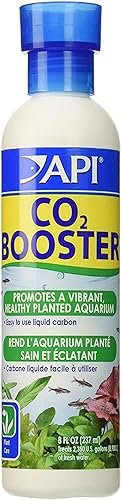
API Plant Treatment Promotes aquarium plant growth by adding essential carbon without altering pH. |
$23 | Buy on Amazon Buy on eBay |
 |
API Leaf Zone Plant Fertilizer Formulated for rapid absorption in freshwater aquarium plants. Use weekly. |
$29 | Buy on Amazon Buy on eBay |
 |
API Aquarium Water Treatment Starts the natural cycle with beneficial bacteria. Limits toxic ammonia and nitrite. |
$18 | Buy on Amazon Buy on eBay |
 |
Root Drops for Propagation Plant root stimulator drops to prevent shock and encourage root growth in cuttings. |
$16 | Buy on Amazon Buy on eBay |
1. API Plant Treatment, 237 ml
This is a niche product for aquarium enthusiasts, but it illustrates a key water treatment principle: targeted addition. Instead of removing contaminants, it adds a specific, beneficial compound (carbon) in a bioavailable form for plants. It’s a good reminder that treatment isn’t always about subtraction. In our view, it’s a solid, pH-stable choice for planted tank hobbyists.
- Adds essential carbon for plant growth
- Does not alter aquarium pH
- Can be used with or without CO2 systems
- Only relevant for freshwater aquariums
- Requires consistent weekly dosing
2. API Leaf Zone Plant Fertilizer, 473 ml
Leaf Zone is another aquarium-specific treatment that focuses on nutrient delivery. It contains chelated iron and other micronutrients designed for rapid plant absorption. Honestly, for most people reading a water treatment article, this isn’t relevant. But if you have a planted tank, it’s a straightforward, easy-to-dose fertilizer that won’t cloud your water.
- Contains chelated iron for better absorption
- Simple weekly dosing regimen
- Won’t cloud aquarium water
- Not a comprehensive fertilizer for all plant types
- Only for freshwater use
3. API Aquarium Water Treatment, 118.3 ml
This product is more directly relevant to water treatment concepts. It’s a concentrated blend of beneficial bacteria designed to kickstart the nitrogen cycle in a new aquarium. In essence, it’s a biological treatment supplement. It helps convert toxic ammonia and nitrite into less harmful nitrate. Think of it as jumpstarting a tiny, living water treatment plant in your tank.
- Immediately starts the biological cycle
- Helps prevent new tank syndrome and fish loss
- Easy to dose
- Requires proper tank conditions (temperature, filtration) to work
- Not a substitute for regular water changes
4. Root Drops for Propagation, 100ml
This is a plant root stimulator for cuttings and propagation. It’s a hormone-based treatment to encourage root development. While not a “water treatment” product in the municipal sense, it treats the water you use for propagation to achieve a desired biological outcome—healthy roots. It’s a good example of how water can be a delivery vehicle for targeted treatments.
- Supports early root growth in cuttings
- Wide range of plant uses
- Easy-to-apply drop format
- Only for propagation, not ongoing care
- Results can vary by plant species
Frequently Asked Questions
- Is tap water from a treatment plant safe to drink?
- In most developed areas, yes. It meets legal safety standards. However, “safe” is a minimum bar. It may contain disinfection byproducts, trace pharmaceuticals, or have picked up lead from pipes. Many people choose to filter for taste, odor, and an extra layer of protection.
- What does a water treatment plant remove?
- Typically: dirt, silt, bacteria, viruses, protozoa (like Giardia), algae, and some organic chemicals. Through coagulation and filtration, it removes particles. Through disinfection, it kills pathogens. It may also remove some metals like iron and manganese. It’s less effective at removing salts, dissolved organic chemicals, or newly emerging contaminants.
- How can I find out what’s in my tap water?
- First, read your utility’s annual Consumer Confidence Report (CCR). You can usually find it on their website. For the most detailed picture, you can get a professional water test from a certified lab, especially if you have a private well. Test for at least: lead, copper, nitrates, total coliform bacteria, and pH.
- Do I need a whole-house filter or just an under-sink one?
- It depends on your concerns. If you mainly want better drinking and cooking water, an under-sink RO or carbon filter is sufficient. If you want to remove chlorine from all water (for showering, protecting appliances) or have specific contaminants like iron or hardness throughout the house, consider a whole house water purification system.
- What’s the difference between a water softener and a filter?
- A water softener specifically removes hardness minerals (calcium, magnesium) through ion exchange to prevent scale. A filter removes a broader range of contaminants like chlorine, lead, or sediment through physical or chemical means. They solve different problems, and many homes have both. Learn more in our detailed comparison of a water softener vs filter.
- How often should I change my refrigerator water filter?
- Most manufacturers recommend every 6 months, or after filtering about 200-300 gallons. This is crucial. An old filter can become clogged, reduce flow, and even release trapped contaminants back into your water. It stops working effectively. Mark your calendar—don’t just wait for the indicator light.
Final Thoughts
Water treatment plants are unsung heroes of modern life. They perform an incredibly complex job, turning potentially dangerous source water into a reliably safe product. But “safe” and “optimal” aren’t always the same thing. The process involves trade-offs, from disinfection byproducts to the simple issue of taste.
That’s why we always recommend a multi-barrier approach. Understand your municipal water report, then choose a point-of-use filter that addresses your specific concerns—whether that’s chlorine taste, lead risk, or emerging contaminants. Your tap water is a partnership between the plant and your home’s final line of defense. Invest in both.
