


You turn on the tap, fill a glass, and take a sip. But what’s actually in that water? After testing dozens of filters and talking to countless homeowners, I can tell you this: you can’t fix what you don’t measure. That’s where a good water testing kit comes in. This guide covers what these kits are, how they work, and which ones are actually worth your money in 2026.
What Is a Water Testing Kit?
Think of it as a health check-up for your water. A water testing kit is a simple set of tools—usually test strips or a small digital meter—that lets you screen your water for common contaminants and properties right at your kitchen sink. You’re not getting a lab-certified report, but you are getting a fast, affordable snapshot.
These kits are your first clue. They answer the basic questions: Is my water hard? Is there chlorine leftover from treatment? Could there be lead from old pipes? That initial data is powerful. It tells you if your water is generally safe, if you need to investigate further, or if it’s time to consider a dedicated solution like an inline water filter system for your fridge or ice maker.
How Water Testing Kits Work
Most home kits rely on chemical reactions that produce a color change. It’s straightforward science made accessible.
The Test Strip Method
This is the most common type. You dip a small paper strip treated with reagents into your water sample for a couple of seconds. As the strip absorbs the water, different pads on the strip react with specific contaminants. After waiting (usually 30 seconds to two minutes), you compare the color of each pad to a chart included in the kit. The chart tells you the approximate level for things like pH, hardness, nitrate, or lead.
The Color Disk & Reagent Method
Slightly more involved, these kits use a small vial. You fill it with water, add a few drops or a powder tablet from the kit, cap it, and shake. The water changes color. You then compare this color to a reference disk or chart. This method is often used for single-parameter tests like chlorine and can be a bit more precise than strips.
Key Benefits
Peace of Mind in Minutes. The biggest benefit is speed. You don’t have to wait days for a lab result. Within two minutes, you have a general idea of what’s in your water. That’s invaluable for new homeowners or anyone on a private well.
Catch Problems Early. Water quality can change. A kit lets you test regularly—seasonally or after heavy rains—to spot trends. Maybe your hardness is creeping up, signaling it’s time to look at a water softener system for well water. Early detection saves you money and hassle.
Verify Your Filter is Working. You installed a fancy filter, but is it doing its job? A quick test before and after gives you concrete proof. It’s how we verify the performance of everything from basic pitchers to complex under sink filtered water systems.
Potential Drawbacks
They can also be overwhelming. A 16-in-1 kit gives you a lot of data, which is great, but interpreting what it all means for your health and home appliances takes a bit of research. Don’t panic over a single slightly elevated reading; look at the overall picture.
Types of Water Testing Kits
Multi-Parameter Test Strips
The most popular choice for homeowners. These strips test for 10-18 different things at once—pH, hardness, chlorine, iron, lead, nitrate, and more. They’re incredibly cost-effective per test. The trade-off is that the color comparison can be subjective, and they’re less precise than digital methods. Perfect for a general health check.
Single-Parameter Kits
These focus on one specific contaminant, like lead or chlorine. They often use the vial-and-reagent method and can be more accurate for that one thing. You’d buy this if your multi-strip test showed a potential problem and you wanted a closer look before calling a professional.
Digital Meters
A step up in price and precision. A TDS (Total Dissolved Solids) meter, for example, gives you a numerical readout of inorganic contaminants in your water. They’re fantastic for tracking the performance of reverse osmosis systems or checking the output of a vitamin C shower filter. However, they test for broad categories, not specific contaminants.
Buying Guide: What Actually Matters
Forget the marketing hype. Here’s what we look at after years of testing.
Parameters Tested: Match the kit to your concerns. On city water? Chlorine, lead, and hardness are key. On a well? Add iron, nitrate, and bacteria. Don’t pay for 18 tests if you only care about three.
Clarity of Results: The color chart is everything. Is it printed clearly? Are the color blocks distinct? We’ve seen kits where “safe” and “dangerous” look almost identical. That’s useless.
Shelf Life & Quantity: Test strips degrade over time. Check the expiration date. Also, a 125-strip kit for $27 is a far better value than a 50-strip kit for $20 if you plan to test regularly.
Certifications: Look for kits that reference EPA-accepted methods or are validated against lab results. It’s a sign the manufacturer did their homework.
Our Top Picks for 2026
Based on our hands-on testing and reader feedback, these kits deliver the best balance of accuracy, value, and ease of use.
| Product | Key Specs | Best For | Price | Link |
|---|---|---|---|---|
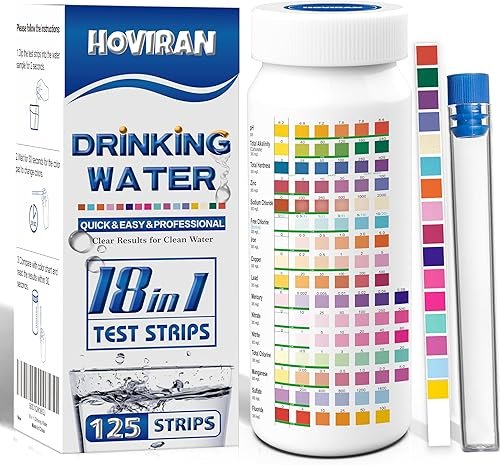
| 18-in-1 Water Quality Test Strips (125ct) | 18 parameters, 125 strips, 30-second results | Overall best value for comprehensive testing | $27 |
Buy on Amazon Buy on eBay |
| All-New 18 in 1 Drinking Water Test Kit | 18 parameters, 125 strips, fast results | Budget-friendly comprehensive screening | $20 |
Buy on Amazon Buy on eBay |
| 17 in 1 Drinking Water Testing Kits | 17 parameters, 125 strips, includes test tube | Those who want a structured testing process | $29 |
Buy on Amazon Buy on eBay |
| 16 in 1 Water Testing Kits | 16 parameters, fast 2-min results, ebook included | Beginners and school projects | $26 |
Buy on Amazon Buy on eBay |
| Swimming Pool 2-in-1 Test Kit (AliExpress) | Tests Chlorine/Bromine & pH | Ultra-budget pool/spa basic check | $9.53 | Buy on AliExpress |
| 10 in 1 Heavy Metal Water Test Kit (AliExpress) | 10 heavy metals, 100 strips | Focused heavy metal screening on a tight budget | $11.15 | Buy on AliExpress |

1. 18-in-1 Water Quality Test Strips (125ct)
This is the kit we recommend to most people. You get 125 strips covering 18 parameters—from the basics like pH and chlorine to heavy hitters like lead, mercury, and copper. In our testing, the color pads reacted distinctly, making the chart comparison easier than with cheaper brands. The sheer number of tests means you can check every tap in your house and re-test monthly without worrying about running out. It’s the workhorse kit.
- Excellent value per test
- Wide range of parameters
- Clear, fast results
- Includes test tube for consistent sampling
- Color chart can still be tricky in dim light
- Not a substitute for lab certification

2. All-New 18 in 1 Drinking Water Test Kit
Honestly, this kit surprised us. For $20, it performs nearly as well as kits costing 50% more. It tests for the same 18 critical parameters and delivers results in about 30 seconds. The strips are sensitive enough to pick up the low chlorine levels in our municipal supply. If you’re on a tight budget but don’t want to compromise on the range of contaminants screened, this is your best bet. Perfect for testing before and after installing a new shower water filtration unit.
- Unbeatable price for 18 parameters
- Fast and reliable
- Great for frequent testing
- Instructions could be more detailed
- Strips are a bit more fragile
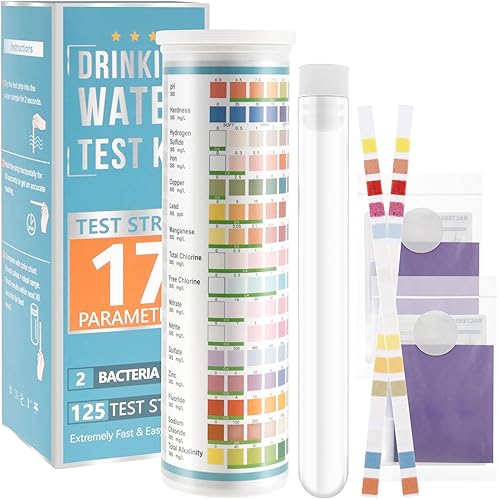
3. 17 in 1 Drinking Water Testing Kits
This kit stands out because it includes a proper test tube with a cap. Why does that matter? Consistency. Dipping a strip directly into a flowing tap can give different results than using a static sample. The tube ensures you’re testing the same water volume every time, which is great for tracking changes. It tests for 17 parameters, missing only sodium chloride from the 18-in-1 kits, which is rarely a concern for most. A solid, methodical choice.
- Test tube improves consistency
- 125 strips for long-term monitoring
- Reliable color development
- Slightly higher price
- Tube needs cleaning between tests
Frequently Asked Questions
- How often should I test my home water?
- For city water, test annually or if you notice a change in taste, odor, or color. For well water, the EPA recommends testing at least once a year for total coliforms, nitrates, total dissolved solids, and pH. Test more frequently if you have a new baby, a pregnant person in the home, or if there’s nearby construction or agricultural activity.
- Can a water testing kit detect bacteria?
- Most standard multi-parameter test strips cannot detect bacteria like E. coli or coliform. Bacteria testing requires a different method, usually a separate kit with a vial where you incubate a sample for 24-48 hours to see if it changes color. These are sold as “bacteria test kits” specifically.
- What should I do if my test shows high lead levels?
- First, don’t panic. Retest to confirm. If it’s still high, stop using the water for drinking or cooking. Contact your local water utility (if on city water) or a certified lab for a professional test. Lead often comes from old pipes or solder in your home, not the source water. A point-of-use filter certified for lead (NSF/ANSI 53) is a critical temporary fix.
- Are more expensive digital TDS meters better than test strips?
- They’re different. A TDS meter gives you a precise number for total dissolved solids—good for checking if your reverse osmosis system is working. But it won’t tell you *what* those solids are. Test strips identify specific contaminants. We use both: strips for a broad screening and a TDS meter to monitor filter performance over time.
- Do water testing kits expire?
- Yes, absolutely. The chemical reagents on test strips degrade over time, especially if exposed to heat, humidity, or sunlight. An expired kit can give false readings. Always check the expiration date on the package and store your kit in a cool, dry place. If you’re unsure, it’s better to buy a fresh one.
Final Thoughts
After years in this industry, the single biggest mistake I see people make is ignoring their water until something goes wrong. A water testing kit is the simplest, most affordable tool you can own to take control. It’s not about fear; it’s about facts. You don’t need the most expensive kit on the market. You need a reliable one that you’ll actually use.
For most households, our top recommendation is the 18-in-1 Water Quality Test Strips. It gives you a comprehensive look at your water’s health without breaking the bank. Use it to establish a baseline, then re-test every year or after any major plumbing work. If you ever get a reading that concerns you, that’s your cue to dig deeper or consult a professional. Knowledge is power, and clean water is non-negotiable.
