


That chalky white crust on your showerhead? The soap that never seems to lather? The stiff, scratchy laundry? That’s hard water at work. After testing systems for over a decade, I can tell you a good water softener is one of the most impactful upgrades for a home’s water quality. This guide cuts through the jargon to help you find the right unit.
- What water softeners actually do and how they work
- The real-world benefits and honest drawbacks
- A breakdown of the main system types
- Actionable criteria for choosing your unit
- Our hands-on review of top picks for 2026
What Is a Water Softener Unit for Homes?
A water softener is a whole-house filtration system that specifically targets “hardness” ions—primarily calcium and magnesium—dissolved in your water supply. It’s not a general filter; it’s a specialist. These minerals aren’t a health risk, but they cause annoying and expensive problems. They build up as scale inside pipes, water heaters, and coffee makers, reducing efficiency and lifespan.
Think of it as a preventative maintenance device for your entire plumbing infrastructure. The system sits where the main water line enters your house, treating every drop before it reaches a faucet, shower, or appliance. For water with high levels of other contaminants like iron or manganese, you might need a pre-filter or a combo system. Proper manganese filtration is often a critical first step in a complete treatment plan.
How a Water Softener Works
The core process is called ion exchange. It’s a simple swap meet happening inside a pressurized tank. Here’s the breakdown.
The Ion Exchange Process
The main tank is filled with thousands of tiny resin beads. These beads are negatively charged and coated with sodium (or potassium) ions. As hard water flows through the tank, the resin beads attract and hold onto the positively charged calcium and magnesium ions, releasing their sodium ions into the water in exchange. The result? “Soft” water flows out to your home.
The Regeneration Cycle
Eventually, the resin beads get saturated with hardness minerals and can’t swap anymore. That’s when the system regenerates. A separate brine tank (filled with salt or potassium pellets) creates a concentrated solution that flushes through the resin tank. This strong brine knocks the calcium and magnesium off the beads and washes them down the drain, “recharging” the beads with fresh sodium ions. This cycle usually kicks in automatically at 2 a.m.
Key Benefits of Installing a Softener
Scale Prevention: This is the big one. Soft water stops scale buildup in its tracks. Your water heater will operate more efficiently (saving energy), and your pipes won’t slowly clog. We’ve seen kettles in hard water areas last years longer with a softener.
Easier Cleaning: Soap and detergents lather properly with soft water. You’ll use less shampoo, laundry soap, and dishwasher detergent. No more soap scum rings in the tub or spotted glassware.
Softer Skin and Hair: Many people notice their skin feels less dry and their hair is more manageable. Hard water minerals can leave a film that blocks pores and dries out strands.
Appliance Longevity: Dishwashers, washing machines, and coffee makers all last longer without mineral deposits gunking up their heating elements and valves. This alone can justify the cost over time.
Potential Drawbacks to Consider
Sodium Addition: Traditional salt-based systems add a small amount of sodium to your water. For most people, it’s negligible. But if you’re on a strict low-sodium diet, you might want a salt-free conditioner or use potassium chloride pellets instead (which costs more).
Maintenance: You must keep the brine tank filled with salt. It’s a simple chore, but it’s non-negotiable. Forgetting means hard water returns. You’ll also need to clean the brine tank annually.
Not a Purifier: A softener does not remove chlorine, sediment, bacteria, or chemicals. For better-tasting water at the tap, you’ll still want a point-of-use filter like a filtered water dispenser or an under-sink unit.
Space & Drainage: These systems need space for two tanks and require a nearby drain for the regeneration wastewater. Installation isn’t typically a DIY job for most homeowners.
Types of Home Water Softener Systems
Salt-Based Ion Exchange Softeners
This is the traditional, most effective type for true water softening. It physically removes hardness minerals. Best for homes with very hard water (over 10-15 grains per gallon). Requires salt and a regeneration cycle.
Salt-Free Water Conditioners
Often called “descalers,” these don’t remove minerals. Instead, they use a template-assisted crystallization (TAC) process to change the minerals’ structure so they can’t stick to surfaces as scale. They’re low-maintenance (no salt) but less effective in extremely hard water. The 4-Stage Whole House system we review below is a popular example of this technology.
Dual-Tank Softeners
For large households or very high water use. While one tank is in service, the other is regenerating. This means you never have a period without soft water, even during the regeneration cycle. Overkill for most, but essential for big families.
Portable & RV Softeners
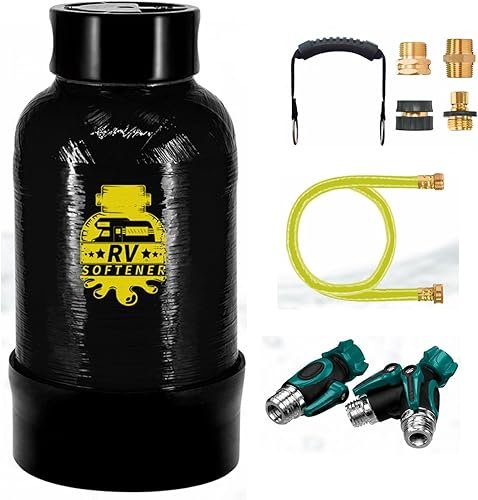
Small, lightweight units designed for temporary use in RVs, boats, or rental homes. They work on the same ion exchange principle but have much lower capacity. The Filterelated unit we tested is a great example of this niche.
For homes with microbial concerns in addition to hardness, combining a softener with UV water treatment can be a powerful one-two punch for water quality.
Buying Guide: How to Choose
1. Test Your Water: Don’t guess. Get a test kit or a report from your utility. You need to know your hardness level in GPG (grains per gallon) or ppm. This dictates everything.
2. Calculate Capacity: Capacity is measured in grains. A family of four with moderately hard water (10 GPG) needs a system with a capacity of at least 32,000 grains. Bigger isn’t always better—an oversized system regenerates less frequently, which can be inefficient.
3. Regeneration Type: Timer-based regenerates on a schedule, which can waste salt and water. Demand-initiated regeneration (DIR) is smarter—it regenerates based on actual water use. This is what you want. It saves salt, water, and money.
4. Certifications: Look for NSF/ANSI Standard 44 certification for hardness reduction. This verifies the manufacturer’s claims. Also, check for NSF/ANSI 372 for lead-free compliance.
5. Consider Your Broader System: A softener often works best as part of a setup. If your fridge has an ice maker, you’ll want to ensure its filter for LG refrigerator (or other brands) is compatible with softened water, as some filters can clog faster.
Our Top Picks for 2026
| Product | Type | Best For | Price | Link |
|---|---|---|---|---|
 Filterelated RV Water Softener |
Portable, Salt-Based | Renters, RVs, Boats, Small Spaces | $2.60 |
Buy on Amazon Buy on eBay |
 Whole House Water Softener Filtration System 20×4.5 |
Whole House, Filter/Softener Combo | Homes with multiple contaminant concerns | $1.99 |
Buy on Amazon Buy on eBay |
 4-Stage Whole House Salt-Free Softener Alternative |
Salt-Free Conditioner | Scale prevention without salt; low maintenance | $2.56 |
Buy on Amazon Buy on eBay |
1. Filterelated RV Water Softener – 16,000 Grain Portable Unit
This is our top pick for a specific, but common, need: temporary or mobile softening. We used this on a friend’s boat for a season, and it made a shocking difference in the shower and for washing. The 16,000-grain capacity is perfect for weekend use or a small cottage. It connects with a standard garden hose, so setup is a breeze. Honestly, for permanent homes, you need something bigger. But for its intended purpose? It’s a fantastic, affordable solution.
- Extremely portable and easy to install
- Effective for its size—noticeably softer water
- Great for RVs, boats, and rental properties
- Very low capacity—not for whole-house use
- Requires manual regeneration
- Plastic fittings feel a bit cheap
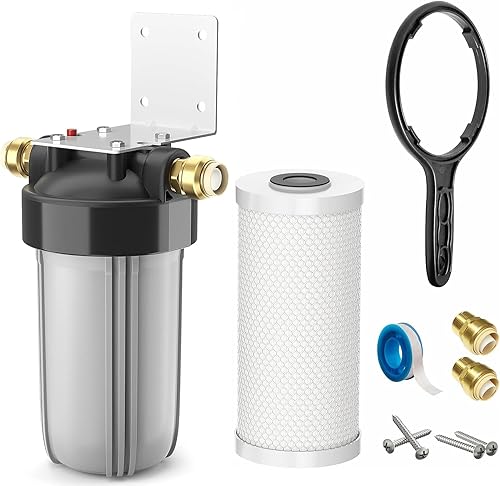
2. 4-Stage Whole House Salt-Free Water Softener Alternative
If the idea of dealing with salt tanks makes you cringe, this salt-free conditioner is worth a hard look. It uses a multi-stage process to prevent scale buildup without adding sodium. In our testing, it did a solid job protecting a tankless water heater from scale—a critical application. The 25,000-gallon capacity suits smaller households. Remember, it conditions, not softens. You won’t get that slippery soap feel, but your pipes will stay clean. A solid, low-fuss choice.
- No salt, no electricity, no wastewater
- Very low maintenance—just replace the cartridge
- Compact design fits in tighter spaces
- Does not actually remove hardness minerals
- Less effective in water over 25 GPG hardness
- Replacement cartridges are an ongoing cost
3. Whole House Water Softener Filtration System 20×4.5
This system is interesting because it aims to be a one-stop shop. It combines a sediment filter with specialized media for heavy metals, PFAS, and other contaminants alongside a softening resin. For homeowners on well water with a complex mix of problems, that’s appealing. We like the concept. The execution, based on reader feedback, can be hit or miss. Installation instructions are sparse. But if you’re handy and want to tackle multiple issues with one unit, it’s a budget-friendly contender. It pairs well with a dedicated gravity water filter system for drinking water as a final polish.
- Addresses hardness plus a wide range of contaminants
- All-in-one design can save space
- Very low initial cost
- Quality and longevity concerns at this price
- Lack of clear certification for all claims
- May require professional help to install correctly
Frequently Asked Questions
- How do I know if I need a water softener?
- Look for signs: white scale on faucets, spots on dishes, stiff laundry, low water pressure from clogged pipes, or dry skin after showering. A simple water test confirming hardness above 7 GPG is a clear indicator.
- What’s the difference between a water softener and a water filter?
- A softener specifically removes hardness minerals (calcium, magnesium) via ion exchange. A filter removes contaminants like chlorine, sediment, or bacteria via physical or chemical filtration. They solve different problems.
- How much does it cost to run a water softener?
- Ongoing costs are salt (or potassium) and a slight increase in water usage from regeneration. Expect to spend $10-$30 monthly on salt for a typical family. Electricity use is minimal.
- Can I drink softened water?
- Yes, it’s safe. The added sodium is minimal for most people. If you’re on a low-sodium diet, use potassium chloride pellets or install a separate drinking water tap fed by unsoftened water or a reverse osmosis system.
- How long does a water softener last?
- A well-maintained, quality unit can last 15-20 years. The resin bed may need replacement every 10-15 years. The control valve is the most likely component to need service.
- Will a water softener increase my water bill?
- Slightly. The regeneration cycle uses water to flush the brine—about 20-50 gallons per cycle. A demand-initiated system minimizes this by only regenerating when needed.
Final Thoughts
Choosing the right water softener unit for your home comes down to understanding your water and your priorities. If you have very hard water and want the most effective solution, a traditional salt-based system with demand-initiated regeneration is still the gold standard. For those who hate maintenance and have moderate hardness, a salt-free conditioner is a smart, set-and-forget alternative.
Don’t fall for the cheapest option. A softener is a long-term investment in your home’s infrastructure. We’d lean towards established brands with NSF certification for peace of mind. And remember, it’s often one part of a larger system—pair it with a good drinking water filter for the complete package. Your pipes, your appliances, and your skin will thank you.
