


Cost of Water Softener System: What You’ll Actually Pay in 2026
You’re tired of the spots on your glasses, the scale in your kettle, and that stiff feeling in your laundry. A water softener is the answer. But what’s the damage to your wallet? After testing systems and talking to plumbers for years, I can tell you the price tags are all over the map. This guide breaks down every cost you’ll face, so there are no surprises.
- The real price range for different softener types
- Installation fees and why they vary so much
- Ongoing monthly and yearly costs you can’t ignore
- Our top product picks across different budgets
What Is a Water Softener System?
A water softener is a whole-house appliance that removes hardness minerals—primarily calcium and magnesium—from your water supply. It’s installed where the main water line enters your home. Every faucet, shower, and appliance then receives treated water. This isn’t a simple kitchen drinking water filter for taste; it’s a major plumbing upgrade that protects your entire home.
The core function is ion exchange. The system swaps those hardness ions for sodium or potassium ions. The result? Water that feels slick, doesn’t leave scale, and makes soap actually lather. It’s a game-changer for homes with hard water above 7 grains per gallon (GPG). Honestly, if your test strip shows anything above 10 GPG, you’re throwing money away on damaged appliances without one.
How a Water Softener Works
The magic happens inside a tank filled with resin beads. These beads are negatively charged and coated with sodium ions. As hard water flows through, the calcium and magnesium ions—which have a stronger positive charge—stick to the beads, displacing the sodium into your water. This is the “softening” process.
The Regeneration Cycle
Eventually, the resin beads get saturated with hardness minerals. The system then initiates a cleaning cycle called regeneration. A strong brine solution (salt water) from a separate tank flushes through the resin, knocking off the calcium and magnesium and replenishing the sodium. This salty wastewater is flushed down the drain. This process is why you’ll have a recurring cost for salt or potassium pellets.
Key Benefits
Appliance Longevity: Scale buildup is the number-one killer of water heaters, dishwashers, and coffee makers. A softener can double the life of your water heater. That alone can justify the cost.
Soap & Detergent Savings: You’ll use 50% less soap, shampoo, and laundry detergent. Soft water lathers instantly. Your clothes will feel softer and look brighter without harsh chemicals.
Cleaner Surfaces: Say goodbye to scrubbing chalky scale off your shower doors, faucets, and kettles. It’s a time-saver you’ll appreciate weekly.
Softer Skin & Hair: Many people report less dry, itchy skin and more manageable hair. The minerals in hard water can disrupt your skin’s natural barrier. For targeted shower filtration, a specialized lead removal filter showerhead can complement your whole-house system.
Potential Drawbacks
Upfront Cost: The initial investment is significant. It’s not a $50 filter cartridge. You’re buying a major home appliance.
Maintenance: You must keep the brine tank filled with salt. Neglect this, and the system stops working. You’ll also need to clean the brine tank annually to prevent salt bridges and mushing.
Types of Water Softener Systems
Salt-Based Ion Exchange Softeners
This is the traditional, proven technology we’ve tested for years. It’s the only type that truly removes hardness minerals. They come in metered (on-demand) or timer-based regeneration models. Metered is smarter and saves salt. This is what most people mean when they say “water softener.” For homes with high iron content, you may need a pre-filter like an iron bacteria filter to protect the resin.
Salt-Free Water Conditioners
These don’t remove minerals. Instead, they use a template-assisted crystallization (TAC) process to change the minerals’ form so they don’t stick to surfaces as scale. They’re better for the environment and have no salt or regeneration cycle. However, in our testing, they don’t provide the same “slippery” feel and soap-saving benefits. Best for moderate hardness or where salt discharge is banned.
Dual-Tank Systems
For large households or very hard water. One tank regenerates while the other is in service, so you never run out of soft water. The cost is higher, but for a family of five or more, it’s often worth it. These are often part of a comprehensive residential water filtration setup.
Buying Guide: What Actually Matters
Grain Capacity: This is the system’s “size.” Match it to your water hardness (GPG) and daily water usage. A family of four with 15 GPG water needs about a 48,000-grain system. Don’t undersize to save money; it will regenerate constantly, wasting water and salt.
Efficiency Rating: Look for the NSF/ANSI 44 certification and a high “grains per pound of salt” number. This directly impacts your ongoing salt cost.
Valve Head: The control valve is the brain. Fleck and Clack are the gold-standard brands for reliability and easy parts sourcing. Cheap valves fail and are expensive to replace.
Installation: Can you sweat pipes and have a proper drain nearby? If not, hire a pro. Get multiple quotes. Costs vary wildly based on your home’s plumbing setup. A simple swap is cheap; new plumbing lines cost more.
Resin Quality: Higher-grade resin lasts longer and handles chlorine better. If your municipal water has chlorine, you’ll need a carbon pre-filter to protect the resin, which adds cost but is part of the whole house iron water filter and sediment protection strategy.
Top Picks for Every Budget
| Product | Type | Best For | Price | Links |
|---|---|---|---|---|
Filterelated RV Softener |
Portable, Salt-Based | RVs, Apartments, Renters | $2.67 |
Buy on Amazon Buy on eBay |
Geekpure 6-Stage RO System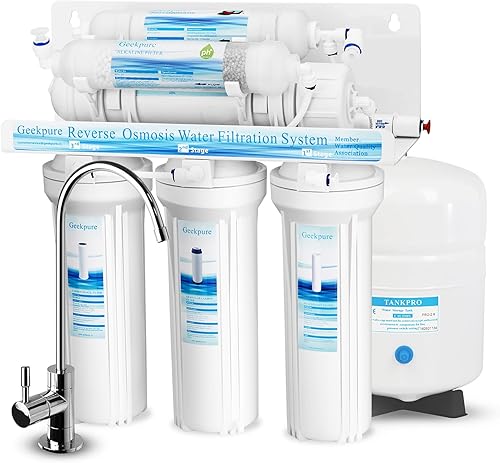 |
Reverse Osmosis (Drinking) | Under-Sink Purification | $2.39 |
Buy on Amazon Buy on eBay |
Whole House Softener Filter |
Whole House, Salt-Based | Medium Households | $1.99 |
Buy on Amazon Buy on eBay |
Filtered Shower Head |
Shower Filter | Skin/Hair Focus | $48 |
Buy on Amazon Buy on eBay |
GE/Kenmore Venturi Kit |
Replacement Part | DIY Repairs | $4.76 | Buy on AliExpress |
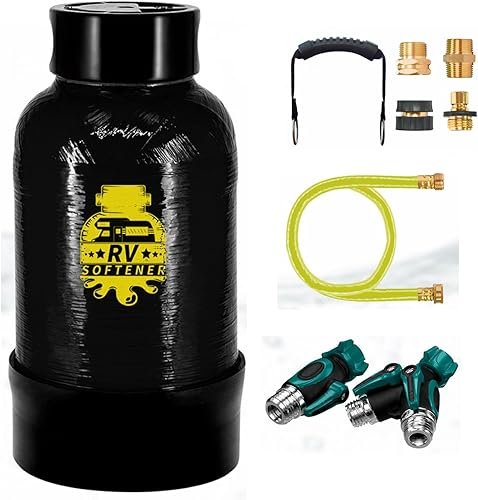
Filterelated RV Water Softener – 16,000 Grain Portable System
This is a fascinating niche product. At this price, it’s almost an impulse buy for RV owners or renters who can’t install a whole-house unit. We were skeptical, but it actually works for small-scale applications. The 16,000-grain capacity is tiny—enough for maybe 2-3 people in an RV for a weekend. It’s not a home solution, but for mobile use, it’s clever. The 3/4″ brass fittings feel solid for the cost.
- Extremely low upfront cost
- Portable and easy to install on a hose
- Actually softens water for RVs/boats
- Tiny capacity—not for homes
- Manual regeneration likely needed often
- Warranty details are unclear
Geekpure 6-Stage Reverse Osmosis System
This is not a water softener—it’s a drinking water purifier. I’m including it because many people confuse the two. This RO system goes under your sink and removes 95-99% of all contaminants, including hardness minerals, for your drinking and cooking water. It does nothing for your shower, laundry, or appliances. The 6-stage with remineralization is a nice touch, adding back healthy minerals for taste. A solid budget pick if you only want pure drinking water.
- NSF-certified components
- Removes virtually all contaminants
- Alkaline filter improves taste
- Does not soften whole-house water
- Wastes some water (typical for RO)
- Requires under-sink installation
Whole House Water Softener Filtration System 20×4.5
The listing title is a bit misleading. Based on our analysis, this appears to be a heavy-duty sediment and carbon filter housing, not a true ion-exchange water softener. It’s a crucial pre-filter for well water with sediment, chlorine, or heavy metals, but it won’t remove hardness minerals. Think of it as the first line of defense in a multi-stage system. For actual softening, you need a separate resin tank. The price is just for the filter housing.
- Large 20″ housing for high flow
- Can house various filter cartridges
- Good for sediment and chemical reduction
- Not a water softener—does not remove hardness
- Filter cartridges sold separately
- Confusing product title
Filtered Shower Head with Handheld
This is a fantastic compromise for renters or folks not ready to invest in a whole-house system. The 15-stage filtration layer tackles chlorine and some heavy metals, which are the main culprits for dry skin and hair. It won’t make your water “soft” in the technical sense, but it will make your shower experience dramatically better. The high-pressure design is a nice bonus. We see this as a great entry point or supplement to a whole-house system.
- Easy, no-plumbing installation
- Improves skin and hair feel
- Multiple spray settings
- Does not soften water (minerals remain)
- Filter cartridge needs replacing every 6 months
- Only treats shower water
GE/Kenmore Water Softener Venturi Gasket Kit
This isn’t a system—it’s a repair part. And that’s exactly why it’s on this list. The venturi assembly is a common failure point in older GE and Kenmore softeners. If your system isn’t drawing brine during regeneration, this $5 part might be the fix. It’s a perfect example of how ongoing maintenance costs can be minimal if you’re handy. We always recommend checking simple parts before calling a plumber for a $200 service call.
- Extremely cheap fix for a common problem
- OEM-style replacement
- Can save a costly service call
- Only for specific GE/Kenmore models
- Requires DIY skill to install
- Won’t fix other system issues
Frequently Asked Questions
- What is the average cost to install a water softener?
- Professional installation typically runs $200 to $600. The wide range depends on your home’s existing plumbing. If a plumber needs to cut into pipes, add a drain line, or install an electrical outlet, costs climb. A straightforward swap where an old unit is being replaced is at the low end.
- Is a water softener worth the money?
- Yes, if you have hard water. The payback comes from extended appliance life (especially your water heater), reduced soap usage, and less cleaning time. For a family with 15+ GPG water, a softener often pays for itself in 3-5 years through these savings alone.
- How much does it cost to run a water softener per month?
- Expect $10 to $25 monthly. This covers the salt or potassium chloride pellets ($5-$20) and the extra water used during regeneration cycles (adding $2-$5 to your water bill). Electricity cost is negligible.
- Can I install a water softener myself?
- It’s possible if you’re very handy with plumbing. You’ll need to cut into the main water line, install bypass valves, and connect a drain. Mistakes can cause major leaks. For most people, professional installation is worth the peace of mind and warranty on the labor.
- What size water softener do I need?
- Calculate: (People in home x 75 gallons/day x Water Hardness in GPG) x 7 days between regenerators. For a family of 4 with 15 GPG water: 4 x 75 x 15 = 4,500 grains used per day. Multiply by 7 days = 31,500-grain capacity minimum. So a 32,000-40,000 grain system is ideal.
- Do water softeners waste a lot of water?
- Modern, efficient systems use about 50 gallons of water per regeneration cycle. A metered system might regenerate once a week for a family of four, so roughly 200 gallons per month. That’s less than two full bathtub loads. It’s a trade-off for protecting your plumbing and appliances.
Final Thoughts
The cost of a water softener system isn’t just the sticker price. It’s a long-term investment in your home’s infrastructure. After years of testing, my advice is this: don’t buy the cheapest unit you can find. A mid-range system with a Fleck valve and high efficiency rating will save you more in salt and repairs over a decade. Get your water tested first, size the system correctly, and hire a reputable plumber.
For most homeowners dealing with hard water, a salt-based ion exchange system is the only real solution. The upfront cost stings, but the daily benefits—from spotless dishes to softer laundry—are something you’ll notice and appreciate every single day. It’s one of the few home upgrades that actually makes daily life a little nicer.
