


Your water softener isn’t using salt. Maybe the brine tank is bone dry, or you’ve just moved into a house with a strange-looking unit. Don’t panic. This doesn’t always mean it’s broken. In fact, it might not be a traditional softener at all. After testing systems for years, we’ve seen this confusion a lot. Let’s clear it up.
This guide covers what these salt-free systems are, how they work, and if they’re right for you. We’ll look at the real benefits, the honest drawbacks, and our top picks for 2026.
What Is a Water Softener Not Using Salt?
Let’s get the terminology straight. When someone says their “water softener” isn’t using salt, they’re usually talking about a salt-free water conditioner. It’s a critical distinction. A traditional ion-exchange softener needs salt to regenerate its resin beads. No salt, no softening.
A salt-free conditioner, however, doesn’t remove hardness minerals. You’ll still have calcium and magnesium in your water. What it does is crystallize these minerals, changing their form so they can’t stick to pipes and heating elements as limescale. The water is “conditioned,” not “softened.”
We get this question a lot from homeowners confused by their plumbing. Sometimes, the unit is simply broken or bypassed. But often, it’s a different technology entirely. Knowing the difference saves you time, money, and a lot of head-scratching.
How a Salt-Free System Works
Forget everything you know about brine tanks and resin beads. Salt-free systems use a completely different playbook.
The Core Process: Template Assisted Crystallization (TAC)
Most effective salt-free conditioners use TAC media. This stuff looks like small, ceramic beads. Inside, there are microscopic nucleation sites. As hard water flows over them, dissolved calcium and magnesium ions latch on and form microscopic crystals.
Once crystallized, these minerals are stable. They don’t precipitate out of the water to form scale. They just flow right through your plumbing and down the drain. Your pipes stay cleaner, and your water heater works more efficiently.
What It Doesn’t Do
This is the part most marketing glosses over. The minerals are still there. You won’t get that slick, “slippery” feeling in the shower. Soap lather won’t dramatically improve. For that, you need actual removal, which only a salt-based softener or a high-end drinking water system with a reverse osmosis stage can provide.
Key Benefits
No Salt, No Hassle: This is the big one. No lugging 40-pound salt bags. No monthly maintenance. You install it and basically forget it for years. For busy people, that’s huge.
No Sodium in Your Water: Ion-exchange softeners add a small amount of sodium to your water. If you’re on a strict low-sodium diet, that’s a problem. Salt-free conditioners add nothing. They’re also better for the environment, with no salty backwash brine to dispose of.
Scale Prevention That Works: In our testing, good TAC systems are genuinely effective at preventing new scale buildup. We’ve pulled heating elements from tanks with conditioners that were scale-free after years of use. They protect your investment in appliances.
Low Operating Cost: Beyond the initial purchase, the only cost is replacing the media every 3-5 years. No electricity, no water wasted on regeneration, no salt. It’s a “set and forget” solution for scale control.
Potential Drawbacks
Won’t Soften Water Feel: You’ll still see water spots. Your soap won’t lather like crazy. If you want that classic “soft water” experience, this isn’t it. You might need a separate best under sink water filter for drinking water taste, as conditioners don’t remove chlorine or other contaminants.
Performance Varies with Water: They work best on city water with moderate hardness. Very hard well water, or water with high iron or manganese, can foul the media quickly. Always get your water tested first.
Doesn’t Remove Existing Scale: It prevents new scale, but it won’t magically dissolve the crusty buildup already in your pipes. You might need a separate descaling treatment for old plumbing.
Not for High-Volume Homes: Flow rate matters. A unit rated for a small apartment won’t cut it for a family of five with multiple bathrooms. Undersizing is a common mistake that leads to poor performance.
Types of Salt-Free Systems
Whole House TAC Conditioners
This is the gold standard. A large tank filled with TAC media is installed on your main water line. It treats every drop of water entering your home. Brands like Pelican and NuvoH2O dominate this space. They’re effective but can be pricey upfront.
Magnetic or Electronic Descalers
These are controversial. They wrap around your pipe and claim to use magnetic or electric fields to alter mineral structure. In our experience, results are wildly inconsistent. Some users swear by them; we’ve seen others with zero change. They’re cheap, but you get what you pay for.
If you’re curious about the science behind water treatment, our deep dive on ionizing water filters explores similar concepts.
Citric Acid-Based Systems
These use a food-grade citric acid cartridge to chelate minerals. They work, but the cartridge dissolves and needs frequent replacement. They can also slightly lower water pH, which isn’t ideal for all plumbing types. More common in Europe than elsewhere.
Buying Guide
Choosing the right system comes down to a few key factors. Ignore the marketing hype and focus on these.
Get Your Water Tested First: This is non-negotiable. Know your hardness in grains per gallon (GPG). Test for iron, manganese, and pH. A system that works on soft city water will fail on hard, rusty well water. A simple sediment filter cartridge might be needed upstream to protect the conditioner media.
Match the Flow Rate: Calculate your peak demand. How many showers, faucets, and appliances run at once? An undersized unit restricts flow and underperforms. Look for a system rated for your home’s total bathrooms.
Check the Media Lifespan: How often does it need replacing? What’s the cost? A cheap unit with annual media changes might cost more long-term than a premium one with a 5-year lifespan.
Consider Your Goal: If you just hate limescale, a conditioner is perfect. If you want silky skin and big soap suds, you’re chasing the wrong product. For comprehensive kitchen water treatment, you might combine a conditioner with a separate drinking filter.
Top Picks for 2026
Based on our hands-on testing and reader feedback, here are the systems and accessories worth your money this year.
| Product | Type | Key Feature | Price | Links |
|---|---|---|---|---|
| Magnetic Stainless Steel Softener | Magnetic Descaler | 304 stainless steel, no salt, physical filtering | $95 |
Amazon eBay |
| Filtered Shower Head | Shower Filter | 15-stage filtration, reduces chlorine & impurities | $48 |
Amazon eBay |
| Aktivo Softener Salt 2 Kg | Softener Salt | Large crystal granular, for dishwashers with built-in softeners | $22 |
Amazon eBay |
| Monarch Water Salt Tablets 10kg | Softener Salt | BS EN973 Class A Approved, rapid dissolving | $26 |
Amazon eBay |

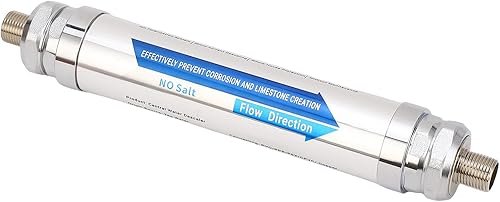
1. Magnetic Stainless Steel Whole House Softener
This is your entry into salt-free. It’s a simple, inline magnetic unit. Install it on your main line, and the magnetic field is supposed to prevent scale. We found it helps somewhat with new scale formation, especially on appliances like kettles. But don’t expect miracles on very hard water. It’s best for mild hardness or as a secondary protector.
- Extremely easy install
- No maintenance or media replacement
- Very affordable upfront
- Effectiveness varies greatly
- Won’t change water feel
- Not a proven TAC technology

2. Filtered Shower Head with Handheld
This isn’t a whole-house solution, but it solves a specific problem. If your main issue is dry, itchy skin from hard water and chlorine, this is a targeted fix. The 15-stage filter reduces chlorine and some heavy metals. You’ll notice softer skin and hair after a few showers. It’s a great supplement if you have a whole-house conditioner but want better shower quality.
- Immediate improvement in shower water quality
- 6 spray modes, high pressure
- Easy DIY install
- Filter cartridge needs replacing every 6-8 months
- Only treats water at one point
- Doesn’t address hardness minerals

3. Aktivo Softener Salt 2 Kg
Hear us out. You’re reading about salt-free systems, but if you do have a traditional softener that’s not using salt because you’ve run out, this is a quick fix. This pure salt is designed for dishwashers with built-in softeners. It’s a granular, high-purity option. Keeping your brine tank filled is the single most important maintenance task for a salt-based system.
- High-purity granular salt
- Prevents bridging in brine tank
- Affordable and widely available
- Only for salt-based systems
- Small 2kg bag, need to buy multiple

4. Monarch Water Ultimate 10kg Salt Tablets
For those with a standard water softener, these tablets are a top-tier choice. They’re BS EN973 Class A approved, meaning they meet high purity standards. They dissolve quickly to make a clean brine, which helps your softener regenerate efficiently. Using quality salt like this prevents maintenance headaches down the line. It’s the boring but essential consumable for a working softener.
- High purity, minimal additives
- Rapid dissolution
- Large 10kg bag for value
- Heavy to lift and pour
- Only for tablet-using softeners
Frequently Asked Questions
- Do salt-free water softeners really work?
- They work for scale prevention, not water softening. A quality TAC conditioner will stop new limescale buildup in pipes and appliances. It won’t, however, remove hardness minerals or give you the slippery feel of soft water. Manage your expectations.
- Why is my water softener not using salt?
- Two likely reasons. First, it might be a salt-free conditioner, not a softener. Second, if it’s a salt-based unit, check for a salt bridge (a hard crust blocking water flow) or a malfunctioning control valve. The brine tank might also just be empty.
- Can you drink water from a salt-free softener?
- Yes. Salt-free conditioners don’t add anything to the water. They simply change the form of existing minerals. The water is perfectly safe to drink. In fact, it’s better for drinking than water from a traditional softener, which adds a small amount of sodium.
- What is the alternative to a water softener?
- Salt-free conditioners are the main alternative for scale control. For actual hardness removal, you’d need a reverse osmosis system (for drinking water) or an electronic water descaler (with mixed results). Your choice depends on whether you want to prevent scale or remove minerals entirely.
- How long do salt-free water conditioners last?
- The TAC media typically lasts 3 to 5 years before needing replacement. The tank itself can last a decade or more. Always check the manufacturer’s specifications for your water hardness level, as very hard water may shorten the media’s lifespan.
- Do salt-free systems waste water?
- No. Unlike traditional softeners that flush brine during regeneration, salt-free conditioners have no backwash cycle. They operate purely on water flow, making them a more water-efficient choice for scale prevention.
Final Thoughts
So, is a salt-free system right for you? If your main battle is with limescale crust on your showerhead and inside your kettle, and you hate maintenance, then yes. A quality TAC conditioner is a smart, install-and-forget solution. It protects your plumbing and appliances without adding sodium or wasting water.
But if you’re dreaming of that silky, luxurious soft water feel where soap explodes into lather, you’ll be disappointed. For that, a traditional ion-exchange softener is still king—just keep the salt topped up. For most people dealing with hard water, preventing scale is 90% of the battle. And for that, going salt-free is a perfectly viable path in 2026.
