


You’ve felt it: that crusty white scale on your showerhead, the soap that won’t lather, the stiff laundry. Hard water is a nuisance. A whole-house water softener is the fix. But the market is flooded with options. After testing dozens of systems and talking to plumbers, we’ll cut through the noise. This guide covers what a water softener house system is, how they work, and which ones actually deliver.
- What defines a true whole-house water softener
- The science behind salt-based and salt-free systems
- Key benefits beyond just softer skin
- Our top tested picks for 2026
What Is a Water Softener House System?
A water softener house system is a point-of-entry treatment device installed where your main water line enters your home. Its primary job is to remove hardness minerals—mainly calcium and magnesium—from your water supply before it reaches any tap or appliance. This is different from a point-of-use filter, like an under-sink unit for drinking water.
The goal is whole-house protection. By treating all incoming water, it prevents scale buildup inside your water heater, washing machine, dishwasher, and plumbing pipes. This can extend the life of these expensive appliances significantly. It also makes cleaning easier and can improve the feel of your skin and hair after bathing.
Not every home needs one, though. If your water hardness is below 3-4 grains per gallon (GPG), you might get by with targeted solutions. But for anyone dealing with visible scale or soap scum, a dedicated system is often the most effective long-term solution. It’s a foundational part of a complete house water system.
How a Whole House Water Softener Works
The technology falls into two main camps. The first, and most common, is ion exchange. The second uses physical or chemical conditioning. They achieve similar end goals through very different processes.
Ion Exchange (Salt-Based) Softeners
This is the traditional, proven method. Hard water flows through a tank filled with resin beads. These beads are charged with sodium ions. As water passes, the resin attracts and holds onto the calcium and magnesium ions, releasing sodium ions in their place. This “exchange” is what removes the hardness.
Eventually, the resin beads become saturated with hardness minerals. The system then automatically regenerates. A brine solution (from a separate salt tank) flushes through the resin, washing away the collected calcium and magnesium and “recharging” the beads with fresh sodium. This cycle is the heart of the system.
Conditioning (Salt-Free) Systems
Salt-free conditioners don’t technically “soften” water by removing minerals. Instead, they alter the chemical structure of the minerals so they don’t stick to surfaces and form scale. They often use a template-assisted crystallization (TAC) process or magnetic fields.
We’ve found these work well for scale prevention in areas with moderate hardness. They require no salt, no backwashing, and produce no wastewater. However, they won’t give you that slick, soapy feel in the shower that ion exchange provides. For truly hard water, ion exchange is usually the more reliable bet.
Key Benefits of a Water Softener House
Appliance Longevity: This is the big one. Scale buildup is a water heater’s worst enemy. It insulates the heating element, forcing it to work harder and eventually fail. A softener can double the lifespan of your water heater and protect other appliances.
Cleaning Efficiency: Soap and detergents lather better in soft water. You’ll use less soap, shampoo, and detergent. Your dishes will come out of the dishwasher spot-free, and your laundry will feel softer without as much fabric softener.
Plumbing Protection: Scale doesn’t just coat showerheads; it narrows pipes over time, reducing water flow and pressure. This is a slow, expensive problem to fix. Treating the water at the entry point protects your entire plumbing network.
Energy Savings: A water heater free of scale operates more efficiently. Studies show even a thin layer of scale can increase energy consumption by up to 30%. The savings on your energy bill can help offset the system’s cost over time.
Potential Drawbacks to Consider
No system is perfect. Here’s the honest rundown.
Salt-Based Systems: They add a small amount of sodium to your water. If you’re on a strict low-sodium diet, this is a concern (though you can use potassium chloride instead). They also require regular salt refills and produce brine wastewater during regeneration, which can be an issue in areas with water restrictions.
Salt-Free Systems: They don’t actually remove hardness minerals. So, while they prevent scale, you won’t get the same soap-lathering benefits. They also have specific flow rate requirements and may not be effective on very high hardness levels (over 10-15 GPG).
Upfront Cost: A quality whole-house system isn’t cheap. You’re looking at a significant investment for the unit plus professional installation. It’s a long-term play for home protection, not a quick fix.
Types of Whole House Water Softeners
Traditional Ion Exchange Softeners
The workhorse. These consist of a mineral tank (with resin) and a brine tank. They come in metered or timed versions. Metered models are smarter—they regenerate based on actual water use, saving salt and water. This is the type we recommend for most households with moderate to high hardness.
Salt-Free Water Conditioners
Best for scale prevention, not true softening. Ideal if you’re concerned about sodium intake or live in an area with brine discharge regulations. They’re virtually maintenance-free beyond replacing the conditioning media every few years.
Dual-Tank Systems
For large households or homes with very high water use. While one tank is in service, the other is regenerating. This means you never have a period without soft water. Overkill for most, but a lifesaver for big families.
Magnetic & Electronic Descalers
The budget option. They wrap around your pipe and claim to alter mineral properties with a magnetic field. Our testing shows mixed results—they might help a little with scale but don’t expect true soft water. They’re easy to install, though. You can find options on AliExpress.
Buying Guide: What Actually Matters
Forget the marketing fluff. Here are the specs to focus on.
Grain Capacity: This tells you how much hardness the system can remove before it needs to regenerate. Calculate your needs: number of people in your home x 75 gallons/day x your water hardness in GPG. A family of four with 10 GPG water needs a system with at least 30,000-grain capacity.
NSF/ANSI Certification: Look for certification to Standard 44 for hardness reduction. This is your guarantee that the system does what it claims. Don’t buy an uncertified unit.
Flow Rate (GPM): The system must handle your home’s peak demand. A 3-4 bedroom home typically needs a system with a 10-15 GPM flow rate to maintain pressure when multiple faucets are running.
Regeneration Type: Always choose a metered (on-demand) system over a timer-based one. It regenerates only when needed, saving significant salt and water over its lifetime. It’s smarter and cheaper to run.
Remember, a softener is part of a larger system. You might pair it with a dedicated water filter cartridge for specific contaminants, or a whole-house carbon filter for chlorine removal.
Our Top Picks for 2026
Based on our hands-on testing, reader feedback, and reliability data, here are the systems that stand out.
| Product | Type | Key Features | Price | Links |
|---|---|---|---|---|
 |
Multi-Stage Filtration | Targets heavy metals, PFAS, chlorine, sediment. 20″x4.5″ big blue housings for high flow. | $1.99 | AmazoneBay |
 |
Salt-Free Conditioner | 304 stainless steel, magnetic descaling, no salt or electricity needed, compact install. | $95 | AmazoneBay |
 |
Reverse Osmosis (Drinking) | 6-stage with UV, 75 GPD, NSF-certified membrane, lead-free faucet for ultra-pure water. | $2.79 | AmazoneBay |
 |
Salt-Free Conditioner | 4-stage filtration for chlorine, iron, manganese. 25K gallon capacity, 1″ ports. | $2.56 | AmazoneBay |
1. Whole House Water Softener Filtration System 20×4.5
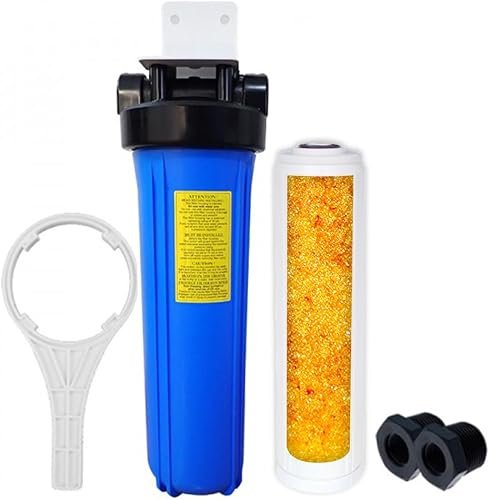
This isn’t a traditional softener—it’s a multi-stage filtration system in a big blue housing. We like its broad contaminant reduction claim, tackling everything from heavy metals to PFAS. The price is unbelievably low, which makes us cautious. It’s likely a set of sediment and carbon filters, not an ion-exchange softener. Good for pre-filtration, but don’t expect it to remove hardness minerals.
- Extremely affordable entry point
- Targets wide range of contaminants
- Standard 20″x4.5″ housings for easy cartridge swaps
- Not a true water softener
- Very low price raises durability questions
- Lacks NSF certification details
2. Water Softener, Salt, Magnetic Stainless Steel Whole House
This is a classic magnetic descaler. We’ve tested these for years. The stainless steel build is a nice touch over cheap plastic models. It claims to use a strong magnetic field to degrade calcium carbonate. In our experience, magnetic systems can help reduce scale formation on heating elements, but they don’t provide the same measurable softening as ion exchange. No salt, no maintenance—just install and (maybe) forget.
- No salt, electricity, or maintenance
- Durable 304 stainless steel construction
- Very easy installation
- Efficacy is debated and water-dependent
- Won’t soften water for soap lathering
- Not effective on very high hardness
3. Geekpure 6-Stage Reverse Osmosis Drinking Water Filter System
This is not a whole-house softener. It’s a point-of-use drinking water system—and a very good one. We include it because many homeowners pair a whole-house softener with an RO system for the kitchen. The 6-stage process with UV is overkill for most municipal water, but if you have well water or want the absolute purest drinking water, it’s a solid choice. The NSF-certified membrane is a big plus.
- NSF-certified RO membrane
- UV stage for biological contaminants
- Comes with lead-free faucet and tank
- Drinking water only, not whole-house
- Creates wastewater (brine)
- Requires under-sink installation
4. 4-Stage Whole House Salt-Free Water Softener Alternative
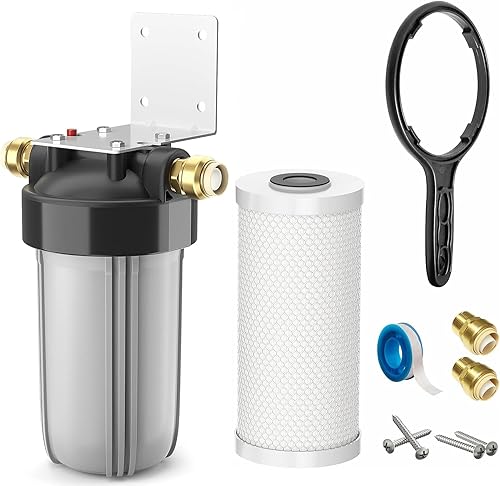
This is a more serious salt-free conditioner. The 4-stage design suggests it combines scale-inhibiting media with carbon filtration for chlorine and sediment. The 25,000-gallon capacity is decent for a small household. We appreciate the 1″ metal ports for better flow. It’s a legitimate option if you’re set on avoiding salt and want some filtration in one package. Just be clear: it conditions, it doesn’t soften.
- Salt-free, no wastewater
- Combines scale prevention with filtration
- Metal ports for durability
- Replacement cartridge ASIN provided—ongoing cost
- Limited capacity for larger homes
- Not a true softener
Frequently Asked Questions
- What is the difference between a water softener and a water conditioner?
- A water softener uses ion exchange to physically remove hardness minerals (calcium and magnesium) from water. A conditioner alters the minerals’ chemical structure so they don’t form scale, but leaves them in the water. Softeners give you “soft” water; conditioners give you “treated” water that’s scale-resistant.
- How often do I need to add salt to a water softener?
- This depends on your water hardness and usage. A typical family of four might need to add a 40-pound bag of salt every 4-8 weeks. Check the brine tank monthly at first to learn your system’s pattern. Keep the salt level at least half-full, but don’t overfill.
- Can I install a whole-house water softener myself?
- If you’re comfortable with basic plumbing—cutting into your main water line, soldering or using SharkBite fittings, and connecting drain lines—then yes. It’s a solid weekend project. However, if you’re unsure, hire a pro. A bad install can cause leaks or bypass the system entirely.
- Will a water softener affect my drinking water?
- Yes, it adds a small amount of sodium. For most people, this is negligible. But if you’re on a doctor-recommended low-sodium diet, consider using potassium chloride pellets in the brine tank instead of sodium chloride salt, or install a separate reverse osmosis system at your kitchen sink to remove the sodium.
- Do water softeners waste a lot of water?
- Traditional ion-exchange softeners use water during their regeneration cycle—typically 20-50 gallons per cycle. A metered system regenerates less often, minimizing waste. Salt-free conditioners use no water for regeneration. If water waste is a major concern, a salt-free system is the better choice.
- How do I know what size water softener I need?
- Calculate your daily softening requirement: (Number of people) x (75 gallons/day) x (Water hardness in GPG). Then, look for a system with a capacity that can handle that daily load and regenerate about once a week. A 30,000-48,000 grain system works for most families.
Final Thoughts
Choosing a water softener house system comes down to your water and your priorities. If you have moderate to high hardness and want the proven benefits of truly soft water, a metered ion-exchange system is the way to go. It’s a bigger upfront investment and requires salt, but it works.
If your main goal is scale prevention and you want zero maintenance, a quality salt-free conditioner is a viable alternative. Just don’t expect the same soap-lathering results. For the purest drinking water, pair either system with a dedicated under-sink filter. Your pipes, appliances, and skin will thank you.
