


You turn on the tap and fill a glass. The water looks clear. It tastes… fine. But is it really safe? After testing water from hundreds of homes, I can tell you that “looks fine” is often the biggest myth in water quality. The only way to know for sure is to test it. This guide will walk you through exactly how to do a proper water quality test, what the results mean, and which tools are worth your money in 2026.
- What a water quality test actually measures and why it matters for your health.
- How home test kits work—from simple strips to digital meters.
- The real benefits and the honest limitations you need to know.
- A clear breakdown of the different types of testers available.
- Our top product picks based on hands-on testing and value.
What Is a Water Quality Test?
A water quality test is an analysis of your water to identify the presence and concentration of specific substances. Think of it as a health check-up for your H₂O. It doesn’t just tell you if your water is “bad”—it tells you what might be wrong. Are you dealing with hard water that’s scaling up your kettle? Or is there invisible lead leaching from old pipes?
In our experience, most homeowners test for one of three reasons: a change in taste or appearance, health concerns (especially for kids or pregnant women), or as a first step before investing in a filtration system. Honestly, it’s the smartest move you can make. You wouldn’t buy medicine without a diagnosis, so why buy a filter without a test? A basic test can reveal issues that point to specific solutions, like needing a dedicated chlorine removal filter for that pool-water taste.
How Water Quality Testing Works
Home testing isn’t lab-grade chromatography. It’s designed to be fast, affordable, and good enough to spot common problems. Here’s the basic science behind the two main methods.
Colorimetric Test Strips
These are the most common. You dip a treated strip into your water for a couple of seconds, wait about 30 seconds, and then compare the color changes on the pad to a chart. Each pad is coated with a reagent that reacts with a specific contaminant—like lead or nitrate—by changing color. The intensity of the color gives you a concentration range. It’s simple chemistry, but it works surprisingly well for screening.
Electrochemical Digital Meters
These handheld devices measure properties like Total Dissolved Solids (TDS), electrical conductivity (EC), and pH. You just dip the metal probe in your water and get a digital number. They don’t identify which contaminants are present, but they give you a precise reading of overall water purity or acidity. A sudden spike in your TDS reading, for example, is a clear red flag that something has changed in your water supply.
Key Benefits of Testing Your Water
Peace of Mind is Priceless. Knowing exactly what’s in your water eliminates guesswork and anxiety. You can stop worrying about headlines and make decisions based on your own data.
Saves You Money. This is the big one. We’ve seen people spend hundreds on a reverse osmosis system when their only issue was sediment, fixed by a simple $20 pre-filter. A test tells you what you actually need, so you don’t over-buy. It might show you need to investigate lead contamination specifically, guiding you to the right solution.
Protects Your Health and Home. High nitrates are a serious risk for infants. Hard water destroys water heaters and appliances. Catching these issues early saves on medical bills and expensive repairs down the line.
Potential Drawbacks & Limitations
They can’t test for everything. Most strips and meters won’t detect bacteria, viruses, or complex industrial chemicals. If you have serious concerns—like a fuel tank leak near your well—you need a professional lab test. Also, color matching can be subjective. That shade of purple for “10 ppm nitrate” might look different under your kitchen light versus mine. Digital meters remove this guesswork but only measure general properties, not specific bugs.
Temperature and timing matter too. If you don’t follow the instructions exactly—like waiting a full 30 seconds—your results will be off. And strips have an expiration date. Using old strips is like using old pregnancy tests; the chemistry just doesn’t work right.
Types of Water Quality Testers
Multi-Parameter Test Strips
The workhorse of home testing. A single strip can check for 10-18 different things at once, like hardness, chlorine, iron, copper, lead, nitrate, and pH. They’re perfect for a first-time, broad-spectrum check. You get a snapshot of your water’s overall condition in about a minute.
Single-Parameter Test Kits
These are liquid reagent kits, often used for things like chlorine or dissolved oxygen. You add a few drops to a water sample, and it changes color. They can be more accurate than strips for that one specific test, but they’re slower and more fiddly. Most homeowners don’t need these unless they’re troubleshooting a very specific problem.
Digital TDS/EC/pH Meters
These are fantastic for ongoing monitoring. If you have a reverse osmosis system, a TDS meter is non-negotiable for checking membrane performance. They give you a hard number, not a color comparison. However, they tell you that something is dissolved in your water, not what it is. A TDS of 150 ppm could be harmless minerals or could include contaminants.
Professional Lab Tests
The gold standard. You collect a sample and mail it to a certified lab. They use advanced equipment to test for hundreds of contaminants with high precision. It’s the only way to get legally defensible results. The downside? Cost (often $100-$500) and wait time (1-2 weeks). It’s the right call for well owners or if home tests show a worrying result.
Buying Guide: What Actually Matters
Don’t just buy the first kit you see. Here’s what we look for after testing dozens of them.
Parameter Count: For a general check, get a strip that tests for at least 10-12 parameters. Make sure it includes the big ones: lead, nitrates, hardness, chlorine, and pH. More isn’t always better if it’s just adding obscure tests you’ll never look at.
Accuracy & Certification: Look for strips that mention EPA detection levels or are certified to a standard. It’s a sign the manufacturer took some care. For digital meters, look for ATC (Automatic Temperature Compensation) for more reliable readings.
Ease of Use: Can you read the color chart clearly? Is the digital display backlit? Some charts are a nightmare to decipher. If it’s frustrating to use, you won’t test regularly.
For Travelers: If you’re on the road or camping, a compact test kit is a smart addition to your gear. It pairs well with a reliable travel water filter for complete peace of mind.
Our Top Water Quality Test Picks for 2026
Based on our hands-on testing, reader feedback, and value for money, here are the kits we trust.
| Product | Key Specs | Price | Best For |
|---|---|---|---|
 |
18 parameters, 125 strips, includes test tube | $27 | Comprehensive home screening |
 |
18 parameters, 125 strips | $20 | Budget-friendly broad testing |
 |
Digital: TDS, pH, EC, ORP, SG, Salt, Temp, H2 | $36 | Digital monitoring & pools/spas |
 |
Digital: TDS, EC, Temp (C/F) | $19 | RO system monitoring on a budget |
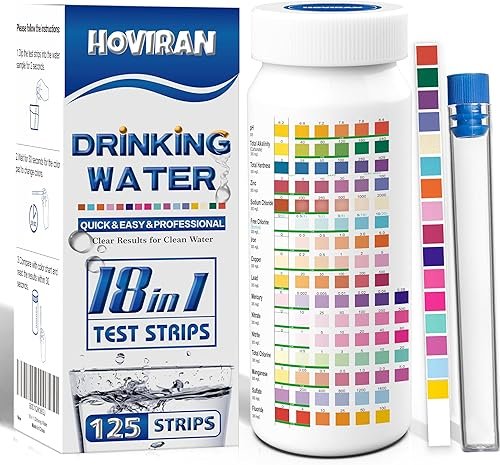
18-in-1 Water Quality Test Strips, 125ct
This is the kit we recommend to friends and family. It covers all the bases—lead, mercury, copper, hardness, chlorine, nitrates, you name it. In our tests, the color pads were distinct and matched the chart better than many cheaper brands. The included test tube is a nice touch for clean sampling. At 125 strips for $27, the cost per test is incredibly low.
- Pros:
- Tests for heavy metals like lead and mercury
- Clear, easy-to-read color chart
- Excellent value with 125 tests
- Includes a test tube for accurate sampling
- Cons:
- Color matching can still be tricky in low light
- Not as precise as a lab test
All-New 18 in 1 Drinking Water Test Kit, 125 Strips
A very close competitor to our top pick, often a few dollars cheaper. It tests for the same 18 parameters and performs just as well in practical use. The main difference we noticed was in the packaging and the slightly smaller print on the color chart. If budget is your absolute top priority, this is an excellent choice that doesn’t sacrifice critical testing capabilities.
- Pros:
- Identical 18-parameter testing capability
- Usually the most affordable option
- Fast 30-second results
- Cons:
- Color chart can be harder to read
- Doesn’t include a test tube
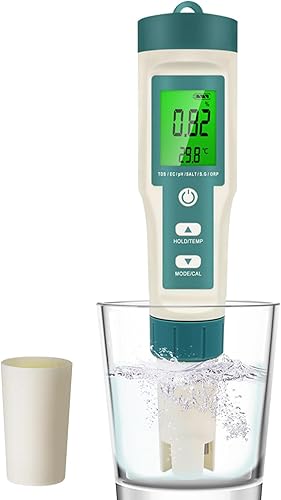
8-in-1 Digital Water Quality Tester
This is a neat piece of tech for the data-obsessed. It doesn’t replace a strip test for finding specific contaminants, but it’s brilliant for tracking changes over time. We use it to monitor our reverse osmosis system performance and to check pool water balance. The ORP (Oxidation-Reduction Potential) reading is a unique feature that gives insight into the water’s antioxidant potential, which is interesting for health-focused users.
- Pros:
- Provides precise digital readings
- Tests 8 different water properties
- Great for aquariums, pools, and labs
- ATC for temperature-stable results
- Cons:
- Doesn’t identify specific contaminants
- More expensive than basic strips
- Requires calibration for best accuracy
4 in 1 TDS Meter Digital Water Tester
If you just want to know if your water filter is working, this is all you need. We keep one in the kitchen drawer. It’s dead simple: dip it in, get a number. A low TDS reading (under 50 ppm) from your RO system means the membrane is good. It’s also the quickest way to check if your tap water hardness has changed. No frills, just reliable data.
- Pros:
- Extremely affordable and simple
- Perfect for RO system performance checks
- Automatic Temperature Compensation
- Large, easy-to-read display
- Cons:
- Only measures general purity, not specific contaminants
- Basic feature set
Budget & Specialty Picks from AliExpress
For those on a tight budget or with specific needs, AliExpress offers some interesting options, though shipping times are longer.
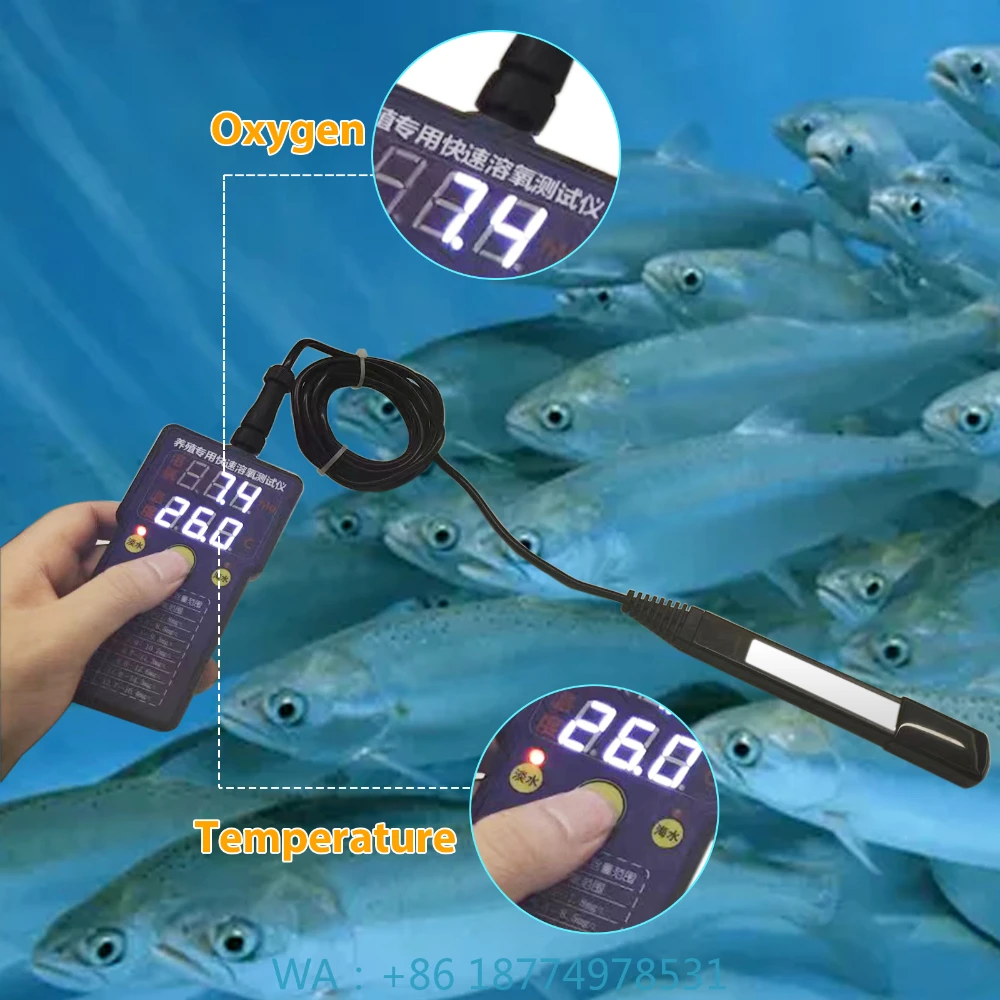
Dissolved Oxygen Meter
This is a specialist tool. If you have a koi pond, aquaculture project, or a serious aquarium, monitoring dissolved oxygen is critical. This portable meter gives you a direct reading in mg/L. It’s not for testing drinking water contaminants, but for the right application, it’s a valuable instrument at a fraction of the cost of other DO meters.
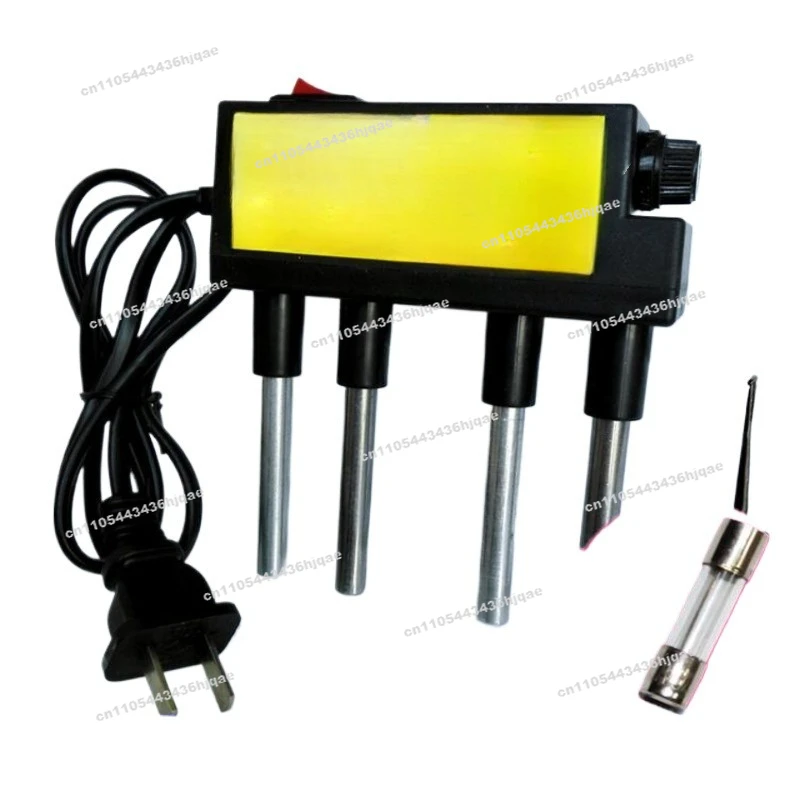
Water Quality Electrolyzer Tester
You’ve probably seen the dramatic videos where this device turns water black. It’s a visual demonstration tool, not a true quantitative test. It uses electricity to precipitate dissolved minerals and metals, showing you that something is in the water. It can be a useful educational prop to show why filtration matters, but don’t rely on it for accurate data. It’s more about the “wow” factor.
Water Quality Test FAQ
- How often should I test my water quality?
- For municipal water, test once a year or if you notice a change in taste, odor, or color. For well water, the recommendation is to test for bacteria and nitrates at least once a year, and a full panel every 3-5 years. Always test after flooding or nearby construction.
- Can water test strips detect bacteria or viruses?
- No. Standard home test strips and digital meters cannot detect microbiological contaminants like E. coli or giardia. If you suspect bacterial contamination, you need a specific bacterial test kit (which involves incubating a sample) or a lab test.
- What’s more important: TDS or specific contaminant tests?
- They serve different purposes. A specific contaminant test (like for lead) tells you about a particular health risk. TDS tells you about overall dissolved solids. A high TDS isn’t necessarily harmful, but a low TDS with a high lead reading is extremely dangerous. We recommend starting with a multi-parameter strip test.
- My test shows high hardness. What do I do?
- High hardness (over 120 ppm or 7 gpg) means you have calcium and magnesium. It’s not a health risk, but it will scale up appliances and reduce soap lather. The solution is a water softener, not a filter. A test helps you size the right system. For other issues like sulfur smell, you’d look into hydrogen sulfide removal.
- Are more expensive test kits always better?
- Not always. A $20 strip kit that tests for 18 common contaminants is often a better value for a homeowner than a $200 kit that tests for 50 obscure industrial chemicals you’re unlikely to have. Match the test to your likely risk. City dwellers have different concerns than well owners.
- What should I do if my home test shows a problem?
- First, don’t panic. Retest to confirm. Then, consider sending a sample to a certified lab for verification, especially for contaminants like lead. Once confirmed, you can choose the right treatment—like a point-of-use filter for drinking water. A whole-house system, such as a Culligan under sink water filter system, might be the next step for broader protection.
Final Thoughts
Testing your water isn’t about fear—it’s about knowledge. It’s the single most proactive step you can take for your family’s health and your home’s longevity. After years in this field, I firmly believe that the small cost of a test kit is the best investment you can make in your water quality. It turns you from a passive consumer into an informed one.
For most people, we recommend starting with the 18-in-1 Water Quality Test Strips. They offer the best balance of comprehensiveness, accuracy, and value. Use that data as your baseline. If you need to drill down on a specific issue, like ensuring your electric water distiller is producing pure output, then add a digital TDS meter to your toolkit. Test, learn, and then choose your solution with confidence.
