


You get that mailer from your water company every year. Most people toss it. Big mistake. That water quality report is the single most important piece of information you can have about what you’re drinking, showering in, and cooking with. I’ve spent years cross-referencing these reports with independent lab tests, and the differences can be shocking.
This guide will break down exactly how to read your report, what the numbers mean for your health, and how to use it to make smart decisions about filtration. We’ll cover:
- What a water quality report actually is (and isn’t)
- How to decode the contaminant list and MCLs
- The real benefits and limitations of these reports
- How to use your report to choose the right filter
What Is a Water Quality Report?
Think of it as your water’s resume. Officially called a Consumer Confidence Report (CCR), it’s a legally required document your public water supplier must send you by July 1st each year. It details the source of your water, what contaminants were found in the last year, and how those levels compare to federal and state standards.
Here’s the key thing: it’s a snapshot, not a live feed. The data is typically from the previous calendar year. It covers regulated contaminants—things like lead, chlorine, nitrates, and bacteria—but it doesn’t cover everything. For a deeper dive into ongoing monitoring, you’d need regular water quality testing at your specific tap.
How to Read Your Water Quality Report
These reports can look intimidating. Rows of chemicals, acronyms, and numbers. Let’s break down the three parts that actually matter.
1. The Source Water Assessment
This tells you where your water comes from—a river, reservoir, or groundwater. It often includes a vulnerability rating for potential contamination. A “high” vulnerability doesn’t mean your water is dirty, but it means the source is more susceptible to pollution, which is good to know.
2. The Contaminant Table
This is the core. You’ll see columns for “Contaminant,” “MCLG” (Maximum Contaminant Level Goal), “MCL” (Maximum Contaminant Level), “Your Water,” and “Range.” MCLG is the ideal—often zero. MCL is the legal limit. Your number should be below the MCL. If it’s not, the system is in violation.
Focus on contaminants that exceed their MCLG. For example, the MCLG for lead is zero, but the action level is 15 ppb. If your report shows 10 ppb, it’s “legal,” but not ideal. This is where understanding your household water pressure and pipe age becomes crucial, as older pipes can leach lead even if the water leaving the plant is clean.
3. Violations & Variances
Any section listing violations is a major red flag. It means the system failed to meet a standard. Read this carefully. It will explain what happened and what’s being done. A single violation for a minor thing might be okay. Repeated violations for bacteria or disinfection byproducts? That’s a serious concern.
Key Benefits of Checking Your Report
Knowledge is power. It’s the only way to make an informed decision about filtration. You might be buying a fancy filter for chlorine taste when your real issue is agricultural nitrates.
It validates your concerns. Been complaining about hard water stains? Your report will show the hardness level in grains per gallon. That data helps you choose the right water conditioner systems instead of guessing.
It tracks trends. Keep your reports for a few years. You can see if contaminant levels are rising or falling. A gradual increase in disinfection byproducts, for instance, might prompt you to consider an entire house water filter rather than just a pitcher.
Potential Drawbacks & Blind Spots
The “range” column can be misleading. A low average might hide dangerous spikes. And remember, the legal limits (MCLs) are set based on both health risks and the cost/feasibility of removal. They are not always the same as the health goals (MCLGs).
Types of Reports & Data Sources
Official Annual CCR
This is the standard, legally mandated report. It’s your primary source. Most are now available online on your utility’s website if you didn’t get a paper copy.
Real-Time or Monthly Data
Some larger utilities now offer online dashboards with more frequent data, sometimes even daily for turbidity or chlorine residual. This is great for peace of mind, but it’s still from monitoring stations, not your house.
Independent Lab Reports
This is the gold standard for your specific water. You collect a sample from your tap and mail it to a certified lab. It’s the only way to get a true picture of what you’re drinking, accounting for your home’s plumbing. If your CCR shows borderline lead levels, this is the next step.
Using Your Report to Buy a Filter
Your report is your shopping list. Don’t buy a filter based on marketing. Buy it based on data.
Step 1: Identify the top 2-3 contaminants that are either present or above the MCLG. Common ones: chlorine, lead, atrazine, nitrate, hardness minerals.
Step 2: Match the filter technology to the contaminant. A carbon block filter is fantastic for chlorine and some pesticides but does nothing for dissolved minerals like manganese. For that, you’d need a specialized manganese water filter or an RO system.
Step 3: Look for NSF/ANSI certifications. Don’t trust claims. Trust seals. NSF/ANSI 42 covers aesthetic effects (taste, chlorine). NSF/ANSI 53 covers health contaminants (lead, cysts). If your report lists a specific contaminant, find a filter certified to reduce it.
Top Testing Kits to Verify Your Report
Want to double-check your utility’s data? These at-home kits are a great start for initial screening.
| Product | Key Feature | Best For | Price |
|---|---|---|---|
 |
Visual agar plates for bacteria & E. coli | Well owners, verifying boil advisories | $58 |
 |
18 parameters including lead, hardness, chlorine | Quick screening of common contaminants | $27 |
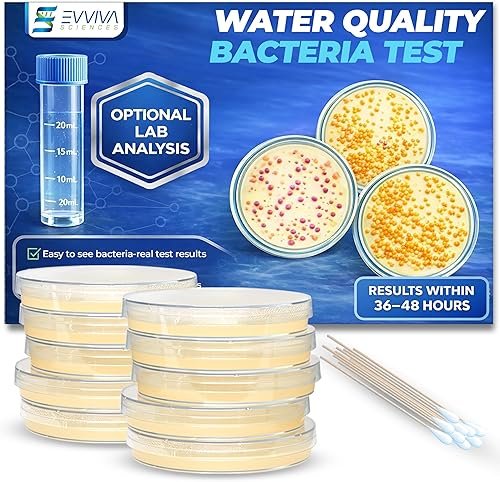
Evviva Sciences Water Bacteria Test Kit
This is a hands-on kit, and that’s its strength. You’re not sending anything out. You swab your water, streak the pre-poured agar plates, and watch for colony growth over 48 hours. It’s perfect for peace of mind on a well, especially after heavy rains or if you suspect a septic issue. The optional lab report add-on is worth it if you see growth and want a professional confirmation.
- Visual, clear results
- Tests for total coliforms and E. coli
- Everything included in one box
- Only tests for bacteria, not chemicals
- Requires careful handling to avoid contamination
18-in-1 Water Quality Test Strips
For the price, this is an incredible screening tool. Dip a strip, wait 30 seconds, and compare the colors. We’ve used these on city water, well water, and even pool water. They won’t give you lab-grade precision for metals like lead, but they will tell you if you have a serious problem that warrants a professional lab test. The 125-count box means you can test multiple sources and track changes over time.
- Affordable for frequent testing
- Tests a huge range of parameters
- Fast, easy 3-step process
- Color matching can be subjective
- Not a substitute for certified lab results
Water Quality Report FAQ
- What if I never received my water quality report?
- Your water supplier is required to provide it. First, check their website—they often post PDFs. If not, call them directly and request a copy. It’s your legal right to have it.
- My report shows everything is “below MCL.” Is my water safe?
- “Legal” doesn’t always mean “optimal.” It means it meets government standards, which are set with economic feasibility in mind. If you have specific health concerns, are pregnant, or have a compromised immune system, you may want stricter standards. An independent test of your tap water is the only way to know for sure.
- How often is the water actually tested?
- It varies wildly by contaminant and system size. Bacteria might be tested daily or weekly. Lead and copper are tested at specific high-risk homes every few years. Volatile organic chemicals might be tested annually or quarterly. The report should list the sampling frequency.
- Can I test my water myself instead of relying on the report?
- Absolutely. In fact, we recommend it, especially if you have an older home or a private well. Start with a comprehensive test strip kit for a broad overview. If it flags issues, invest in a certified lab test for definitive results.
- What’s the difference between a water quality report and a water test?
- The report is a summary of data collected by your utility from their system. A water test is an analysis of water from a specific point—like your kitchen faucet—conducted by a lab. The test is more relevant to your personal exposure.
Final Thoughts
That annual water quality report isn’t junk mail. It’s a critical tool. Take ten minutes to read it. Look for the source, scan the violations section, and find the contaminants that matter most. Use that data as your guide—not marketing hype—to choose the right filtration for your home.
If your report raises any red flags, or if you just want certainty, pair it with a good at-home test kit. The combination of official data and your own verification is the smartest way to ensure the water you and your family drink is truly clean.
