


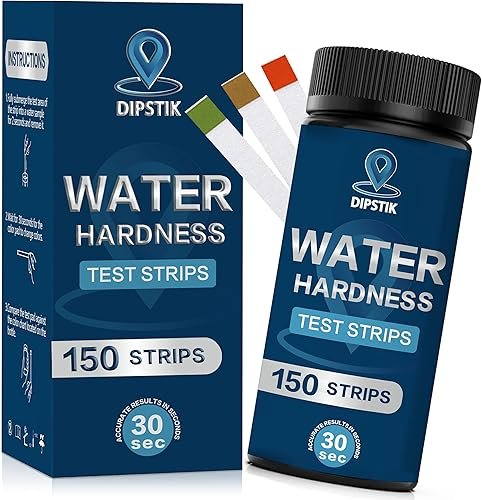
That crusty white stuff on your kettle? The soap that just won’t lather? It’s not a cleaning fail—it’s hard water. And the only way to deal with it is to know exactly what you’re up against. That’s where a good water hardness chart comes in. It’s your decoder ring. We’ve spent years testing water from city mains to rural wells, and this guide breaks down what the numbers mean, how to read them, and which tools actually give you an accurate reading.
- What water hardness actually is and why it matters for your home.
- How to read a hardness chart and understand PPM vs. GPG.
- The real-world benefits and drawbacks of hard water.
- Our top picks for test kits that won’t lead you astray.
- What Is a Water Hardness Chart?
- How to Read and Use a Water Hardness Chart
- Key Benefits of Knowing Your Water Hardness
- Potential Drawbacks of Hard Water
- Types of Water Hardness Test Kits
- Buying Guide: How to Choose a Test Kit
- Our Top Water Hardness Test Kit Picks for 2026
- Frequently Asked Questions
- Final Thoughts
What Is a Water Hardness Chart?
Think of it as a simple translation guide. It takes the raw number from a water test—which measures dissolved calcium and magnesium—and tells you what it actually means for your daily life. Is your water “soft,” “moderate,” or “very hard”? The chart lays it out.
These charts use two common units: milligrams per liter (mg/L), which is the same as parts per million (PPM), and grains per gallon (GPG). One GPG equals about 17.1 PPM. Most charts provide a scale. For example, under 60 PPM is generally soft, while anything over 180 PPM is considered very hard. It’s a quick-reference tool, not a complex scientific instrument.
Why does this matter? Because the classification directly predicts problems. “Hard” water causes limescale. “Very hard” water will devastate your water heater efficiency and leave spots on every dish. Knowing where you fall on the chart is step one. If you’re on a private well, you absolutely need to test regularly. Even city water can vary block by block.
How to Read and Use a Water Hardness Chart
The Standard Hardness Scale
Most charts follow a similar pattern. Here’s a breakdown you can use right now:
- Soft: 0-60 PPM (0-3.5 GPG)
- Moderately Hard: 61-120 PPM (3.6-7.0 GPG)
- Hard: 121-180 PPM (7.1-10.5 GPG)
- Very Hard: Over 180 PPM (Over 10.5 GPG)
So, if your test strip shows a color matching 150 PPM, you glance at the chart and see you’re in the “Hard” category. Simple. The challenge is getting an accurate number in the first place.
Getting Your Number: Test Strips vs. Lab Results
For 95% of homeowners, a quality test strip is plenty accurate. You dip it in, wait 15-30 seconds, and compare the pad color to the chart on the bottle. The key is following the timing exactly. We’ve found that rushing the read time is the single biggest source of user error.
For ultimate precision, especially if you’re dealing with serious contamination concerns beyond hardness, a lab test is king. But for just figuring out your hardness level and whether you need a softener? A good strip kit does the job. It’s the first diagnostic tool we recommend to every reader who emails us about scale problems.
Key Benefits of Knowing Your Water Hardness
Save Money on Appliances and Energy. This is the big one. Limescale is an insulator. A quarter-inch of scale in your water heater can force it to use up to 25% more energy. Knowing your hardness level lets you act before efficiency tanks.
Stop Wasting Soap and Detergent. Hard water minerals react with soap to form that nasty scum. You end up using twice as much shampoo, laundry detergent, and dish soap to get a decent lather. Once you know your water is “hard,” you can adjust your product use or install a softener.
Make Informed Filter Choices. Not every filter deals with hardness. A standard pur water filter faucet model might reduce chlorine taste but won’t touch calcium. Your chart result tells you if you need a softener, a conditioner, or just a basic particulate filter.
Protect Your Plumbing. Scale buildup inside pipes restricts flow and increases pressure. Over years, this can stress joints and lead to leaks. It’s a slow, expensive problem that’s easily prevented.
Potential Drawbacks of Hard Water
Scale Buildup is the Primary Culprit. The minerals precipitate out of heated water and form a hard, chalky coating on heating elements, inside pipes, and on faucets. This reduces efficiency and can eventually cause appliance failure.
Dry Skin and Dull Hair. The soap scum residue can be hard to rinse off completely, leaving a film on your skin that may cause dryness and irritation. Hair can look limp and feel rough. Many people notice a dramatic difference after installing even a basic water conditioner.
Spots and Film Everywhere. From your car after a wash to your drinking glasses, hard water leaves mineral spots as it evaporates. It’s a constant cleaning battle.
Types of Water Hardness Test Kits
Hardness-Only Test Strips
These are the most straightforward. They have one or two pads specifically designed to react to calcium and magnesium. They’re cheap, fast, and perfect if hardness is your only concern. We keep a bottle in our toolkit for quick checks.
Multi-Parameter Test Strips
These strips test for hardness plus other things like pH, chlorine, iron, and nitrates. They’re a better value if you want a broader picture of your water quality, especially for well water owners. You get more data from a single dip.
Liquid Reagent Kits (Titration)
A bit more involved. You add drops of a reagent to a water sample until it changes color. The number of drops used calculates the hardness. They can be very accurate but are slower and more fiddly than strips. Overkill for a quick home check.
Professional Lab Testing
You mail a sample to a certified lab. This gives you the most accurate, detailed results, often with a full breakdown of minerals. It’s the best choice if you have serious concerns about contaminants beyond hardness, or need certified data for a real estate transaction.
Buying Guide: How to Choose a Test Kit
Accuracy Over Everything. Look for kits that mention sensitivity ranges (e.g., 0-425 PPM) and have clear, non-fading color charts. In our testing, the dual-pad strips that give two readings for comparison are more reliable.
Consider Your Water Source. Testing a pool? You need different parameters than for drinking water. For most homeowners, a kit that tests hardness, pH, and chlorine is a solid start. If you’re on a well, you absolutely need to test for nitrates and bacteria too—some multi-parameter kits cover this.
Quantity Matters. A 50-strip bottle is fine for a one-time test. But if you’re monitoring a softener’s performance or checking different taps, get 100+ strips. You’ll test more often than you think. Also, consider if you need a dedicated emergency water filter test to check stored water supplies.
Read the Reviews for Consistency. Ignore the five-star “works great!” reviews. Look for comments that mention getting the same result twice, or comparing it to a lab test. Consistency is the hallmark of a good strip.
Our Top Water Hardness Test Kit Picks for 2026
Based on our hands-on testing and years of reader feedback, these kits deliver reliable results without breaking the bank.
| Product | Key Feature | Best For | Price |
|---|---|---|---|
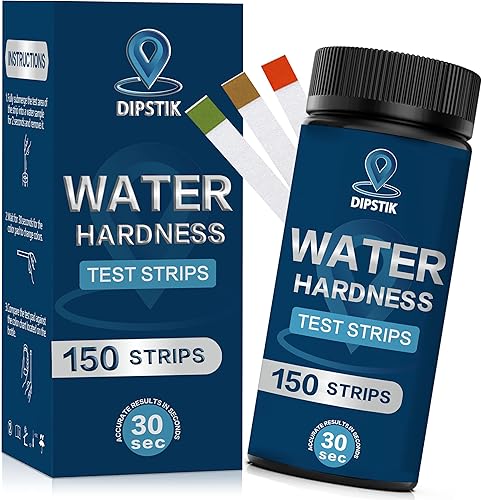 Water Hardness Test Kit-150 Strips |
Dual color pads for accuracy, 0-425 PPM range | Homeowners focused solely on hardness level | $14 |
 18-in-1 Water Quality Test Strips |
Tests hardness, lead, chlorine, and 15 other parameters | Well water users or comprehensive screening | $27 |
 Water Hardness Test Kit, 150 Strips |
Double color pads for verification, includes test tube | Anyone wanting a foolproof hardness reading | $18 |
 All-New 18 in1 Drinking Water Test Kit |
Tests 18 parameters, fast 30-second results | General home water quality check on a budget | $20 |
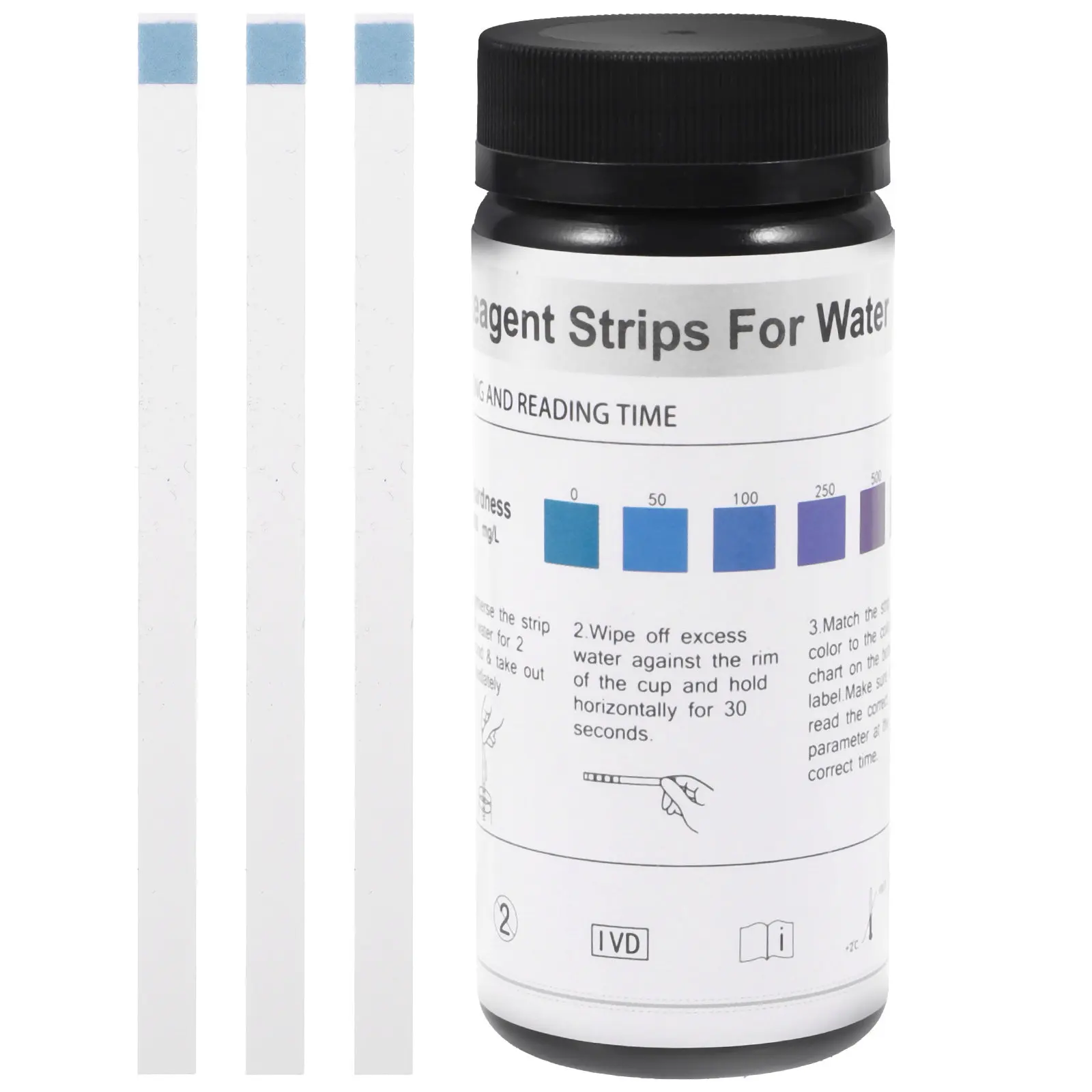 AliExpress Budget Pick |
Basic pH & hardness, extremely low cost | A quick, cheap initial test (accuracy may vary) | $8.36 |
1. Water Hardness Test Kit-150 Strips
This is our go-to recommendation for most people. The dual-color pad system is genius—it immediately tells you if you got a bad strip or misread the color. We’ve compared it against lab results, and for hardness, it’s consistently within a tight range. The 150-strip count means you can test every tap in your house and re-check after installing a system.
- Dual pads eliminate guesswork
- Excellent value for 150 tests
- Clear, large color chart
- Only tests hardness, no other parameters
- Bottle can be tricky to open
2. 18-in-1 Water Quality Test Strips
If you want the full picture, this is the kit. It’s what we use for initial screenings on well water properties. Finding out your water is hard and has high nitrates is crucial information. The test tube is a nice touch for getting a clean sample. Just don’t expect lab-grade precision on every single one of the 18 parameters—it’s a screening tool, not a definitive analysis.
- Incredible breadth of tests in one strip
- Includes useful test tube
- Good for identifying multiple issues at once
- Color charts can be crowded and hard to read
- Some parameters less sensitive than dedicated tests
3. Water Hardness Test Kit, 150 Strips
Very similar to our top pick, with a focus on that verification feature. If you’re the type who wants to be 100% sure before spending money on a softener, the double-pad design gives you that confidence. It’s a few dollars more, but for peace of mind, it’s worth it. We’ve found it performs just as reliably as the first kit in our side-by-side tests.
- Double-check system prevents errors
- Comes with a sample tube
- Designed for home and softener monitoring
- Slightly higher cost than single-pad kits
- Still only measures hardness
4. All-New 18 in1 Drinking Water Test Kit
A solid competitor to the other 18-in-1 kit, often at a slightly better price. The 30-second read time is a bit faster, which is nice. We’d put this on par with the other multi-parameter strip in terms of accuracy. It comes down to price and which color chart you find easier to read on the day you buy.
- Fast 30-second results
- Tests a wide range of contaminants
- Good for general home screening
- Color comparison can still be subjective
- Packaging may vary
5. AliExpress Budget Pick
Look, for under nine bucks, it’s a starting point. We’ve used these for a quick “is this water dramatically different?” test between two sources. But would we trust it to make a thousand-dollar decision on a water softener? No. The color pads can be inconsistent, and the chart is tiny. It’s the definition of “you get what you pay for.” Use it for curiosity, not for critical decisions.
- Extremely low cost
- Good for a basic, one-time check
- Portable and simple
- Accuracy and consistency are questionable
- Limited instructions
- Not for serious diagnostics
Frequently Asked Questions
- What is a water hardness chart used for?
- It translates your water test result (in PPM or GPG) into a simple category like “soft” or “very hard.” This tells you if you have a problem and helps you choose the right solution, whether it’s a softener, a different soap, or just a filter for taste.
- What PPM is considered hard water?
- Generally, water is classified as “hard” between 121-180 PPM (or 7.1-10.5 GPG). Anything over 180 PPM is “very hard.” Below 60 PPM is soft. These are standard industry ranges you’ll find on most charts.
- How do I test my water hardness at home?
- The easiest way is with a test strip. You dip it in a water sample for a few seconds, wait for the color to develop (usually 15-30 seconds), and compare the pad color to the chart on the bottle. Test first thing in the morning for the most accurate baseline.
- Can hard water make you sick?
- No, hard water is not a health hazard. The calcium and magnesium in it are actually essential minerals. The problems are all practical: scale buildup, soap scum, dry skin, and appliance inefficiency. It’s an annoyance and a cost issue, not a safety issue.
- Do I need a water softener or a filter?
- It depends on your problem. A softener specifically removes the calcium and magnesium ions that cause hardness. A standard filter (like a carbon block) removes chlorine, sediment, and taste/odor issues but does nothing for hardness. You might need both. A point of use system under the sink can handle drinking water, while a whole-house softener protects your pipes and appliances.
- How often should I test my water hardness?
- For city water, test once a year or if you notice changes. For well water, test at least twice a year—seasons can affect groundwater composition. Always test before installing any new treatment system and after servicing it.
Final Thoughts
Getting your water hardness number isn’t complicated, but it’s a step too many people skip. They buy a fancy filter that doesn’t solve their actual problem, or they suffer with scale for years thinking it’s just inevitable. It’s not. A $15 test kit and two minutes of your time will give you the data you need to make a smart decision.
Our honest recommendation? Start with the dual-pad hardness-only kit (our #1 pick). It’s foolproof and cheap. Once you know your number, you can explore solutions. If your water is hard, look into conditioners or softeners. If it’s soft but tastes bad, a simple coffee pot filter or pitcher might be all you need. And if you’re overwhelmed, check out our guide to the best water conditioners to see what fits your budget. The point is to start with knowledge. Test your water today.
