


You want cold, clean water straight from your fridge. Simple, right? But the aisle of filter pitchers is confusing, and your fridge’s built-in filter is expensive to replace. We’ve spent years testing these systems, from cheap jugs to high-end under-sink units. This guide cuts through the noise. We’ll cover what these filters actually do, the real pros and cons, and show you our top picks for 2026—so you can stop guessing and start drinking better water.
What Is a “Water Filter With Fridge”?
Let’s clear up the confusion. This phrase covers two main things. First, it’s the filter built into your refrigerator’s water dispenser and ice maker. Second—and what most people mean—is a standalone pitcher or dispenser you fill and place inside your fridge. We’re focusing on the latter today.
These are point-of-use filters. You fill the top reservoir with tap water. Gravity pulls it through a filter cartridge, which traps contaminants. The clean water collects in a lower chamber, ready for you to pour. The whole point is convenience: chilled, filtered water without installing anything permanent. They’re a massive upgrade over drinking straight from the tap, especially if your municipal water has a strong chlorine taste or you’re worried about old pipes. For a deeper look at filtration for specific contaminants like lead, our guide on lead filtration is a must-read.
How It Works
It’s not magic, but good engineering. Understanding the process helps you choose the right one.
The Filtration Media
Most pitchers use activated carbon. Think of it as a microscopic sponge with millions of pores. As water passes through, contaminants like chlorine, some pesticides, and organic compounds that cause bad taste and odor get adsorbed onto the carbon’s vast surface area. Some filters, like the MAXTRA PRO in BRITA models, add an ion-exchanger resin to reduce metals like lead and copper, plus a mesh to catch physical particles.
The Flow & Contact Time
Speed matters. A filter that works too fast might not have enough contact time with the media to do its job properly. That’s why cheap filters often underperform. The best designs balance flow rate with effective filtration. You’ll notice a good filter takes a minute or two to process a full reservoir—that’s a good sign, not a bad one.
The Limitations
Here’s the hard truth: pitcher filters have limits. They’re not a water distillation unit. They won’t remove all dissolved minerals, heavy metals, or microorganisms. Their certification (usually NSF/ANSI 42 for taste and odor, sometimes 53 for specific health contaminants) tells you exactly what they’re tested to reduce. Always check the box.
Key Benefits
Dramatically Better Taste: This is the number one reason people buy them. By reducing chlorine and its byproducts, your water tastes clean and neutral. Your coffee and tea will thank you.
Cost Savings Over Time: A $30 pitcher with $7 replacement filters every two months crushes the cost of buying bottled water. It’s not even close. You’ll save hundreds a year.
Reduced Plastic Waste: You’re ditching single-use bottles. One filter cartridge replaces about 100 plastic bottles. It’s a small but meaningful win for the planet.
Convenience & Accessibility: No installation. No plumber. Fill it, put it in the fridge door, and you have cold water ready for dinner, workouts, or midnight thirst. It’s dead simple.
Potential Drawbacks
Ongoing Cost & Maintenance: You have to remember to replace the filter. Let it go too long, and it becomes a breeding ground for bacteria and stops filtering effectively. Set a calendar reminder.
Limited Capacity & Speed: If you have a big family or drink a lot of water, you’ll be constantly refilling a small pitcher. Waiting for it to filter can be annoying when you need a full glass right now.
Not for All Contaminants: They generally don’t reduce TDS (Total Dissolved Solids), fluoride, or nitrates. If those are your concerns, you need a different technology.
Types of Fridge-Friendly Filters
Filter Pitchers
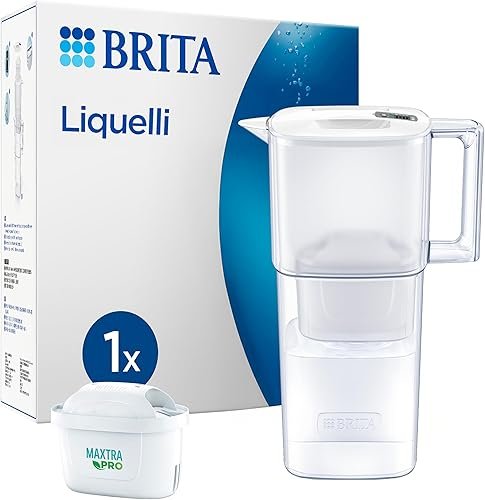
The classic. Ranging from 1.5L to 3L, they fit perfectly in the fridge door. Best for individuals, couples, or small families. Our top pick, the BRITA Liquelli, is a perfect example. It’s the most popular category for a reason.
Filter Dispensers
Think of a big, lidded jug with a tap. Capacities go up to 8L or more. You keep it on a fridge shelf. Ideal for large households, home offices, or anyone tired of refilling a pitcher constantly. The BRITA Flow Cask is the king here.
Under-Sink Systems (with Fridge Line)
This is the pro move. You install a dedicated filter under your sink and run a separate line to your fridge’s water inlet. Your fridge’s built-in filter becomes redundant. This gives you the best filtration—like a full reverse osmosis water filter for refrigerator—and feeds both your tap and ice maker. It’s more expensive upfront but superior long-term.
Buying Guide: What Actually Matters
Forget the marketing hype. Focus on these four things.
1. Certifications (NSF/ANSI): This is non-negotiable. NSF/ANSI 42 means it improves taste/odor. NSF/ANSI 53 means it reduces a specific health contaminant like lead. Look for the seal on the box.
2. Filter Life & Cost: A cheap pitcher with expensive filters is a trap. Calculate the yearly cost. Most good filters last 40-60 gallons or about 2 months. Our best water filter pitcher guide dives deep into long-term value.
3. Capacity vs. Your Needs: Be honest. A 5-person household will hate a 1.5L pitcher. Measure the space in your fridge door or on the shelf before you buy.
4. Filter Indicator: A simple memo or digital reminder is worth its weight in gold. It takes the guesswork out of replacement, which is critical for performance. Don’t buy one without it.
Our Top Picks for 2026
| Product | Type | Capacity | Key Feature | Price |
|---|---|---|---|---|
| BRITA Liquelli | Pitcher | 2.2L (1.1L filtered) | Fridge door fit, MAXTRA PRO filter, digital reminder | $38 |
| AQUAPHOR Compact | Pitcher | 2.4L | Budget-friendly, dishwasher safe, basic filtration | $32 |
| BRITA Flow Cask | Dispenser | 8.2L (5.2L filtered) | XXL capacity, integrated tap, great for families | $85 |
| Waterdrop WD-X8 | Under-Sink RO | N/A (800 GPD) | 9-stage filtration, NSF certified, feeds fridge line | $719 |
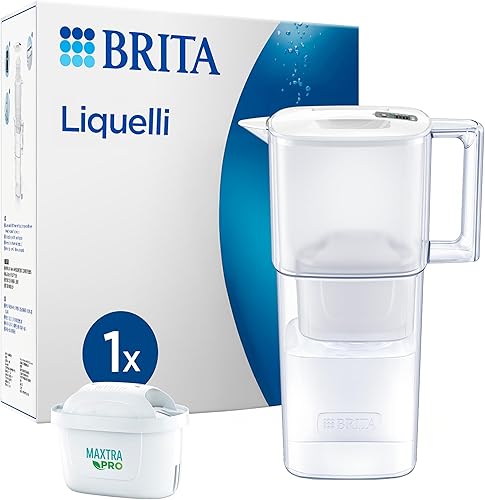
1. BRITA Liquelli Water Filter Jug
This is the one we recommend to most readers. It’s not the fanciest, but it nails the basics. The slim design fits perfectly in a fridge door, and the 1.1L filtered capacity is enough for 1-2 people. The MAXTRA PRO filter is excellent for chlorine and metal reduction. The digital memo is a lifesaver. Honestly, for under $40, it’s a no-brainer starting point.
- Perfect fridge door fit
- Proven MAXTRA PRO filtration
- Digital filter reminder
- Small capacity for families
- Filters aren’t the cheapest

2. AQUAPHOR Water Filter Jug Compact
A solid budget pick. It gets the job done for taste improvement. We like that it’s dishwasher safe (top rack, lid off), which makes cleaning easy. The filtration is basic but certified for chlorine reduction. Where it falls short is in heavy metal reduction compared to the BRITA. It’s a good starter jug if you’re not sure you’ll stick with filtered water.
- Very affordable
- Dishwasher safe body
- Simple flip-top lid
- No filter life indicator
- Less advanced filtration

3. BRITA Flow Cask Water Filter Dispenser
This is the solution for busy households. We tested this in a family of five, and it ended the constant “the pitcher is empty!” complaints. The 5.2L filtered capacity is massive. The tap is sturdy and doesn’t drip. It sits on a fridge shelf, so you lose some shelf space, but the trade-off is worth it. It uses the same great MAXTRA PRO filters as the Liquelli.
- Huge 5.2L filtered capacity
- Convenient tap dispenser
- Same excellent filtration
- Takes up fridge shelf space
- Heavier to refill

4. Waterdrop WD-X8 Under-Sink RO System
This is the endgame. If you’re serious about purity for both your drinking tap and your fridge’s ice/water, this is the move. The 9-stage filtration is overkill for city water but perfect for well water or areas with known contaminants. The 2:1 pure-to-waste water ratio is industry-leading. Installation isn’t for everyone, but once it’s in, you’re set for years. It’s a different league from pitchers.
- Removes virtually everything (PFAS, lead, TDS)
- Feeds fridge and sink
- High 800 GPD flow rate
- High upfront cost
- Requires installation
FAQ
- Can I use a water filter pitcher with well water?
- It’s risky. Standard pitchers are designed for municipally treated water. Well water can contain bacteria, heavy metals, and sediment that these filters aren’t certified to remove. You should test your well water first and consider a dedicated treatment system.
- How often should I really change my fridge filter cartridge?
- Follow the manufacturer’s guideline, which is usually every 2 months or 40 gallons. If your water has high sediment, you might need to change it sooner. A clogged filter works poorly and can harbor bacteria. Our guide on refrigerator filter cartridge replacement has all the details.
- Do fridge water filters remove fluoride?
- Almost all pitcher and standard fridge filters do not remove fluoride. Fluoride reduction requires a specific type of filter media, typically found in reverse osmosis systems or certain specialty filters.
- Is it cheaper to use a filter pitcher or buy bottled water?
- A filter pitcher is dramatically cheaper. A $38 pitcher with $14/year in filters costs about $0.08 per gallon. Bottled water costs $0.50-$1.50 per gallon. You’ll save hundreds of dollars annually.
- Why does my filtered water taste funny after a while?
- This usually means your filter is overdue for a change. An exhausted filter can no longer adsorb contaminants and may even release trapped ones back into the water. Always replace filters on schedule.
- Can I connect a water filter directly to my fridge?
- Yes, but it’s a more advanced setup. You’d install an under-sink filter and run a dedicated line to your fridge’s water inlet. This bypasses the fridge’s built-in filter and provides superior filtration for both water and ice.
Final Thoughts
After testing dozens of systems, here’s our straight advice: for 90% of people on city water, the BRITA Liquelli is the perfect starting point. It’s affordable, effective, and fits anywhere. If your family guzzles water, upgrade to the BRITA Flow Cask dispenser. The convenience is worth the shelf space.
Only consider the under-sink RO system if you have specific water quality concerns or want the absolute best for your fridge’s ice maker. It’s a bigger investment, but it’s a install-once, forget-about-it solution for years. Don’t overcomplicate it. Start with a good pitcher, taste the difference, and go from there.
