


I’ve spent years installing, testing, and sometimes cursing at water filters. The single biggest lesson? Convenience wins. That’s why a water filter in the sink is so popular—it puts clean water on tap without filling your fridge or cluttering your counter. We’ll break down exactly how these systems work, what they can (and can’t) remove, and which models are actually worth your money in 2026.
- What faucet-mount and undersink filters really are
- Their inner workings and key filtration stages
- Honest benefits and real-world drawbacks
- A clear buying guide and our top tested picks
What Is a Water Filter in the Sink?
It’s a point-of-use filtration system that connects directly to your kitchen faucet or the plumbing beneath your sink. The goal is simple: treat water right before you drink it or use it for cooking. You get dedicated filtration without the expense or complexity of a whole-house system.
There are two main camps. Faucet-mount filters attach directly to your tap’s aerator—they’re quick to install and often cheaper. Undersink systems live in the cabinet below, using a separate dedicated faucet. They’re more permanent and typically offer more advanced filtration. Both aim to reduce contaminants like chlorine, lead, and sediment that affect taste and safety.
How a Sink Water Filter Works
It’s not magic, but it is clever engineering. Water from your main line is forced through one or more filter cartridges. Each cartridge has a specific job, trapping unwanted particles and chemicals while letting clean water pass through.
The Filtration Media
Most systems start with activated carbon. This stuff has a massive surface area—think of it like a microscopic sponge—that adsorbs chlorine, volatile organic compounds (VOCs), and unpleasant tastes. Some filters add a sediment filter cartridge as a first stage to catch rust, sand, and silt, protecting the more delicate carbon from clogging too fast.
Filtration Stages and Flow
More advanced systems, like a 4 stage filter, might layer in additional media. This could include ion-exchange resin to reduce heavy metals like lead, or a sub-micron physical filter to trap cysts. Water pressure from your tap does the work, pushing water through these layers and out the spout. The flow rate matters—a good system won’t make you wait forever to fill a pot.
Key Benefits of Sink Filtration
Dramatically Better Taste and Odor: This is the number one reason people install one. Chlorine, the most common municipal disinfectant, makes water taste and smell like a swimming pool. A carbon-based filter zaps it instantly. The difference is night and day.
Targeted Contaminant Reduction: The right filter can tackle specific worries. If your old pipes are a concern, a system certified for lead reduction is peace of mind in a cartridge. It’s a focused solution for your safe drinking water goals.
Cost-Effective and Eco-Friendly: Think about it. A $70 filter that lasts 6 months replaces hundreds of plastic water bottles. It’s a win for your wallet and the planet. The ongoing cost is just replacement filters.
Convenience is King: No more lifting heavy pitchers or waiting for water to chill. Clean water is always available, right at the tap. It seamlessly becomes part of your kitchen routine.
Potential Drawbacks to Consider
Flow Rate Reduction: Some cheaper filters can slow your water stream to a trickle. It’s frustrating when you’re trying to fill a pasta pot. Look for models that specify a flow rate in GPM (gallons per minute).
Space and Installation: Undersink models eat into cabinet space—you’ll need to relocate that cleaning caddy. And while many are DIY-friendly, if you’re not comfortable shutting off water valves and using a wrench, you might need a plumber. Faucet mounts are easier but don’t fit all faucet styles, especially pull-down or sprayer models.
Ongoing Maintenance: You have to remember to change the filters. A clogged or exhausted filter doesn’t just stop working; it can become a breeding ground for bacteria. Set a calendar reminder.
Types of Sink Water Filters
Faucet-Mount Filters
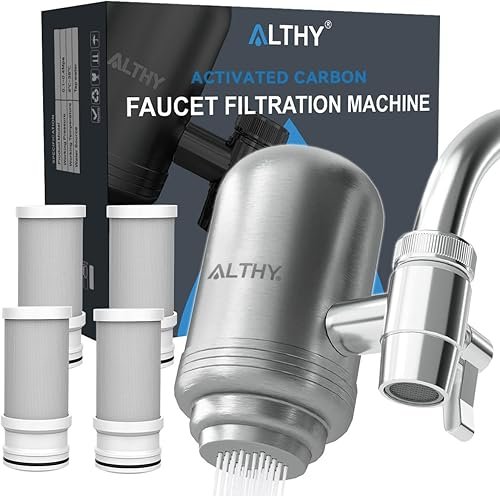
These are your plug-and-play option. They screw onto the end of your faucet in minutes. The ALTY Stainless Steel model we review below is a great example. Perfect for renters or anyone who wants a no-commitment trial. The downside? They can be bulky on the tap and, as mentioned, compatibility is a real issue.
Undersink Carbon Block Filters
The most common undersink type. They use one, two, or more carbon block cartridges in a sequence. Systems like the Quick Change Twin offer a dedicated faucet and much higher capacity than faucet mounts. They’re the sweet spot for most homeowners—serious filtration without the wastewater of reverse osmosis.
Specialty Filters
This includes ceramic filters that physically sieve out bacteria and sediment, and ultraviolet (UV) light units that disinfect. A whole house ceramic filter is a different beast, but undersink ceramic options exist for high-sediment well water. The smart tap with a ceramic cartridge we found on AliExpress is an interesting, if niche, take on this.
Buying Guide: What Actually Matters
Forget the marketing fluff. Here’s what we look at after years of testing.
Certifications are Non-Negotiable: This is your proof. NSF/ANSI 42 for chlorine/taste, NSF/ANSI 53 for lead and cysts, NSF/ANSI 401 for emerging compounds like pharmaceuticals. No certification? Walk away.
Filter Lifespan and Cost: A cheap system with expensive, short-lived filters is a trap. Calculate the annual cost. A 3-year lifespan, like that budget AliExpress pick, is exceptional if it’s legitimate.
Flow Rate: Aim for at least 0.5 GPM for a faucet mount. Undersink systems should deliver 1 GPM or more. Don’t sacrifice your kitchen’s functionality.
Your Faucet: Seriously, check compatibility before buying a faucet mount. Pull-down sprayers and designer faucets often don’t work with them. When in doubt, go undersink.
Your Water Quality: Get your water tested, especially if you’re on a well. The 20 inch filter housing used in whole-house systems is for heavy-duty sediment, but knowing your specific contaminants will guide you to the right undersink cartridge type.
Our Top Picks for 2026
| Product | Type | Key Feature | Price |
|---|---|---|---|
 |
Faucet Mount | 304 Stainless Steel, 0.5 GPM Flow | $68 |
 |
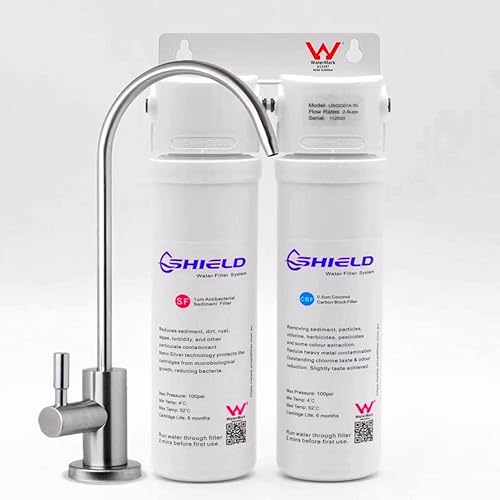
Undersink (2-Stage) | WaterMark Certified, Includes Extra Cartridges | $109 |
 |
Undersink (2-Stage) | Ultra-Compact Design, SUS304 Tap | $95 |
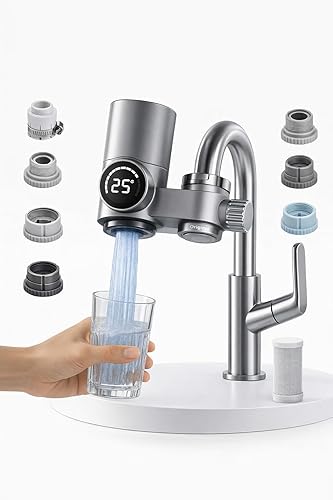 |
Faucet Mount (Ceramic/UV) | LED Display, Turbine Powered | $59 |
1. ALTHY Stainless Steel Faucet Mount Filter
This one surprised us. Most faucet mounts feel flimsy, but the 304 stainless steel housing on the ALTY is genuinely sturdy. It feels like it’ll last. The 0.5 GPM flow rate is solid—it won’t leave you waiting an age to fill a kettle. Installation took under five minutes with the right adapter. The real test? It made our heavily chlorinated test water taste clean and neutral. A great, no-fuss option if your faucet is compatible.
- Durable stainless steel construction
- Good flow rate for its class
- Tool-free installation
- Won’t fit pull-down or specialty faucets
- Filter life is average at 400 gallons
2. Quick Change Twin Undersink Water Filter System
This is the workhorse. WaterMark certification means it meets strict plumbing standards—a big trust signal. The two-stage system (sediment plus carbon block) tackles chlorine and particulates effectively. We love that it includes extra cartridges; you’re set for over a year. The dedicated SUS304 lead-free faucet is a nice touch. It’s not fancy, but it’s reliable, certified, and the quick-change design makes filter swaps a two-minute job.
- WaterMark Certified for compliance
- Includes extra filters—great value
- Lead-free dedicated faucet
- Requires under-sink installation
- Basic plastic housing
3. Twin Undersink Water Filter System (Compact)
If cabinet space is tight, look at this one. At just 14cm wide, it’s one of the most compact undersink systems we’ve seen. Performance is on par with larger units—it uses standard cartridges and removes chlorine taste effectively. The quick-change system is identical to our #2 pick. It’s a smart choice for apartments or smaller kitchens where every inch counts. The SUS304 faucet matches modern sinks well.
- Extremely space-saving design
- Easy filter changes
- Durable, lead-free faucet
- Smaller filter capacity than larger units
- Plastic housing feels less premium
4. Smart Tap UV Water Purifier (Ceramic Filter)
This is the wild card. It combines a ceramic filter cartridge (good for sediment and bacteria) with a UV light for disinfection, all powered by water flow—no batteries. The LED display showing “water quality” is more gimmick than science, but the core filtration is sound. It’s a niche pick for those with well water or specific biological concerns. For city water, a standard carbon filter is more practical.
- No electricity or batteries needed
- Ceramic filter is cleanable and long-lasting
- UV adds a layer of disinfection
- LED metrics are not lab-accurate
- Flow rate can be low
- More complex than needed for municipal water
Budget Finds on AliExpress
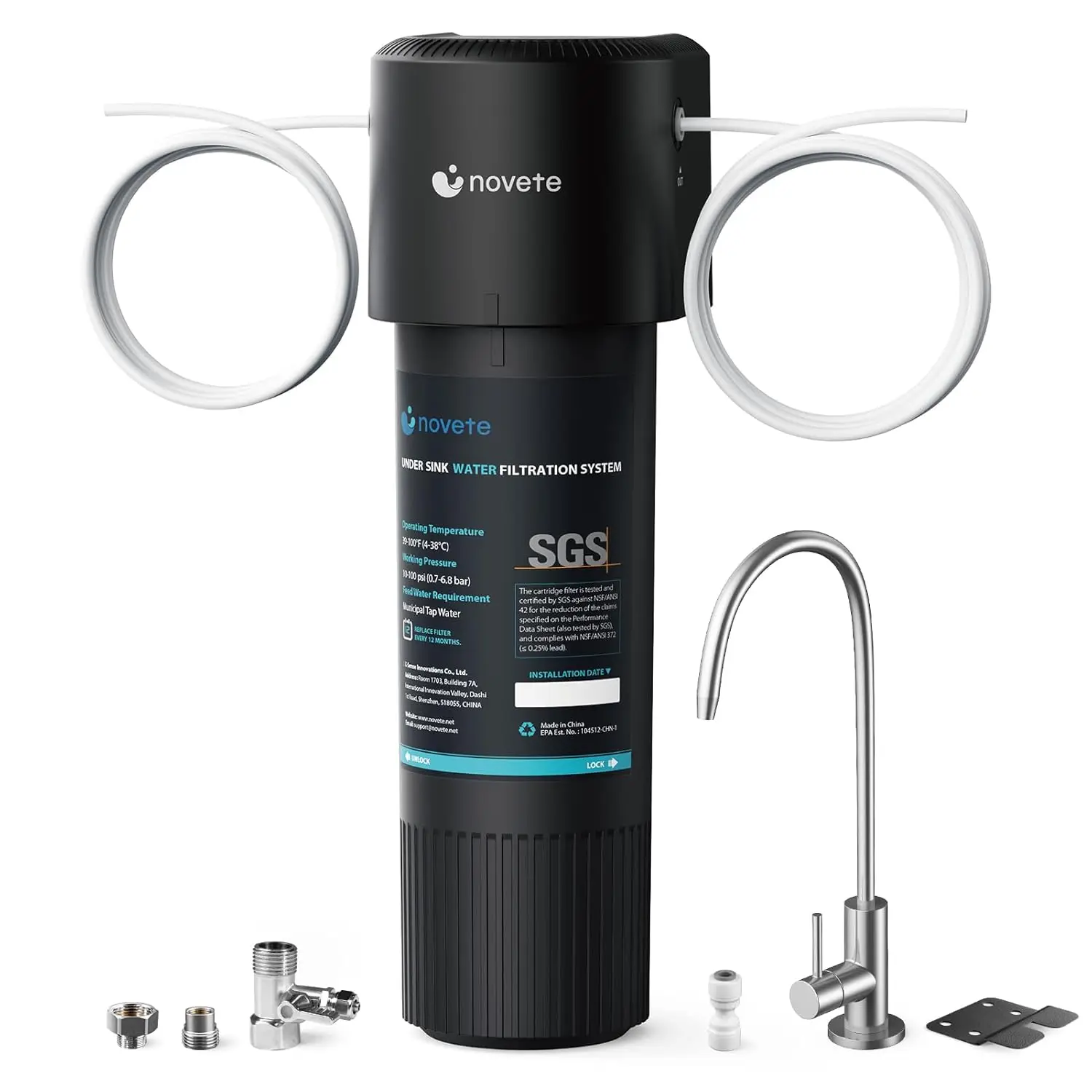
Under Sink Water Filter, 3-Year Lifespan
The claim of a 3-year filter life and NSF certification at this price is eye-catching. It includes a stainless steel faucet. If the certifications hold up, this is an incredible value for a basic undersink system. However, verify the NSF claims independently. It’s a classic “you get what you pay for” scenario—could be a gem, could be a gamble.
Frequently Asked Questions
- How often should I change my sink water filter?
- It depends on the filter’s capacity and your water usage. Most manufacturers recommend every 3-6 months. If you notice a slowdown in flow or a return of bad taste, change it sooner. Ignoring this can make the filter ineffective.
- Can a sink filter remove lead?
- Yes, but only if it’s specifically certified to NSF/ANSI Standard 53 for lead reduction. Look for that exact claim on the packaging. Standard carbon filters do not remove lead.
- Do I need a plumber to install an undersink filter?
- Not necessarily. Most modern systems are designed for DIY installation with basic tools. You’ll need to shut off the cold water valve, drill a hole for the faucet if needed, and connect tubing. If you’re not comfortable, a plumber is a safe bet.
- Is a faucet mount or undersink filter better?
- Undersink is generally better for performance and capacity. Faucet mounts win on convenience and install speed. Choose undersink if you own your home and want dedicated filtration. Choose a faucet mount if you rent or want to test the waters first.
- Will a water filter soften hard water?
- No. Standard carbon filters do not remove dissolved calcium and magnesium, which cause hardness. You need a water softener that uses ion-exchange for that. Some filters might reduce scale a bit, but they are not a true softening solution.
Final Thoughts
After testing dozens of systems, here’s my take: don’t overcomplicate it. For most people with city water, a quality two-stage undersink filter like the Quick Change Twin system is the perfect balance of cost, performance, and convenience. It gives you clean water without the waste of a pitcher or the complexity of reverse osmosis.
If you’re just starting out or need a flexible solution, the ALTY Stainless Steel faucet mount is a fantastic, durable entry point. It proves you don’t need to spend a fortune to get water that tastes good. The key is to match the filter to your actual water problems, not the fanciest marketing claims.
