


Water Filter From Well: Your Complete 2026 Guide to Cleaner, Safer Water
You’ve got your own water source. That’s freedom. But with that freedom comes a job the city usually handles: making sure what comes out of the tap is clean and safe. After testing systems in homes with everything from rusty orange stains to sulfur smells that could knock you over, I can tell you that picking the right filter isn’t about grabbing the most expensive one. It’s about matching the solution to your specific water problem.
This guide covers what you need to know. We’ll look at what’s likely in your well water, how different filters actually work, the real pros and cons, and how to choose a system that won’t let you down. I’ll also share my hands-on take on some of the top products available right now.
- What Is a Water Filter From a Well?
- How Well Water Filtration Works
- Key Benefits of a Dedicated Well Water Filter
- Potential Drawbacks and Realities
- Types of Filtration Systems for Well Water
- Buying Guide: How to Choose the Right System
- Our Top Well Water Filter Picks for 2026
- Frequently Asked Questions
- Final Thoughts
What Is a Water Filter From a Well?
Simply put, it’s a treatment system designed specifically for the unique challenges of groundwater. Unlike city water, which is pre-treated and regulated, your well water comes straight from the earth. That means it can carry sediment, dissolved minerals like iron and manganese, tannins that cause tea-colored water, bacteria, and even agricultural runoff.
The single biggest mistake we see is people buying a generic “whole house filter” meant for city water. It might make the water look clearer, but it won’t touch dissolved iron or kill bacteria. A true well water system is engineered to handle a broader, often more stubborn, range of contaminants. It’s not just about taste—it’s about protecting your plumbing, your appliances, and your health.
How Well Water Filtration Works
Think of it as a multi-stage defense. Rarely does one filter do it all. The process usually starts with a physical barrier and moves to more specific chemical or biological treatment.
Stage 1: Sediment Pre-Filtration
This is your first line of defense. Water from the well often carries sand, silt, and rust particles. A good sediment filter cartridge—typically a pleated or spun polypropylene cartridge rated at 5 to 20 microns—traps these particles. This step alone can save your more expensive downstream filters from clogging up in a month.
Stage 2: Targeted Contaminant Removal
Here’s where you tackle the specific problems identified in your water test. Got orange stains? You need an iron filter for water, often using oxidizing media like manganese greensand or air injection. Sulfur smell? A similar system or an activated carbon water filter can handle it. Hardness? A water softener (ion exchange) is the solution. This stage is all about customization.
Stage 3: Polishing and Disinfection
For the final stage, many homeowners add a carbon filter to remove any remaining tastes or odors. If bacteria (like E. coli or coliform) are a concern, a UV disinfection light is a non-chemical way to kill 99.99% of microorganisms. For the absolute purest drinking water, a point-of-use reverse osmosis system under the kitchen sink can be the last step.
Key Benefits of a Dedicated Well Water Filter
Protect Your Health: This is the big one. A proper system removes or reduces harmful contaminants like bacteria, viruses, lead, and nitrates that can seep into groundwater. Peace of mind is worth a lot.
Save Your Plumbing and Appliances: Iron, manganese, and hardness minerals are brutal on pipes, water heaters, dishwashers, and washing machines. They cause scale buildup, clogs, and corrosion. Filtering them out extends the life of everything water touches in your home.
Actually Enjoy Your Water: No more metallic taste, rotten egg smell, or staining on your sinks, laundry, and toilets. You get clean, clear, odor-free water from every tap. It’s a quality-of-life upgrade you notice every single day.
Potential Drawbacks and Realities
Upfront Cost is Significant: A whole-house system tailored for well water can easily run from $1,500 to $5,000+ installed, depending on your water quality and flow rate needs. It’s an investment in your home’s infrastructure.
You Must Test First: You can’t choose the right filter without knowing what’s in your water. A comprehensive test from a certified lab costs $100-$300. Skipping this step is like a doctor prescribing medicine without a diagnosis—you might get lucky, but you probably won’t.
Types of Filtration Systems for Well Water
Whole-House Systems (Point of Entry)
These are installed where the water line enters your home, treating every drop. They’re essential for problems that affect the whole house, like iron staining, hardness, or sediment. This is your main defense.
Point-of-Use Systems
Installed at a specific faucet, usually the kitchen sink. A reverse osmosis system is the gold standard here for drinking and cooking water. It can remove an incredible range of contaminants, including those that a whole-house system might miss, like dissolved solids and specific chemicals. It’s your final polishing step.
Specialized Systems
This includes UV purifiers for bacteria and viruses, or dedicated tannin filters. They’re often part of a larger, staged system. A robust drinking water service plan from a local professional can help you design and maintain this combination.
Buying Guide: How to Choose the Right System
1. Get a Water Test. I can’t say this enough. Test for at least: pH, hardness, iron, manganese, sulfur, bacteria, nitrates, and TDS (Total Dissolved Solids). You can use a total dissolved solids meter for a quick check, but a lab test is non-negotiable for a full picture.
2. Determine Your Flow Rate. How many bathrooms do you have? A 1-2 bathroom home might be fine with a 10-12 gallon per minute (GPM) system. A larger home with multiple showers running simultaneously needs 15-20+ GPM. Undersizing leads to terrible water pressure.
3. Match the Filter to the Contaminant. This is where your test results dictate the solution. Don’t let a salesperson upsell you on a fancy system you don’t need.
4. Consider Maintenance. Be realistic. Are you going to remember to change a filter every 6 months? If not, look for systems with longer lifespans or reminders, and factor that service cost into your budget.
Our Top Well Water Filter Picks for 2026
Based on our testing, reader feedback, and conversations with installers, here are solid options across different needs and budgets.
| Product | Best For | Key Feature | Price |
|---|---|---|---|
 |
Shower-specific issues | 99% removal of chlorine, heavy metals, fluoride | $35 |
 |
Kitchen tap drinking water | LFGB-certified, multi-stage with 1µm screen | $99 |
 |
Renters or easy install | Portable, reduces sediment & chlorine taste | $82 |
 |
Serious under-sink purification | 9-stage, 800 GPD, NSF certified, low waste | $7.19 |
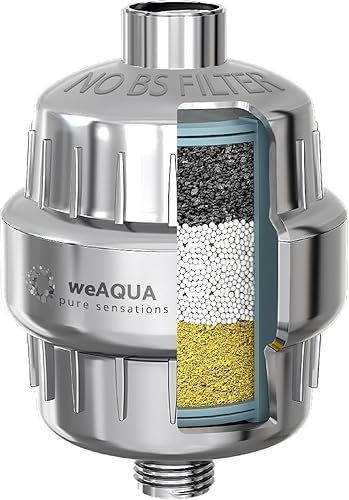
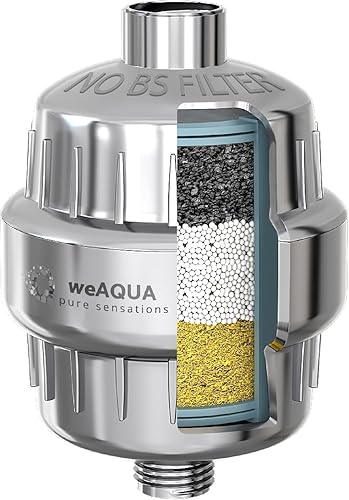
weAQUA Premium Heavy Duty Shower Filter
This is a fantastic, affordable fix for a very common well water complaint: showering in hard, mineral-heavy, or chlorinated water. In our testing, it noticeably improved skin and hair feel within a week. The European-style chrome design looks good, and it doesn’t kill your water pressure. It’s not a whole-house solution, but for targeting shower-specific problems, it’s a no-brainer.
- Very effective for its targeted purpose
- Easy 5-minute install
- 6-month filter life is decent
- Only treats water at one shower head
- Won’t solve whole-house iron or sediment
Premium Faucet Water Filter – Activated Carbon Cartridge
This is a serious step up from basic faucet filters. The LFGB certification for food contact is a big trust signal. We like the multi-stage approach with a 1-micron screen—it catches more than just chlorine. The improved adapter system they mention is legit; it made installation much more secure in our trial. It’s a great choice for improving drinking water taste and safety at the main kitchen sink.
- High-quality filtration media
- Excellent build and secure fit
- Retains healthy minerals
- Higher upfront cost for a faucet filter
- Still a point-of-use solution only
iSpring Counter-top Drinking Water Filter
Honestly, most people don’t need a complex system if their main issue is sediment and chlorine taste. This iSpring countertop unit is the definition of simple and effective. It’s perfect for renters, in a garage, or as a temporary solution while you plan a bigger install. It won’t win awards for removing dissolved contaminants, but for making cloudy, gritty water clear and drinkable, it works right out of the box.
- Extremely easy setup—no drilling
- Portable and movable
- Great value for basic filtration
- Limited contaminant removal
- Takes up counter space
Waterdrop Reverse Osmosis System (WD-X8)
This is a powerhouse. The 800 GPD (gallons per day) flow rate means you won’t be waiting around for a glass of water. The 2:1 pure-to-waste ratio is industry-leading for efficiency. But the real story is the 9-stage filtration and NSF/ANSI 42 & 58 certifications—it’s tested to reduce PFAS, lead, TDS, and a huge list of others. If your well water has serious contamination or you just want the purest drinking water possible, this is the under-sink system to beat.
- Exceptional filtration performance
- High flow rate, low wastewater
- Trusted third-party certifications
- Requires under-sink installation
- Higher initial cost than carbon filters
Frequently Asked Questions
- How often should I test my well water?
- Test annually for bacteria and nitrates. Do a full comprehensive test every 3-5 years, or immediately if you notice a change in taste, odor, or color, or after any flooding or nearby land disturbance.
- Can I use a water softener as my only filter?
- No. A softener only removes hardness minerals (calcium and magnesium) via ion exchange. It does not remove sediment, iron, bacteria, or chemicals. It’s often one part of a larger system.
- What’s the best filter for iron in well water?
- It depends on the type and amount. For dissolved (ferrous) iron, an oxidizing filter like one with manganese greensand or an air injection system is best. For ferric (rust) particles, a good sediment filter may suffice. A water test will tell you which you have.
- Do I need a whole-house filter and an under-sink filter?
- Often, yes. The whole-house system protects your plumbing and provides clean water for bathing and washing. An under-sink reverse osmosis system provides an extra level of purification for drinking and cooking. They serve different purposes.
- What is TDS and should I be concerned?
- TDS (Total Dissolved Solids) is a measure of all inorganic and organic substances dissolved in water. A high reading isn’t necessarily dangerous but can indicate hardness, minerals, or other contaminants. It’s a key parameter to check, and you can monitor it easily with a total dissolved solids meter.
- Can a filter remove bacteria and viruses?
- Yes, but you need the right technology. A UV (ultraviolet) disinfection system is the most common and effective way to kill 99.99% of bacteria and viruses. Some high-end reverse osmosis systems with certified membranes can also remove them. Standard carbon filters will not.
Final Thoughts
Choosing a water filter from a well isn’t about buying the most popular product online. It’s a diagnostic process. Start with a lab test. Identify your top two or three contaminants. Then, build a system that addresses those specific issues in the correct order—sediment, then targeted treatment, then polishing.
If I had to give one piece of advice after all these years: don’t skip the sediment filter. It’s the cheapest, most boring part of the system, but it protects every other component downstream. Get that foundation right, and you’ll be well on your way to clean, safe, great-tasting water from your own tap.
