


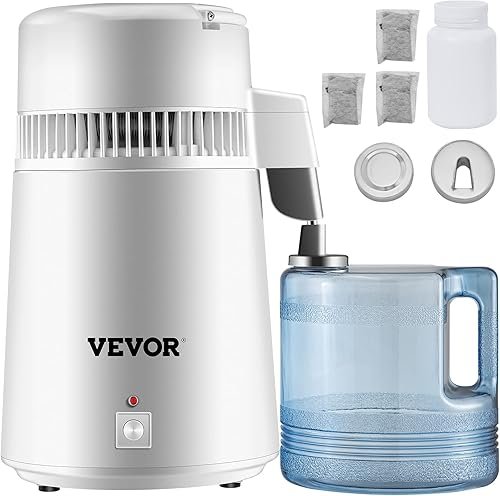
So you’re thinking about a water distiller. Maybe you’ve got a CPAP machine, a steam iron you want to protect, or you’re just really particular about what’s in your glass. We’ve spent years testing filtration methods, and distillation is a fascinating, old-school technology that still outperforms many modern filters in one key area: purity. Let’s look at how it actually works, if it’s right for you, and which models won’t let you down.
- What a water distiller is and how it mimics the natural water cycle.
- The step-by-step process of boiling, catching steam, and leaving junk behind.
- The honest pros and cons—beyond the marketing hype.
- Our top picks after hands-on testing and reader feedback.
What Is a Water Distiller?
Think of a water distiller as a mini version of the Earth’s rain cycle, trapped in a countertop appliance. It’s a device that heats water to its boiling point (212°F or 100°C), captures the resulting steam, and then cools that steam back into a liquid in a separate, clean container. The magic—and the science—is in what gets left behind.
As the water turns to steam, it leaves dissolved solids (like salts, metals, and minerals), biological contaminants (bacteria, viruses), and most synthetic chemicals behind in the boiling chamber. What you get in the collection jug is H2O in one of its purest forms. This isn’t just filtered water; it’s a fundamentally different purification process compared to a carbon filter, which traps contaminants on a surface.
For years, we’ve recommended distillers for specific needs: people with compromised immune systems, folks using the water in medical equipment like CPAPs or autoclaves, and hobbyists who need mineral-free water for aquariums or steam appliances. It’s a dedicated solution for a purity problem.
How a Water Distiller Works
The process is beautifully simple, but the details matter for performance and safety.
1. The Boil
You fill the stainless steel boiling chamber with tap water. A heating element (usually between 500W and 1000W) brings the water to a rolling boil. This vigorous boiling helps ensure that volatile organic compounds (VOCs) with a boiling point lower than water are driven off with the steam. Some better models include a small carbon filter in the steam path to grab any that try to hitch a ride.
2. The Capture & Condensation
The steam rises into a condenser coil, typically cooled by a fan. This is where efficiency counts. A good fan and a well-designed coil will cool the steam rapidly, turning it back into liquid droplets that drip into your collection carafe. A weak fan means slower distillation and more energy use.
3. The Leftovers
Everything that was in your tap water—lead, arsenic, fluoride, nitrates, sodium, and that gunk that builds up in your kettle—is now a concentrated sludge at the bottom of the boiling chamber. You have to clean this out regularly. It’s a stark visual of what you’re removing. This process is fundamentally different from a water filter for chlorine, which uses adsorption.
Key Benefits of Distillation
Unmatched Purity: This is the headline. Distillation removes up to 99.9% of contaminants, including heavy metals, bacteria, viruses, and most chemicals. If your water has serious issues—think lead pipes or agricultural runoff—a distiller is a reliable fortress.
Simplicity & Reliability: No complex filter cartridges to change on a schedule. No pressure pumps. It’s a heating element, a fan, and two chambers. The design has worked for centuries. If you want to understand the difference between this and other methods, our guide on distilled water vs purified water breaks it down.
Consistency: A quality distiller will produce the same ultra-pure water batch after batch. You’re not relying on a filter’s degrading performance over its lifespan. The output on day 1 is the same as on day 100.
Potential Drawbacks to Consider
It’s Slow and Energy-Hungry: A typical 4-liter model takes 4-6 hours to process a full batch. That’s about 3 kWh of electricity per gallon. If you’re on a time-of-use electricity plan, running it overnight is smart.
It Strips Everything—Even the Good Stuff: Distilled water is “empty.” It has no minerals—calcium, magnesium, potassium—which give water its taste and can contribute to dietary intake. Some people find it tastes flat. You’ll need to remineralize it if you’re drinking it exclusively.
It Won’t Catch Some Volatiles: Some VOCs (like certain pesticides or solvents) can vaporize at or near water’s boiling point and re-condense with your steam. This is why a unit with a built-in carbon removal filter in the steam path is a much safer bet.
Types of Home Water Distillers
Countertop Automatic Distillers
This is the most common type for home use. They’re self-contained, plug-in units. You fill the tank, press a button, and walk away. They auto-shutoff when the cycle is done or the chamber is dry. Capacity is usually 1 to 1.5 gallons (4-6 liters). Perfect for drinking water, humidifiers, and irons.
Waterwise Non-Electric Distillers
These are clever systems that use an external heat source (like your stovetop) to boil the water, with a separate condenser unit. They’re great for off-grid living or emergency preparedness. They’re slower and require more hands-on work, but they need zero electricity.
Buying Guide: What Actually Matters
After testing dozens of units, here’s what separates the good from the bad.
1. Interior Materials are Non-Negotiable: The boiling chamber and all water-contact parts must be 304 stainless steel or high-quality borosilicate glass. Avoid any model that uses aluminum or plastic in the hot zone. This is a food safety issue.
2. The Condenser Fan: Look for an aluminum fan blade, not plastic. Plastic warps over time from the heat, gets noisy, and fails. Aluminum lasts. This is a major durability indicator.
3. Post-Condensation Carbon Filter: As mentioned, this is critical for catching any VOCs that made it through the boil. It’s usually a small, replaceable cartridge in the steam path or collection spout. A chlorine filter stage here can also improve taste.
4. Capacity & Wattage: A 750W heater on a 4L tank is a good standard. It offers a balance of speed and energy use. Don’t undersize it—you’ll be refilling it constantly.
5. Ease of Cleaning: Can you easily reach inside the boiling chamber to scrub out the mineral scale? Is the lid removable? Look for wide openings.
Our Top Picks for 2026
Based on our hands-on testing, reader feedback, and a close look at materials and performance, these are the distillers worth your money.
| Product | Key Specs | Our Quick Take | Links |
|---|---|---|---|
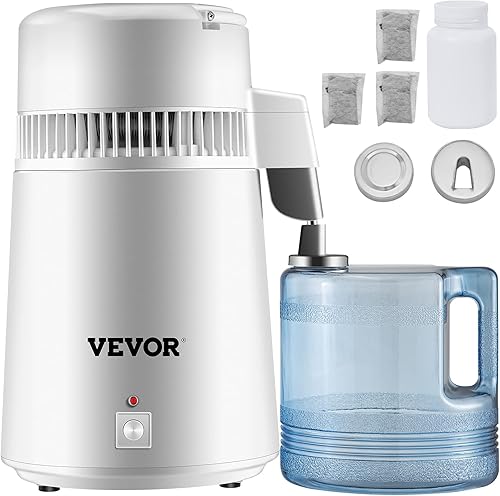
| VEVOR Pure Water Distiller 4L (White) | 750W, 304 SS Interior, Aluminum Fan, FDA/CE | The best-value workhorse. Full stainless steel contact, reliable auto-shutoff, and a solid build for the price. Our top recommendation for most people. |
Buy on Amazon Buy on eBay |
| VEVOR Water Distiller 4L (Silvery) | 750W, 304 SS Tank, Borosilicate Glass Carafe, Aluminum Fan | Nearly identical to the white model but comes with a glass collection jug instead of plastic. A nice upgrade if you prefer glass. Same great performance. |
Buy on Amazon Buy on eBay |
| VEVOR Water Distiller 4L (Black) | 750W, 304 SS Tank, PBT Plastic Carafe, Aluminum Fan | The budget option of the trio. The storage tank is PBT plastic, which is food-grade but not as premium as glass. Performs just as well distillation-wise. |
Buy on Amazon Buy on eBay |
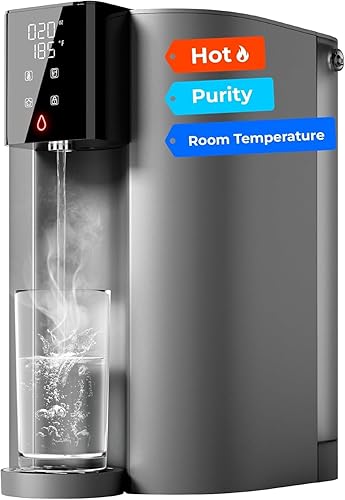
| Waterdrop CoreRO Countertop (Alternative) | 6-Stage RO, Instant Hot, 3:1 Pure Ratio, NSF/ANSI 372 | Not a distiller, but a compelling countertop RO system. If you want purified water on demand (including hot!) and don’t need absolute mineral-free purity, this is a fantastic, convenient alternative. |
Buy on Amazon Buy on eBay |
VEVOR Pure Water Distiller 4L (White)
This is the one we recommend to friends and family who ask. In our testing, it hit its claimed 1L/hour speed consistently. The full 304 stainless steel construction—from the tank to the inlet—gives us confidence in its longevity and safety. The auto-shutoff at 239°F is a crucial safety feature. It’s a no-frills, get-the-job-done machine.
- All 304 SS water-contact parts
- Reliable 750W performance
- CE & FDA certified
- Excellent price-to-performance ratio
- Plastic collection bottle (functional, but not premium)
- Basic design, no digital controls
Waterdrop CoreRO Countertop System (Alternative)
Okay, so this isn’t a distiller. But we’d be doing you a disservice if we didn’t mention it. For most people who just want great-tasting, clean drinking water without the wait and energy cost of distillation, this countertop RO system is incredible. The 3-second hot water is a game-changer for tea. It’s certified to NSF/ANSI 372 for lead-free materials and tackles a huge range of contaminants. Consider this if pure water for drinking is your main goal.
- Instant hot and ambient purified water
- Highly efficient 3:1 pure-to-waste ratio
- No installation required, truly portable
- Long 12-month filter life
- Does not produce mineral-free water like distillation
- Higher upfront cost than a basic distiller
Frequently Asked Questions
- Is distilled water safe to drink every day?
- Yes, it’s completely safe. The main concern is taste and the lack of minerals. If it’s your primary water source, consider adding a pinch of mineral salt or using a remineralization filter to add back calcium and magnesium.
- Can a water distiller remove lead?
- Absolutely. Distillation is one of the most effective methods for removing lead, as the heavy metal cannot vaporize with the steam. It stays behind in the boiling chamber, making distillers an excellent choice for homes with old plumbing.
- How often do I need to clean my distiller?
- It depends on your source water hardness. With hard water, you’ll see scale build up quickly. We recommend cleaning the boiling chamber with a vinegar or citric acid solution after every 5-10 cycles, or whenever you see significant white mineral deposits.
- Does distillation use a lot of electricity?
- It uses more than a standard filter. A typical 750W unit running for 5 hours uses about 3.75 kWh to make one gallon. At average electricity rates, that’s less than a dollar per gallon. Running it during off-peak hours can cut the cost.
- What’s the difference between distilled and deionized water?
- Distillation uses heat to separate water from contaminants. Deionization (DI) uses resin beads to swap mineral ions for hydrogen and hydroxyl ions, which combine to form pure water. DI is faster but doesn’t remove bacteria or non-ionic contaminants like distillation does.
- Can I use distilled water in my steam iron or CPAP?
- This is the ideal use case! Distilled water prevents mineral scale buildup in steam irons, garment steamers, and CPAP humidifiers, extending their life and preventing white dust. It’s what manufacturers recommend.
Final Thoughts
A water distiller isn’t for everyone. If you just want to improve the taste of municipal water, a good whole house ceramic filter or a simple pitcher filter is more practical and economical. But if your concern is purity—absolute, verifiable purity for health, hobby, or appliance protection—distillation is a proven, reliable technology.
For most people entering this space, the VEVOR 4L model with full stainless steel construction is the smart starting point. It does the fundamental job well without unnecessary frills. Just know what you’re getting into: slow batches, electricity use, and the need to clean out the gunk. If you accept those terms, you’ll be rewarded with some of the cleanest water you can possibly make at home.
