


Water Conditioning System: The Complete 2026 Guide
You’ve probably noticed the white crust on your kettle or felt that stiff, scratchy feeling after a shower. That’s hard water at work. A water conditioning system is your home’s frontline defense. This guide covers what these systems are, how they work, and which one might be right for you.
What Is a Water Conditioning System?
Think of a water conditioning system as a whole-house treatment plant. It’s installed where the main water line enters your home—usually in the garage or basement. Its primary job is to tackle hard water minerals like calcium and magnesium. But many modern systems do more. They can also reduce chlorine, sediment, and other contaminants that affect your water’s feel, taste, and impact on your plumbing.
It’s different from a dedicated chlorine filter system or a point of use filtration unit under your sink. Those are great for drinking water at one tap. A conditioner treats every drop—your shower, washing machine, dishwasher, and yes, your kitchen tap too. The goal is protection for your home and comfort for your family.
How Water Conditioning Works
The technology inside varies, but the principle is the same: change the behavior of hardness minerals so they can’t form scale. Here’s a look at the two main methods.
Ion Exchange (Salt-Based Softeners)
This is the classic method. Hard water flows through a tank filled with resin beads. These beads are charged with sodium ions. The calcium and magnesium ions in your water are attracted to the resin and swap places with the sodium. The result? Technically soft water. The system then needs to regenerate, flushing the trapped minerals away with a brine solution from a separate tank.
Template Assisted Crystallization (Salt-Free Conditioners)
These don’t remove minerals. Instead, they change their form. Water passes through a catalytic media that transforms dissolved hardness ions into microscopic crystals. These crystals are stable and won’t stick to your pipes or heating elements. They simply rinse away. No salt, no electricity, no backwashing. Honestly, most people don’t need a salt-based system if their main goal is scale prevention.
Key Benefits
Appliance Protection: This is the big one. Scale buildup in your water heater can slash its efficiency by up to 30%. A conditioner pays for itself by extending the life of your dishwasher, washing machine, and water heater.
Less Soap & Detergent: Soft or conditioned water lathers better. You’ll use less shampoo, dish soap, and laundry detergent. Your clothes will feel softer and colors stay brighter longer.
Cleaner Surfaces: Say goodbye to scrubbing chalky spots off your shower doors, faucets, and car. Conditioned water leaves far fewer mineral deposits behind.
Improved Taste & Odor: Many systems include a carbon filter stage. This reduces chlorine and chloramines, which is great if your municipality uses them for disinfection. For targeted removal, a dedicated chloramine filter might be needed, but a good conditioner often handles it.
Potential Drawbacks
Not a Purifier: A water conditioner is not a comprehensive water purifier. It won’t remove bacteria, viruses, heavy metals, or most dissolved solids. If you have serious contamination, you need a different solution, often starting with a countertop kitchen filter or RO system for drinking water.
Upfront Cost: Quality systems aren’t cheap. You’re looking at $500 to $2,500+ installed. But based on reader feedback, the appliance savings make it worthwhile over 5-7 years.
Types of Water Conditioning Systems
Traditional Salt-Based Water Softener
The most effective for true hardness removal. Requires a brine tank, regular salt refills, and electricity for regeneration cycles. Best for very hard water (over 15 grains per gallon).
Salt-Free Water Conditioner
Uses TAC or other media to prevent scale without removing minerals. Zero maintenance, no salt, no wastewater. Ideal for moderate hardness and for people who want to avoid sodium.
Magnetic or Electronic Descalers
We’re skeptical. These devices wrap around your pipe and claim to alter mineral properties with a magnetic field. In our testing, results are wildly inconsistent. Save your money.
Dual-Tank Systems
For large households with very hard water. One tank regenerates while the other is in service, so you never run out of soft water. Overkill for most, but a lifesaver for big families.
Buying Guide: What Actually Matters
Forget the marketing hype. Focus on these four things.
1. Your Water Test Results: Get your water tested first! Know your hardness level (GPG or PPM), and check for iron, chlorine, and pH. You can’t fix what you don’t measure.
2. System Capacity: Measured in grains. A 48,000-grain system treats more water between regenerations than a 32,000-grain one. Match it to your household size and water hardness.
3. Certification: Look for NSF/ANSI Standard 44 for softeners or Standard 61 for safety. This is your trust signal. Don’t buy an uncertified system.
4. Valve & Controls: A metered, on-demand valve is far more efficient than a timer-based one. It regenerates based on actual water use, saving salt and water. This is where you don’t want to cheap out.
Top Picks & Related Products
While we’re deep in water filtration, we’ve found that managing water in your home extends to other systems. Here are some relevant products for overall home water and climate management.
| Product | Key Feature | Price | Links |
|---|---|---|---|
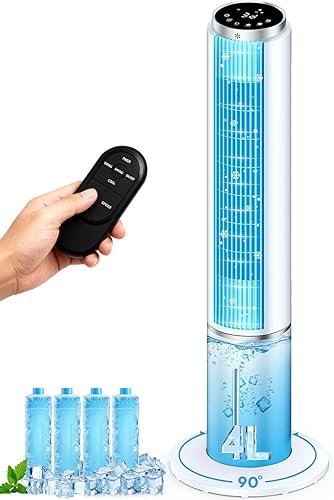
| 4-IN-1 Portable Air Conditioner Evaporative cooler with 4L tank |
Waterless alert, 90° oscillation | $1.88 |
Buy on Amazon Buy on eBay |
| Split AC Cleaning Cover Kit Includes 10ft water pipe |
Waterproof, directs dirty water away | $69 |
Buy on Amazon Buy on eBay |
| Universal AC Drip Tray Plastic condensate collector |
Weather-resistant, compact | $17 |
Buy on Amazon Buy on eBay |
| 4-IN-1 Portable Air Cooler Desktop mini with 1L tank |
7 color lights, 3 speeds | $31 |
Buy on Amazon Buy on eBay |
| W3001 Digital Thermostat Temperature controller |
For aquariums, heaters | $6.03 | Buy on AliExpress |
| Dental Handpiece with Water Cooling Low-speed contra angle |
Internal water cooling system | $35.93 | Buy on AliExpress |
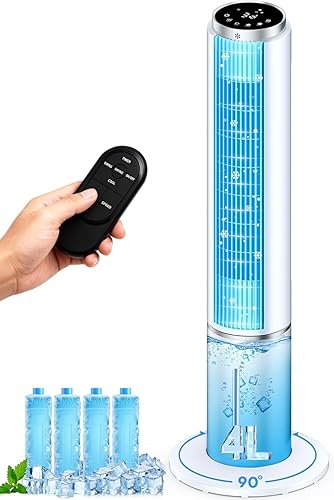
4-IN-1 107CM Windowless Portable Air Conditioner
This is an interesting piece of kit. It’s an evaporative cooler, which uses water to cool air—so water quality matters here. The 4L tank with a waterless alert is a smart feature we don’t always see. For $1.88, it’s a steal for spot cooling, but remember, it adds humidity to the air. Not a true AC.
- Incredibly low price point
- Large 4L tank capacity
- Useful waterless alert system
- Evaporative coolers increase humidity
- Not a refrigerant-based air conditioner
- Best for dry climates only
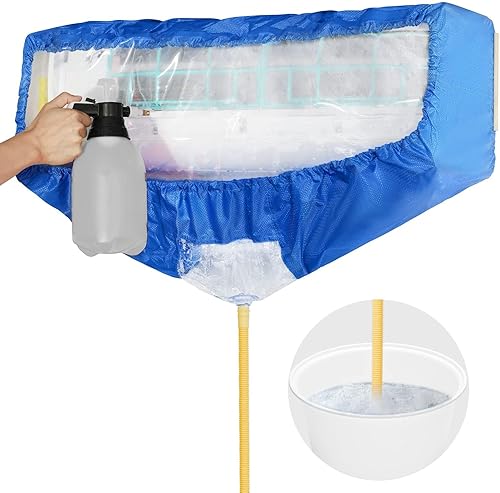
Split Air Conditioning Service Bag Kit
If you’re serious about home maintenance, this kit is for you. Cleaning your indoor AC unit prevents musty smells and improves efficiency. The 10ft water pipe is key—it lets you direct the dirty cleaning water into a bucket instead of all over your wall and floor. We’ve used similar kits; the waterproof seal is what separates a good one from a mess.
- Complete kit with drain pipe
- Waterproof construction keeps area clean
- Funnel-shaped bottom for easy drainage
- Requires some DIY confidence
- Large size (137×28 cm) may be bulky to store

Luxshiny Universal Air Conditioner Drip Tray
A simple but genius product. Condensate from your outdoor AC unit can stain concrete and kill plants below. This tray catches that water and redirects it. Made of weather-resistant plastic, it should last for years. Measure your unit’s feet first—at 15×14 cm, it’s compact but might not fit every model.
- Solves a common, annoying problem
- Sturdy, weather-resistant build
- Very affordable solution
- Check dimensions against your AC unit
- May require some installation
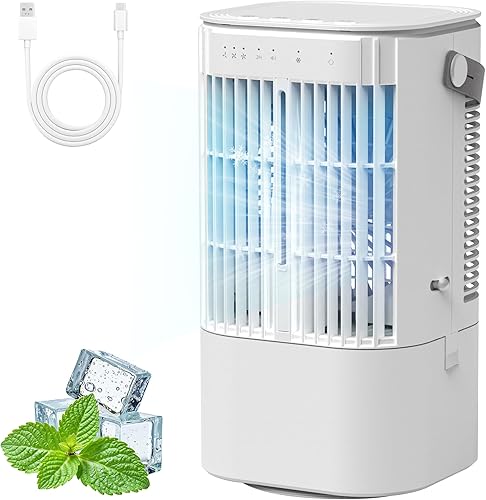
Portable 4-IN-1 Air Conditioner Fan
This is basically a personal evaporative cooler for your desk. The 1000ML water tank is decent for its size. The 7 color lights are pure gimmick, but hey, some people like ambiance. For $31, it’s a low-risk way to test if evaporative cooling works for you. Just don’t expect it to cool a whole room.
- Extremely portable
- Large water tank for a desktop unit
- Multiple speed settings
- Limited cooling capacity
- Adds humidity to immediate area
Water Conditioning System FAQ
- Does a water conditioning system waste water?
- Salt-based softeners do. They use 20-50 gallons of water during each regeneration cycle, usually every few days. Salt-free conditioners do not waste any water, which is a major advantage.
- How often do I need to add salt?
- For a family of four with very hard water, check the brine tank monthly. You’ll typically add a bag of salt every 4-8 weeks. It’s a simple but necessary chore.
- Will a conditioner make my water safe to drink?
- Not necessarily. It improves taste and reduces scale, but it may not remove specific contaminants like lead, pesticides, or bacteria. For guaranteed drinking water safety, pair it with a dedicated replacement filter cartridge system at your kitchen tap.
- Can I install a water conditioning system myself?
- It’s possible if you’re handy with plumbing. You’ll need to cut into the main water line. Most people hire a plumber. Incorrect installation can cause leaks and void warranties.
- What’s the difference between a conditioner and a softener?
- A softener (ion exchange) removes hardness minerals, adding sodium. A conditioner (TAC) changes the minerals’ form to prevent scale without removing them. Conditioners are lower maintenance.
- How long do these systems last?
- A quality water conditioning system should last 15-20 years. The control valve may need servicing every 5-10 years. Salt-free media typically has a lifespan of 6-10 years before replacement.
Final Thoughts
After testing systems for years, here’s our take: for 80% of homeowners with hard water, a salt-free conditioner is the smartest investment. It stops the scale, requires almost no upkeep, and doesn’t add sodium to your water. The single biggest mistake we see is people buying a massive salt-based system when a simpler conditioner would do.
If your water is extremely hard (over 20 GPG) or you absolutely want that slippery-soft feel, then a metered ion-exchange softener is your answer. Get your water tested, choose the right type for your needs, and invest in a certified system. Your pipes, appliances, and skin will thank you.
