


Water Conditioner: What It Is, How It Works, and If You Need One (2026)
You’ve heard the term tossed around at the hardware store or in aquarium forums. But what actually is a water conditioner? And more importantly, do you need one for your home or your fish tank? We’ve spent years testing everything from whole-house systems to the drops you add to a betta bowl. Let’s cut through the jargon.
- What a water conditioner actually does (and doesn’t do)
- The science behind how it treats your water
- Honest benefits and real-world limitations
- The different types you’ll encounter
- Our top picks for 2026, from aquarium drops to whole-house units
What Is a Water Conditioner?
Forget the marketing fluff. At its core, a water conditioner is any product that changes your water’s properties to solve a specific issue. The term gets used in two main worlds: home plumbing and aquariums. In your home, it usually refers to systems that tackle hard water scale. Think of it as a negotiator for the minerals in your water.
Instead of removing calcium and magnesium (like a traditional water softener), many conditioners use a template-assisted crystallization (TAC) process. This changes the minerals into microscopic crystals that won’t stick to your pipes or shower door. The minerals are still there—they’re just harmless now. For aquariums, the term means something different entirely. It’s a liquid or powder you add to tap water to instantly neutralize chlorine, chloramines, and heavy metals that are lethal to fish. This is non-negotiable if you’re filling a tank from the tap.
The single biggest mistake we see is people confusing conditioners with filters. They serve different purposes. A conditioner might be part of a larger filtration setup, but on its own, it’s a specialist tool. If you’re looking for broader contaminant removal, you’ll want to explore a dedicated kitchen sink filter or a full reverse osmosis system.
How a Water Conditioner Works
The Science of Scale Prevention (TAC)
Template-assisted crystallization is clever. Imagine tiny beads inside the conditioner tank coated with a specific template. As hard water flows past, calcium and magnesium ions latch onto these templates. They’re forced into a stable, crystalline form. Once formed, these crystals break off and flow harmlessly downstream. They don’t have the “sticky” charge needed to form scale on your heating elements or pipes. The water tests as “hard” because the minerals are present, but they behave differently.
The Chemistry of Aquarium Conditioners
This is straight-up water chemistry. Tap water contains chlorine or chloramines (chlorine bonded to ammonia) to kill bacteria. Great for municipal systems, terrible for fish gills. Aquarium conditioners contain sodium thiosulfate or similar compounds that instantly neutralize these disinfectants. The better ones also have chelating agents that bind to heavy metals like copper or lead, rendering them inert. It’s a rapid chemical reaction, not a filtration process. The water is safe within minutes.
Key Benefits of Using a Conditioner
For Home Plumbing & Appliances:
Prevents Scale Buildup: This is the main event. By preventing scale, you protect water heaters, coffee makers, and kettles. Scale acts as an insulator, forcing your water heater to work harder and use more energy. A conditioner can maintain efficiency.
No Salt or Electricity Needed: Most TAC-based conditioners are salt-free and require no backflushing or electricity. They’re low-maintenance compared to traditional ion-exchange softeners. You just replace the media every few years.
Maintains Healthy Minerals: Unlike reverse osmosis, which strips everything out, a conditioner leaves calcium and magnesium in your water. Some people prefer this for drinking water taste and mineral intake.
For Aquariums:
Instant Water Safety: This is critical. You can treat a bucket of tap water and add it to your tank immediately during a water change. No waiting. Your fish won’t suffer from chlorine burns on their gills.
Detoxifies Heavy Metals: Old pipes leach metals. A good conditioner binds to these, protecting sensitive species like shrimp and scaleless fish. It’s an essential safety net.
Potential Drawbacks to Consider
Doesn’t “Soften” Water Feel: A scale-inhibiting conditioner won’t give you that slippery, soft-water feel in the shower. Your soap won’t lather more. The minerals are still there, just non-scaling. Some people miss that traditional soft water feel.
Variable Effectiveness: TAC conditioners work best with water of a certain hardness and chemistry. Very high iron or manganese levels can foul the media. Always get your water tested first.
Aquarium Overdosing Risks: It’s rare, but adding way too much conditioner can deplete oxygen in a small tank. Follow the dosing instructions on the bottle precisely. It’s potent stuff.
Types of Water Conditioners
Whole-House Scale Inhibitors
These are tanks or cartridges installed on your main water line. They treat every drop of water entering your home. Ideal for protecting your water heater, boiler, and all plumbing fixtures from scale. They’re a “set and forget” solution for years.
Point-of-Use Conditioners
These are smaller filters installed under a specific sink, often protecting a single appliance like an fridge ice maker water filter line from scale. They’re cheaper upfront but only treat water at one outlet.
Aquarium Water Conditioners (Liquid/Powder)
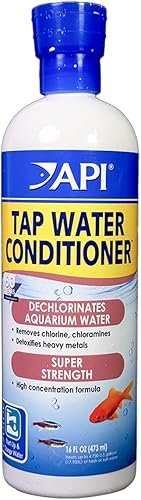
The most common type for hobbyists. Bottles of concentrated solution (like API Tap Water Conditioner or Seachem Prime) that you dose per gallon of new water. Essential for any water change or tank setup.
Magnetic & Electronic “Conditioners”
Controversial. These devices clamp onto your pipe and claim to alter mineral structure with magnetic fields. In our testing and based on reader feedback, results are wildly inconsistent. We don’t recommend them as a primary defense against scale.
Buying Guide: How to Choose
First, identify your problem. Is it white, crusty scale on your faucets and kettle? You need a whole-house or point-of-use scale inhibitor. Is it making tap water safe for a fish tank? You need an aquarium conditioner.
For Home Scale Prevention:
- Get a Water Test: Know your hardness level (in GPG or PPM) and check for iron. This dictates which system will work.
- Check Certifications: Look for NSF/ANSI 44 certification for scale reduction performance. Don’t trust unverified claims.
- Calculate Flow Rate: Ensure the system can handle your home’s peak demand (gallons per minute). Undersized units are ineffective.
For Aquariums:
- Match to Your Tank: Dosing is per volume. A 10-gallon tank needs a different concentration than a 100-gallon tank.
- Consider Your Livestock: Sensitive invertebrates like shrimp often require conditioners that also detoxify heavy metals and ammonia. Seachem Prime is a popular choice for this.
- Buy the Right Size: A large bottle is far more economical in the long run if you have multiple tanks.
If you’re looking for a more robust system that handles both contaminants and scale, combining a conditioner with one of the best under sink reverse osmosis units is a powerful one-two punch for ultimate water quality.
Our Top Picks for 2026
| Product | Best For | Key Feature | Price | Link |
|---|---|---|---|---|
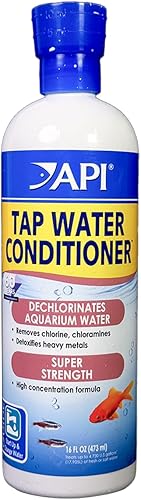 API Tapwater Conditioner, 437 ml |
Large Tanks / Multiple Tanks | Removes chlorine, chloramines, heavy metals; highly concentrated | $23 |
Buy on Amazon Buy on eBay |
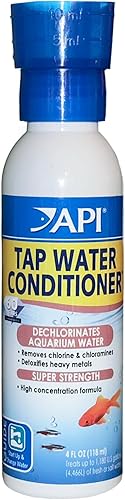 API Tapwater Conditioner, 118 ml |
Small Tanks / Beginners | Same trusted formula, affordable entry point | $16 |
Buy on Amazon Buy on eBay |
 API Tapwater Conditioner, 946 ml |
Serious Hobbyists / Best Value | Bulk size for frequent water changes; lowest cost per dose | $45 |
Buy on Amazon Buy on eBay |
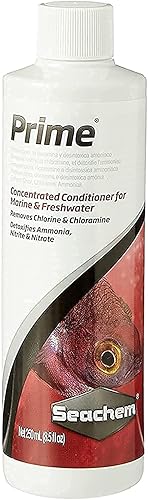 Seachem Prime Concentrated Conditioner, 250 ml |
Sensitive Livestock / Shrimp Tanks | 5x more concentrated; detoxifies ammonia & heavy metals | $26 |
Buy on Amazon Buy on eBay |
API Tapwater Conditioner, 437 ml
This is the workhorse. We’ve used the 437ml bottle for years in our testing lab with multiple tanks. It’s straightforward, effective, and lasts a surprisingly long time. The dosing cap makes measuring easy. Honestly, for most freshwater aquariums, this is all you need. It handles chlorine and chloramines without fuss. The only downside? It doesn’t detoxify ammonia like some premium brands.
- Highly economical for large volumes
- Simple, proven formula
- Easy-to-use measuring cap
- Does not address ammonia
- Bottle can be messy if over-poured
Seachem Prime Concentrated Conditioner, 250 ml
The gold standard for serious hobbyists. Prime is 5x more concentrated than most competitors, so a little goes a very long way. What sets it apart is its ability to temporarily detoxify ammonia and nitrites for 24-48 hours—a lifesaver during a cycle crash or when quarantining new fish. The smell is strong (like sulfur), but it dissipates quickly. Worth the premium if you keep sensitive shrimp or expensive fish.
- Extremely concentrated—best value per gallon
- Detoxifies ammonia, nitrites, and heavy metals
- Trusted by breeders and public aquariums
- Strong odor when pouring
- Precise dosing required for small tanks
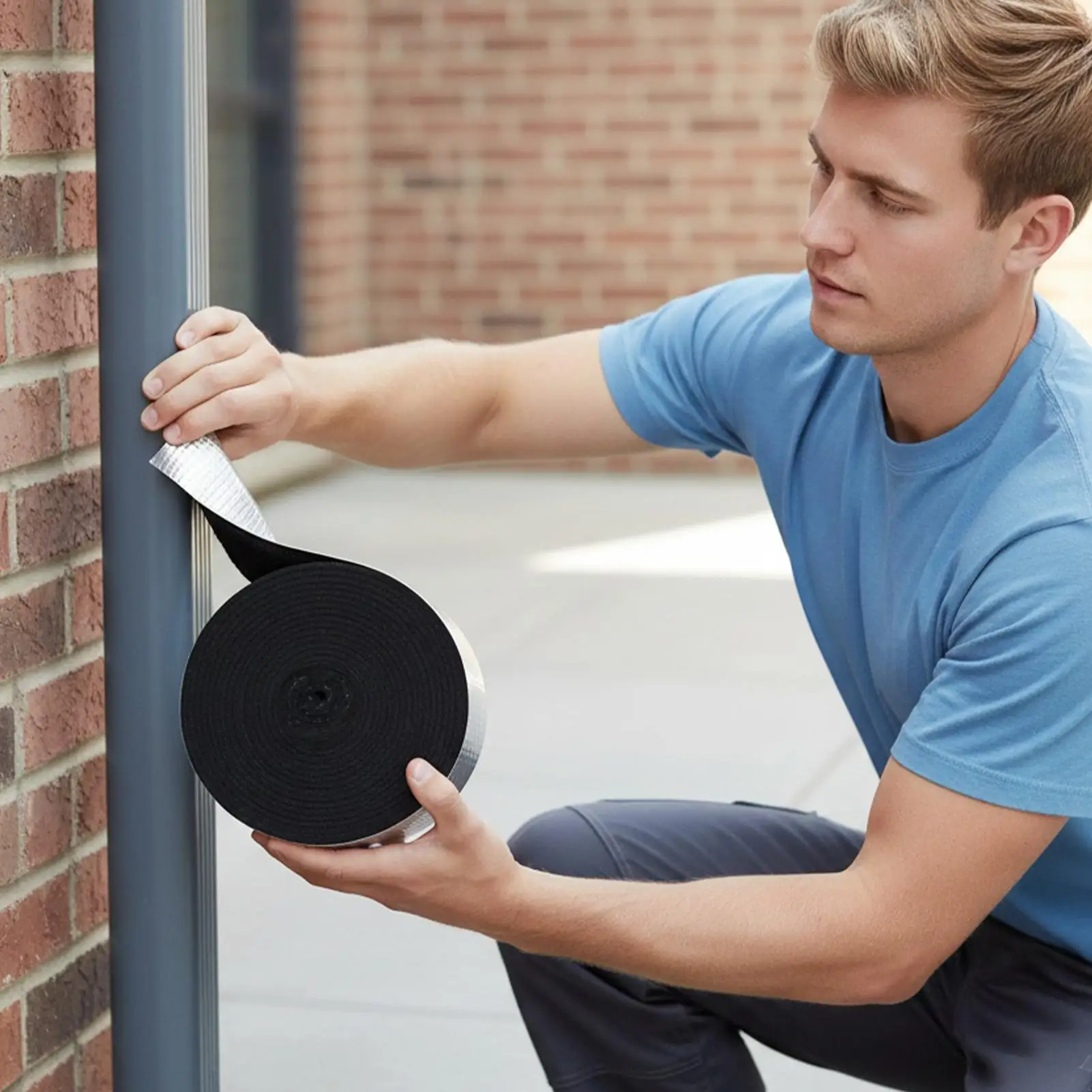
Pipe Insulation Foam Wrap (AliExpress Budget Pick)
This is not a water conditioner. It’s a foam sleeve for your pipes to prevent heat loss and condensation. It can be a smart, cheap upgrade to protect pipes in cold areas or reduce energy waste from hot water lines. But it won’t touch scale, chlorine, or minerals. A totally different product category.
- Very low cost
- Reduces heat loss from hot water pipes
- Can prevent pipe sweating
- Does not treat water in any way
- Installation required on each pipe
Frequently Asked Questions
- Can I use a water conditioner instead of a filter?
- No. They do different jobs. A conditioner alters minerals or neutralizes chlorine. A filter physically removes contaminants like lead, sediment, or bacteria. For comprehensive protection, you often need both. A conditioner alone won’t make unsafe water safe to drink.
- How often do I need to add aquarium conditioner?
- Every time you add new tap water to the tank. This includes during water changes and when topping off evaporated water (use conditioned water for top-offs). Never add untreated tap water directly to an aquarium.
- Do salt-free water conditioners really work?
- Yes, but with caveats. TAC (template-assisted crystallization) conditioners are proven to reduce scale formation in most residential settings. However, their effectiveness can vary based on your specific water chemistry, especially with very high hardness or iron levels. Get a water test first.
- Is a water conditioner the same as a water softener?
- No. A traditional water softener uses salt (sodium or potassium) to remove calcium and magnesium ions through ion exchange. A salt-free conditioner changes the mineral structure to prevent scaling but leaves the minerals in the water. Softeners give that “slippery” feel; conditioners do not.
- Can I overdose aquarium water conditioner?
- It’s difficult but possible. Most conditioners have a wide safety margin. However, massively overdosing (like 10x the dose) can bind too much oxygen in the water, potentially harming fish. Always follow the label’s dosing instructions. When in doubt, slightly underdose rather than overdose.
- Where should I install a whole-house conditioner?
- After the water meter and main shut-off valve, but before the water heater and any branch lines. This ensures all water entering your home is treated. Installation by a licensed plumber is recommended to maintain warranty and ensure proper function.
- Do I need a conditioner if I have a reverse osmosis system?
- Possibly. An RO system removes most minerals, so scale isn’t usually an issue for the drinking water line. However, the rest of your home’s hot water (showers, dishwasher) is still vulnerable. A whole-house conditioner protects those appliances and pipes, while your best under sink RO system handles your drinking water purification.
Final Thoughts
After years of testing, here’s our take: a water conditioner is a specialist tool, not a cure-all. For aquarium keepers, it’s an absolute necessity—the API and Seachem products above are both excellent. For homeowners battling hard water scale, a salt-free TAC conditioner is a smart, low-maintenance option that protects your investment in water-using appliances.
But be honest about your needs. If your goal is better-tasting, contaminant-free drinking water, a conditioner alone won’t cut it. Pair it with a point-of-use filter or a full reverse osmosis system for complete peace of mind. Know your water, pick the right tool for the job, and you’ll be in great shape.
