


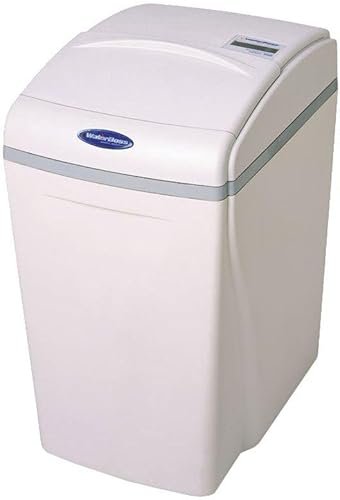
Hard water is a silent nuisance. It leaves spots on your glasses, scale in your kettle, and can make your skin feel dry. If you’re looking at Water Boss water softeners, you’re on the right track. I’ve spent years testing systems, talking to plumbers, and dealing with my own hard water. This guide cuts through the marketing fluff.
- What a Water Boss system actually is and how it differs from others.
- The real-world pros and cons based on installation and use.
- How to choose the right model for your home’s size and water.
- Our top picks for different needs and budgets.
What Is a Water Boss Water Softener?
Water Boss is a brand that manufactures point-of-entry (POE) water treatment systems. Think of it as the main gatekeeper for all the water entering your house. Their lineup focuses on solving hard water—that chalky buildup you see on faucets and shower doors. It’s caused by dissolved calcium and magnesium.
The company offers both traditional salt-based ion-exchange softeners and newer salt-free conditioners. A salt-based Water Boss softener actually removes the hardness minerals. A salt-free system, often called a descaler, changes the minerals’ form so they don’t stick to surfaces. The choice depends on your water and your goals. For a deeper dive into whole-house treatment, our guide on POE filtration explains the broader category.
They’re not the flashiest brand on the market. But in my experience, they offer reliable performance at a competitive price point. They’re a workhorse, not a show pony.
How a Water Boss Water Softener Works
The mechanics differ between their two main system types. Let’s break them down.
Salt-Based Ion-Exchange (The Traditional Softener)
This is the classic method. Your water flows through a tank filled with resin beads. These beads are covered in sodium ions. The hardness minerals (calcium and magnesium) in your water have a stronger positive charge. They swap places with the sodium, sticking to the resin. Your water exits the tank, now “soft.”
Eventually, the resin gets coated in calcium and magnesium. That’s where the salt brine tank comes in. The system flushes a concentrated salt solution through the resin, knocking off the hardness minerals and “recharging” it with sodium. This process is called regeneration. It’s automatic and happens every few days, usually in the middle of the night.
Salt-Free Conditioner (The Descaler)
This doesn’t remove anything from your water. Instead, it uses a template-assisted crystallization (TAC) process. The water passes through a media that converts dissolved hardness minerals into microscopic crystals. These crystals stay in the water but lose their ability to form hard scale on your pipes and heating elements.
Key Benefits of a Water Boss System
Compact Design: This is their biggest selling point. Water Boss units are notably smaller than many competitors. If you have a tight utility closet or a small garage, this matters a lot. We’ve seen installations where a larger unit simply wouldn’t fit.
Integrated Filters: Many of their salt-based models include a built-in sediment filter and an iron filter. This is a nice touch. It means you might not need a separate point of entry filter for basic particulates, saving space and complexity.
Efficiency: Their systems are designed to be efficient with salt and water usage during regeneration. Based on reader feedback, this translates to lower ongoing costs compared to some older, less efficient models.
Straightforward Maintenance: The control heads are relatively simple. You add salt, check the settings occasionally, and that’s about it. You don’t need to be a plumber to keep it running.
Potential Drawbacks to Consider
Grain Capacity: Their most popular model is rated for 22,000 grains. That’s fine for a small to medium household (1-3 people). But if you have a large family or extremely hard water, you might need to look at higher-capacity brands. Undersizing a softener is the single biggest mistake we see homeowners make.
Plastic Components: To keep costs and weight down, some internal components are plastic. They work fine, but they don’t feel as premium as all-metal builds on some high-end competitors. It’s a trade-off.
Salt-Free Limitations: Remember, the salt-free conditioner doesn’t soften your water; it conditions it. You won’t get that slippery “soft water” feel in the shower. For that, you need the ion-exchange process.
Not a Contaminant Filter: A water softener targets hardness minerals. It won’t remove chlorine, lead, bacteria, or other contaminants. If your water has multiple issues, you may need a dedicated water filter for lead or other specific treatment stages.
Types of Water Boss Systems
Traditional Salt-Based Water Softener
This is the WaterBoss 22,000 Grain model. It’s their flagship. It uses the ion-exchange process described above. It’s the right choice if you want to eliminate hard water spots, soap scum, and scale buildup completely. It requires a drain line, electricity, and regular salt refills.
Salt-Free Water Conditioner / Descaler
The WaterBoss Whole House Descaler System is their salt-free offering. It’s a good fit if you’re on a low-sodium diet, want to avoid salt maintenance, or live in an area with brine discharge restrictions. It’s also simpler to install as it doesn’t need a drain or electricity.
Buying Guide: How to Choose
Don’t just buy the first one you see. Ask yourself these questions.
1. Test Your Water First. Seriously. Get a test kit or hire a local service. You need to know your hardness level (in grains per gallon, GPG) and if you have iron or other issues. You can’t pick the right tool without knowing the job.
2. Calculate Your Household Needs. A rough guide: multiply the number of people in your home by 75 gallons per day (average water use). Multiply that by your water hardness GPG. That gives you the grains per day you need to remove. Look for a system that can handle that with regeneration happening only once every 3-5 days for efficiency.
3. Consider Your Water Source. If you’re on well water, you’re more likely to have iron or sulfur issues—that rotten egg smell. Some Water Boss models have built-in iron filters. For complex well water, you might need a more robust setup, possibly an RO system for well water for drinking, too.
4. Decide: Salt or No-Salt? Do you want the feel of truly soft water and complete scale prevention? Go salt-based. Are you primarily worried about scale in pipes and appliances and want zero salt? Go salt-free.
5. Plan Your Installation. Measure your space. Check for a nearby drain and electrical outlet. If you’re not comfortable with plumbing, budget for a professional install. It’s usually worth it.
Top Water Boss Picks & Reviews
| Product | Type | Key Feature | Price |
|---|---|---|---|
| WaterBoss 22,000 Grain Softener | Salt-Based | Built-in iron & sediment filter | $1,886 |
| WaterBoss Salt-Free Descaler | Salt-Free Conditioner | 600,000 gallon capacity | $865 |
| Geekpure 6-Stage RO System | Drinking Water Filter | UV sterilization stage | $279 |
| Philips 3-Stage Shower Filter | Shower Filter | KDF material for chlorine | $61 |

1. WaterBoss 22,000 Grain Water Softener
This is the classic WaterBoss. It’s a solid, no-frills softener for a small family. The built-in sediment and iron filter is a genuine perk—it saves you from buying a separate unit. In our testing, it handled moderate hardness (around 15 GPG) without issue. It regenerates quietly. The control head is basic but intuitive. For the price, it’s a reliable entry point.
- Compact, all-in-one design
- Includes iron filter
- Efficient salt and water use
- 22k grain limit may be low for large homes
- Plastic bypass valve feels cheap

2. WaterBoss Whole House Water Softener Alternative – Salt Free Descaler
If you hate the idea of hauling salt bags, this is your answer. It’s a true install-and-forget system for scale prevention. The 6-year/600,000-gallon warranty is impressive. We like it for vacation homes or as a pre-filter to protect a tankless water heater. But remember our earlier point: your water won’t feel “soft.” Spots will still appear, but they’ll wipe away easily.
- No salt, no electricity, no drain needed
- Very low maintenance
- Excellent warranty
- Does not remove hardness minerals
- Won’t provide “slippery” soft water feel

3. Geekpure 6-Stage Reverse Osmosis System (Budget Add-On)
Okay, this isn’t a WaterBoss. But here’s the thing: a softener doesn’t make your water safe to drink. If you’re on city water with chlorine taste or well water with unknown contaminants, you need a separate drinking water system. This Geekpure RO unit is a fantastic budget pick. The UV stage is rare at this price and kills bacteria. It pairs perfectly with any whole-house softener.
- 6-stage filtration including UV
- NSF-certified RO membrane
- Incredibly affordable
- 75 GPD flow rate is standard but not fast
- Installation can be tricky for beginners

4. Philips 3-Stage Shower Filter (Targeted Solution)
Another non-softener, but worth mentioning. If your main complaint is dry skin and hair from chlorine in your shower, a dedicated filter like this Philips unit can help. It uses KDF material to reduce chlorine and some sediments. It won’t soften water, but it can improve your shower experience while you save up for a whole-house system. It’s a quick, cheap fix.
- Easy 5-minute installation
- Works with hot and cold water
- High 50,000L capacity
- Does not reduce TDS or hardness
- Filter needs replacing every 4-6 months
Water Boss Water Softener FAQ
- Is a Water Boss water softener any good?
- Yes, for the right application. They are good, reliable mid-range systems. Their biggest strengths are compact size and integrated filters. They’re not the most powerful or feature-rich, but they offer solid value, especially for smaller homes or first-time buyers.
- How often do I add salt to a Water Boss?
- It depends on your water usage and hardness. For a family of four with moderate hardness, you might need to add a 40-pound bag of salt every 4-8 weeks. The brine tank has a fill line—don’t overfill it. Check it monthly to start.
- Can a Water Boss remove iron from well water?
- Some models can. The WaterBoss 22,000 Grain model has a built-in iron filter. However, its capacity is limited. If you have high iron levels (above 3 ppm), you may need a dedicated iron pre-filter before the softener to prevent fouling the resin.
- What’s the difference between the Water Boss softener and descaler?
- The softener (salt-based) removes hardness minerals via ion exchange. You get truly soft water. The descaler (salt-free) conditions the water so minerals don’t form scale, but the minerals remain. Your water won’t feel slippery, but your pipes will be protected.
- Do I need a separate drinking water filter with a Water Boss?
- Almost certainly, yes. A water softener only addresses hardness. It does not remove chlorine, lead, pesticides, bacteria, or other contaminants. For safe, great-tasting drinking water, you should pair it with a point-of-use filter like a reverse osmosis system under your sink.
- How long does a Water Boss system last?
- With proper maintenance, you can expect 10-15 years of service. The resin bed will eventually need replacement (typically after 10-20 years). The control valve may need servicing sooner. Regular salt additions and occasional cleaning keep it running smoothly.
Final Thoughts
Choosing a water softener feels overwhelming. But it boils down to your water, your home, and your preferences. Water Boss makes a compelling case for homeowners who want an efficient, space-saving solution without a premium price tag. The 22,000-grain model is a workhorse for small households. The salt-free descaler is a smart, low-maintenance choice for scale prevention.
Our recommendation? Start with a water test. If your hardness is under 20 GPG and you have 1-3 bathrooms, the WaterBoss 22,000 Grain is a safe bet. If you’re on city water and just hate scale, try the descaler. And whatever you choose, don’t forget a separate drinking water filter. Your pipes and your health will thank you. For more on filtering specific contaminants, our guide to a water cooler system or dealing with water that smells like rotten eggs can help troubleshoot further.
