


You’ve spent hundreds, maybe thousands, on a camera lens. The last thing you want is a scratch ruining your images—or your wallet. That’s where a UV filter comes in. We’ve tested dozens over the years, talked to repair techs, and seen the good, the bad, and the hazy. This guide covers what they actually do, how to pick a good one, and which models we trust on our own gear.
What Is a UV Filter?
Forget the marketing fluff. A UV filter is a piece of optical glass with a metal ring that threads onto the front of your camera lens. Originally, they were designed to block ultraviolet light, which could cause a bluish haze in film photography. With modern digital sensors, that’s far less of an issue.
So why does everyone still use them? Protection. Think of it as a clear, sacrificial shield. It takes the hit from sand, sea spray, or an accidental bump so your lens’s delicate front element doesn’t. It’s a simple concept, but the quality of the glass and coatings varies wildly. That’s what separates a great filter from one that degrades your $2,000 lens.
How a UV Filter Works
It’s deceptively simple. Light enters the filter glass, which is engineered to be as transparent as possible. The best filters use high-grade optical glass—like Japanese AGC or German Schott—with multiple anti-reflective coatings. These coatings do the heavy lifting.
The Glass & Coatings
The glass itself needs to be perfectly flat and clear. Cheap filters use inferior glass that can soften your images. Then come the coatings. A basic filter might have a single layer. A pro-grade filter will have 18, 24, or even 30+ layers of nano-coatings. These layers serve multiple purposes: they reduce reflections (flare), repel water and oil (hydrophobic), and make the surface easier to clean. In our testing, the difference between a multi-coated and uncoated filter is immediately obvious when shooting towards a bright light source.
Light Transmission
This is the key metric. It measures how much light passes through the filter versus how much is reflected or absorbed. A top-tier filter will boast 99%+ light transmission. A poor one might be below 95%. That lost light might seem minor, but it can affect autofocus speed and force your camera to use a slightly higher ISO. Always check this spec.
Key Benefits
Lens Protection: This is the number one reason. A $20 filter is a lot cheaper than a $400 lens repair. It guards against front-element scratches, dust, and moisture.
Haze Reduction: In high-altitude or coastal photography, UV light can still create a slight atmospheric haze. A quality UV filter can cut through that, giving you clearer, more contrasty distant shots.
Easier Cleaning: It’s far less stressful to wipe a filter clean than to risk scratching your lens’s actual coating. Some photographers even leave a lens cap off with just a filter for quick shooting.
Potential Drawbacks
Another issue is vignetting. Some ultra-wide-angle lenses (think 16mm and wider) can show dark corners if the filter ring is too thick. That’s why “slim” or “ultra-slim” designs exist. Finally, stacking filters (like a UV plus a polarizer) increases the chance of vignetting and can multiply any optical flaws.
Types of UV Filters
Not all UV filters are created equal. The main differentiators are glass quality, coating count, and ring thickness.
Standard Multi-Coated
This is the sweet spot for most photographers. They offer good protection and multi-layer coatings that handle flare reasonably well. Brands like K&F Concept offer excellent value here. They’re a huge step up from uncoated filters.
Nano-Coated / Pro-Grade
These use premium glass (like Schott B270) and advanced hydrophobic nano-coatings. They repel water and oil like magic, and their light transmission is often above 99.5%. Brands like Urth and B+W sit here. They’re for photographers who demand zero compromise.
Slim / Ultra-Slim
The ring is machined thinner to prevent vignetting on wide-angle lenses. The trade-off? They often don’t have front threads, so you can’t stack another filter on top. Always check if you need that feature.
Buying Guide: What Actually Matters
Ignore the hype. Focus on these four things.
1. Glass Quality: Look for mentions of “optical glass,” “AGC,” or “Schott.” Avoid any filter that doesn’t specify. This is the foundation.
2. Coating Count & Type: More layers are generally better. Look for “multi-coated” at a minimum. “Nano-coated” or “hydrophobic” is a premium feature worth paying for if you shoot in tough conditions. It’s similar to how a good whole house filter cartridge relies on quality media—materials matter.
3. Light Transmission: A reputable brand will list this. Aim for 98% or higher. If they don’t list it, be skeptical.
4. Ring Design: For lenses wider than 24mm (full-frame equivalent), get a slim filter. For standard and telephoto lenses, a standard ring is fine and often more robust.
Our Top UV Filter Picks for 2026
After years of testing, these are the filters we buy with our own money and recommend to friends.
| Filter | Key Specs | Best For | Price |
|---|---|---|---|
| K&F Concept 67mm MCUV (K-Series) | 18-Layer Multi-Coated, 98.3% Transmission, 3.3mm Slim | Best value for most photographers | $17 |
| K&F Concept 72mm Nano-Tec | 28-Layer Nano-Coated, 99.6% Transmission, 3.3mm Slim | Excellent performance under $40 | $38 |
| Urth 77mm UV Plus+ | 30-Layer Nano-Coated, German Schott Glass | Premium protection & hydrophobic coating | $99 |

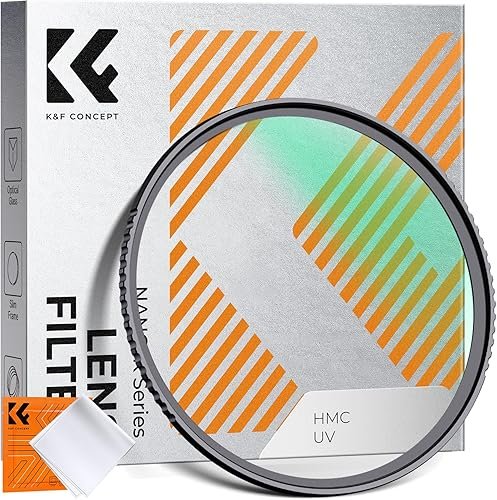
K&F Concept 67mm MCUV Lens Protection Filter (K-Series)
This is the filter we recommend to 90% of people. Honestly, most photographers don’t need to spend more. The 18-layer coating does a solid job reducing flare, and the 98.3% light transmission is more than adequate. We’ve used the 58mm version on a travel zoom for two years—no vignetting, and it’s taken a couple of knocks without issue. The included cleaning cloth is a nice touch.
- Outstanding value for money
- Slim design prevents vignetting
- Good multi-coating performance
- Not as hydrophobic as nano-coated options
- Coating count lower than premium filters
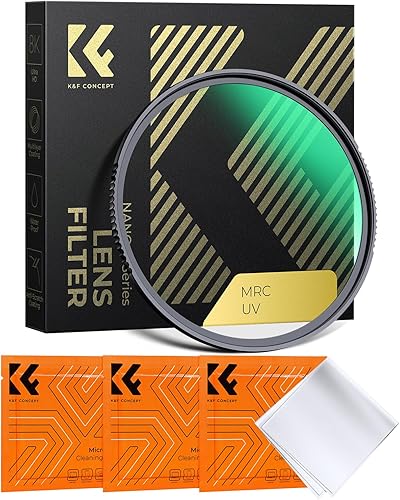
K&F Concept 72mm UV Filter (Nano-Tec Series)
This is where the performance jumps significantly. That 99.6% transmission rating isn’t just a number—we noticed slightly faster autofocus lock in low light compared to the K-Series. The 28-layer nano-coating is genuinely impressive for the price; water beads up and rolls off. If you shoot in rain or near saltwater, spend the extra $20. It’s a noticeable step up.
- Exceptional 99.6% light transmission
- Effective hydrophobic nano-coating
- Still competitively priced
- Costs more than the basic K-Series
- Hydrophobic coating can wear over years

Urth 77mm UV Lens Filter (Plus+)
This is the luxury pick. The German Schott glass is flawless, and the 30-layer coating is in a different league. We tested it in a downpour—water sheets off instantly. Is it worth 5x the K&F K-Series? For a working pro who needs absolute reliability and minimal cleaning in the field, yes. For a hobbyist? Probably not. But the craftsmanship is undeniable.
- Premium German Schott glass
- Best-in-class hydrophobic coating
- Exceptional build quality
- Very high price point
- Diminishing returns for casual shooters
UV Filter FAQ
- Do UV filters really protect lenses?
- Absolutely. We’ve seen countless lenses saved from front-element scratches by a $20 filter. It takes the impact, sandblast, or smear instead of your expensive glass. It’s the cheapest insurance you can buy.
- Will a UV filter affect image quality?
- A high-quality, multi-coated filter will have no visible impact on sharpness or color. A cheap, uncoated filter can reduce contrast and cause flare. This is why glass and coatings matter more than brand name.
- Should I use a UV filter or a clear protective filter?
- They are functionally identical today. “UV” is a historical name. Both are clear glass protection filters. Don’t overthink the label; check the specs (glass type, coating layers).
- Can I leave a UV filter on all the time?
- Yes, that’s the point. Many photographers, including us, keep a UV filter on every lens permanently. Just ensure it’s a good one. A bad filter is worse than no filter.
- What’s the difference between a $20 and a $100 UV filter?
- Glass quality, coating technology (nano vs. standard), and light transmission. The expensive filter will be easier to clean, handle flare better, and lose less light. Whether that’s worth 5x the cost depends on your needs.
- Do I need a slim filter for my lens?
- If you use a wide-angle lens (typically wider than 24mm on full-frame), yes, to avoid dark corners (vignetting). For standard and telephoto lenses, a standard ring is fine and often more durable.
Final Thoughts
After all our tests, the single biggest mistake is buying the cheapest filter you can find. It’s false economy. A bad filter can degrade the image from a lens that costs fifty times more. Get a quality multi-coated filter from a reputable brand and leave it on.
Our clear recommendation for most people is the K&F Concept K-Series. It hits the sweet spot of price and performance. If you frequently shoot in challenging weather, step up to the K&F Nano-Tec or Urth Plus+. Your lens is an investment—protect it properly. While you’re thinking about protection systems, you might also explore how a iron and sulfur filter protects your home’s water infrastructure, or how point of entry filtration safeguards your entire plumbing system. The principle is the same: a small upfront cost prevents major damage down the line.
