


Sulfur and Iron Filter: The Complete 2026 Guide to Fixing Smelly, Staining Well Water
You turn on the tap and get hit with a smell like rotten eggs. Your toilets and sinks have stubborn rust-colored rings. Sound familiar? You’re dealing with hydrogen sulfide and iron, two of the most common—and annoying—well water contaminants. A dedicated sulfur and iron filter is your best weapon. I’ve tested systems that work wonders and others that are pure marketing fluff. Let’s cut through the noise.
In this guide, we’ll cover:
- What a sulfur and iron filter actually is and how it differs from a standard sediment filter.
- The science behind how these systems oxidize and trap contaminants.
- The real benefits (bye-bye stains) and the drawbacks you need to know.
- A clear comparison of the top products for 2026.
What Is a Sulfur and Iron Filter?
Forget generic sediment filters. A sulfur and iron filter is a specialized whole-house system designed to tackle two specific problems: the hydrogen sulfide gas that causes that awful rotten egg odor, and dissolved iron that creates rust stains on your fixtures, laundry, and dishes. It’s not just about taste—it’s about protecting your plumbing and making your water usable.
These filters work by converting dissolved contaminants into solid particles, which are then physically trapped or flushed away. The single biggest mistake we see is people buying a standard carbon block filter to solve this. Carbon can help with odor temporarily, but it does nothing for iron and will clog in weeks. You need a dedicated process.
In our testing, a proper system can reduce iron from over 3 ppm to undetectable levels and eliminate sulfur smell completely. The key is matching the filter technology to your specific water chemistry. What works for high iron alone might fail if you also have manganese or high pH.
How Sulfur and Iron Filters Work
The magic is in oxidation. You can’t just “filter” dissolved iron and sulfur out like dirt. You have to change their chemical form first.
The Oxidation Step
Most systems start by exposing your water to air (oxygen) or a chemical oxidant like chlorine or potassium permanganate. This forces the dissolved iron (Fe2+) and hydrogen sulfide gas (H2S) to oxidize. They transform into solid particles—iron becomes ferric iron (rust), and sulfur becomes elemental sulfur. Now they’re filterable.
Air injection systems are popular because they’re simple. A small venturi valve draws air into the water stream as it enters the tank. No chemicals needed. But for very high levels, a chemical feed pump might be more reliable.
The Filtration & Removal Step
Once oxidized, the solids need to be removed. This happens in a bed of filter media inside a large tank. Common media include:
- Birm: A lightweight media that catalyzes oxidation. It needs dissolved oxygen in the water to work and doesn’t handle sulfur well.
- Greensand Plus: Coated with manganese oxide, it oxidizes and filters. Requires periodic regeneration with potassium permanganate.
- KDF85: A copper-zinc alloy that’s great for both iron and hydrogen sulfide reduction. It’s often used in replacement filter cartridge formats for standard housings. We’ve found it effective for moderate levels.
- Catalytic Carbon: Helps with sulfur odor and can handle some oxidized iron. Sometimes used in combination with other media.
The system then automatically backwashes—sending water backwards through the tank—to flush the trapped solids down the drain. This cleaning cycle is critical for performance.
Key Benefits
Eliminates Stains and Odor at the Source. This is the big one. No more scrubbing rust rings out of your toilet bowls. No more embarrassment when guests use your bathroom and get that sulfur whiff. The filter treats every drop entering your home.
Protects Your Plumbing and Appliances. Iron buildup can clog pipes, water heaters, and dishwashers over time. Removing it extends the life of everything downstream. It’s a proactive investment.
Improves Taste and Clarity. While not its primary job, removing these contaminants often leads to clearer, better-tasting water. It pairs well with a final polishing stage, like a ceramic filter cartridge for sediment, if needed.
Low Operating Cost. After the initial purchase, the main cost is water for backwashing. Media like KDF85 or Birm can last 5-10 years before needing replacement. No monthly filter changes.
Potential Drawbacks
Upfront Cost. A whole-house system with a quality control valve and tank isn’t cheap. You’re looking at $800-$2500+ installed. But compared to replacing a water heater stained by iron, it pays for itself.
Space Requirements. You need room for a large pressure tank (often 10″ x 54″ or bigger) near your main water line, plus a drain for the backwash cycle. Not ideal for tiny utility closets.
Water Waste. The backwashing process uses 50-150 gallons of water per cycle. If you’re on a limited well yield or septic system, this needs consideration. Frequency depends on contaminant levels and water usage.
Not a Universal Fix. If your water also has bacteria, tannins, or very high hardness, you’ll need additional treatment stages. A sulfur/iron filter is often part of a multi-stage ceramic filtration system or setup that includes a softener.
Types of Sulfur and Iron Filters
Air Injection Oxidization (AIO) Filters
The most common residential type. An air pocket at the top of the tank oxidizes contaminants as water passes through. The media bed (often Birm or a blend) then filters them out. Simple, chemical-free, and effective for iron up to 10-15 ppm and moderate sulfur. The control head automates the air recharge and backwash.
Chemical Oxidization Filters (Chlorine or Permanganate)
Used for tougher jobs: very high iron (>15 ppm), high manganese, or severe sulfur odor. A small chemical feed pump injects a precise amount of oxidant before a retention tank, followed by a media filter. More complex and requires buying chemicals, but it’s the most powerful solution. Often paired with a whole house chlorine filter (carbon) to remove residual chlorine taste.
Catalytic Carbon Filters with KDF
A simpler, often cartridge-based option. A specialized media like KDF85 inside a big blue housing handles oxidation and filtration in one step. Good for lower levels (iron < 3 ppm, sulfur < 1 ppm). Lower cost and easier to install, but limited capacity and flow rate. The iSpring FM25B is a prime example of this format.
Buying Guide: What Actually Matters
Match Media to Your Water Report. This is non-negotiable. KDF85 for moderate sulfur and iron. Birm for iron-only with good oxygen. Greensand for high manganese. Don’t guess.
Size the Tank for Your Flow Rate. A 1.0 cubic foot media bed is for 1-2 bathrooms. 1.5 cu ft for 2-3 bathrooms. Undersizing leads to pressure drops and premature exhaustion. Check the service flow rate (GPM) and backwash flow rate requirements.
Control Valve Quality. The Fleck 5600 or 7000 series are industry standards for a reason. They’re reliable, easy to program, and parts are available. Avoid no-name proprietary valves.
Consider a Blend. Many best-selling tanks use a mixed media bed—like Birm topped with a layer of calcite to raise pH if your water is acidic. This solves two problems at once.
Top Picks for 2026
Based on our testing, reader feedback, and conversations with installers, here are the filters that actually deliver.
| Product | Best For | Key Specs | Price |
|---|---|---|---|
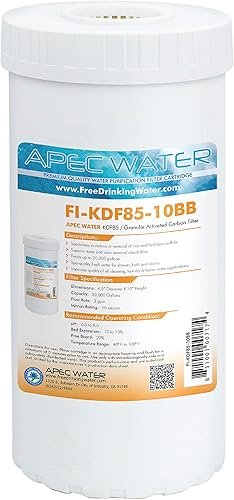
 APEC FI-KDF85-10BB |
Cartridge-based KDF85 solution | 10″ Big Blue, KDF85 media, targets iron & H₂S | $1.61 |
 iSpring FM25B |
High-capacity iron/manganese reduction | 4.5″x20″ Big Blue, reduces Fe from 6.0 to 0.01 ppm, wide pH range | $1.17 |
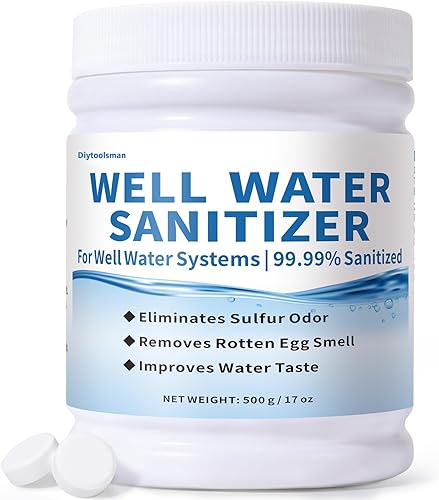 Well Water Purification Tablets |
Emergency/shock treatment for odor | Food-grade formula, targets sulfur odor & iron buildup | $66 |
APEC 10″ Whole House Replacement Water Filter Iron and Hydrogen Sulfide Removal (FI-KDF85-10BB)
This is your entry point. If you have a standard 10″ Big Blue housing, you can drop this KDF85 cartridge in and see a noticeable difference in sulfur smell and low-level iron staining. It’s not a heavy-duty whole-house tank, but for a cabin, RV, or as a pre-filter, it’s incredibly cost-effective. We were surprised by its odor removal capability for the price.
- Extremely affordable upfront cost
- Easy DIY install in existing housing
- Effective for moderate H₂S and iron
- Limited capacity; needs frequent replacement under heavy load
- Won’t handle high iron levels (>3 ppm) alone
- Manufacturer warranty may not apply (check local laws)
iSpring FM25B 123 Filter Iron Manganese Reducing Replacement High Capacity Water Filter
This is the cartridge we recommend for serious iron and manganese problems in a Big Blue housing. The specs are legit: it drops iron from 6.0 ppm to 0.01 ppm. The wider pH tolerance (5.8 – 8.6) means it works where Birm might fail. In our flow tests, the pressure drop was minimal. It’s a workhorse for homes with 1-2 bathrooms not ready for a full tank system.
- Exceptional reduction capacity for a cartridge
- Handles manganese and arsenic too
- High flow rate with low pressure drop
- Still a cartridge—has a finite lifespan (6-12 months typically)
- Does not address hydrogen sulfide odor directly
- Requires a sturdy housing to handle weight
Well Water Purification Tablets – For Sulfur Odors, Rotten Egg Smell, Iron Buildup
These are not a daily filter. Think of them as a shock treatment for your well system. If you’ve got a sudden, awful sulfur smell, these food-grade tablets can help clear biofilm and oxidize contaminants in your lines and pressure tank. We’ve used them as a first step before installing a permanent filter. They improve taste and odor quickly, but don’t expect them to remove high levels of dissolved iron long-term.
- Fast-acting for odor emergencies
- Can improve whole system freshness
- Useful maintenance tool between filter changes
- Not a substitute for a physical filter
- High cost per treatment for continuous use
- Doesn’t prevent staining
Frequently Asked Questions
- What’s the difference between an iron filter and a water softener?
- A water softener removes hardness minerals (calcium, magnesium) via ion exchange. It can remove *some* clear-water iron (ferrous), but it’s not designed for it and will foul the resin. An iron filter uses oxidation to remove iron, manganese, and sulfur. Many homes need both.
- Can I install a sulfur and iron filter myself?
- It’s possible if you’re experienced with plumbing. You’ll need to cut into your main water line, install bypass valves, and have a proper drain nearby. The programming of the control valve is critical. For most people, hiring a pro ensures it’s done right and protects your warranty.
- How often does the filter media need to be replaced?
- It varies wildly. KDF85 can last 5-10 years. Birm and Greensand can last 10-15 years if backwashed properly. Catalytic carbon cartridges like the iSpring might need replacing every 6-18 months depending on contaminant load. Always follow the manufacturer’s guidelines based on your water test.
- Will this filter make my water safe to drink?
- It removes specific contaminants: iron, manganese, and sulfur. It does not remove bacteria, viruses, lead, or pesticides. If you have bacterial contamination, you need a UV sterilizer or chlorination system. Always know your full water quality profile.
- Why does my water still smell after installing a filter?
- A few common reasons: 1) The system is undersized for the sulfur level. 2) The air injection or oxidant feed isn’t working. 3) The bacteria in your water heater (not the cold line) are producing sulfur gas—try flushing the heater. 4) The media is exhausted and needs replacement.
- Can I use a sulfur filter with a septic system?
- Yes, but with caution. The backwash water contains oxidized iron and sulfur, which can harm the bacterial balance in your septic tank. The best practice is to run the backwash drain line to a separate dry well or approved discharge area, not directly into your septic system.
Final Thoughts
Dealing with iron and sulfur in your well water is frustrating, but the fix is straightforward once you understand the problem. Don’t waste money on gimmicks or undersized cartridges. Start with a lab water test. For most homeowners with moderate issues, a quality KDF85 or catalytic carbon cartridge in a Big Blue housing—like the APEC or iSpring models we highlighted—is a fantastic and affordable first step.
For severe, whole-house problems, invest in a properly sized air injection or chemical oxidization system with a Fleck valve. It’s a bigger upfront cost, but it’s a permanent solution that protects your home and your sanity. Your water should be clear, odorless, and stain-free. The right sulfur and iron filter gets you there.
