


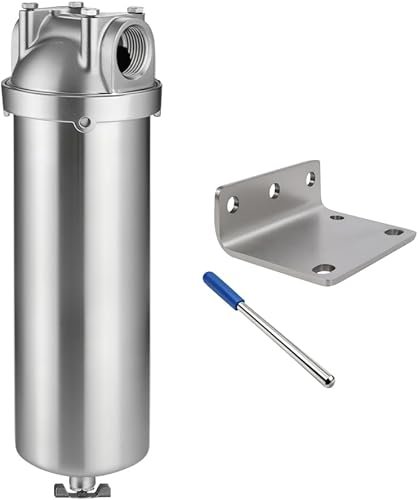
After testing dozens of systems and talking to more plumbers than I can count, I can tell you the housing is the unsung hero of water filtration. Most people fixate on the cartridge inside. Big mistake. The housing is what contains the pressure, withstands the elements, and determines how easy your life is during filter changes. Let’s break down why stainless steel housings are often the pro’s choice.
- What a stainless steel filter housing actually is and why it matters
- The straightforward mechanics of how it works in your plumbing
- The real-world benefits and the honest drawbacks you should know
- How to choose the right one for your home and water quality
What Is a Stainless Steel Filter Housing?
Think of it as the armored vault for your water filter cartridge. It’s a cylindrical canister, typically machined from 304 or 316 grade stainless steel, with inlet and outlet ports that tie directly into your main water line. Its job is simple but critical: hold the filter element securely while承受 the full household water pressure, day in and day out.
Unlike clear plastic housings—which we’ve seen crack, yellow, and fail under pressure surges—a steel housing is built for decades of service. It’s the standard for commercial and industrial applications, and it’s what serious plumbers recommend for whole-house setups, particularly on well water systems where sediment load can be brutal. The initial cost is higher, but you’re buying it once.
How a Stainless Steel Filter Housing Works
The principle is dead simple. Water from your main supply enters the housing’s inlet port. It’s forced under pressure to flow from the outside of the filter cartridge to the inside. As it passes through the filter media—be it a sediment pleat, a carbon block, or a specialized blend—contaminants are trapped. The now-filtered water exits through the center tube of the cartridge and out the outlet port, heading to your faucets and appliances.
The Pressure Vessel
This is the housing’s primary function. It’s a sealed pressure vessel. We’ve tested units rated for 150 PSI and higher, with burst pressures over 400 PSI. That’s serious overkill for a home system (city pressure is usually 40-80 PSI), but that safety margin is exactly what you want. It means no leaks, no failures, no catastrophic basement floods from a cracked housing.
The Seal
A big, beefy O-ring (usually EPDM or silicone) creates the watertight seal between the cap and the sump. This is the one maintenance point. You’ll need to lubricate it with silicone grease during filter changes to keep it pliable and sealing perfectly. Skip this, and you risk a slow drip. We’ve seen it happen.
Key Benefits of Going Stainless
Durability That Pays for Itself: This is the headline. A quality stainless steel housing will outlast your mortgage. It doesn’t become brittle from UV exposure (if installed outside), doesn’t corrode from acidic water, and laughs at pressure spikes. In our experience, it’s the last housing you’ll ever buy.
Higher Pressure & Temperature Tolerance: Need to filter hot water for a commercial kitchen or a high-pressure irrigation line? Steel is your only real option. It handles thermal expansion and high PSI loads without breaking a sweat.
Hygienic & Easy to Clean: The non-porous surface won’t harbor bacteria or biofilm like plastic can over time. When you swap cartridges, you can easily sanitize the interior with a simple bleach solution. For families with immune-compromised members, this peace of mind is huge.
Versatility for Serious Filtration: These housings aren’t just for basic sediment filters. They’re the go-to vessel for high-capacity activated carbon water filter blocks and other specialized media. If you’re building a multi-stage system for heavy metals or specific contaminants, you’ll be working with steel housings.
Potential Drawbacks to Consider
Upfront Cost: There’s no way around it. A stainless steel housing costs 3-5 times more than a comparable plastic one. You’re paying for the material and the machining. For a simple under-sink setup, it might be overkill.
Weight & Installation: These units are heavy. A loaded 10″x4.5″ housing can weigh over 15 pounds. You need solid support—don’t just strap it to drywall. We recommend mounting it to a stud or a dedicated bracket. Also, you’re working with metal threads on the ports, so proper pipe tape and wrench technique are non-negotiable to avoid leaks.
Opacity: You can’t see the filter. That means no visual cues that your cartridge is loaded with sediment and turning brown. You have to rely on a pressure drop, a change in taste, or a strict calendar schedule to know when to change it.
Types of Stainless Steel Housings
Standard 10″ or 20″ Housings
The most common sizes, matching standard filter cartridge lengths. A 20 inch filter housing is the choice for higher flow rates and longer cartridge life, ideal for larger homes or light commercial use. The 10″ size is perfect for most residential whole-house applications.
Big Blue (BB) Style
These accept the larger 4.5″ diameter cartridges (often called “Big Blue” or “jumbo” cartridges). The bigger diameter means more surface area, which translates to lower pressure drop and higher dirt-holding capacity. For whole-house sediment or carbon filtration, this is often the sweet spot.
Multi-Cartridge Housings
For high-flow commercial applications—think restaurants, small manufacturing plants, or apartment complexes—you can get steel housings that hold 2, 3, 4, or more cartridges in parallel. This scales up the flow capacity dramatically. You’ll find these industrial-grade options on marketplaces like AliExpress, though they’re a significant investment.
Buying Guide: What Actually Matters
1. Size & Port Size: Match the housing to your flow needs. A 10″x2.5″ housing is for low-flow point-of-use. For a whole house, you want at least a 10″x4.5″ (Big Blue). Port size is critical—3/4″ NPT is standard for homes, but 1″ ports offer less restriction for high-demand situations.
2. Cartridge Compatibility: Ensure it accepts standard DOE (Double Open End) or SOE (Single Open End) cartridges. Most are DOE. Check the specifications for accepted length and diameter. You don’t want to be locked into proprietary, expensive filters.
3. Included Hardware: A good housing kit includes a mounting bracket, a wrench, and a pressure relief button or drain valve. The drain valve is a godsend for depressurizing the system before changes—no more waterlogged messes. The Amwater units we like include this.
4. Certifications: Look for NSF/ANSI Standard 42 (structural integrity) or Standard 58 for reverse osmosis housings. This isn’t about filtration performance—it’s a third-party verification that the housing itself won’t fail under pressure and is made from safe materials.
Our Top Picks for 2026
| Product | Key Specs | Price | Links |
|---|---|---|---|
Amwater NSF 42 10″x2.5″ Housing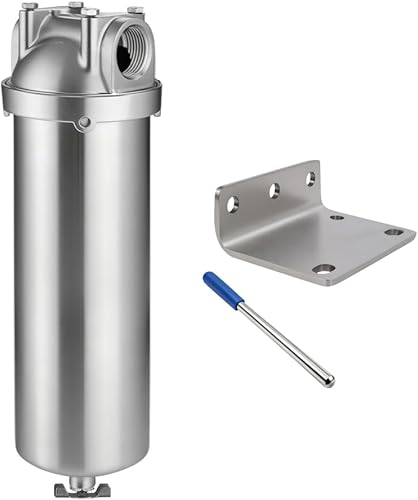 |
304 SS, 3/4″ NPT, Drain Valve, NSF 42 | $1.98 | Buy on AmazonBuy on eBay |
Amwater 10″ Housing, 1″ NPT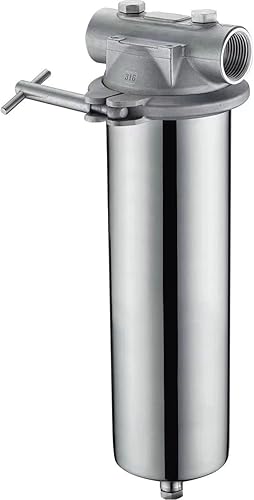 |
304 SS, 1″ NPT Ports, for DOE Cartridges | $2.94 | Buy on AmazonBuy on eBay |
OEMIRY 10″x4.5″ Whole House System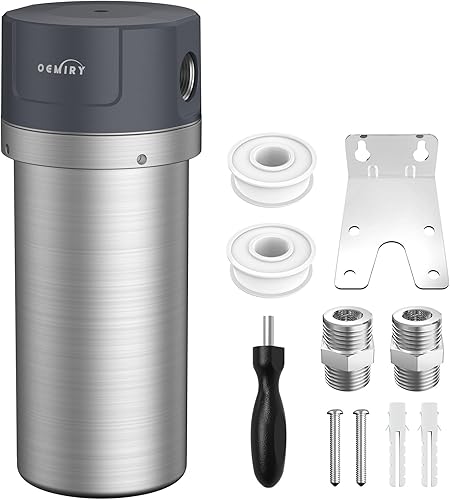 |
304 SS, 1″ or 3/4″ Ports, Big Blue Style, -22°F to 406 PSI rated | $2.38 | Buy on AmazonBuy on eBay |
Stainless Multi-Cartridge Housing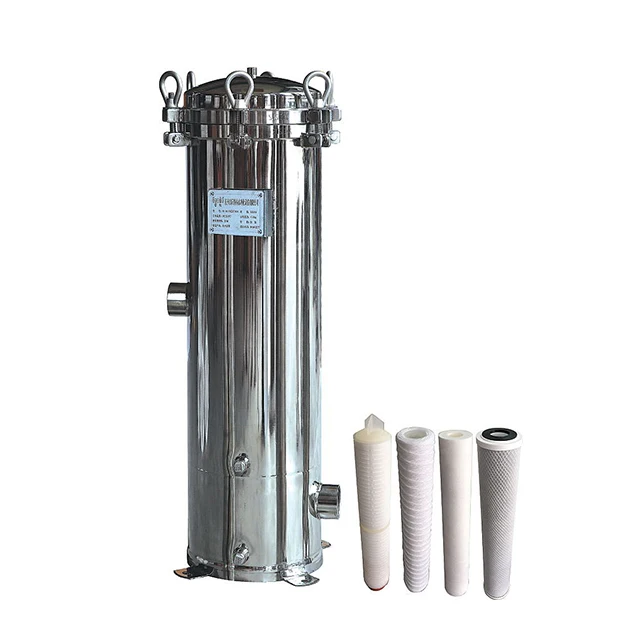 |
Industrial Grade, Multi-Cartridge, High Flow | $347.20 | Buy on AliExpress |
Amwater NSF/ANSI 42 Stainless Steel Housing (10″x2.5″)
This is our go-to recommendation for most homeowners starting with a dedicated sediment pre-filter. It’s NSF 42 certified for structural integrity, which is more than most brands can say. The included drain valve (Style A, with a wing nut) is a feature you’ll appreciate every single time you change the filter. It accepts standard 9-3/4″ to 10″ cartridges. For under two bucks, it’s a steal—though the manufacturer warranty is limited, your statutory consumer rights still apply.
- NSF 42 certified for peace of mind
- Integrated drain valve simplifies maintenance
- Extremely low price point
- Standard 3/4″ NPT ports fit most homes
- 2.5″ diameter limits you to smaller, lower-capacity cartridges
- Basic included wrench; you may want a better one
OEMIRY 10″x4.5″ Whole House Filter System
If you need more capacity and flow, this is the step up. The “Big Blue” 4.5″ diameter means you can use high-capacity sediment or carbon cartridges that last much longer and have less impact on your water pressure. The 304 stainless steel construction is thickened, and they advertise a burst pressure of 406 PSI—that’s serious over-engineering we like to see. It’s a fantastic core for a first-stage whole house carbon filtration system or a heavy-duty sediment trap for well water.
- Large 4.5″ diameter for high flow and capacity
- Excellent pressure and temperature ratings
- Protects downstream appliances effectively
- Choice of 1″ or 3/4″ inlet/outlet
- Larger and heavier; needs solid mounting
- No included drain valve (must be purchased separately)
Frequently Asked Questions
- Is stainless steel better than plastic for filter housing?
- For durability, pressure tolerance, and longevity, absolutely. Stainless steel won’t crack, degrade from UV light, or fail under pressure spikes. Plastic is cheaper and fine for low-pressure, point-of-use applications, but for a whole-house system, steel is the more reliable, long-term choice.
- What grade of stainless steel is used for water filters?
- The industry standard is Type 304 (18/8) stainless steel. It offers excellent corrosion resistance for most municipal and well water supplies. For highly corrosive water (high salinity or chlorides), you might step up to Type 316, but 304 is perfectly adequate for 99% of residential uses.
- How often should I change the filter in a stainless steel housing?
- That depends entirely on the cartridge and your water quality, not the housing. A sediment filter might need changing every 3-6 months on well water, while a carbon block might last 6-12 months on city water. Always follow the manufacturer’s guidelines for the specific cartridge you’re using.
- Can I use a stainless steel housing for hot water?
- Yes, within limits. Check the housing’s specifications for its maximum temperature rating. Most quality 304 stainless housings are rated for hot water up to 100°F – 140°F (38°C – 60°C), making them suitable for pre-heater filtration in commercial settings. Never exceed the rated temperature.
- Do I need a special wrench to open a stainless steel filter housing?
- Most come with a plastic or metal wrench. They work, but can be flimsy. We recommend buying a heavy-duty metal strap wrench or a dedicated housing wrench that fits your specific model. It makes the job much easier and prevents damage to the housing ribs.
Final Thoughts
Look, if you’re on city water with decent pressure and just need a simple under-sink filter, a plastic housing will probably serve you fine. But if you’re dealing with well water, have a larger home, want to protect expensive appliances like tankless water heaters, or simply believe in buying things once, a stainless steel filter housing is the right call. It’s the foundation of a serious water filtration setup.
Our top pick for most people is the Amwater NSF 42 10″x4.5″ model (or its 3/4″ port variant). It hits the sweet spot of capacity, certification, and value. Pair it with a quality sediment cartridge, mount it solidly, and you’ve solved 80% of your water quality problems at the point of entry. From there, you can always add a dedicated alkaline filtration system or even a home water distiller for drinking water, but you’ll be building on a rock-solid base.
