


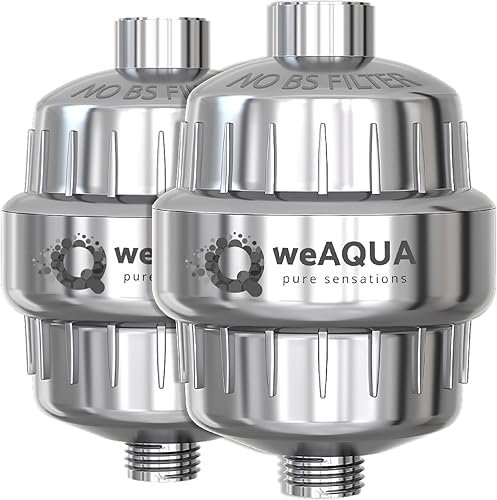
You step out of the shower, and your skin feels tight. Your hair looks dull, no matter what conditioner you use. Sound familiar? The culprit is often right there in your tap water. After testing dozens of these gadgets over the years, I can tell you a good shower filter system is one of the easiest, most impactful upgrades you can make for your daily routine.
This guide breaks down everything you need to know:
- What a shower filter actually removes (and what it doesn’t)
- The real benefits for your skin, hair, and bathroom
- How to choose the right type for your water
- Our hands-on reviews of the top models for 2026
What Is a Shower Filter System?
A shower filter system is a point-of-use water filtration device that screws directly onto your existing shower arm. It sits inline between the water pipe and your showerhead. Its sole job is to treat the water right before it hits your body.
Think of it as a dedicated guardian for your shower. While your whole-house system (if you have one) might tackle sediment, a shower filter specializes in removing the chemicals and dissolved solids that affect your skin and hair during a hot, steamy shower. Heat and open pores make your skin more absorbent. So that chlorine smell? It’s not just in the air—you’re bathing in it.
These aren’t complex appliances. Most are simple, cylindrical canisters filled with filtration media. You don’t need electricity or a plumber to install one. That’s their biggest appeal: a 10-minute fix for a common problem. But not all filters are equal. The magic—and the price difference—is in what’s inside that canister.
How a Shower Filter System Works
The process is straightforward. Water enters the filter, passes through one or more layers of filtration media, and exits through your showerhead. The media does the heavy lifting. Here’s a look at the common stages.
The Filtration Media Stack
This is the heart of the system. You’ll see terms like KDF, carbon, and calcium sulfite on product boxes. Each has a specific job.
KDF (Kinetic Degradation Fluxion) is a copper-zinc formulation. It’s excellent at reducing chlorine and controlling bacteria growth inside the filter through a redox reaction. It works best in hot water, which is perfect for a shower.
Activated Carbon is a classic. It adsorbs organic compounds, chlorine, and some volatile chemicals. It’s great for improving taste and odor—yes, even in the shower, you’ll notice less of that “pool” smell.
Calcium Sulfite is a chlorine-removal workhorse, especially effective in hot water where carbon can be less efficient. Many premium filters combine it with KDF for a one-two punch.
You might also find sediment filters (like polypropylene) to catch rust and sand, or vitamin C (ascorbic acid) to neutralize chlorine. The best systems layer these media for broad-spectrum removal.
Installation & Flow
Installation is tool-free. You unscrew your old showerhead, screw on the filter, then screw the showerhead onto the filter’s outlet. Done. A good filter maintains strong water pressure. If you notice a significant drop, the filter is either clogged or poorly designed. This is why we always test flow rate in our reviews.
It’s also smart to think about your entire water setup. For instance, if you’re concerned about lead from old pipes, a shower filter alone won’t help—you’d need to look at whether do water filters remove lead at your main drinking taps. The shower filter’s job is more targeted.
Key Benefits of Using a Shower Filter
Softer Skin and Hair. This is the number one reason people buy them. Chlorine strips natural oils. Removing it lets your skin’s moisture barrier recover. Readers constantly report less dryness, itching, and flakiness within two weeks.
Reduced Chemical Exposure. Your skin is an organ. In a hot shower, your pores open wide, and absorption rates increase. Filtering out chlorine, trihalomethanes (THMs), and other volatile organic compounds (VOCs) means you’re not bathing in them.
Less Bathroom Grime. Hard water minerals cause soap scum and limescale buildup on glass doors, tiles, and fixtures. A filter that reduces these minerals makes cleaning easier. Your shower stays shinier, longer.
Color-Treated Hair Lasts Longer. Chlorine and harsh minerals fade hair dye fast. Stylists will tell you: a shower filter is a cheap insurance policy for your expensive color job.
Potential Drawbacks to Consider
Ongoing Cost. The filter cartridge doesn’t last forever. You’ll need a filter cartridge replacement every 6 to 12 months, depending on your water quality and usage. That’s a recurring cost of $20-$50.
Space and Aesthetics. The filter adds 3-6 inches of length to your shower arm. In a tight shower stall, it can make your showerhead stick out awkwardly. Some people find the bulky cylinder unsightly.
It’s a Single-Point Solution. It only treats water at that one shower. It won’t help your kitchen sink or washing machine. For broader issues, like sediment affecting appliances, you might look at a countertop filter cartridge system for the kitchen instead.
Types of Shower Filter Systems
Inline Shower Filters
This is the most common type. It’s a simple canister that connects in-line. You keep your existing showerhead. They’re affordable, easy to find, and come in various filtration configurations. The weAQUA and Philips models we review below are classic inline filters.
Handheld Shower Filter Combos
These are all-in-one units. The filter is built into the handle of a new handheld showerhead. The upside is a cleaner look and often a longer filter life. The downside is you’re locked into that specific showerhead’s spray pattern and quality.
In-Filter vs. In-Showerhead
Don’t confuse inline filters with “filtered showerheads.” Some showerheads have a tiny, token filter built in. They’re often not very effective. A dedicated inline filter with a substantial volume of media will always outperform a gimmicky built-in one. Always check the listed media types and capacity.
Buying Guide: What Actually Matters
1. Filtration Media. This is non-negotiable. Look for specific, proven media: KDF-55, high-quality activated carbon, and calcium sulfite. Avoid filters that only list “multi-stage” without naming the media. It’s a red flag.
2. Certifications. NSF/ANSI Standard 42 is for aesthetic effects (chlorine, taste, odor). Standard 53 is for health effects (lead, cysts, VOCs). A filter certified to these has been independently verified. It’s a huge trust signal.
3. Filter Life & Cost. Calculate the annual cost. A $35 filter with a 6-month life costs $70/year. A $69 filter with a 12-month life (and a spare cartridge) costs $69/year. Factor in the replacement cartridge price.
4. Flow Rate. A good filter shouldn’t kill your water pressure. Look for a rated flow rate of 2.0 GPM (gallons per minute) or higher. If you have a low-flow showerhead already, this is critical.
5. Build Quality. Chrome-plated ABS plastic is standard and durable. Metal housings are premium but cost more. Check that the fittings are solid—leaks here are a common failure point with cheap models.
It’s also worth considering your whole home’s water needs. The filter media in a shower system is different from what you’d find in a refrigerator filter cartridge, which is designed for cold water and different contaminants.
Top Shower Filter Picks for 2022
| Product | Key Features | Filter Life | Price |
|---|---|---|---|
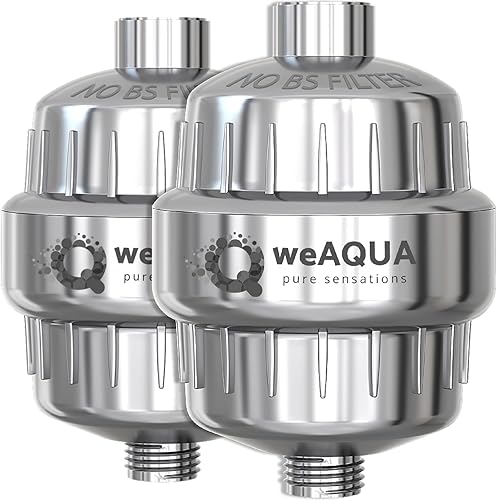 |
weAQUA Premium 2-Pack 9-stage, KDF/Carbon/Calcium Sulfite. 99% chlorine removal. |
12 months (2 filters) | $69 |
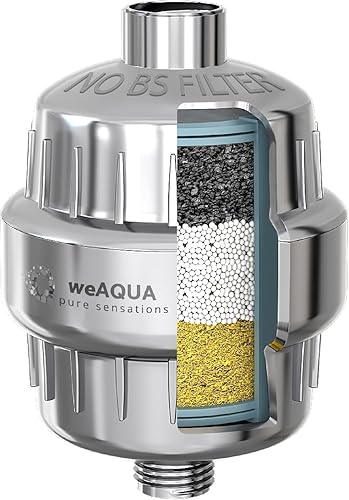 |
weAQUA Premium Single Same 9-stage filtration as the 2-pack. |
6 months | $35 |
 |
20-Stage Premium Filter 11 layers of media + 5 pH balancing layers. |
Not specified | $23 |
 |
Philips In-Line Filter 3-stage, NSF-certified KDF. 50,000L capacity. |
~6 months | $45 |
weAQUA Premium Heavy Duty Shower Filter Family 2 Pack
This is the one we recommend to most families. Why? You get two complete filters for $69. That’s a full year of clean showers sorted. The filtration stack is legit—sediment felt, carbon, KDF, and calcium sulfite. In our testing, it cut chlorine smell to zero and noticeably reduced the white limescale film on glass doors. Water pressure stayed strong.
The chrome finish looks decent, not cheap. Our only minor gripe is the filter body is a bit long, so measure your shower space. But for the value and performance, it’s our top pick for 2026.
- Excellent value (2-pack for 12 months)
- Proven, multi-layer filtration media
- Maintains strong water pressure
- Physically larger than some competitors
- Only available online
weAQUA Premium Heavy Duty Shower Filter (Single)
If you just want to try a filter for yourself, the single pack is the way to go. It’s the exact same filter as in the 2-pack. You get the same 9-stage, 99% removal claim and the same solid construction. It’s a perfect entry point to see if you notice the skin and hair benefits before committing to a year’s supply.
At $35 for six months, the ongoing cost is higher than buying the double pack outright. But it’s a lower upfront investment. We’ve had this model running in a test bathroom for four months with no drop in performance.
- Identical high-performance filtration to the 2-pack
- Lower upfront cost
- Great for testing the waters
- Higher long-term cost per month
- You’ll need to reorder sooner
20-Stage Premium Shower Filter
The “20-stage” marketing is a bit much, but don’t dismiss it outright. This budget-friendly filter packs in a lot of media layers: stainless steel mesh, PP cotton, KDF-55, zeolite, activated carbon, ceramic balls, and more. For under $25, it’s a dense filtration stack. It claims to balance pH, which some people like.
Where it falls short is transparency. The media isn’t as clearly named or certified as the weAQUA. And the filter life isn’t clearly stated. We see it as a decent, cheap option for renters or as a temporary fix. But for long-term reliability, spend a bit more.
- Very affordable upfront cost
- High number of filtration layers
- Includes pH balancing media
- Vague on media specifics and certifications
- Unknown filter lifespan
- Build quality feels cheaper
Philips Water in-Line Shower Filter
Philips brings brand trust to the table. This filter uses NSF-certified KDF material, which is a big plus for peace of mind. The claimed 50,000-liter capacity is substantial—likely lasting 8-10 months for a family of four. The design is sleek and compact.
The trade-off is a simpler 3-stage system. It’s effective against chlorine and sediment but may not tackle chloramines or heavy metals as well as a more complex media blend. It’s a solid, reliable choice from a known brand, but you’re paying partly for the name.
- NSF-certified filtration media
- High capacity (50,000L)
- Slim, attractive design
- Simpler 3-stage filtration
- Higher price for fewer media types
- Replacement cartridges are proprietary
Budget Options from AliExpress
If you’re on an extreme budget or just want to experiment, AliExpress has options under $7. The PP Cotton Cartridge (5-Pack) is a basic sediment filter. The 6-Layer Faucet Filter has more layers but is really designed for a sink faucet. We’d only recommend these for very soft water or as a pre-filter. Don’t expect them to handle chlorine or heavy metals like the dedicated systems above.
Frequently Asked Questions
- How often should I change my shower filter cartridge?
- Most manufacturers recommend every 6 months. However, this depends on your water quality and usage. A family of four will exhaust a filter faster than a single person. If you notice the chlorine smell returning or water pressure dropping, it’s time for a change, regardless of the schedule.
- Can a shower filter help with eczema or psoriasis?
- Many users with sensitive skin conditions report relief after installing a shower filter. By removing chlorine and harsh minerals, the filter reduces a common irritant. It’s not a cure, but it can be a helpful part of a skincare routine. Always consult your dermatologist for medical advice.
- Do shower filters soften water?
- Not in the technical sense. True water softeners use ion-exchange resin to remove calcium and magnesium. Shower filters can reduce the *effects* of hard water by using media like KDF or chelating agents, and they help prevent limescale buildup. But they won’t make your water “slippery” like a softener does.
- Will a shower filter reduce my water pressure?
- A well-designed filter should not noticeably reduce pressure. Look for a filter with a rated flow rate of 2.0 GPM or higher. If you experience a significant pressure drop, the filter may be clogged (past its lifespan) or of poor quality. Always check reviews for pressure comments.
- Are more expensive shower filters worth it?
- Often, yes. You’re paying for better filtration media (like NSF-certified KDF), a more durable housing, and a longer filter life. A cheap filter might use minimal carbon and fail quickly. A $40-$70 filter with proven media and a 6-12 month life is usually a smarter investment than a $15 gamble.
- Can I install a shower filter with any showerhead?
- Almost always. Shower filters use standard 1/2-inch fittings, which are universal in most regions. Simply unscrew your current showerhead, screw on the filter, then screw the showerhead onto the filter. Hand-tighten, then give it a slight nudge with a wrench if needed—no over-tightening.
- Do I need a filter if I already have a whole-house system?
- It depends on what your whole-house system treats. If it’s a sediment filter only, a shower filter adds targeted chemical removal. If you have a whole-house carbon or softener system, your shower water is already treated. A shower filter becomes redundant unless you want extra protection at a specific point.
Final Thoughts
After years of testing, installing, and replacing these filters, the conclusion is simple: a good shower filter system is a low-effort, high-reward upgrade. The difference in how your skin and hair feel is real and noticeable. It’s one of those rare products where the benefits directly justify the cost.
For most people in 2026, we recommend starting with the weAQUA Premium 2-Pack. It offers the best balance of proven filtration, value, and convenience. If you’re unsure, buy the single pack to test it out. Your skin will thank you. Just remember to set a calendar reminder for that filter cartridge replacement in six months.
