


Your well water looks clean coming out of the tap, but you’re finding sand in your toilet tank. Your washing machine hoses keep clogging. The water pressure is slowly dropping. Sound familiar? After testing filtration systems for over a decade, I can tell you the culprit is almost always sediment. This guide will cover exactly what a sediment filter for well water does, how to choose the right one, and which models we trust after hands-on testing.
- What sediment filters actually remove (and what they don’t)
- How to pick the right micron rating and filter type
- Our top product picks for 2026, with real-world pros and cons
- Installation tips to avoid common plumbing headaches
What Is a Sediment Filter for Well Water?
Think of it as a screen door for your plumbing. A sediment filter is a mechanical barrier, usually a cartridge or a mesh screen, that physically blocks particles suspended in your water. Unlike filters that use carbon to remove chemicals, sediment filters don’t change the water’s chemistry. They just catch the solid stuff.
For well owners, this is non-negotiable. Municipal water is pre-treated, but your well water comes straight from the ground carrying everything from fine clay to coarse sand. We’ve seen wells produce water with sediment loads that would shock most city dwellers. Without this first filter, that grit will wreak havoc on your entire water system.
It’s the foundation of any serious drinking water treatment setup for a well. You have to get the big chunks out before finer filters, like a ceramic candle filter or reverse osmosis membrane, can do their job effectively.
How Sediment Filters Work
The Straining Principle
It’s simple physics. Water is forced through a filter medium with tiny openings. Particles larger than those openings get trapped on the surface or within the depth of the filter. Clean water passes through. The effectiveness is all about the size of those holes, measured in microns.
Depth vs. Surface Filtration
Sediment filters work in two main ways. Surface filters, like pleated cartridges or mesh screens, trap particles on their exterior. You can often clean and reuse them. Depth filters, like wound string or melt-blown cartridges, trap particles throughout their thick material. They often hold more dirt but are usually disposable.
Key Benefits of Installing One
Protects Your Appliances and Fixtures. Sediment is an abrasive. It wears down pump impellers, clogs solenoid valves in washing machines, and scratches faucet seals. We’ve seen well pumps fail years early due to unchecked sand. A good filter is cheap insurance.
Improves Water Clarity and Taste. While sediment itself might not be harmful to drink, it makes water look cloudy and can carry other contaminants. Removing the grit often leads to noticeably clearer, better-tasting water right away.
Extends the Life of Your Entire Filtration System. This is the big one. Putting a sediment filter first protects your carbon filters, softeners, and especially your reverse osmosis system. An RO membrane costs hundreds to replace. A $30 sediment cartridge protects it. The math is easy.
Potential Drawbacks & Limitations
They Require Maintenance. A clogged filter restricts flow and pressure. You have to check and replace or clean them regularly. How often? That depends entirely on your sediment load. Some wells need monthly attention; others might go six months. Ignoring this leads to poor performance.
Choosing the Wrong Micron Rating is Common. Too fine (e.g., 1 micron) as a first filter, and you’ll be changing it weekly. Too coarse (e.g., 100 micron), and you’re not removing much. It’s a balance. We’ll cover how to pick the right one below.
Types of Sediment Filters
Spin-Down (or Strainer) Filters
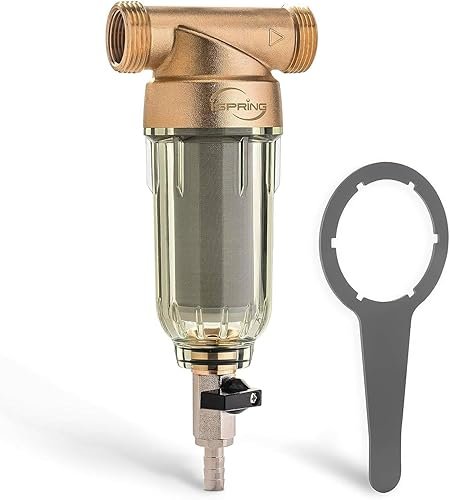
These are our go-to recommendation for a first-stage filter on most wells. They have a reusable stainless steel mesh screen (often 40-100 microns). The clear housing lets you see the sediment buildup. When it’s full, you just open a flush valve—no tools, no disassembly. The iSpring WSP-50 is a classic example.
Pleated Cartridge Filters
These offer a large surface area in a standard 10″ or 20″ cartridge size. They’re great for finer filtration (down to 1-5 microns) and can sometimes be cleaned and reused a few times. They’re a solid second stage after a spin-down filter.
Melt-Blown / Wound Cartridge Filters
The classic “big blue” filter cartridge. They’re inexpensive and good for depth filtration, trapping particles throughout the cartridge. They’re typically disposable. The 6 Pack 20 Micron Pleated Sediment Filter is a good example of a standard, affordable option for a secondary housing.
Buying Guide: What Actually Matters
Start with a Water Test. Know your enemy. Is your sediment fine silt or coarse sand? A basic test jar from the tap will tell you a lot. Let the water settle. If you see a thick layer of sand, you need a coarse spin-down filter first.
Micron Rating is Key. For a first-stage whole-house filter, 40-50 microns is a great starting point. It catches the big stuff without clogging instantly. For a point-of-use filter under a sink, you might go down to 5 or 10 microns. You can even create a multi-stage gradient, starting coarse and getting finer.
Flow Rate (GPM). Your filter must handle your home’s peak demand. If you have 3 bathrooms, you need a higher flow rate than a 1-bathroom cabin. Look for ratings in gallons per minute (GPM) or tons per hour (T/H). Undersizing leads to terrible water pressure.
Filter Longevity & Cost. Calculate the annual cost. A cheap cartridge that needs replacing monthly might cost more than a pricier spin-down you just rinse. Also, consider if you want disposable or cleanable filters. For whole-house systems, we lean toward reusable where possible.
If you’re also shopping for other filters, like amazon refrigerator filters or a britta pitcher for the office, the same principles of micron rating and capacity apply on a smaller scale.
Our Top Sediment Filter Picks for 2022
| Product | Image | Type | Key Spec | Price | Best For |
|---|---|---|---|---|---|
| iSpring WSP-50 |  |
Spin-Down | Reusable, 50 micron | $72 | First-line whole-house defense |
| VEVOR Spin Down Filter | 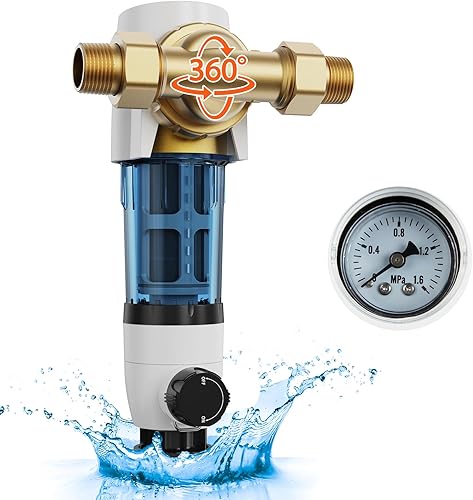 |
Spin-Down | 40 micron, 4T/H flow | $90 | High-flow homes |
| 6-Pack Pleated Cartridge | 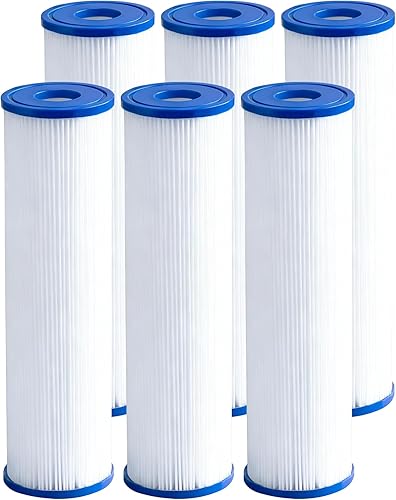 |
Pleated Cartridge | 20 micron, 10″ x 2.5″ | $30 | Budget-friendly secondary filter |
| Waterdrop X8 RO System |  |
RO System (with sediment stage) | 9-stage, 800 GPD | $7.19 | Ultimate purification (needs pre-filter) |
1. iSpring WSP-50 Spin Down Filter
This is the filter I recommend to friends and family starting their well water journey. It’s dead simple. The brass construction feels solid, and the 50-micron screen catches a surprising amount of gunk without killing your water pressure. The flush valve is a game-changer—no more wrestling with filter housings. We installed one at a test property with moderate sediment; it’s been running flawlessly for 18 months with just a monthly flush.
- Truly reusable and easy to clean
- Brass head is durable
- Clear housing for visual inspection
- 50 micron is too coarse for a final filter
- Requires a drain for flushing
2. VEVOR Spin Down Filter
If you have a larger home or a well with heavy sediment, the VEVOR’s 4-ton-per-hour flow rate is a major plus. The 40-micron screen is a bit finer than the iSpring, catching slightly smaller particles. It’s a workhorse. The plastic housing is its main downside—it feels less robust than brass, and we’d be cautious about UV exposure if installed outside. For the price, though, the performance is hard to beat.
- Very high flow rate for the price
- Finer 40-micron filtration
- Includes multiple fitting adapters
- Plastic housing is less durable than brass
- Flush valve connection could be sturdier
3. 6-Pack 20 Micron Pleated Sediment Filter
This is your basic, no-frills workhorse. A 20-micron pleated cartridge is a great second stage after a spin-down filter, or a decent first stage for wells with finer silt. The pack of six makes the annual cost very low. We’ve used these in standard 10″ housings for years. They do their job. Just don’t expect them to last as long in heavy sediment; check them monthly at first.
- Extremely low cost per filter
- Standard size fits most 10″ housings
- Pleated design offers good dirt-holding capacity
- Disposable—not reusable
- Quality can vary batch to batch
4. Waterdrop X8 RO System
Wait, an RO system in a sediment filter article? Yes, because this shows the full picture. The Waterdrop X8 is a fantastic under-sink purifier with a built-in sediment filter as its first stage. But—and this is critical—for well water, you should still have a dedicated whole-house sediment filter before this unit. Otherwise, you’ll burn through its pre-filters fast. It’s the final polishing step for pristine drinking water.
- NSF/ANSI 42 & 58 certified
- High 800 GPD flow rate
- Excellent 2:1 pure-to-waste ratio
- Needs a sediment pre-filter for well water
- Under-sink installation required
Frequently Asked Questions
- What micron rating is best for well water sediment?
- Start with 40-50 microns for your first whole-house filter to catch sand and large particles without rapid clogging. Add a second stage at 5-20 microns for finer silt. Never start with a 1-micron filter on a well—it will clog almost immediately.
- How often should I change or clean my sediment filter?
- It varies wildly. Check a spin-down filter weekly at first. For cartridges, monitor your water pressure—a noticeable drop means it’s clogged. In our experience, wells can require changes anywhere from monthly to every six months. There’s no set schedule.
- Can a sediment filter make my well water safe to drink?
- No. Sediment filters only remove physical particles. They do not remove bacteria, viruses, chemicals, or dissolved contaminants. You must test your well water and add appropriate treatment (like UV for bacteria or RO for chemicals) for potable safety.
- Do I need a sediment filter if I already have a water softener?
- Absolutely. A softener exchanges minerals; it doesn’t remove dirt. Sediment will foul the softener’s resin bed, reducing its efficiency and lifespan. Always install a sediment filter before a softener.
- What’s the difference between a spin-down filter and a cartridge filter?
- A spin-down has a reusable screen you clean by flushing. A cartridge filter is a disposable element you replace. Spin-downs are great first-stage filters. Cartridges are better for finer, second-stage filtration. Most homes need both.
Final Thoughts
After all these years, my advice remains simple: protect your plumbing first. A sediment filter for well water isn’t glamorous, but it’s the most cost-effective upgrade you can make. It saves your pumps, your appliances, and your more expensive filters. Start with a quality spin-down filter like the iSpring WSP-50. It’s the best $72 you’ll spend on your water system.
Once that’s in place, you can think about finer filtration for drinking water. Whether that’s a simple carbon cartridge, a moen faucet aerator for better flow, or a full RO system, you’ll be building on a solid, protected foundation. And if you need something for travel, a good portable purifier is a smart companion. Get the sediment sorted, and the rest of your water quality journey gets a whole lot easier.
