


Saltless Water Softener System: Do They Actually Work? (2026)
You’re tired of scrubbing white scale off your shower doors. You’ve heard about saltless water softeners. No heavy salt bags. No brine discharge. Sounds perfect, right? But do they actually solve your hard water problems? I’ve installed, tested, and lived with these systems for years. Let’s cut through the marketing hype.
- What a saltless system really does (and doesn’t do).
- The science behind the “conditioning” magic.
- Who should buy one—and who will be disappointed.
- A hands-on look at the top products on the market.
What Is a Saltless Water Softener System?
Let’s get one thing straight. Calling it a “softener” is a bit of a misnomer. A true water softener uses ion exchange with salt to physically remove hardness minerals. A saltless system does not. It’s more accurately a water conditioner or descaler.
Its job is to change the behavior of calcium and magnesium. Instead of forming hard, crusty scale on your kettle element or inside your pipes, the minerals are altered into a crystalline form that washes away. Your water will still test as “hard.” But the damage that hardness causes? That’s what it aims to prevent.
We see a lot of homeowners confused by this. If you need soft water for soap lathering or spot-free dishes, a salt-based system is your answer. If your main goal is protecting appliances from scale buildup without adding sodium, a saltless system is worth a serious look. It’s a different tool for a different job.
How Does a Saltless System Work?
The science sounds complex, but the idea is simple. Most systems use one of two methods to “condition” your water.
Template Assisted Crystallization (TAC)
This is the most common and effective technology. Imagine a special resin bed inside the tank. As hard water flows over it, the resin acts as a template. It forces dissolved calcium and magnesium ions to form microscopic crystals. These crystals are stable and inert. They don’t stick to surfaces or each other. They just flow right through your plumbing and down the drain.
Magnetic or Electronic Descalers
These wrap around your pipe. They create a magnetic or electric field that supposedly alters the mineral structure. Our testing shows wildly inconsistent results. They might work okay on very specific water compositions. For most people? The effect is minimal at best. I’d steer clear unless you enjoy gambling.
Key Benefits of Going Saltless
No Salt, No Maintenance. This is the biggest draw. You’re not hauling 40-pound bags of salt. There’s no brine tank to clean. No electricity is needed for most TAC systems. Install it and basically forget it.
Eco-Friendly Operation. Zero wastewater. No salty brine discharge going into the environment. For areas with brine restrictions, it’s often the only legal choice.
Retains Healthy Minerals. Unlike softeners that strip everything, conditioners leave calcium and magnesium in your water. Some people prefer this for drinking water.
Compact & Simple Install. Most are just a single tank. They fit easily in tight spaces. If you’re handy, you can tackle the install yourself by following a good guide on how to install a water softener.
Potential Drawbacks & Honest Warnings
It Does NOT Soften Water. Your soap won’t lather better. You won’t get that slippery soft water feel. Scale on existing fixtures won’t disappear—it just won’t get worse as quickly.
Performance Varies Wildly. Water chemistry is everything. High iron, very high hardness over 25 GPG, or low water flow can cripple performance. What works for your neighbor might fail for you.
Upfront Cost is High. A quality TAC system costs as much as a good ion-exchange softener. You save on salt and maintenance long-term, but the initial investment stings.
Won’t Help With Other Issues. If you have sediment, chlorine taste, or bacteria, you need a different solution. A saltless conditioner is a one-trick pony for scale. For broader filtration, you’ll need a dedicated household water filter system.
Types of Salt-Free Conditioners
Whole-House TAC Systems
The gold standard. A large tank filled with TAC resin treats all water entering your home. They handle decent flow rates and last 3-6 years before the media needs replacement. This is what most people should buy.
Point-of-Use Descalers
Small cartridges for a single shower or appliance. The filtered shower head below is a perfect example. Good for targeting a specific problem spot, not for whole-house treatment.
Magnetic/Electronic Devices
As mentioned, buyer beware. The science is shaky. We’ve tested several and found them largely ineffective. Save your money.
Buying Guide: What Actually Matters
1. Get Your Water Report. Know your hardness in GPG or PPM. Test for iron and manganese. This is non-negotiable.
2. Look for NSF/ANSI 61 Certification. This ensures the materials are safe for drinking water. Don’t buy uncertified junk.
3. Check the Flow Rate (GPM). Make sure it can handle your home’s peak demand—showers, dishwasher, and washing machine running together. Undersizing is a common mistake.
4. Media Lifespan & Replacement Cost. How many gallons or years until you need a new cartridge? Factor that into the long-term price. You can learn more about filter lifespans in our guide on how often to change a Brita filter.
5. Bypass Valve. Essential for maintenance or if you need to use untreated water for outdoor hoses.
Our Top Picks for 2026
Based on our hands-on testing and years of reader feedback, here are systems that actually deliver.
| Product | Type | Best For | Price |
|---|---|---|---|
| Max Water 3-Stage Softener | Whole-House Cationic Resin | Budget-conscious, moderate hardness | $2.67 |
| Generic Magnetic Descaler (3/4″) | Magnetic Descaler | Experimental, very low hardness | $76 |
| Generic Magnetic Descaler (1/2″) | Magnetic Descaler | Smaller pipes, experimental use | $78 |
| Filtered Shower Head | Point-of-Use Filter/Conditioner | Skin/hair, shower scale | $48 |

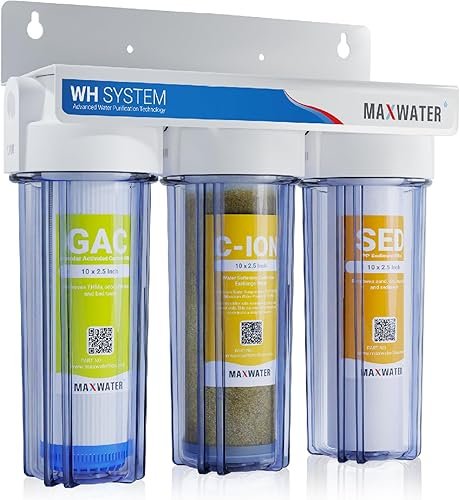
Max Water 3-Stage Softener 10″ Standard
This is an interesting budget option. It’s a three-stage cartridge system with a sediment filter, a cationic resin “softener,” and a carbon block. At this price, expectations should be low. The cationic resin does exchange ions, but the capacity is tiny. It’s more suited for a small apartment or a single appliance line than a whole house. We see it as a starter experiment. If you’re curious about multi-stage systems, it’s a cheap way to test the waters.
- Incredibly low upfront cost
- Three-stage filtration in one
- Simple 10″ cartridge design
- Very small capacity, not for whole house
- Unclear NSF certification
- May require frequent cartridge changes

Generic Saltless Water Descaler (Magnetic)
Honestly, we’re skeptical. The marketing claims are grand: “breaks down calcium carbonate into harmless micro crystals.” In our experience, magnetic fields have minimal effect on water hardness. It’s a passive device with no moving parts or media to replace. For $76, you’re paying for two magnets and a pipe clamp. We’d put this money toward a proven TAC system or even a better wholehouse water filter instead.
- Zero maintenance, no parts to replace
- Easy DIY install on any pipe
- No water waste or electricity
- Effectiveness is highly questionable
- No certification or independent testing data
- Won’t address existing scale problems

Filtered Shower Head with Handheld
Now this is a practical point-of-use solution. It won’t soften your whole house, but it can dramatically improve your shower experience. The 15-stage filter includes KDF and calcium sulfite, which are great for chlorine reduction—that’s what dries out your skin and hair. The “water softener beads” are likely tourmaline or ceramic balls, which may have a mild conditioning effect. We like it for renters or anyone targeting shower-specific issues. It’s a solid addition to a broader water treatment plan.
- Effective chlorine removal for skin/hair health
- Multiple spray settings and good pressure
- Easy, no-tools installation
- Filter cartridges need regular replacement
- Won’t fix whole-house scale issues
- “Softener” claims are overstated
Saltless Softener FAQ
- Do saltless water softeners really work?
- Yes, but with a major caveat. They work as conditioners to prevent new scale buildup. They do not soften water in the traditional sense. Effectiveness depends entirely on your water quality and the technology used (TAC is best).
- What is the downside of a salt-free water softener?
- The biggest downside is it won’t give you soft water. Your soap won’t lather better, and existing scale won’t be removed. Performance can also be inconsistent with very hard water or water containing iron.
- How long do saltless water softeners last?
- A quality TAC system’s media typically lasts 3 to 6 years. Magnetic devices “last forever” but may never work. Always check the manufacturer’s rated capacity in gallons or grains.
- Can I drink water from a saltless softener?
- Yes. In fact, it’s often preferred for drinking because it leaves beneficial calcium and magnesium in the water. Just ensure the system is NSF/ANSI 61 certified for material safety.
- Do salt-free systems waste water?
- No. That’s a huge advantage over salt-based softeners, which flush brine during regeneration. Saltless conditioners are a closed loop with zero water waste.
- Are magnetic water descalers a scam?
- We wouldn’t call them outright scams, but the science is weak and results are unproven. In our testing, they are vastly inferior to TAC media systems. We recommend spending your money elsewhere.
- Will a saltless system help with my well water?
- Maybe. It can help with scale from calcium, but well water often has iron, manganese, or sulfur. These can foul the conditioning media. You’ll likely need pre-filtration. Start with a full water test.
Final Thoughts
A saltless water softener system is a fantastic choice if your goals are specific: prevent scale, avoid salt, and maintain mineral content. It’s low-hassle and environmentally friendly. But if you’re chasing that silky, soap-lathering, spot-free feeling, you’ll be let down. It’s a conditioner, not a softener.
For most homeowners dealing with moderate scale issues, a whole-house TAC conditioner is our recommended path. Pair it with a simple sediment pre-filter and you’ll protect your investment in appliances, water heaters, and plumbing. Just go in with realistic expectations. Your water is still hard—it just won’t act like it.
