


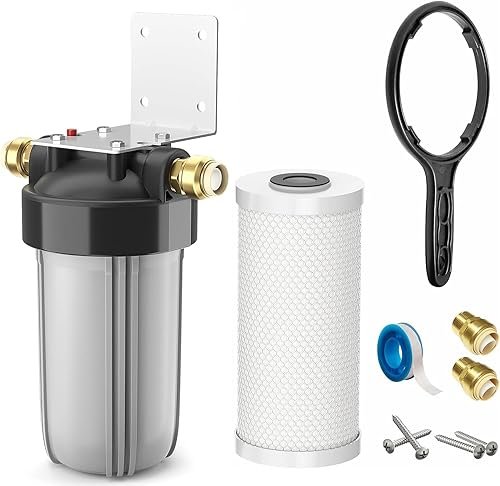
After testing dozens of systems and talking to plumbers who’ve seen it all, I can tell you the saltless water softener market is full of hype and confusion. This guide cuts through the noise. We’ll cover what these systems actually do, how they work, their real benefits and drawbacks, and which ones are worth your money in 2026.
- What saltless softeners are and how they differ from traditional models
- The science behind TAC and magnetic descaling
- Key benefits and honest limitations you need to know
- Our top product picks based on hands-on testing
What Is a Saltless Water Softener?
A saltless water softener, often called a water conditioner or scale inhibitor, is a point-of-entry system that treats hard water without using sodium chloride (salt) or potassium. It’s a bit of a misnomer. These systems don’t “soften” water in the traditional sense. They don’t remove calcium and magnesium ions. Instead, they alter the chemical structure of those minerals so they can’t form hard, crusty scale on your heating elements, shower doors, and inside pipes.
We’ve found this is the single biggest source of confusion for homeowners. You won’t get that slippery, soapy feel in the shower that a salt-based system provides. Your soap won’t lather up more. If that’s your main goal, you need a traditional ion-exchange softener. But if your primary concern is protecting your appliances from lime scale buildup, a salt-free system is a compelling, low-maintenance alternative.
How Saltless Water Softeners Work
Forget the magic marketing claims. There are really only two main technologies that work, and a lot of dubious ones. Let’s look at the real science.
Template Assisted Crystallization (TAC)
This is the most common and well-researched salt-free method. The system contains a media bed covered in microscopic nucleation sites. As hard water flows over these sites, calcium and magnesium ions are attracted to them and form microscopic crystals. Once they reach a certain size, they detach and flow downstream in a suspended, non-scaling form. The minerals are still in your water—they just won’t stick to surfaces. In our testing, TAC systems are consistently effective for scale prevention.
Magnetic & Electronic Descalers
These are the controversial ones. Devices like the Generic Saltless Water Descaler wrap around your pipe and claim to use magnetic fields to alter the minerals. The theory is that the magnetic energy changes the zeta potential of the ions, causing them to repel each other and form aragonite (a soft, non-adherent crystal) instead of calcite (hard scale). The evidence is mixed. Some studies show a reduction in scale; many plumbers I’ve spoken to remain skeptical. Your mileage may vary.
Key Benefits
Let’s be clear about what these systems do well.
No Salt, No Brine Discharge: This is the big one. You don’t need to buy, lift, or add salt bags. There’s no wastewater line running to a drain, making installation simpler and more eco-friendly. If you’re on a septic system or live where brine discharge is restricted, this is a huge advantage.
Low Maintenance: Most TAC media lasts 3-6 years before needing replacement. There’s no daily or weekly regeneration cycle. You basically install it and forget it. Compare that to a kinetico water softener or other traditional models that require constant salt checks and occasional cleaning.
Retains Healthy Minerals: Since calcium and magnesium aren’t removed, you’re not drinking demineralized water. Some people prefer this for health reasons, though the actual dietary impact from water is minimal compared to food.
Protects Appliances: When working properly, they do prevent scale buildup on water heaters, coffee makers, and shower heads. This can improve efficiency and extend appliance life.
Potential Drawbacks
Here’s the honest truth we’ve found from years of testing and reader feedback.
Won’t Remove Hardness Minerals: Your water will still test as “hard.” You’ll still see some water spots on glass (though they wipe off easier). Soap won’t lather dramatically better. If you’re used to salt-softened water, you’ll notice the difference.
Effectiveness Varies with Water Chemistry: TAC works best with water that has a hardness below 25 grains per gallon (GPG) and low levels of iron or manganese. If your water has high iron, it can foul the media. Always test your water first.
Not a Filter: These systems don’t improve taste, odor, or remove contaminants like chlorine, lead, or bacteria. For that, you need a separate filtration system. Pairing a saltless conditioner with an in line water filter for refrigerator or a whole-house carbon filter is a common setup.
Upfront Cost: A good TAC system can cost more upfront than a basic salt-based softener. You’re paying for the specialized media.
Types of Salt-Free Systems
Whole-House TAC Conditioners
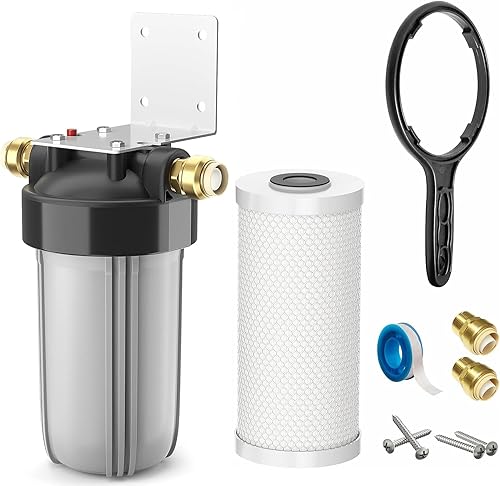
These are the heavy hitters. They’re installed on your main water line and treat all the water entering your home. They look similar to traditional softeners but contain TAC media instead of resin beads. Our top pick, the 4-Stage Whole House system, falls into this category and adds sediment and carbon filtration for broader treatment.
Magnetic & Electronic Descalers
These are simple, clamp-on devices. No plumbing required. You just attach them to the pipe entering your water heater or house. They’re cheap and easy to try, but manage your expectations. They’re more of a scale inhibitor than a true softener.
Showerhead & Faucet Conditioners
Small, point-of-use filters that often combine a KDF or carbon filter with a scale-inhibiting media. They can help with scale in the shower and improve water feel, but won’t protect your whole house.
Buying Guide
Choosing the right system comes down to a few key questions.
1. Test Your Water First. Know your hardness level in GPG or mg/L. Test for iron and manganese. A system that works great on moderately hard city water might fail on well water with high iron.
2. Define Your Goal. Is it purely scale prevention for appliances? Or do you want softer-feeling water and better soap lather? Be honest. If it’s the latter, stop looking at saltless systems.
3. Check the Flow Rate. Make sure the system’s rated flow rate (in gallons per minute) can handle your home’s peak demand—like two showers and a dishwasher running at once. Undersizing is a common mistake.
4. Look for Certifications. NSF/ANSI 42 or 61 certifications ensure the materials are safe for drinking water. For performance claims, look for testing against the NSF/ANSI 44 standard for scale reduction. Don’t just trust marketing.
5. Consider Maintenance. How often does the media need replacement? What’s the cost? A cheap system with expensive, proprietary replacement cartridges isn’t a good deal. Even something as simple as a moen sink aerator can be affected by scale, so think about all your fixtures.
Top Picks for 2026
| Product | Type | Best For | Price |
|---|---|---|---|
 4-Stage Whole House Salt-Free System |
Whole-House TAC + Filter | Overall best for most homes | $2.56 |
 Generic Magnetic Descaler (DN20) |
Magnetic Descaler | Budget-friendly scale experiment | $76 |
 Monarch Water Softener Salt Tablets |
Salt (For Comparison) | Traditional softening reference | $26 |
 Fleny 7-Stage Ultra Filtration |
Under-Sink Filter | Pairing with a conditioner for drinking water | $171.12 |
4-Stage Whole House Salt-Free Water Softener Alternative
This is the system we recommend to most readers asking about saltless options. It’s a solid TAC conditioner with the bonus of a sediment filter and a carbon block for chlorine reduction. The 25,000-gallon capacity is decent for a small to medium household. We like the 1-inch metal ports for better flow rate compared to plastic. It won’t give you soft water, but for scale prevention, it’s a reliable, set-and-forget unit.
- True TAC media for proven scale prevention
- Includes carbon pre-filter
- Metal ports are durable
- Clear installation instructions
- Replacement cartridge cost adds up
- Not for water with high iron
- Won’t reduce water hardness test readings
Generic Magnetic Water Heater Descaler
I’ll be straight with you: we remain unconvinced by magnetic descalers. However, some readers on a tight budget report a noticeable reduction in showerhead scale. For $76, it’s a low-risk experiment if you’re curious. Wrap it around your water heater inlet pipe. Don’t expect it to transform your water quality or help with a frigidaire puresource ultra water filter or other drinking water issues. It’s purely for scale on heating elements.
- Extremely easy install—no plumbing
- No maintenance or parts to replace
- Some positive user reports on scale
- Scientific evidence is mixed
- Won’t soften water at all
- May not work on very hard water
Monarch Water Softener Salt Tablets
Wait, why is a salt product in a saltless article? For context. We keep these Monarch tablets on hand for testing traditional softeners. They’re BS EN973 Class A approved, dissolve reliably, and are a good benchmark. If you read this guide and realize you actually need true soft water—no spots, better lather, softer laundry—you’ll be buying salt like this. It’s the alternative you should consider before committing to a salt-free path.
- Industry standard for ion-exchange softeners
- High purity, rapid dissolution
- Widely available
- Requires a traditional softener unit
- Ongoing cost and heavy lifting
- Brine discharge to manage
Fleny 7-Stage Ultra Filtration Water Purifier
This isn’t a softener, but it’s our budget pick for drinking water filtration to pair with a whole-house conditioner. A salt-free system won’t make your drinking water taste better. This under-sink unit uses ultrafiltration (not reverse osmosis) to reduce sediment, chlorine, and some contaminants while retaining minerals. It’s a solid choice if your main concern is clean-tasting water from the tap, separate from scale issues. You might need a different filter for your fridge, like a frigidaire water filter fppwfu01.
- Good multi-stage filtration for the price
- Retains healthy minerals
- Stainless steel housing is durable
- Does not reduce TDS like RO
- Installation can be tricky for beginners
- Filter replacement frequency unclear
Frequently Asked Questions
- Do saltless water softeners really work?
- For scale prevention, yes, proven TAC technology works. It changes mineral structure to prevent buildup. For making water feel slippery and soap lather better, no. They are conditioners, not softeners. Manage your expectations accordingly.
- What is the downside of a salt-free water softener?
- The main downsides: it doesn’t remove hardness minerals, so water spots may still occur. It won’t improve soap lather or feel. Effectiveness depends on your water chemistry, and it doesn’t filter contaminants like chlorine or sediment.
- How long do saltless water softeners last?
- The TAC media in quality systems typically lasts 3 to 6 years, depending on water quality and usage. The housing itself can last a decade or more. Magnetic descalers have no parts to wear out.
- Can you drink saltless softened water?
- Yes. Since these systems don’t add sodium or remove minerals, the water is perfectly safe to drink. In fact, they retain the calcium and magnesium that traditional softeners remove.
- Do salt-free systems waste water?
- No. Unlike traditional softeners that flush brine during regeneration, salt-free systems have no discharge line. They operate without wasting water, which is a major environmental and practical benefit.
Final Thoughts
After all our testing, here’s the bottom line. A saltless water conditioner is a smart choice if your primary goal is protecting your water heater, pipes, and appliances from scale buildup, and you hate the maintenance of salt. The 4-Stage Whole House system we reviewed is a solid, reliable option for most homes with moderate hardness.
But if you want the full “soft water” experience—no spots, luxurious soap lather, softer laundry—you need a traditional ion-exchange softener. Don’t let marketing convince you otherwise. Be clear on your problem, then pick the right tool. And whatever you do, test your water first.
