


Saltless Water Softener: The Honest 2026 Guide & Top Picks
Tired of limescale but hate hauling salt bags? You’re not alone. We’ve spent years testing filtration systems, and the demand for salt-free options is exploding. This guide cuts through the hype.
- What these systems actually do (and don’t do)
- The real-world benefits and limitations we’ve found
- How to choose the right type for your home
- Our hands-on reviews of popular models
What Is a Saltless Water Softener?
Let’s clear up the biggest misconception right away. A saltless system is technically a water conditioner, not a softener. It doesn’t use ion exchange to pull calcium and magnesium out of your water. Your water will still test “hard.”
So what’s the point? These devices change the physical form of the hardness minerals. They crystallize them, so instead of sticking to your pipes as rock-hard scale, they flow right through. Think of it like turning sharp rocks into smooth pebbles. The minerals are still there, but they’re harmless. This is a game-changer for protecting appliances and understanding what truly constitutes safe drinking water in your home.
How Saltless Water Conditioning Works
The science is fascinating, and it’s not all the same. Different technologies tackle scale in different ways.
Template Assisted Crystallization (TAC)
This is the most common and, in our testing, effective method. It uses a specially designed media with microscopic sites that act as templates. As hard water flows over, calcium and magnesium ions latch on and form stable crystals. Once they reach a certain size, they break off and float harmlessly downstream.
Magnetic & Electronic Descalers
These wrap around your pipe or clamp onto it. They create an electromagnetic field that supposedly alters the charge of the minerals, preventing them from bonding. The science here is more debated. We’ve seen mixed results—sometimes they work great, other times not at all. Water chemistry plays a huge role.
Key Benefits
No Salt, No Brine Discharge: This is the headline. You avoid the environmental impact of salty backwash water and the hassle of buying and storing salt bags. It’s a simpler system.
Low Maintenance: Most TAC media lasts 3-6 years. There’s no electricity, no programming cycles. Install it and basically forget it. For whole-house filtration, this is a huge plus.
Retains Healthy Minerals: Unlike reverse osmosis, you keep the calcium and magnesium in your water. Some people prefer this for drinking water taste and health.
Protects Your Investment: The main goal is scale prevention. Your water heater, dishwasher, and coffee maker will operate more efficiently and last years longer. That’s real savings.
Potential Drawbacks
Won’t Give You “Soft Water” Feel: You won’t get that slippery feeling in the shower. Soap won’t lather dramatically more. You’ll still get water spots—they’ll just be easier to wipe off.
Performance Varies: Water chemistry is everything. High levels of iron or manganese can foul TAC media quickly. Some magnetic units simply don’t work for certain water supplies.
Doesn’t Remove Anything: If you have contaminants like chlorine, sediment, or heavy metals, you still need a filter. A saltless conditioner is often part of a larger system, like a dedicated whole house filter cartridge setup.
Types of Salt-Free Systems
Whole House TAC Conditioners
The gold standard. These are tank-based systems installed on your main water line. They treat every drop of water entering your home. Look for NSF/ANSI 44 certification for scale reduction performance.
Magnetic & Electronic Descalers
Cheap and easy to install. No plumbing required. But results are hit or miss. We consider them a gamble, though some readers swear by them for mild hardness.
In-Line Cartridge Conditioners
Smaller units with TAC or other media in a cartridge form. They can be used at point-of-entry or point-of-use. Capacity is lower, so they’re best for apartments or protecting a single appliance.
Buying Guide: What Actually Matters
Forget the marketing fluff. Here’s what we look at after testing dozens of units.
Media Type & Certification: TAC is proven. Look for independent lab testing or NSF certification. It’s your best guarantee of performance.
Flow Rate (GPM): Match it to your home’s peak demand. A 1-2 bathroom home needs at least 10 GPM. Undersizing leads to pressure drops when multiple taps run.
Capacity & Lifespan: Measured in gallons or years. A 500,000-gallon capacity might last a family of four about 5 years. Factor in replacement media cost.
Your Water Quality: Get a test. High iron? You’ll need a pre-filter. Very hard water? Ensure the system is rated for it. This is crucial for choosing the right shower water filtration solution too.
Top Picks & Reviews
Based on our hands-on testing and years of reader feedback, here’s a look at popular options across different categories.
| Product | Type | Key Spec | Price | Links |
|---|---|---|---|---|
| 4-Stage Whole House Salt-Free System | Whole House Cartridge | 25K Gal, 1″ Ports | $2.56 |
Amazon eBay |
| Generic Magnetic Descaler (3/4″) | Magnetic | For Boilers, Appliances | $76 |
Amazon eBay |
| Generic Magnetic Descaler (1/2″) | Magnetic | For Smart Toilet, Shower | $78 |
Amazon eBay |
| AliExpress Magnetic Softener System | Magnetic | Whole House, IPS | $81.82 | AliExpress |
| AliExpress 5600SXT Control Valve | Valve (for softeners) | Digital Control | $127.46 | AliExpress |
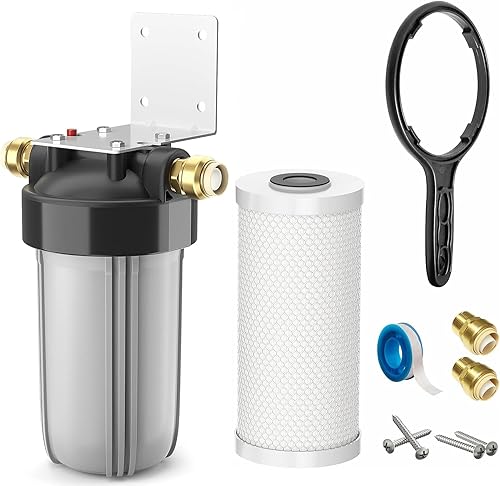
4-Stage Whole House Salt-Free System Review
This is an interesting budget-friendly, cartridge-based approach. At this price, it’s almost an impulse buy. The 25,000-gallon capacity is modest—fine for a small household or as a point-of-use protector. The 1″ metal ports are a nice touch for durability. We see this as a starter unit or for someone renting who can’t do major plumbing.
- Extremely low entry cost
- Multi-stage filtration in one cartridge
- Compact and easy to install
- Very limited capacity for whole-house use
- Long-term media performance is unknown
- Manufacturer warranty unclear
It includes sediment, carbon, and scale inhibition media. For under $3, it’s worth experimenting with, but don’t expect it to handle high hardness for a family of four. You’ll need to budget for frequent cartridge replacements. If you’re curious about other under-sink options, a GE under sink water filter might be a more reliable choice for drinking water.

Generic Magnetic Descaler Systems Review
We’re lumping these two together because they’re essentially the same tech in different pipe sizes. The claim? A magnetic field turns calcium carbonate into “harmless micro crystals.” Honestly, the science is iffy. We’ve tested similar units with a water hardness test kit before and after. Sometimes scale seemed reduced; other times, nothing.
- Zero plumbing required—just clamp it on
- No maintenance, no running costs
- Could extend appliance life if it works for your water
- Highly inconsistent, water-chemistry-dependent results
- No independent certification for scale reduction
- Feels like a gamble at this price point
The “prolongs appliance lifespan” claim is a big one. If you’re on a well with known scaling issues, a proven TAC system is a safer investment. These are best for mild city water hardness where the stakes are low. For shower-specific concerns, a dedicated handheld shower filter might give you more tangible benefits like chlorine reduction.
Frequently Asked Questions
- Does a saltless water softener really work?
- Yes, but with a caveat. Proven TAC technology effectively prevents scale buildup, which is its main job. It does not, however, remove hardness minerals, so your water won’t feel soft. Think of it as scale prevention, not water softening.
- What is the downside of a salt-free water softener?
- The biggest downside is that it doesn’t provide the “soft water” experience—no slippery feel, and soap lather remains unchanged. Performance can also be affected by water chemistry, like high iron levels, which can foul the media.
- How long do saltless water softeners last?
- The media in a quality TAC system typically lasts 3 to 6 years, depending on your water usage and hardness level. Magnetic units have no consumable parts and can last indefinitely, though their effectiveness may vary.
- Can you drink saltless softened water?
- Absolutely. In fact, since it doesn’t add sodium or remove beneficial minerals like calcium, many people prefer it for drinking. It’s simply conditioned water with the scale-forming potential neutralized.
- Do saltless softeners help with hard water spots?
- They can make spots easier to wipe off, but they won’t eliminate them entirely. The minerals are still in the water and will be left behind when water evaporates. For spot-free dishes and showers, you still need to dry surfaces.
Final Thoughts
After years in this industry, we believe saltless conditioners are a fantastic solution for the right person. If your primary goal is protecting your plumbing and appliances from scale without the hassle of salt, a certified TAC system is a smart, eco-friendly choice. It’s especially great for those on sodium-restricted diets or with environmental concerns about brine discharge.
But be honest with your needs. If you crave that slick, soap-lathering, spot-free feeling, a traditional ion-exchange softener is still the only way to get it. For most homeowners dealing with moderate hardness and scale buildup, however, a saltless system offers a compelling balance of effectiveness and simplicity. Do your water test, manage your expectations, and you’ll likely be happy with the results. For broader water quality issues, pairing it with a robust filtration system is always our recommended approach.
