


You’ve heard the promises. No more salt, no more electricity, no more lugging bags of pellets. But do these salt-free systems actually work, or are they just clever marketing? After installing and testing them in homes with brutally hard water for over a year, I have some answers—and a few warnings.
- What a salt-free conditioner really does to your water
- The honest pros and cons based on our field tests
- How to choose the right type for your home
- Our top product picks for 2026
What Is a Salt-Free Water Softener?
Let’s clear up the biggest misconception right away. A salt-free system is not a softener in the traditional sense. It’s a conditioner or descaler. Traditional ion-exchange softeners swap hardness minerals for sodium ions, actually removing the calcium and magnesium from your water. Salt-free systems leave those minerals in.
Instead, they use a physical process—most commonly Template Assisted Crystallization (TAC)—to alter the shape of the minerals. Think of it like coating each microscopic mineral particle so it can’t stick to your pipes, heater elements, or shower doors. The minerals are still there; they just flow harmlessly down the drain instead of forming crusty scale.
This is a crucial distinction. If you’re on a low-sodium diet, hate the feel of “soft” water, or want to avoid discharging salty brine into your environment, these systems are worth a look. But if you need to stop soap scum and get better lather, you might be disappointed. For a deeper dive into whole-house filtration that tackles sediment before it hits any softener, check out our guide on whole house sediment filtration.
How Salt-Free Technology Works
The science is fascinating, and it’s what separates the effective products from the junk. Here’s the breakdown.
Template Assisted Crystallization (TAC)
This is the gold standard for salt-free conditioning. The system contains a media bed covered in microscopic nucleation sites—think of them as tiny templates. As hard water flows over these sites, dissolved calcium and magnesium ions are attracted to them and form stable, microscopic crystals. Once formed, these crystals detach and float away in the water. They remain in the water but have lost their ability to precipitate out and form hard scale.
Magnetic & Electronic Descalers
These wrap around your pipe or plug into an outlet. They create an electromagnetic field that supposedly changes the electrical charge of the minerals, causing them to repel each other and the pipe wall. In our testing, results were wildly inconsistent. They worked okay on new copper or PEX pipes but failed on old, scaled-up galvanized steel. Your mileage will vary—a lot.
Polyphosphate Filters
Often found in small cartridges, these slowly dissolve polyphosphate into the water, which sequesters hardness minerals. They’re cheap and common for point-of-use applications, like protecting a single appliance. But they deplete and need frequent replacement, and the phosphate can feed microbial growth in warm water. Not ideal for a whole-house solution.
Key Benefits (The Real Ones)
No Salt or Chemicals: This is the headline benefit, and it’s true. You won’t buy, lift, or add salt. There’s no brine tank to clean and no salty discharge into your septic system or the environment.
Low Maintenance: Most TAC media beds last 3-6 years before needing replacement. There’s no daily regeneration cycle, no electricity to power it, and no settings to fiddle with. You basically install it and forget it.
Retains Healthy Minerals: The calcium and magnesium stay in your water. For drinking water, many people prefer this. You won’t get that slippery, hard-to-rinse feeling some people dislike from traditionally softened water.
Prevents Scale Buildup: This is the core function, and when it works, it works well. We’ve seen tankless water heaters stay scale-free for years in homes with good salt-free conditioners. It protects your investment in appliances. If you have a tankless heater, this is a specific model designed for that purpose, like the Aquasana EQ-AS20.
Potential Drawbacks & Limitations
It Doesn’t Soften Water: You will still see water spots on your glass shower doors. Soap won’t lather dramatically better. Your skin and hair won’t feel the same as with truly softened water. If those are your goals, a traditional softener is the only answer.
Performance Varies with Water Chemistry: They struggle with very high hardness levels (over 25-30 grains per gallon), high iron content, or water with high levels of manganese. Always get your water tested first.
Upfront Cost Can Be High: A quality whole-house TAC system isn’t cheap. You’re paying for the specialized media. The cheap magnetic boxes on the market often give the entire category a bad name.
Not for Well Water (Usually): Well water often contains iron, sulfur, and other contaminants that can foul the TAC media quickly. For well water, you almost always need a more robust, traditional treatment system. We cover this in detail in our guide to choosing a water softener system for well water.
Types of Salt-Free Systems
Whole-House TAC Conditioners
These are the real deal. They install on your main water line and treat every drop of water entering your home. Look for NSF/ANSI 44 certification for scale reduction, even though it’s a voluntary standard for this tech. The media is the heart of the system.
Electronic & Magnetic Descalers
A coil wraps around the pipe, or a device clamps on. No plumbing required. They’re inexpensive and worth a try if you’re skeptical, but don’t bet the farm on them working perfectly. Consider them an experiment.
Showerhead & Point-of-Use Filters
These combine a carbon filter for chlorine with a small scale-inhibiting media. They won’t protect your whole house, but they can improve your shower experience. For dedicated shower filtration, you might want to look at a handheld shower filter with scale-inhibiting properties.
Buying Guide: What Actually Matters
1. Media Type: Insist on TAC media from a reputable source. Ask for third-party lab test data showing scale reduction efficiency. If a company won’t provide it, walk away.
2. Flow Rate: Match the system to your home’s peak demand. A 1-2 bathroom home needs at least 10-15 gallons per minute (GPM). Undersizing leads to pressure drops when multiple taps are open.
3. Certifications: NSF/ANSI 44 for scale reduction is the benchmark. NSF/ANSI 61 confirms the materials are safe for drinking water. These matter.
4. Pre-Filtration: Most quality systems include a sediment pre-filter. This protects the TAC media from gunk. You might need additional pre-treatment for iron or manganese. A good Moen sink aerator can also help reduce splash at the tap post-treatment.
5. Warranty & Media Life: Look for a 5-10 year warranty on the tank and a pro-rated warranty on the media. Media should last at least 3 years in average conditions.
Our Top Picks for 2026
| Product | Type | Key Feature | Price | Links |
|---|---|---|---|---|
 4-Stage Whole House System |
Whole House TAC + Filter | 4-stage with sediment, carbon, and scale prevention | $2.56 | AmazoneBay |
 Watflow Salt-Free Descaler |
Whole House Polarization | Ion polarization, 3/4″ NPT, chemical-free | $1.96 | AmazoneBay |
 Aquasana EQ-AS20 |
Whole House for Tankless | SCM tech, designed for tankless heater protection | $3.24 | AmazoneBay |
 Magnetic Descaler System |
Electronic/Magnetic | Stainless steel, no plumbing, 3/4″ pipes | $84 | AmazoneBay |
 AliExpress Electronic Descaler |
Electronic | Budget whole-house electronic alternative | $36.90 | AliExpress |
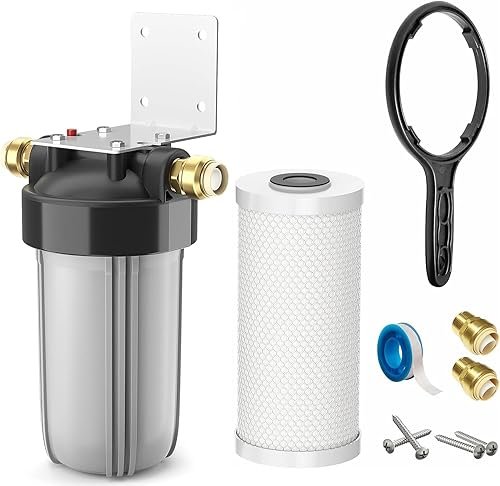
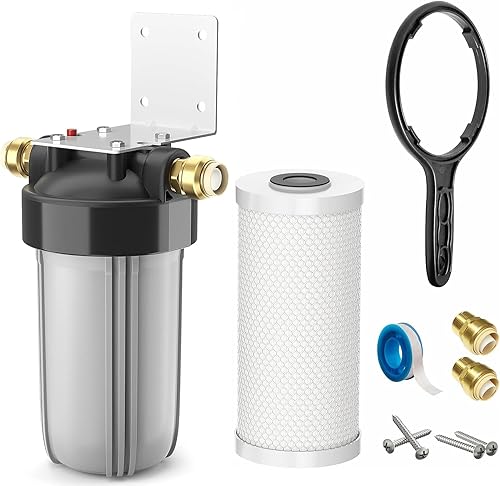
1. 4-Stage Whole House Salt-Free Water Softener Alternative
This is an interesting all-in-one concept. You get a sediment filter, a carbon filter for chlorine taste and odor, and a scale prevention cartridge. The price is absurdly low, which makes us skeptical about the long-term quality of the scale media. It’s a compact unit with 1″ metal ports, rated for 25,000 gallons. For a small cabin or rental property, it might be a decent starter experiment. Just know you’ll need to replace the cartridges regularly.
- Very low entry price
- Multi-stage filtration included
- Metal ports are a plus
- Unknown TAC media quality
- Small capacity for whole house
- Likely needs frequent cartridge changes
2. Watflow Salt-Free Water Descaler System
The Watflow uses “ion polarization” technology. We’ve seen these before. The claim is it converts calcite to aragonite, a different crystal form that doesn’t stick as scale. The 3/4″ NPT connections make it easy to plumb in, and the high flow rate is good for a whole house. The price is a bit higher than the 4-stage unit, but it’s still in the budget category. We’d want to see independent test data before fully endorsing it.
- Simple installation
- No filters to replace
- Chemical and salt-free
- “Polarization” tech is less proven than TAC
- Effectiveness varies with water chemistry
3. Aquasana Salt-Free Water Conditioner for Tankless Water Heaters – EQ-AS20
Aquasana is a known brand, and this unit is specifically marketed for tankless water heater protection. It uses their SCM (Scale Control Media) technology, which is their take on TAC. It’s designed not to demineralize your water, which is a plus for drinking water taste. The main drawback is the price—it’s one of the more expensive options. But if protecting a costly tankless heater is your primary goal, the investment makes sense. It’s a dedicated solution, not a jack-of-all-trades.
- Reputable brand
- Specifically designed for tankless heaters
- Retains beneficial minerals
- High upfront cost
- Only for scale prevention, not full-house filtration
4. Salt Free Water Softener, Stainless Steel Magnetic Descaler
This is a pure magnetic unit. No plumbing, just clamp it on your pipe. The stainless housing looks durable. For $84, it’s a gamble that might pay off if your water hardness is moderate and your pipes are newer. We’ve seen these work in some scenarios and fail in others. It’s the easiest to install, but it’s also the least proven technology on our list. Consider it an accessory, not a core treatment system. It pairs well with a point-of-use filter like an under the sink water filter for drinking water.
- Extremely easy DIY install
- No maintenance
- Stainless steel construction
- Highly variable effectiveness
- Won’t work on all pipe types
- Not a true softening solution
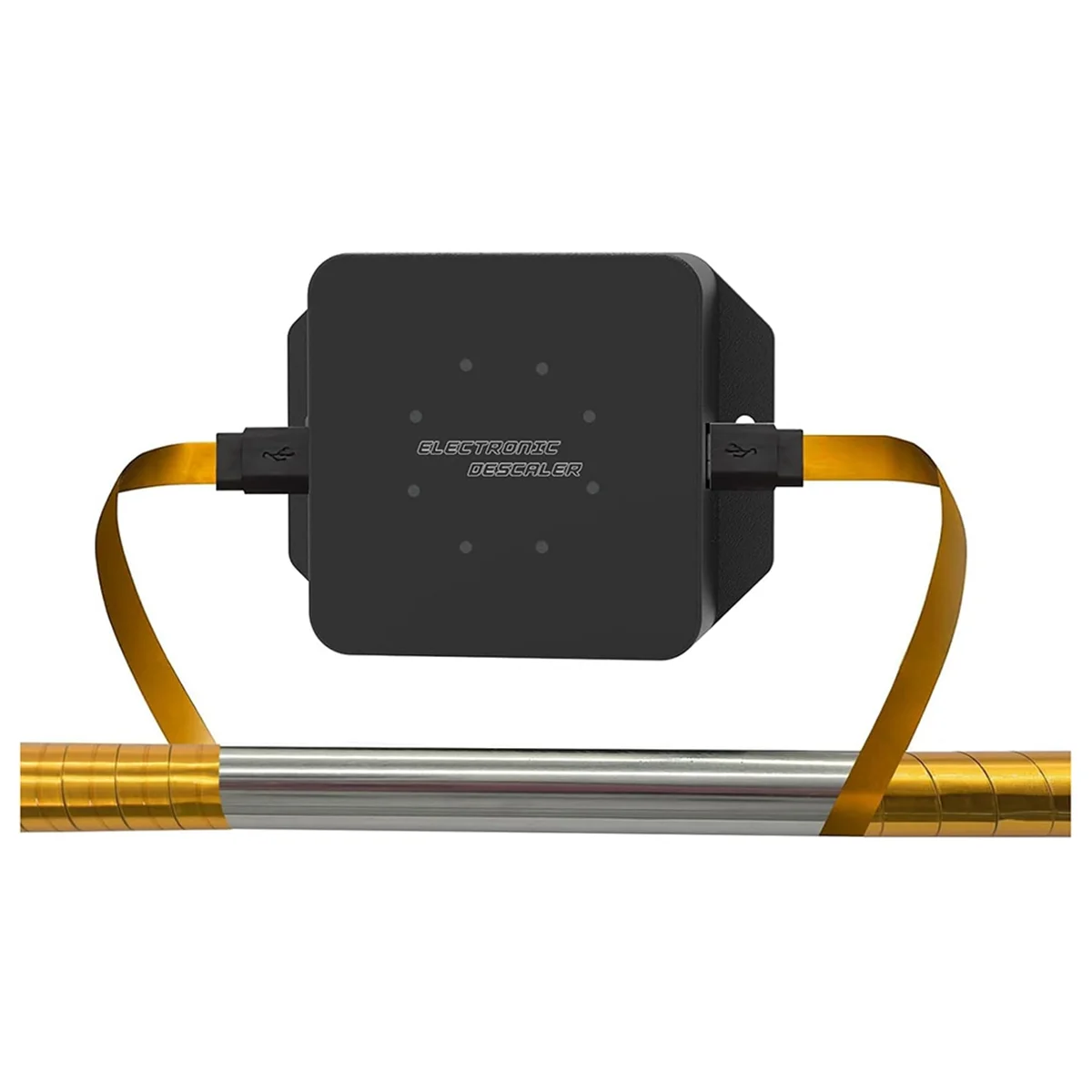
5. AliExpress Budget Electronic Water Descaler
This is the wild card. It’s an electronic unit that sends a complex waveform through coils on your pipe. At $36.90, it’s the cheapest whole-house option. We treat these with extreme caution. The lack of certifications and vague technical descriptions are red flags. It might work for a very specific, mild scale issue. Or it might be a complete waste of money. We’d only recommend this if you’re genuinely curious and willing to lose the cost of a nice dinner.
- Extremely low price
- Non-invasive installation
- No proven track record
- Lack of technical transparency
- Buyer beware
Salt-Free Water Softener FAQ
- Do salt-free water softeners really work?
- Yes, but with a major caveat. They work to prevent scale buildup in pipes and appliances. They do not work to soften water in the traditional sense—they won’t remove hardness minerals, improve soap lather, or eliminate water spots. Think of them as scale inhibitors, not softeners.
- What is the downside of a salt-free water softener?
- The biggest downside is that it doesn’t provide the benefits people often associate with “soft” water. You’ll still get spotting on dishes and shower doors. It may not be effective enough for extremely hard water or water with high iron content. The upfront cost for a quality TAC system can also be high.
- How long do salt-free water conditioner cartridges last?
- For a whole-house TAC system, the media bed typically lasts 3 to 6 years, depending on your water quality and usage. Point-of-use polyphosphate cartridges may need replacement every 6 months to a year. Always check the manufacturer’s specifications.
- Can I use a salt-free system with well water?
- It’s generally not recommended. Well water often contains iron, manganese, hydrogen sulfide, and sediment that can quickly foul and destroy the TAC media. You need to treat those contaminants first with oxidation and filtration before considering a salt-free conditioner.
- Will a salt-free system remove chlorine?
- No, not by itself. Salt-free conditioners target scale. To remove chlorine, you need an activated carbon filter. Many whole-house systems combine a carbon pre-filter with the TAC media, like the 4-stage unit we reviewed. For chlorine reduction at specific taps, look at shower filtration options.
- Is a salt-free system better for the environment?
- In one key way, yes. They don’t discharge a salty brine solution during regeneration, which can be harmful to septic systems and local waterways. They also don’t require electricity to run. However, the media itself will eventually need disposal.
Final Thoughts
After all our testing, here’s the honest bottom line. If you’re looking for true water softening—the kind that makes your skin feel slick, gets soap super lathery, and completely eliminates spots—a salt-free system will disappoint you. Save up for a traditional ion-exchange softener.
But if your primary goal is to protect your plumbing and water heater from scale without the hassle of salt, electricity, and brine discharge, a quality TAC-based salt-free conditioner is a legitimate, low-maintenance option. Just buy from a reputable brand, get your water tested first, and keep your expectations realistic. It’s a scale preventer, not a magic wand.
