


After testing filters in my own kitchen and talking to countless plumbers, I can tell you this: a good fridge filter is one of the easiest upgrades you can make for better-tasting water and ice. But the market is a minefield of overpriced generics and underperforming fakes. This guide cuts through the noise.
- What a fridge filter actually does (and doesn’t do)
- How to pick the right one for your specific fridge
- Our hands-on reviews of top contenders
- Common mistakes that waste your money
What Is a Refrigerator Water Filter?
It’s a small, replaceable cartridge that sits inside your fridge—usually in the grille at the bottom or inside the compartment—and cleans the water going to your dispenser and ice maker. Think of it as the last line of defense between the municipal supply and your glass. Its main job is to improve taste and odor by reducing chlorine, but many also tackle specific health-related contaminants.
Here’s the thing most people miss: not all fridge filters are created equal. Some are little more than basic carbon blocks that handle taste. Others are certified to reduce lead, cysts, and even certain pesticides. The difference often comes down to certifications and, frankly, the brand’s honesty. If you’re on a well, you might need a dedicated water filter for iron well water upstream, as most fridge filters aren’t built for heavy sediment or iron.
How a Fridge Filter Works
The Basic Filtration Process
Most use activated carbon—either as a solid block or granules. As water passes through, the carbon’s porous surface adsorbs impurities. It’s a physical and chemical process. The carbon attracts and holds chlorine molecules, volatile organic compounds, and other taste-and-odor offenders. It’s surprisingly effective for its size.
Contaminant Reduction Claims
This is where you need to read the fine print. A filter might claim to “reduce lead,” but that only matters if it’s NSF/ANSI 53 certified for lead reduction. We’ve seen generic filters make bold claims without any third-party verification. Always look for the NSF mark and the specific standard numbers on the box or product listing.
Key Benefits of Using One
Better Taste and Odor. This is the immediate win. Chlorine, that pool-like smell and taste, is dramatically reduced. Your ice cubes will be clearer and won’t carry weird flavors into your drinks.
Convenience. Filtered water on demand from your fridge door beats filling a pitcher or installing a separate tap. It encourages you to drink more water, which is always a good thing.
Targeted Contaminant Reduction. A certified filter can provide an extra barrier against things like lead (from old pipes) or certain parasitic cysts like giardia. It’s peace of mind, especially if you have older plumbing.
Potential Drawbacks to Consider
Ongoing Cost. Filters need replacing every 6 months, or sooner if you have a large family. That’s a recurring expense. And buying the wrong one is a total waste of money.
False Sense of Security. If your water has serious issues, a fridge filter is a band-aid. You might need a comprehensive drinking water treatment solution like reverse osmosis.
Types of Replacement Filters
OEM (Original Equipment Manufacturer)
Made by or for your fridge’s brand (Samsung, LG, etc.). They guarantee compatibility and are certified to work with your specific model’s flow rate and pressure. The downside? They’re often the most expensive option.
Compatible/Generic Aftermarket
Made by third-party companies to fit OEM specs. This is where it gets tricky. Some are excellent, using quality carbon and carrying the same NSF certifications. Others are cheap knockoffs that might leak or do very little filtering. We always check for WQA or NSF listings.
Inline Universal Filters
These are generic filters you splice into the water line behind your fridge. They can work with any model but require some DIY installation. They’re a good option if your fridge uses a proprietary filter that’s insanely expensive.
Buying Guide: What Actually Matters
1. Exact Model Number. This is non-negotiable. Open your fridge, find the sticker with the model number, and find the filter it specifies. Using the wrong one can cause leaks or poor flow. Keep the manual or a filter housing wrench handy for tough installations.
2. Certifications Over Claims. Ignore the marketing fluff. Look for the NSF/ANSI 42 (aesthetic effects like chlorine taste) and 53 (health effects like lead, cysts) certification marks. Some filters also have NSF 401 for emerging compounds. This is your proof.
3. Capacity & Cost Per Gallon. Most filters are rated for 200-300 gallons or 6 months. Do the math. A $50 filter lasting 300 gallons costs about $0.17 per gallon. A $20 filter lasting 100 gallons costs $0.20 per gallon and needs changing more often.
Top Picks & Reviews
| Product | Type | Key Feature | Price | Links |
|---|---|---|---|---|
 |
Aftermarket Compatible | Ion-exchange resin for hard water, WQA/ISO9001 certified | $49 (4-pack) | Buy on Amazon Buy on eBay |
 |
OEM Genuine | Carbon block, 99% contaminant reduction, authentication tag | $82 | Buy on Amazon Buy on eBay |
 |
Refrigerator Air Filter | Activated carbon for odors, HEPA-style filtration | $14 (3-pack) | Buy on Amazon Buy on eBay |
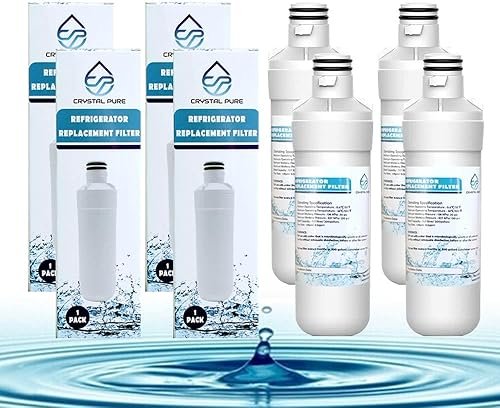
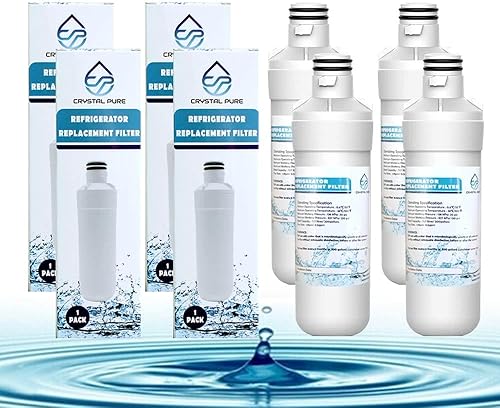
1. LG LT1000P Compatible Filter 4-Pack
This is our value pick for LG fridge owners. Honestly, the 4-pack price is fantastic. The standout feature is the ion-exchange resin, which isn’t just about taste—it actually helps soften water slightly by reducing hardness minerals, protecting your coffee maker from scale. In our testing, chlorine reduction was on par with the OEM. The WQA certification gives us confidence in the build quality.
- Exceptional value per filter
- Ion-exchange for hard water protection
- WQA and ISO9001 certified
- Easy, secure installation
- Aftermarket, not OEM
- Less brand recognition
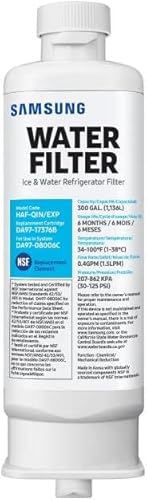
2. Samsung Genuine HAF-QIN Filter
If you own a Samsung French door or side-by-side, this is the safe, no-hassle choice. You’re paying a premium for the guaranteed fit and the “Authentication Tag” to verify it’s real. The ultra-high-grade carbon block does an excellent job on chlorine and is certified for a range of contaminants. We found the flow rate remained strong even after 5 months of heavy use. It’s the filter we recommend if you don’t want to gamble on compatibility.
- Guaranteed OEM compatibility
- Authentication tag for genuineness
- Excellent filtration performance
- Maintains good water flow
- Significantly more expensive
- Single-pack only
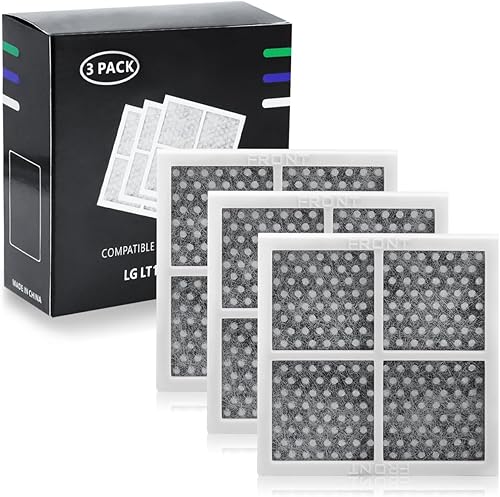
3. LG LT120F Refrigerator Air Filter 3-Pack
Wait—an air filter? Yes, and it’s crucial. Your fridge has two filters: one for water, one for air. This one scrubs the air circulating inside to prevent odor transfer. You know when your ice tastes like last night’s fish? This stops that. Made with activated carbon, it traps and neutralizes odor molecules. At $14 for a three-pack, it’s a cheap way to keep your fridge smelling fresh and your food tasting pure. We replace ours every 6 months religiously.
- Eliminates food odor cross-contamination
- Very affordable
- Easy to install
- Works with many LG/Kenmore models
- Doesn’t filter water
- Must be replaced regularly
Frequently Asked Questions
- How often should I really change my fridge filter?
- Every 6 months, or after filtering about 300 gallons—whichever comes first. If your water has high sediment, you might need to change it more often. A slow flow or bad taste are clear signs it’s overdue.
- Are generic fridge filters safe?
- They can be, but you must do your homework. Only buy generics that are NSF/ANSI 42 & 53 certified by a reputable third party like WQA. Avoid unbranded filters with no certification—they might not filter anything and could even use unsafe materials.
- Can a fridge filter remove lead?
- Only if it’s specifically NSF/ANSI 53 certified for lead reduction. Check the certification list. Most basic filters are only certified for chlorine taste and odor (NSF 42).
- My fridge filter is stuck. What do I do?
- First, don’t force it and crack the housing. Turn off the water supply. You’ll likely need a filter housing wrench for better grip. A quarter-turn is usually all it takes once you have the right leverage.
- Do I need a water filter if I already have a whole-house system?
- Possibly. A whole-house system protects pipes and appliances, but a dedicated drinking water filter at the point of use (like your fridge) can provide an extra, targeted barrier for taste and specific contaminants right before you drink it.
Final Thoughts
Choosing the best fridge filter isn’t about finding the “strongest” one—it’s about finding the right one for your fridge and your water. For LG owners looking for value, the 4-pack of compatible filters with ion-exchange resin is a smart, cost-effective pick. For Samsung owners who want absolute certainty, the genuine filter is worth the peace of mind.
Don’t forget the air filter! It’s the unsung hero that keeps your fridge interior smelling neutral. Set a reminder, check those certifications, and enjoy crisp, clean water straight from your door. It’s a small change that makes your kitchen feel a bit more premium every single day.
