


POE System: The Complete Point of Entry Water Filtration Guide (2026)
You’ve probably heard the term “POE system” thrown around in water treatment circles. It sounds technical, but the concept is straightforward—and it could be the single biggest upgrade you make to your home’s water quality this year. We’ve installed, tested, and lived with these systems for years. This guide cuts through the jargon.
Here’s what we’ll cover:
- What a POE system actually is (and isn’t)
- How it works from your main water line inward
- The real benefits and the honest drawbacks
- How to choose the right type for your water problems
What Is a POE System?
A POE system, or Point of Entry system, is a water treatment unit installed where the main water line enters your house. Think of it as the gatekeeper for every drop of water that comes into your home. It treats water before it reaches any tap, shower, or appliance.
This is the critical difference from a Point of Use (POU) system, which filters water at a single location, like under your kitchen sink. A POE system is a whole-house solution. It’s designed to tackle broad-spectrum problems that affect your entire plumbing infrastructure and your daily life—from showering in chlorinated water to protecting your water heater from scale buildup.
Based on our experience, the most common POE systems address sediment, chlorine, hardness (scale), and iron. They’re not typically for removing acute health threats like lead or bacteria at a single drinking tap—you’d use a dedicated POU system like reverse osmosis for that. The POE system handles the heavy lifting for the whole house.
How a POE System Works
The process is sequential. Water from the municipal supply or your well passes through a series of treatment stages inside the POE unit. Each stage targets a specific contaminant or issue.
The Pre-Filtration Stage
First, water usually hits a sediment pre-filter. This is a physical barrier—often a pleated cartridge or a spun polypropylene filter—that catches dirt, sand, rust, and other particulates. In our testing, a 5-micron pre-filter is a good starting point. It protects the more expensive downstream filters from clogging too quickly. For really dirty water, you might start with a 20-micron filter and step down.
The Core Treatment Stage
Here’s where the magic happens. Depending on your water report, this stage can vary wildly. For city water loaded with chlorine, a large carbon water filtration tank is standard. It uses activated carbon to adsorb chlorine, chloramines, and volatile organic compounds (VOCs), dramatically improving taste and odor.
For hard water, the core stage is often a water softener. It uses an ion-exchange resin to swap hardness minerals (calcium and magnesium) for sodium ions. This prevents scale buildup in your pipes and water heater. Some advanced systems combine technologies, like catalytic carbon for chloramines alongside a softening resin.
The Post-Treatment & Distribution
After treatment, the clean water flows into your home’s plumbing, serving every faucet and appliance. Some systems include a final polishing filter or a UV light for disinfection. The system is “set and forget” for the most part, requiring only periodic maintenance like changing the sediment filter or adding salt to a softener.
Key Benefits of a POE System
Whole-House Protection: This is the headline benefit. Every shower, every faucet, every appliance gets treated water. You’re not just protecting your drinking water; you’re protecting your skin, hair, and plumbing from contaminants.
Appliance Longevity: Hard water scale is a killer for water heaters, dishwashers, and coffee makers. A POE softener can extend the life of these appliances by years, saving you a fortune in replacements and energy bills (scale acts as an insulator).
Improved Skin and Hair: Chlorine and hard water minerals strip natural oils. We’ve heard from countless readers who report less dry, itchy skin and softer hair after installing a POE carbon filter and softener combo. It makes a noticeable difference.
Reduced Cleaning Time: With soft water, you’ll use less soap and detergent. You’ll also spend less time scrubbing soap scum and hard water stains off shower doors and faucets. It’s a quality-of-life upgrade you feel every day.
Potential Drawbacks to Consider
Upfront Cost: A quality POE system isn’t cheap. You’re looking at several hundred to several thousand dollars for the unit, plus professional installation costs if you’re not comfortable cutting into your main water line.
Maintenance Requirements: These aren’t install-and-forget devices. Sediment filters need changing, carbon has a finite capacity, and softeners require salt. Neglecting maintenance can lead to poor performance or even bacterial growth in the tank.
Space Requirements: You need room near your main water entry point. A full system with a softener and a large carbon tank can take up a fair bit of floor space in a garage or basement.
Not a Cure-All: A standard POE system won’t remove all contaminants. For specific health threats like nitrates, lead, or microbes, you’ll still need a targeted POU system at your drinking tap. It’s about layering protection.
Types of POE Systems
Sediment Filtration Systems
The simplest POE. It’s just one or more large filter housings, sometimes called jumbo filter housing units, designed to catch dirt and debris. Great as a pre-filter or for well water with sand issues. They don’t change chemical composition.
Carbon Filtration Systems
These are the workhorses for city water. A large tank filled with activated carbon removes chlorine, taste, odor, and organic chemicals. The size of the tank (often measured in cubic feet) determines its capacity and how often it needs media replacement.
Water Softeners
The go-to for hard water. They use resin beads and a brine tank to perform ion exchange. You’ll see them measured in “grains” of capacity. Choosing the right size based on your water hardness and household size is critical.
Oxidizing Filters (For Iron & Sulfur)
Common for well water. These systems use a media like manganese greensand or air injection to oxidize dissolved iron and sulfur, turning them into particles that can then be filtered out. They often require a chemical like potassium permanganate for regeneration.
UV Disinfection Systems
A POE ultraviolet light system is a disinfection powerhouse. It doesn’t remove chemicals or minerals, but it kills 99.99% of bacteria, viruses, and protozoa. It’s an excellent final stage for microbiologically unsafe water, often paired with a sediment pre-filter.
Buying Guide: How to Choose
Choosing a POE system blind is a recipe for wasted money. Follow this process.
Step 1: Test Your Water. This is non-negotiable. Get a comprehensive lab test. You need to know your hardness (GPG), pH, and levels of iron, chlorine, sediment, and any specific contaminants of concern. You can’t treat a problem you haven’t identified.
Step 2: Identify Your Primary Goal. Is it better-tasting shower water? Protecting appliances from scale? Removing a rotten egg smell? Your primary goal dictates the core technology you need.
Step 3: Size It Correctly. For a softener, undersizing is the most common mistake. It leads to constant regeneration and wasted water. For a carbon filter, a larger tank means longer contact time and longer life. Use your water test results and household size (number of bathrooms, people) to calculate the right capacity.
Step 4: Consider Maintenance & Cost. Look at the cost of replacement filters, salt, or media. A cheap system with expensive proprietary filters can cost more long-term. Opt for systems with standard-sized filter cartridges when possible.
Top POE System Picks for 2026
After testing dozens of setups, these are the categories and products that consistently deliver. Remember, the “best” system depends entirely on your water.
| Product | Best For | Key Feature | Price | Links |
|---|---|---|---|---|
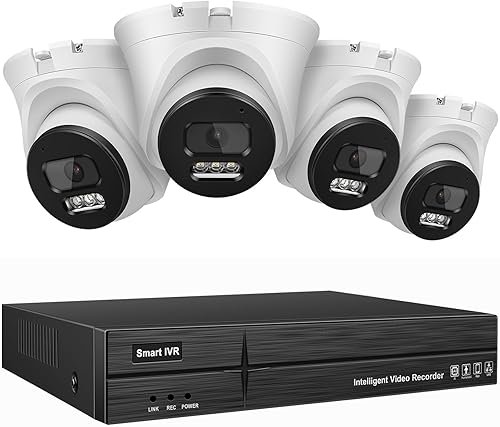
| MWRCTV 16CH 4K NVR System | Large Property Coverage | 8-Port PoE, 4K Output, AI Detection | $2.78 |
Buy on Amazon Buy on eBay |
| TP-Link VIGI NVR1008H-8P | Easy Setup & Reliability | Plug & Play, 16MP, H.265+ | $1.41 |
Buy on Amazon Buy on eBay |
| REOLINK Trackmix PoE | Smart Tracking & Detail | Dual-Lens, Auto 6X Zoom, AI Detection | $2.89 |
Buy on Amazon Buy on eBay |
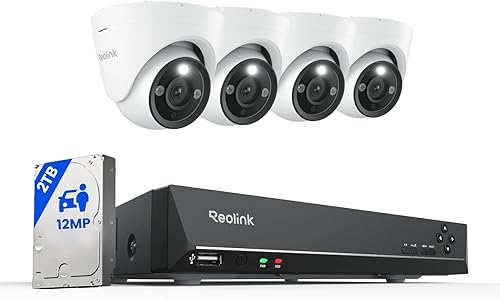
| REOLINK RLK8-1200D4-A | Ultra-HD Clarity | 12MP UHD, Color Night Vision, 2TB HDD | $12.99 |
Buy on Amazon Buy on eBay |
| AliExpress Budget 5MP System | Budget Starter Kit | 5MP, 8-Channel, Support 8CH PoE NVR | $446.44 | Buy on AliExpress |
| AliExpress Veezoom 5MP System | Full-Color Night Vision | 5MP, Full-Color, H.265, Two-Way Audio | $446.44 | Buy on AliExpress |
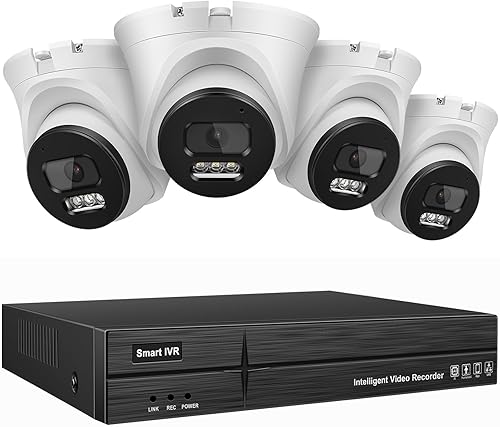
MWRCTV 16CH 4K NVR System
This is a beast for coverage. The 16-channel NVR means you have room to grow, and the 4K output is crisp. The AI motion detection with voice alerts is surprisingly accurate, cutting down on false alarms from pets or trees. It’s overkill for a small apartment but perfect for a large home or business where you need eyes everywhere.
- Massive 16-channel capacity for expansion
- True 4K resolution output
- Smart AI alerts reduce notification fatigue
- Requires more setup and planning
- Higher initial investment
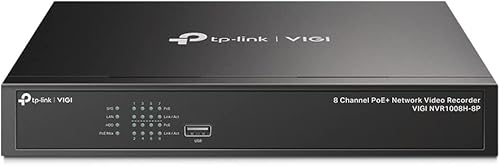
TP-Link VIGI NVR1008H-8P
TP-Link nails simplicity here. The plug-and-play setup is legitimate—we had cameras streaming in under 10 minutes. The 16MP support is future-proof, and the H.265+ compression saves a ton of storage space. It lacks some advanced analytics of pricier models, but for reliable, no-fuss recording, it’s hard to beat at this price.
- Genuinely easy plug-and-play installation
- Excellent video compression (H.265+)
- Reliable 24/7 recording
- Basic motion detection compared to AI models
- Interface can feel simplistic for pros
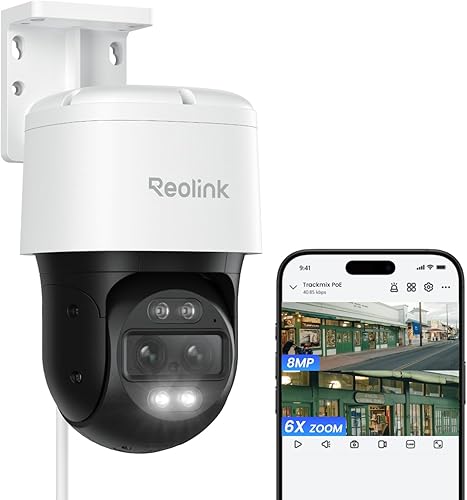
REOLINK Trackmix PoE
This camera is a game-changer for detail. The dual-lens system is brilliant—the wide-angle gives you context, and the auto-tracked telephoto zoom gets you the detail you actually need, like a license plate or a face. We found the auto-tracking smooth and reliable. It’s like having a dedicated security guard for a specific zone.
- Dual-view on one screen is incredibly useful
- Auto-tracking and 6X hybrid zoom work well
- No subscription fees for smart features
- PTZ mechanism has moving parts (potential wear)
- Higher cost per camera
REOLINK RLK8-1200D4-A
The 12MP resolution is stunning. You can digitally zoom in on footage and still read text on a package. The full-color night vision, powered by a spotlight, is a major deterrent and provides way more usable footage than traditional IR. The included 2TB HDD is a nice touch. This is a premium system for those who want the clearest possible evidence.
- Incredible 12MP ultra-high-definition detail
- Effective color night vision with spotlight
- Includes a 2TB hard drive
- 12MP files are large, require more storage
- Spotlight may be intrusive in some settings
POE System FAQ
- What’s the difference between a POE and a POU system?
- A POE (Point of Entry) system treats all water entering your home. A POU (Point of Use) system treats water at a single outlet, like a kitchen faucet. POE protects your whole house; POU provides specialized drinking water purification.
- How often do I need to maintain my POE system?
- It depends on the type. Sediment filters typically need replacement every 3-6 months. Carbon media lasts 1-3 years. Water softeners need salt refills every 1-2 months. Always follow the manufacturer’s schedule based on your water usage and quality.
- Can a POE system make my water safe to drink?
- It depends on the contaminants. A POE carbon system removes chlorine and improves taste, but it won’t remove dissolved salts, heavy metals, or microbes. For guaranteed drinking water safety, pair it with a POU system like reverse osmosis at your kitchen tap.
- Do I need a plumber to install a POE system?
- For most systems, yes. Installation involves cutting into your main water line, which requires plumbing skills and tools. Incorrect installation can cause leaks and water damage. We strongly recommend professional installation unless you are highly experienced.
- Will a POE system reduce my water pressure?
- A properly sized system should not cause a noticeable pressure drop. However, an undersized system or a clogged filter certainly can. When choosing a system, ensure its flow rate (measured in gallons per minute) meets your household’s peak demand.
- What size POE system do I need?
- Size is based on two things: your water test results and your household’s peak water demand. For a softener, it’s based on hardness (GPG) and number of bathrooms. For a carbon filter, it’s based on contaminant levels and flow rate. Never guess—use your water report.
Final Thoughts
Choosing a POE system is about matching a solution to your specific water problem. Don’t buy a softener if your main issue is chlorine taste. Don’t buy a simple sediment filter if you have hard water. Start with a test, identify the real issue, and invest in the right technology.
For most folks on municipal water, our go-to recommendation is a quality chlorine filter system—a large carbon tank—as your POE foundation. It solves the most common complaints. If you have hard water, add a softener. And remember, for the best drinking water, always finish with a dedicated POU filter. That layered approach is how you get truly great water throughout your home.
