


You’ve picked out the perfect carbon water filter, but what holds it? That’s the job of the filter housing, and for most residential systems, it’s made of plastic. I’ve installed, wrenched on, and unfortunately, witnessed the failures of dozens of these over the years. This guide covers what they are, how they work, and which ones are actually worth your money in 2026.
- What a plastic filter housing is and why material matters.
- The simple mechanics of how it seals and functions.
- Key benefits and the drawbacks you need to know.
- A breakdown of the main types for different applications.
- A clear buying guide and our top product picks.
What Is a Plastic Filter Housing?
Think of it as a pressure vessel. It’s the cylindrical, screw-on container that houses your filter cartridge—the actual part that cleans the water. The housing’s job is to create a sealed, pressurized chamber, forcing incoming water through the filter media and out to your tap. Most standard 10-inch housings, like those used in a typical drinking water system, are made from polypropylene.
Now, “plastic” isn’t just one thing. The quality varies wildly. Cheap housings use brittle, low-grade polymers. Good ones use reinforced, NSF-certified materials designed to handle constant water pressure without cracking, leaching chemicals, or failing at the seams. After seeing a few split open and cause water damage, I never skimp on the housing itself.
How a Plastic Filter Housing Works
The principle is straightforward, but the engineering details matter. Here’s the breakdown.
The Sealing Mechanism
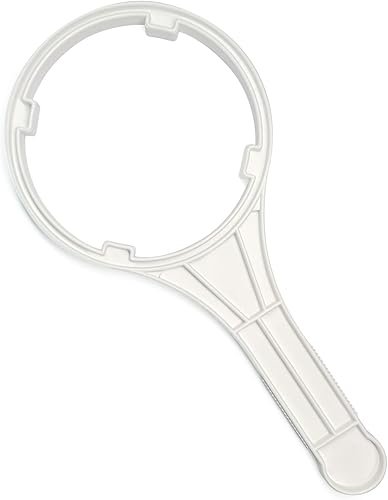
The magic is in the O-ring. A thick, lubricated rubber or silicone ring sits in a groove on the housing’s cap. When you screw the sump (the clear or blue bowl) onto the cap, it compresses this O-ring, creating a watertight seal. This is why a housing wrench is non-negotiable—hand-tightening rarely provides enough compression. A dry or pinched O-ring is the number one cause of leaks.
The Flow Path
Incoming water enters through the port in the cap, flows down into the sump, and is forced radially inward through the filter cartridge. The filtered water then travels up through the center core of the cartridge and exits through the outlet port. This design ensures all water passes through the media. For specialized filters like a ceramic candle filter, the housing shape may differ, but the sealed-chamber principle remains the same.
Key Benefits of Plastic Housings
Cost-Effective: This is the big one. Plastic housings are significantly cheaper to manufacture than stainless steel alternatives, bringing the overall cost of a filtration system down for homeowners.
Transparency for Monitoring: Many sumps are made from clear or blue-transparent plastic. This lets you see the cartridge and gauge its saturation level without disassembling the system. You’ll know when it’s time for a change.
Corrosion Resistance: Unlike metal, plastic won’t rust or corrode from the inside out, which is crucial for maintaining water quality and structural integrity over time.
Potential Drawbacks to Consider
Pressure Limits: Standard plastic housings are typically rated for 100-125 PSI at a specific temperature. Exceeding this, especially with hot water, is dangerous. They are not for hot water recirculation lines.
UV Degradation: If installed where sunlight can hit it directly (like in a sunny utility room), the plastic can become brittle over years. Most are designed for concealed installation.
Types of Plastic Filter Housings
Standard 10″ Housings
The absolute workhorse. These hold the ubiquitous 2.5″ x 10″ cartridges, from sediment filters to carbon blocks. They’re the core of most under-sink systems and small point-of-entry setups. If you’re replacing a housing, this is likely what you have.
“Big Blue” Housings
These are the larger 4.5″ x 10″ or 4.5″ x 20″ versions. They offer much higher flow rates and dirt-holding capacity, making them ideal for whole-house filtration or homes with high water usage. They often require a more robust mounting bracket. For high-flow needs, a jumbo filter housing is the way to go.
Specialty & Inline Housings
These include smaller 1/4″ port housings for icemakers or refrigerators, and housings designed for specific filter types, like the dedicated housings for a faucet filter cartridge. They prioritize compact size and easy connection.
Buying Guide: What Actually Matters
Forget the marketing fluff. Here’s what I check.
1. Certification: Look for NSF/ANSI 42 (material safety) and 58 (structural integrity) certification on the housing itself, not just the filter. This is your guarantee it won’t leach chemicals into your water.
2. Port Size & Type: Most are 3/4″ or 1″ FNPT (Female National Pipe Thread). Know what your plumbing uses. Quick-connect ports are easier for DIY but can be a failure point if low quality.
3. Included Wrench & Bracket: A good kit includes a metal wrench and a sturdy mounting bracket. Buying them separately adds cost and hassle. The Jiawu RO Housing KIT is a decent example of an all-in-one solution.
4. Pressure Relief Button: That little red button on some caps is a lifesaver. It depressurizes the sump before you unscrew it, preventing a messy, pressurized spray. Worth the extra few dollars.
When it’s time to change the filter element, you’ll want a reliable universal filter cartridge that fits your housing’s specifications precisely.
Top Picks for 2026
| Product | Best For | Price | Key Feature |
|---|---|---|---|
| DlGITEN Wrench | Essential Tool | $8 | Perfect fit for 10″ housings |
| Jiawu RO Housing KIT | DIY Install | $38 | All-in-one kit with fittings |
| 10in Transparent Housing | Visual Monitoring | $46 | See-through sump, brass ports |
| 10″ Clear Big Blue | High Capacity | $69 | Pressure relief, sediment filter |
DlGITEN Wrench for 10″ Filter Housing
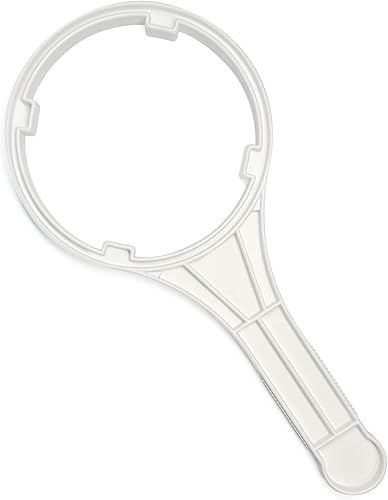
This isn’t a housing, but it’s the most important accessory you’ll own. I’ve bent cheap plastic wrenches and sliced my hand on a slipping metal one. This DlGITEN wrench has a solid, comfortable grip and the correct geometry to grip the housing sump without slipping. It’s a simple tool that solves a real problem. Don’t try to use pliers.
- Durable construction
- Good leverage and grip
- Prevents housing damage
- Only fits standard 10″ housings
- Easy to misplace

Jiawu RO Housing KIT
This is a solid starter kit if you’re building a system from scratch or replacing a cracked housing. It includes the housing, wrench, two quick-connect fittings, and screws. The 1/4-inch ports are standard for RO systems. Honestly, the included fittings are the weak point—I’d recommend using your own brass fittings if you have them. But for the price, it’s a convenient package.
- Complete installation kit
- Compatible with most 10″ cartridges
- Clear sump for monitoring
- Plastic fittings may not last
- Bracket could be sturdier

10in Transparent Housing with Brass Ports
This one caught my eye because of the brass ports. In our testing, brass threads are far less likely to crack or strip than plastic ones during installation. The transparent sump is made from a sturdy, BPA-free material. It’s marketed for washing machines and heaters, but it’s a perfectly good housing for a sediment pre-filter in a point-of-entry system. The build quality feels a step above the generic options.
- Brass ports for durability
- Good seal and construction
- Versatile application
- No pressure relief button
- Bracket not included

10″ Clear Big Blue Housing + Sediment Filter
This is a proper “Big Blue” setup. The included polyspun sediment filter is a nice bonus—it’s a 3-layer graded depth filter that will catch a lot of gunk. The real star is the housing with its pressure relief button. That feature alone is worth the premium. The clear sump lets you see exactly when the filter is loaded. For a whole-house sediment guard, this is a smart, ready-to-go package.
- Pressure relief button included
- High-quality sediment filter
- Clear sump, high flow rate
- Larger footprint requires space
- Higher initial cost
Frequently Asked Questions
- How often should I replace my plastic filter housing?
- You don’t replace the housing on a schedule. You replace the cartridge inside it. The housing itself should last 5-10 years if it’s NSF-certified and not abused. Replace it immediately if you see cracks, discoloration, or persistent leaks that a new O-ring doesn’t fix.
- Can I use a plastic housing for hot water?
- Absolutely not. Standard plastic housings are for cold water lines only, usually rated up to 100°F (38°C). Hot water will soften the plastic, warp it, and can cause a dangerous failure. You need a dedicated hot water filter housing.
- Why does my filter housing leak from the top?
- This is almost always an O-ring problem. It’s either dry, pinched, cracked, or has debris on its seat. Turn off the water, depressurize the system, unscrew the sump, and inspect the O-ring. Clean the groove, lubricate the ring with silicone grease, and reassemble. If that doesn’t work, replace the O-ring.
- What’s the difference between a standard and a “Big Blue” housing?
- Size and capacity. Standard housings hold 2.5″ diameter cartridges. Big Blue housings hold 4.5″ diameter cartridges. The larger size allows for much higher water flow rates and a longer time between filter changes, making them ideal for whole-house applications.
- Are clear plastic housings as strong as blue ones?
- Generally, yes, if they are from a reputable brand and NSF-certified. The clear material is often a different polymer blend designed for transparency while maintaining pressure ratings. The blue color in standard housings is just a pigment. Always check the PSI rating on the label.
Final Thoughts
After years in this field, my advice is simple: don’t overthink the housing, but don’t ignore it either. It’s the foundation of your system. For most people replacing an old or cracked housing, the 10in Transparent Housing with Brass Ports offers a great balance of durability and visibility. If you’re building a new system, the Jiawu KIT gets you started, but invest in better fittings.
The single biggest mistake we see is people hand-tightening the sump. Buy the $8 wrench. Use it. Lubricate your O-ring. That simple maintenance ritual will prevent 95% of housing headaches. Get those basics right, and your plastic filter housing will quietly do its job for years.
